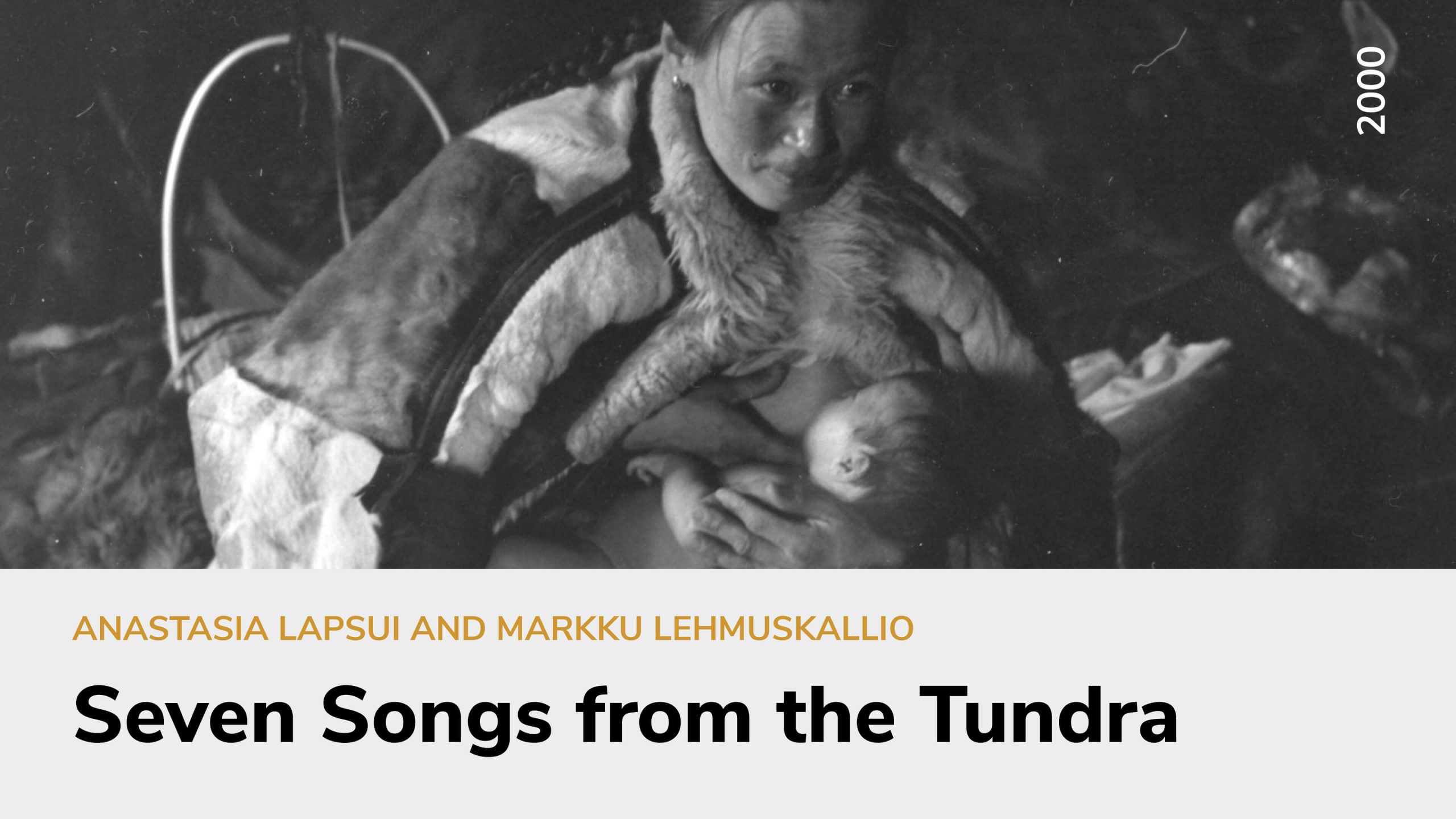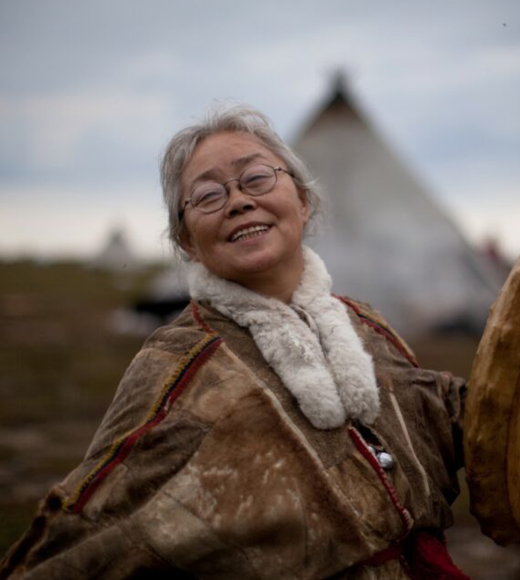
Anastasia Lapsui (b. 1944) is a Soviet-born filmmaker, screenwriter, and radio journalist of the indigenous Nenets people of Siberia known for her work with her partner Markku Lehmuskallio. Lapsui was forced to attend a Soviet boarding school as a child, despite not speaking Russian. She studied at the Salekhard Pedagogical Institute (1963-1966) and Ural State University, becoming the first Nenets-language radio journalist in the world. Lehmuskallio met Lapsui while working on his 1992 film I Am. The pair went on to develop a distinctive co-directorial practice that blends documentary and narrative filmmaking, incorporating traditional folktales and spiritual customs with observational attention to the everyday lives of their subjects. While they have made films about a number of Arctic Indigenous peoples, including the Sami native to northern Finland, much of their work has been concerned with the Nenets and other Indigenous groups from Arctic Russia: the Chukchi, the Nganasan, and the Selkup. Their films include Tsamo (2015), Eleven Images of a Human (2012), Travelling (2007), Fata Morgana (2004), A Bride of the Seventh Heaven (2003), Shepherd (2001), and Seven Songs from the Tundra (2000). Lapsui is the recipient of numerous awards including Finland’s top film prize, the Jussi Award, for Best Film (2000), Best Screenplay (2001) and Best Documentary Film (2003); Grand Prize from Festival International de Films de Femmes (2010); a Confédération Internationale des Cinémas d’Art et Essai Award from Berlinale Forum (2002); and the Finland Award (2009).