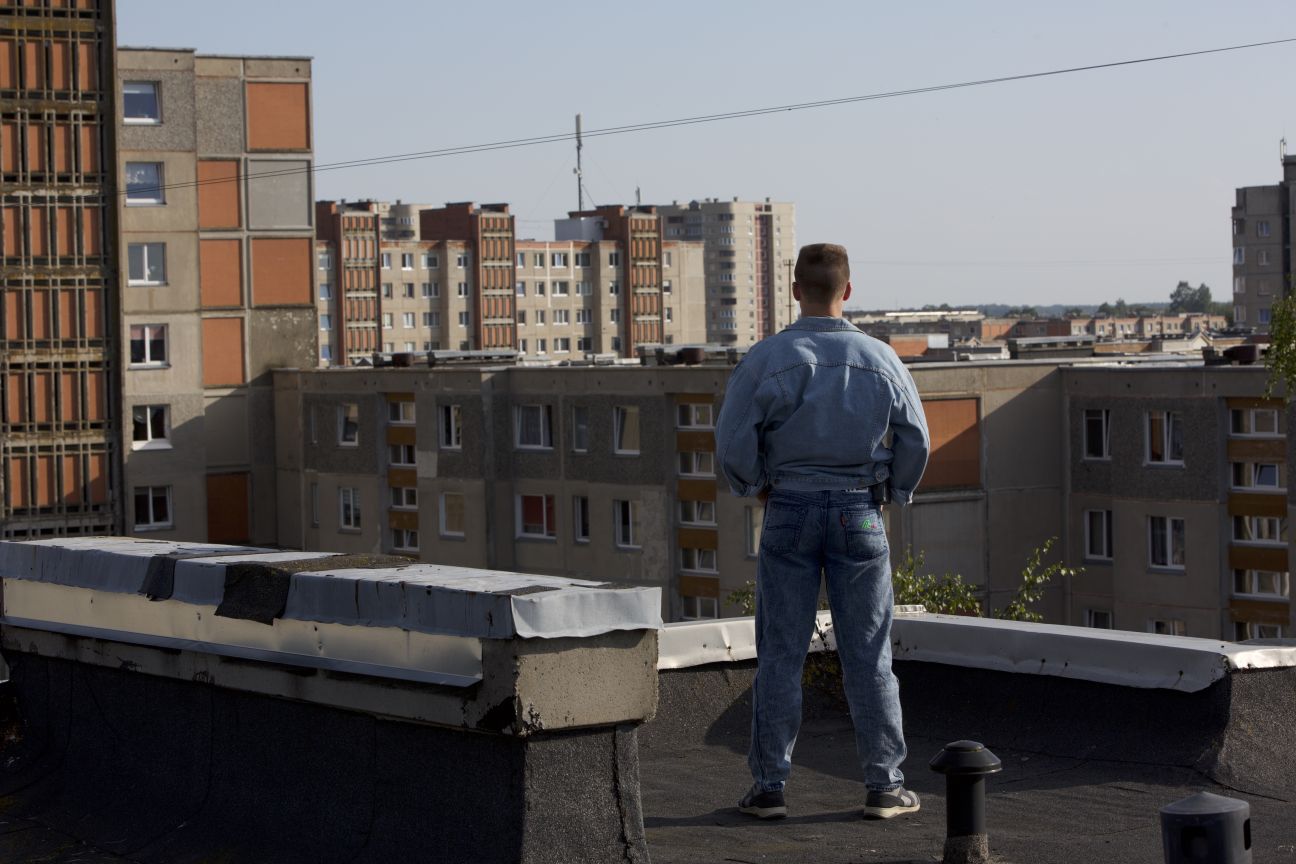
Džiugas Grinys in The Southern Chronicles (dir. Ignas Miškinis, 2024)
The small city of Šiauliai in northern Lithuania might not be on many foreigners’ travel itineraries, but it is a proud, post-industrial town with a boisterous local identity, encapsulated in its notorious (in Lithuania) local dialect. It was this homegrown linguistic flair, and the energetic, desperate spirit of the post-Soviet “wild nineties”, that writer Rimantas Kmita mined for his hugely popular autobiographical novel The Southern Chronicles. When director Ignas Miškinis and screenwriter Eglė Vertelytė brought Kmita’s work to the big screen in 2024, the response was almost universal: the film quickly became the highest-grossing Lithuanian feature of all time, winning 12 awards at the national Silver Crane awards, as well as the prestigious Baltic competition at the Tallinn Black Nights Film Festival – perhaps the highest accolade in the region. It is not hard to understand this success: The Southern Chronicles is replete with surface-level charms, from its retro 16mm and VHS cinematography, to its wonderfully detailed production design and the propulsive Eurobeat soundtrack sprinkled with hits of MC Hammer and Technotronic. But these pleasures, and the well-worn narrative grooves of its coming-of-age teen romance plot, merely burnish a surprisingly mature and open-ended portrait of a protagonist and a nation beginning the peripatetic process of coming to themselves.
Our instantly likeable hero is Rimantas (Džiugas Grinys), perhaps the oldest looking “seventeen-year-old” in teen movie history. As the film opens, Rimantas and his best friend Mindė (Robertas Petraitis) are would-be black-market hustlers and hesitant high-school lotharios, growing up amidst the economic and social precarity of newly independent Šiauliai: “the Manchester of Lithuania”, where, as Rimantas puts it, “those who read and write stand last in line for bread.” Rimantas’ life revolves around rugby, a contrary, almost perverse pursuit in a country where basketball is king. His world is turned on its head when he begins dating middle-class Monika (Digna Kulionytė); in trying to keep up with her cultural references, he finds himself falling in love with literature and writing poetry. The culture-clash headaches of their romance, Rimantas’ and Mindė’s money-making schemes, and the ambiguous attentions of hipster artist Jurga (Irena Sikorskytė), keep the narrative rollicking along.
The Southern Chronicles is screening on Klassiki until 9 April. We spoke to Miškinis about adapting the book, his memories of the nineties, and the filmmaking lessons of rugby. This is an abridged version of the interview; Klassiki subscribers can watch in full here.
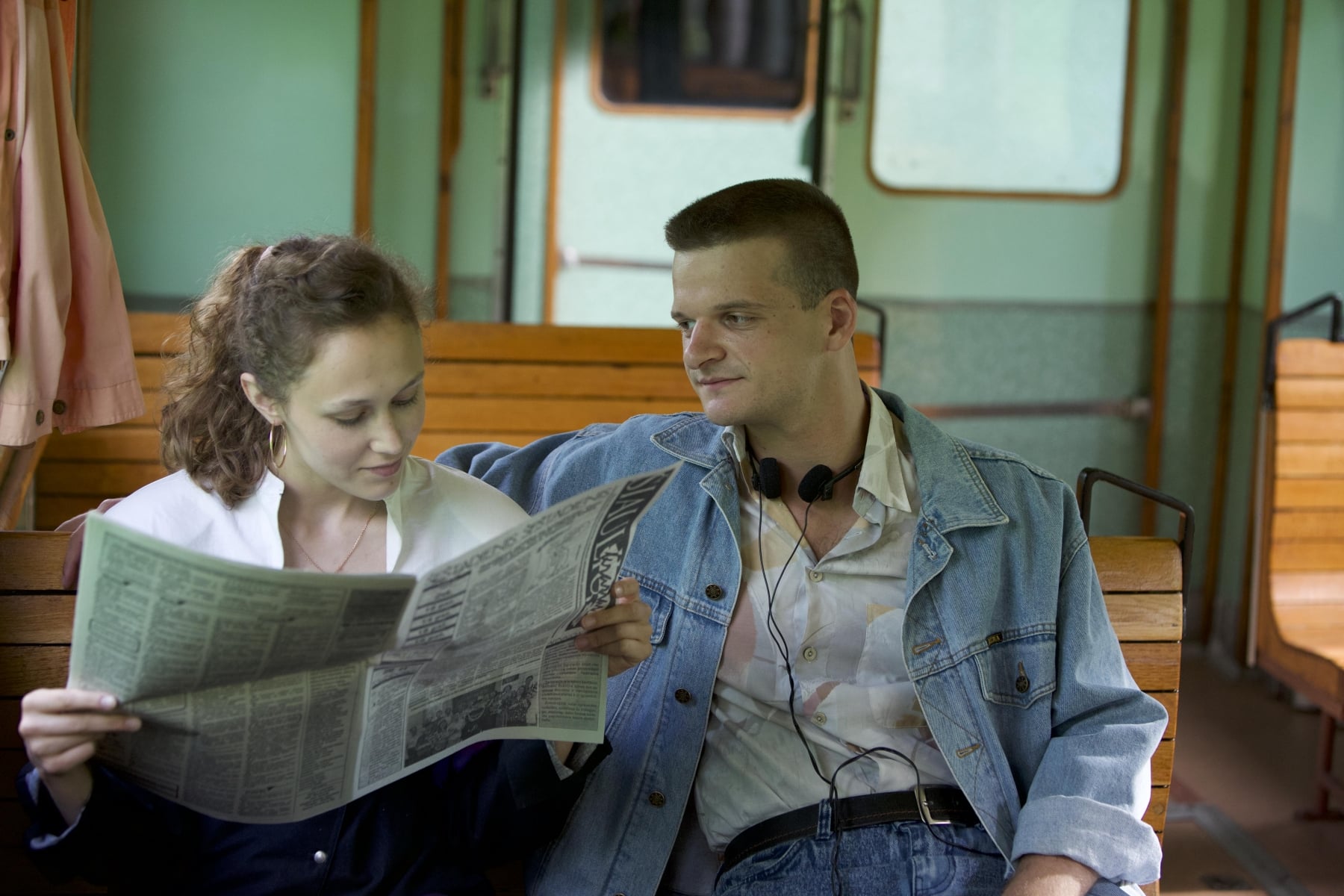
Digna Kulionytė and Džiugas Grinys in The Southern Chronicles (dir. Ignas Miškinis, 2024)
The film is adapted from a novel by Rimantas Kmita, which was a huge success in Lithuania. How did you come to adapt it?
Actually, it wasn’t my idea, it was [screenwriter] Eglė Vertelytė and the producer Lukas [Trimonis] who bought the rights to the book in 2018. In 2020, he called me and offered me a role in the project. Eglė already had a first draft, but she was not sure about directing the movie. I read the script, then the book, but I wasn’t sure I wanted to take on this story.
Why not?
My memories from the nineties were far from a comedy. It’s one of the blackest periods. I was a teenager. We had just got independence, and suddenly there was this time of crime, a very wild time, insecure. It was chaos. I think one of the best sides of the novel is that after almost three decades, we can speak about those times in completely different colours. We are much freer to speak about some not very pleasant things.
Just like the book, your film has been a hit in Lithuania. What is it about this story that you think resonates so much at home?
It was a big surprise. None of us expected that it would be so popular. I think it’s because the story is very simple. Even if you don’t know the context, the historical context, these coming-of-age stories are understandable for anyone – it doesn’t matter how old you are, what generation. It’s a time when we can look at those things, those times with a smile. We can discuss them in different forms.
I think for every director, if you’re afraid of something then you should go straight for it. This film has lots of clichés, but when you’re not afraid of them you can use them as a tool
Speaking of the Lithuanian context, I did want to ask about the setting. It’s very much a story about a specific town, Šiauliai, with a specific identity, even a very strong dialect in Lithuanian. One character describes it as “the Manchester of Lithuania”. What do you think someone coming to the film from outside Lithuania should know about Šiauliai?
Šiauliai is the capital of rugby in Lithuania. That already says a lot. Now we live in completely different times, but in the nineties, Šiauliai was rough. Back then, I was a different guy from the characters [in the film]: I had long hair, I was listening to heavy music, and I was afraid to go to Šiauliai – it was too dangerous. It was tough. Rimantas Kmita was also a very good rugby player, and I think that helped him survive. For me, when I read the book, I understood that even though we are the same age, he was more grown-up than me.
You mention rugby: I read that you took it up in preparation for the film. What did you learn about yourself, and about the character?
I learned that it’s the friendliest game. Usually, we think that it’s a fighting game, a very radical or aggressive game. Actually, it’s not. For me, it was a discovery: the community around rugby is so strong and so friendly. This bond, for me it was very special material. It helped me a lot later on the communicate with the rugby players and to direct them. We became friends. Of course, for me it was a disaster. It was painful.
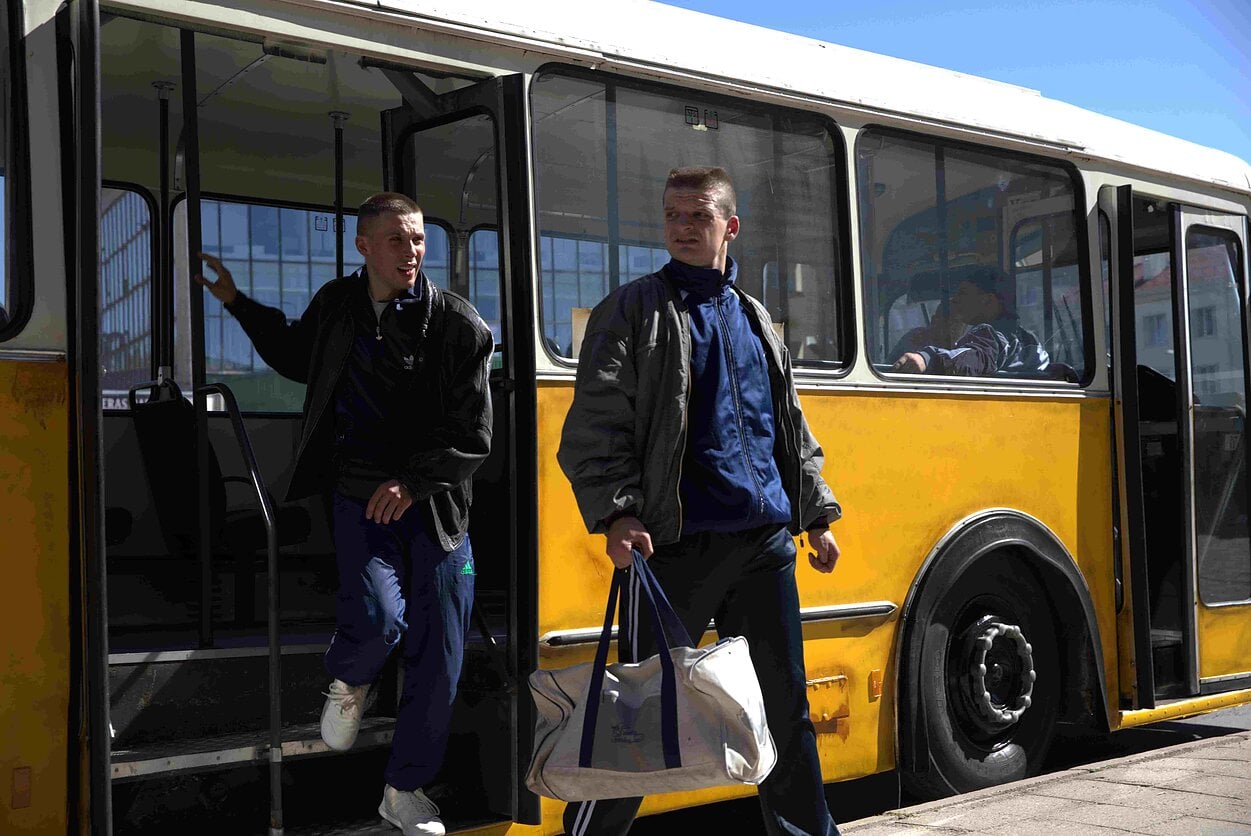
Robertas Petraitis and Džiugas Grinys in The Southern Chronicles (dir. Ignas Miškinis, 2024)
The film shows how in the nineties, Western cultural symbols took on a strange new resonance for young people in a country like post-communist Lithuania – Jean Claude van Damme, Eurodance, rugby…
At the beginning of the nineties, suddenly you could watch MTV. Even to get a Coca-Cola for some people was special. Now, it sounds funny. We were chasing for jeans, logos, brands, and we didn’t even know if they were real.
It plays into the coming-of-age story – there’s this time in your life when you’re searching for some authentic version of yourself. You said that one of the reasons you think the film has proven so popular is that the coming-of-age story is so universal. One of the risks there is that universal stories come weighted with tropes and clichés.
I think for every director, if you’re afraid of something, like clichés, then you should go straight for it. This film has lots of clichés, but when you’re not afraid of them you can use them as a tool within the narrative. If it looks clichéd then I don’t feel bad about it. It’s one way of expressing the story.
Can you tell us a little about the technical choices you made when it came to capturing the feel of the period? The use of “outdated” formats is very striking.
I wanted this film to look like it was made in the nineties. That’s why we used 16mm and VHS cameras. In the nineties, we didn’t have drones or big cranes. This cheap, DIY equipment helped to create an authentic feeling. We even bought a VHS camera in Šiauliai for $18 – it broke on the second day. The best thing about shooting on VHS is that you don’t need post-production. You cannot fix anything!
Watch The Southern Chronicles on Klassiki until 9 April.
Explore our full collection of Lithuanian films here.


 Go back to journal home page