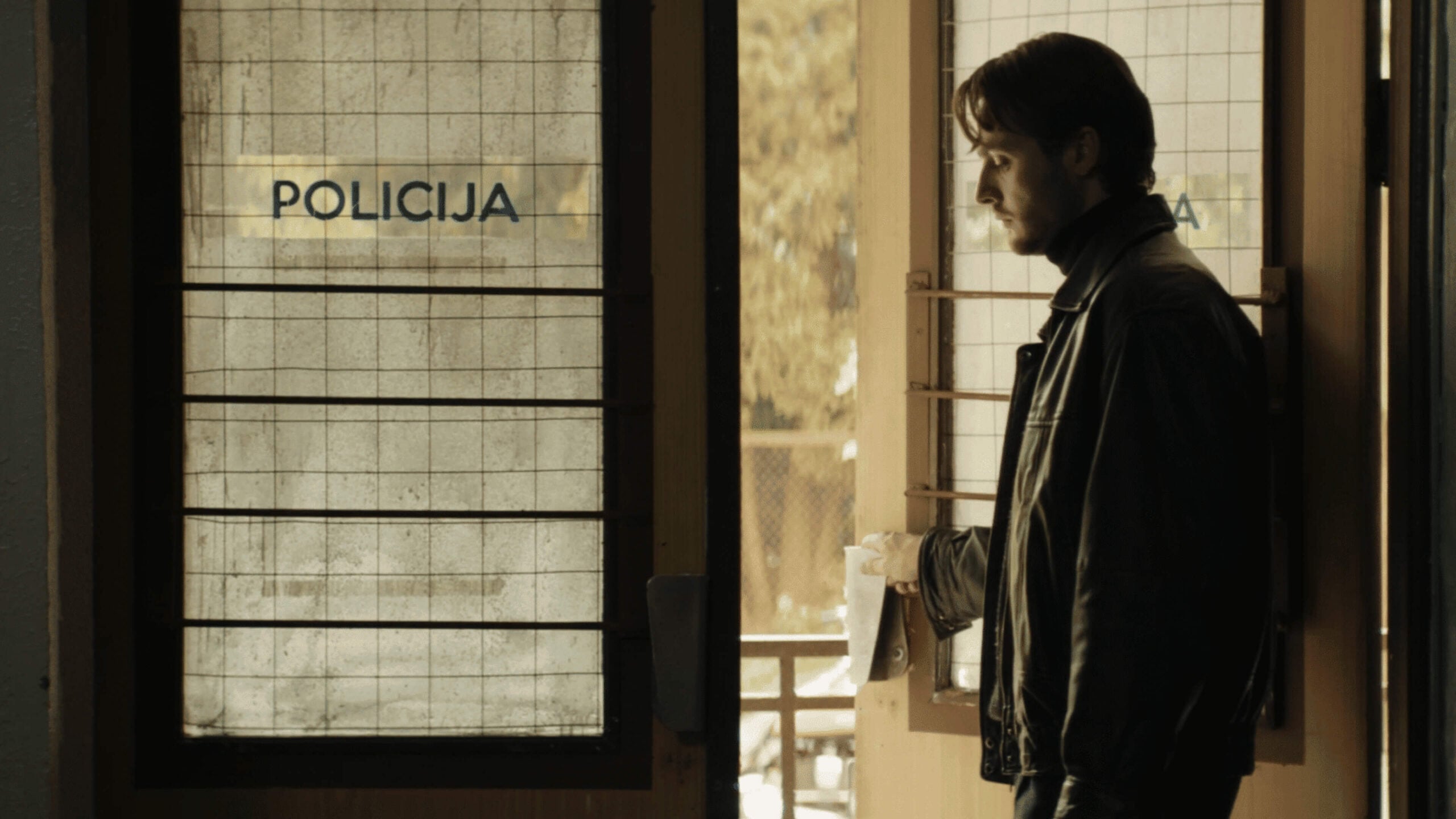
Raitis Stūrmanis in Red Code Blue (dir. Oskars Rupenheits, 2025)
In the Baltic states, as across the whole of the former Soviet bloc, the nineties were a time of turmoil. The collapse of sclerotic state-run structures and spiralling economic troubles opened the door for organised crime, endemic corruption, and a dog-eat-dog atmosphere of graft and cynicism. In recent years, these “wild” nineties, as they are universally known in the region, have been enjoying a kind of cinematic afterlife. Where once the decade was something to be forgotten, moved on from as quickly as possible, the 2010s and 2020s have seen a proliferation of period pieces set in those lawless times. The critic Sonya Vseliubska has argued that the geopolitical and social tensions of the present day produce this kind of retrospection: “nations under the strain of political upheaval or war… are prone to reinterpret it to align with contemporary realities. This often manifests in the representation of past collective experiences, whether of success or hardship.” In Lithuania, Ignas Miškinis’s The Southern Chronicles (2024), which set a coming-of-age romance against the backdrop of post-industrial decline and low-level criminality, became the highest-grossing Lithuanian feature of all time, winning 12 awards at the national Silver Crane awards.
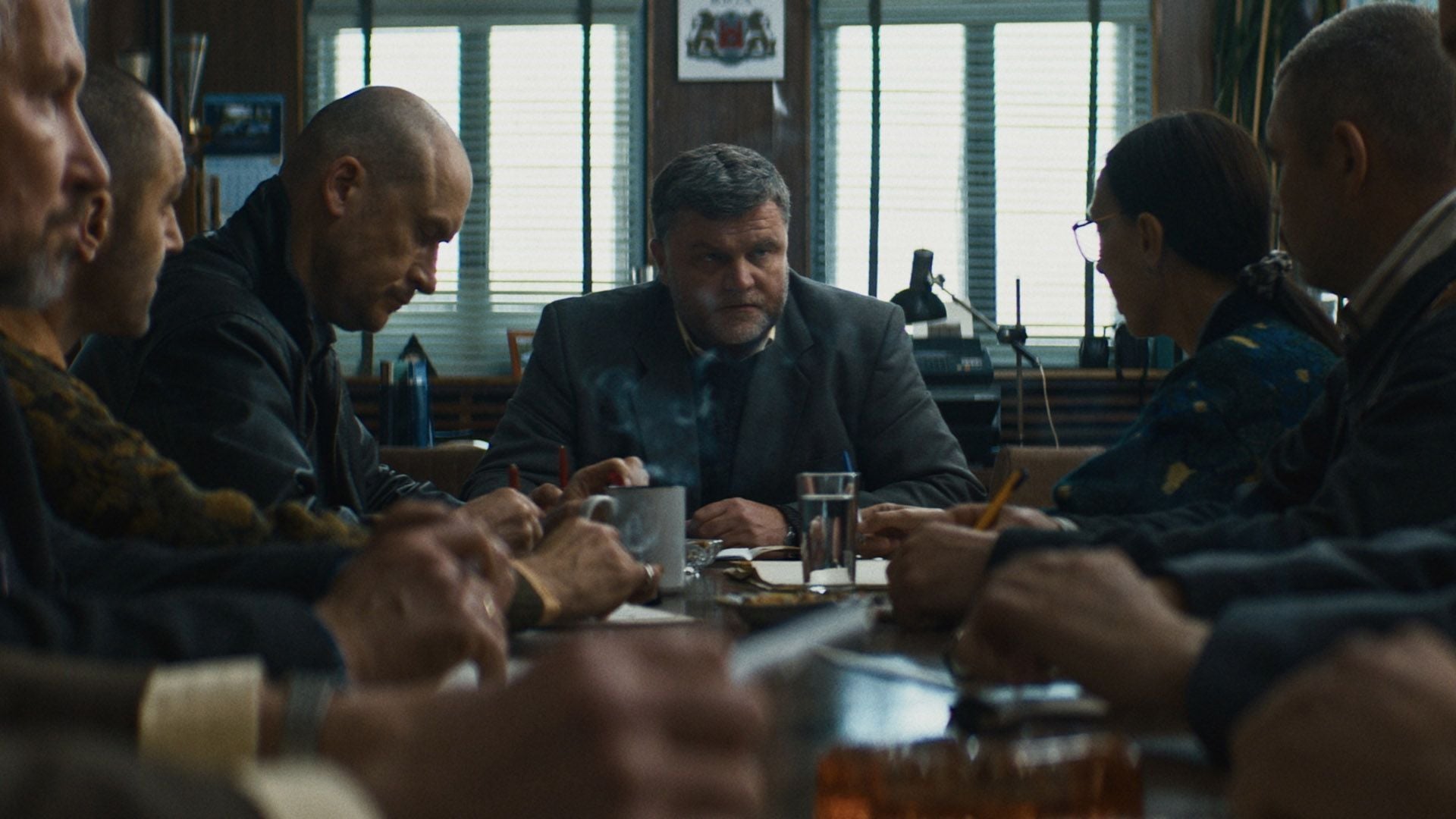
Latvia now has its answer to the phenomenon in the form of Oskars Rupenheits’ 2025 police thriller Red Code Blue. Like Southern Chronicles, it has proved hugely popular with domestic audiences, winning the prizes for Best Film, Best Director, and Best Leading Actor at the 2026 Latvian Film Awards. Red Code Blue is a Baltic spin on the freewheeling gangster epics of Martin Scorsese. This is a hard-nosed, grimy film, full of slurs, foul language, and petty cruelty. It’s also a slowly unfurling character study of a protagonist, rookie detective Romāns Skulte (Raitis Stūrmanis), who at first glance appears inscrutable, even bland in his commitment to the letter of the law. Skulte is fresh out of the academy when he is assigned to the hard-bitten investigative department of Riga’s Central Precinct, where his moral code makes him a marked man. The streets of the capital are cowed, ruled over by a crime lord known only as “the Armenian” (Robers Kosojans), whose racketeers and traffickers operate under the invisible cover of police protection. As Skulte sets out on his own into this abyss, he comes to realise that the road to hell is paved with good intentions.
With Red Code Blue now showing on Klassiki as part of our partnership with FilmFestival Cottbus 2026, we spoke with Rupenheits about his interest in dramatising moral dilemmas, the harsh realities of nineties life, and the cycles of nostalgia and forgetting that define moviemaking.
Red Code Blue (dir. Oskars Rupenheits, 2025)
I want to start with the question of the time period. What was it that first made you want to go back to the nineties in this film? This was a very particular period for Latvia, for the Baltic region, for post-Soviet countries in general.
If you asked anyone who’s seen the film what it’s about, they’d probably say the nineties. But my initial idea was about questioning my moral compass – how do I view my wrongdoings, how screwed up am I as a person? For me, this film is about a guy whose moral standards are tested, and the best way to test someone’s moral integrity was to place them against the backdrop of the 1990s, which was a lawless time, like our Wild West. Of course, when I started to research the period more, it was like a can of worms. It’s such a vivid time in our history: a hard, violent time, and a time of opportunity. But like I say, I wasn’t interested in the period as much as in the inner workings of a human being.
Does that go along with wanting to make a gangster film? By design, stories about police and criminals are concerned with the line between right and wrong.
Well, again, my main idea was the corruption inside oneself, not corruption in the sense of the police or government. When do I view my own actions as correct or corrupt? How blind are we to our own wrongdoings? So, from the beginning, it was about a human being rather than a policeman. But over time I realised that this couldn’t go in any other direction than the guy being a young policeman, and the period just suggested itself. Everything I’ve heard about the nineties… After screenings, the younger generation asks me, “come on, was it really that bad?” And their parents say: “my boy, you don’t know a thing. It was ten times that.” Of course, [the setting] is never just a backdrop. The setting starts seeping into the story and demanding space on the screen.
The prologue – in which we see Romāns as a young boy lying to a blind neighbour to steal some money to donate to the church – introduces the theme of religiosity that runs through the film. Did that also come from your initial interest in the psychology of morality?
I’m telling the audience up front what the film is going to be about. This fable contains the message of the film. As for religion: I don’t really appreciate it when films set up their heroes and villains, and the good guy is pressured into action. Like, they have 24 hours to get the money, or their family will be killed. There’s no way out. I wanted to give my character a way out. What happened was his choice. Religion represents one escape route he could have taken. But I chose to show that, actually, we’re not so righteous. My view of the human soul is not that we always choose the right path when given a choice. It’s not as simple as that. But I wanted to give the character this leeway, to show that it would have been possible to get out through religion. I am a somewhat esoteric person, as I suppose all Latvians are. I’m not really religious. This is not a film about finding God. Religion here is part of the dramatic structure; I’m not offering my commentary on it. Though I did consult with a lot of policemen from the period, and one – who had been a big shot detective – had actually become quite religious.
“After screenings, the younger generation asks me, ‘come on, was it really that bad?’ And their parents say: ‘my boy, you don’t know a thing. It was ten times that.’”
Did any of the stories you heard from these retired policemen make it into the film?
Yes, absolutely. I don’t have any connection to the police force, so I was a bit naïve about the setting and the structure. In the film, there is a scene where they raid a gangster hideout. I wrote it and showed it to someone who had been high up, like the chief of police in the nineties. I asked him: did you wear bulletproof vests when you went on raids like this? He said yes, of course, every single policeman would have worn one. Then I asked a guy who had worked for 15 years in this kind of thing. And he said that he had never seen anyone wearing a bulletproof vest. Then I asked a third guy, who is actually in the film, he plays [hard-bitten detective] Gena. He said, look, we had two vests in the whole precinct. If someone had put one of them on, everyone else would have called him a wuss. And people died because of this. So, you have three people who worked in the system with three completely different perspectives. I realised I had to choose one reality from several. I had to serve the story as well as the reality of the time.
To be honest, most of the main crew in the precinct were ex-policemen. And it just turned out like that, since I work mostly with non-professional actors – [Elīna Avotiņa] who plays Dr Sadovska is the only professional actor in the film. Most of the rest of the cast are people from the street. I chose them by their faces, then when we got to talking, I found out that they used to work in the police force or in customs. Maybe there is something written in the face of a cop, I don’t know.
With any meticulous reconstruction of a time period like this, I always want to know about the production design. Were there any specific difficulties involved with making everything look authentically nineties?
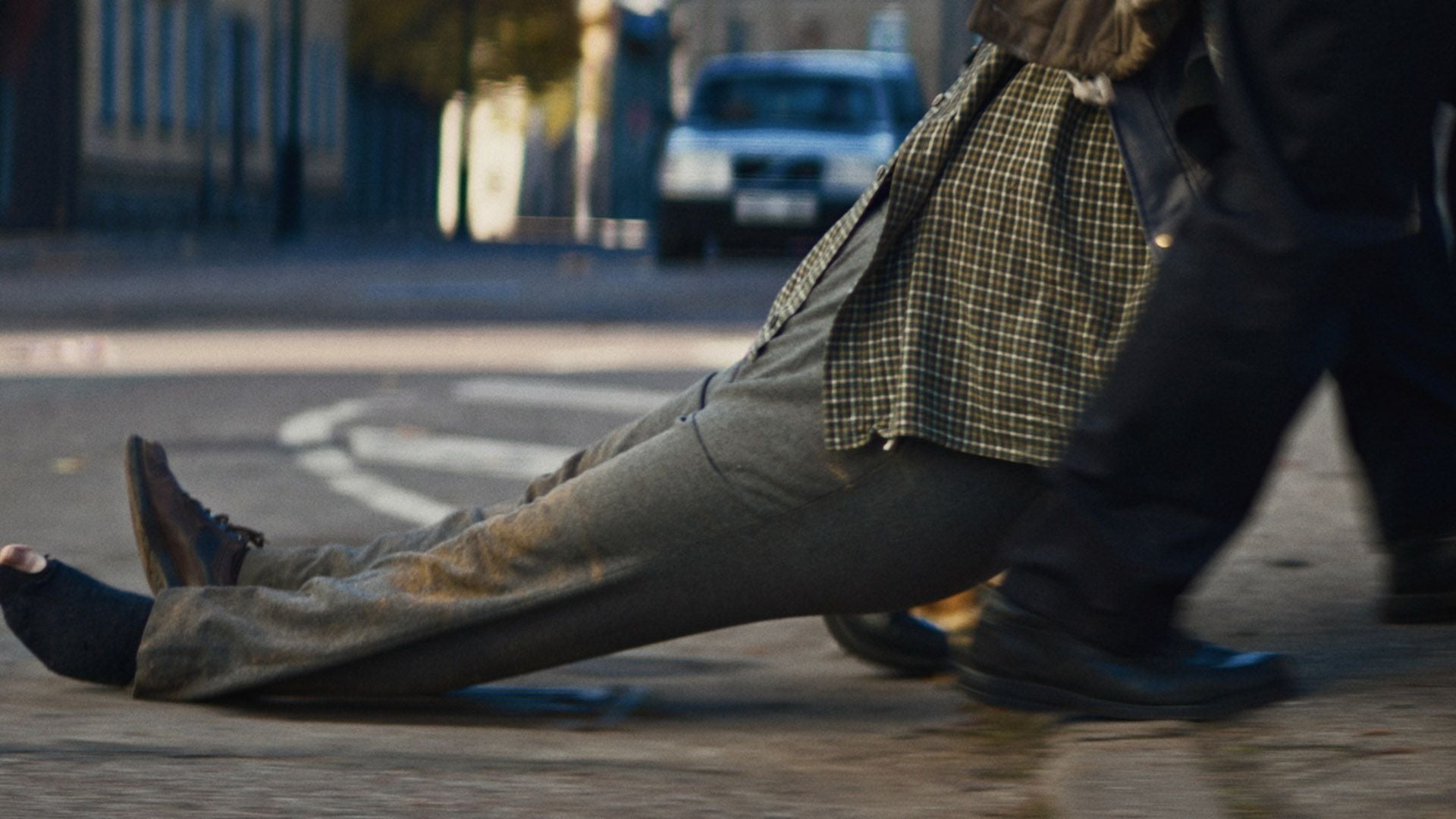
There still plenty of locations here in Riga which are from that period. But of course, we did have to build some things. A lot of people told me that the set we built for the main detectives’ office in the precinct was too spacious – at that time, it would have been split into five rooms. With the costumes it’s a bit easier, a lot of those are still available. Leather jackets haven’t exactly gone out of fashion. The challenge in the streets is that the ground floors of buildings now have a lot of shops and commercial units that are too modern, but the second storey up hasn’t changed. So, we use a lot of low angles to cut out the modern city.
Red Code Blue (dir. Oskars Rupenheits, 2025)
I feel like there’s been a trend recently in certain post-Soviet countries of looking back to the nineties, reconsidering and recreating that era. In Lithuania, there was The Southern Chronicles by Ignas Miškinis, which was a huge hit. Your film did very well at the Latvian Film Awards. In Ukraine, around the start of the full-scale invasion, they had started looking back at the period – in fact, your film reminded me of one Ukrainian film in particular, Philip Sotnychenko’s police drama La Palisiada. I wonder if you agree with my diagnosis that there’s something in the air here?
Again, I didn’t seek the make a film about a specific period, that was just where the core of the story took me. But of course, it was a very turbulent and violent time, and we tend to look back on those peaks. We’re not interested in flat areas. People resonate with strong material. I saw that a certain section of the audience was sickened by the thought of the period: someone told me that they were driving home from the movie scared that the nineties were back and that the police were going to pull them over just to screw with them. And some people said: yes, this was our Wild West, and we want to see it. I don’t think you can rely on the draw of the nineties, though. You have to have a story.
I think nostalgia is inevitable. Sometimes I look at kids on the street, and I see they’re dressed like we did in the nineties, new age bling, big jeans, leather jackets. It’s interesting, this question of how far back we look. Because some people haven’t forgotten the nineties and some never experienced it. We had a young girl on set, the continuity girl. We were shooting in the street at one point and she ran up to me and said, “hey, listen, there are traffic lights in shot.” I said, “OK?” And she said: “well, did you have those in the nineties?” It was funny, but she’s 20 years old and this was more than 30 years ago. Those are ancient times for her. I guess in 50 years they’ll be making films about the 2020s. It’s always fashionable, going back and revisiting. Something has to have passed before you can romanticise it.
Watch Red Code Blue on Klassiki until 3 December as part of our partnership with FilmFestival Cottbus 2026.


 Go back to journal home page