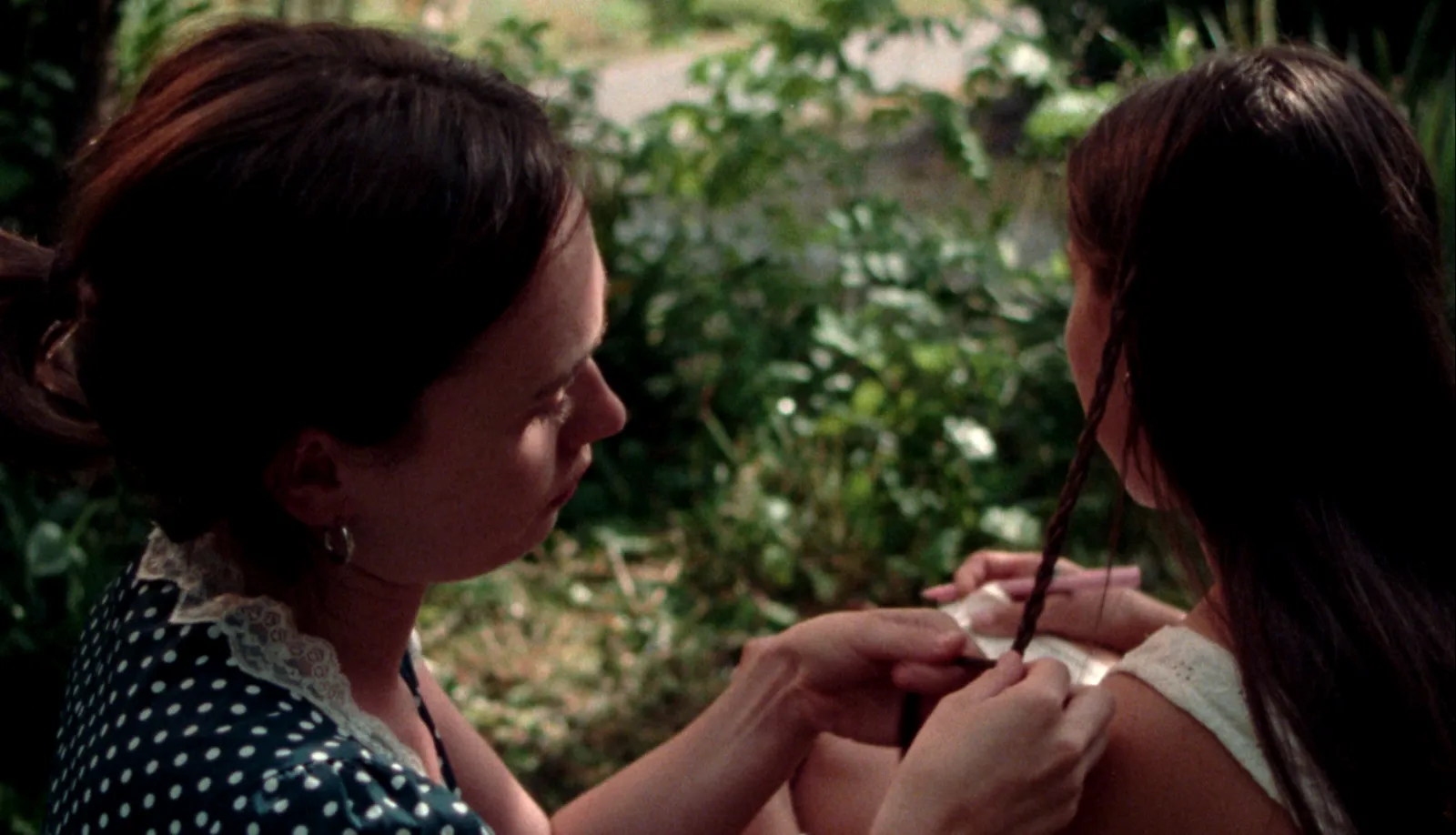
Alžběta Malá and Mia Celestina Ševčíková in Sisters (dir. Luca Pereș-Bota and Nikol Urbanová, 2026)
FAMU – or the Film and TV School of the Academy of Performing Arts – is a Prague institution, founded in 1946 and one of the oldest film schools in the world. Its alumni include almost all the luminaries of Czechoslovak and Czech cinema, from Věra Chytilová to Miloš Forman, and to this day anyone looking to stay on top of emerging filmmaking talent from Central Europe knows to keep an eye on FAMU’s graduates. Two of them – the Romanian-Belgian Luca Pereș-Bota and the Czech Nikol Urbanová – are premiering their graduation film Sisters at FilmFestival Cottbus 2026.
The pair had previously worked together on another short, FLOWERBOYS (2024), which was selected at the Berlin XPOSED Queer Festival and Art200 in Bucharest. Their new film is a lucid dream of a short, shot on hazy 16mm and shot through with bittersweet warmth. Twenty-something Ema (Alžběta Malá) arrives in the Czech countryside from Prague to spend one final summer’s day in her family’s country home with teenaged sister Mia (Mia Celestina Ševčíková) before the property is sold on. Over the course of a sun-drenched afternoon, the pair both regress – replaying games from their childhood – as well as move towards a more mature mutual understanding. This is a short that comes alive in its evocation of feeling rather than the precision of its dialogue or the force of its symbolism. Nostalgia for the unbroken family past is both deeply attractive and a source of angst. But sorority has a strength all of its own that survives the shifting seasons.
With Sisters now showing on Klassiki as part of our partnership with FilmFestival Cottbus 2026, we spoke with Pereș-Bota and Urbanová about their collaborative approach, the symbolic power of the sisterly relationship, and the lure of the Czech countryside.
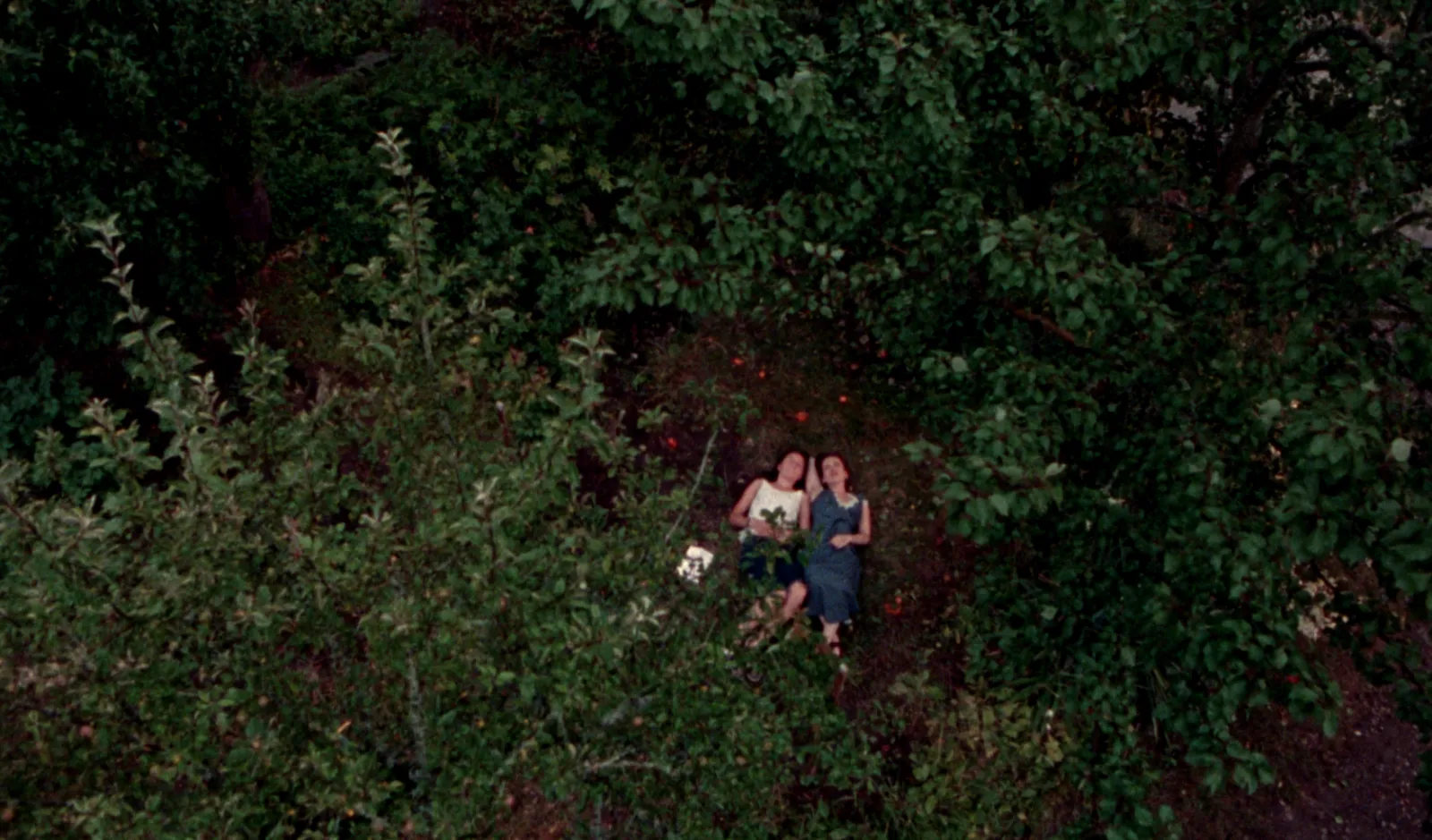
Alžběta Malá and Mia Celestina Ševčíková in Sisters (dir. Luca Pereș-Bota and Nikol Urbanová, 2026)
How did you two begin working together, and how did that lead to your co-directing this short?
Luca Pereș-Bota: We met at FAMU in Prague in 2020 and started working together as co-directors on our first short film, FLOWERBOYS, which was released in 2024. It was a no-budget short film that we shot with two actors and just a handicam. The process was very natural and went very smoothly. Then, for our graduation film, we started figuring out how to work on other projects together and what interested us, and what we could do together. The idea for Sisters came up while were living in Brussels. We were homesick; I was missing Romania, and Nikol was missing the Czech Republic. It was a melancholic time.
Nikol Urbanová: We’d also worked on other short films as co-editors, so the editing process was familiar to us. That’s how we found out that we work well together, that we have a similar taste and want to make similar films. It’s also nice to have someone there who can give you instant feedback and discuss things with you. It feels less lonely when you’re working on and creating a short or feature film, because it can get intense at times.
And what’s the division of labour when it comes to co-direction?
NU: On this film, there was a sort of division, because it’s in Czech. I’m Czech, so I did more of the talking with the actors and discussing the scenes. Luka was more with the cinematographer, discussing the technical aspects of the shoot. But we were both very involved.
“It was interesting to see that the more personal you get, the more universal the story becomes”
You said you were both feeling homesick and melancholic, and that’s where the feeling of the film came from. How did you get from the feeling to the concrete setting and characters of the film?
NU: This story is quite personal to me, to my childhood and growing up. The inspiration definitely comes from my family and from what I missed while living abroad. There was a bit of sadness that I wasn’t there and couldn’t experience my family’s everyday life. The garden is a very typical place in the Czech Republic; many families have a space in a garden colony. Each family can own or rent one. That was always part of my family, too, when I was growing up. The garden was where we spent most afternoons after school or at weekends.
It was quite funny, because when we cast the actresses, all of them had some kind of relationship with a garden, a hut, or something connected to nature. Each experienced the story in her own way. It was interesting to see that the more personal you get, the more universal the story becomes. The garden where we shot the film is my family’s garden.
LP-B: I’d also been to this garden quite a few times, and it feels like an idyllic place, a pause from daily life or the chaos of big cities. I remember going back to my grandparents’ village a few years ago, which I hadn’t seen for many, many years. The place felt like it had changed so much, but I hadn’t been there for so long that you realise that it’s you who changed. The place doesn’t really change that much. I think that’s in the film, in a way. It felt like such a natural story to make together; it came really easily to us.
Nikol, you say that the story came from your family history. What’s the symbolic importance of the sisterly relationship? Apart from the autobiographical aspect, why build the film around that, as opposed to, say, a mother and daughter?
LP-B: I think maybe it’s the fact that two sisters can grow up together and go through life together. There’s a bond you might not have with your mother or father. If there’s a generational difference, there’s always kind of a divide. From what I see of Nikol and her sister’s relationship, there’s this unshakable bond, and I think that’s what drew us to the project and to this specific relationship.
NU: Maybe being siblings is a different kind of relationship than being friends, because you’re very close to someone who has probably experienced most of what you’ve experienced. You experienced it together, but at the same time, you’re not the same age. Then you get into situations where you feel like you want to grow or leave, but you don’t want to leave the other person behind. It’s quite difficult in terms of growing up and becoming an adult. That was also, I think, the inspiration for the story.
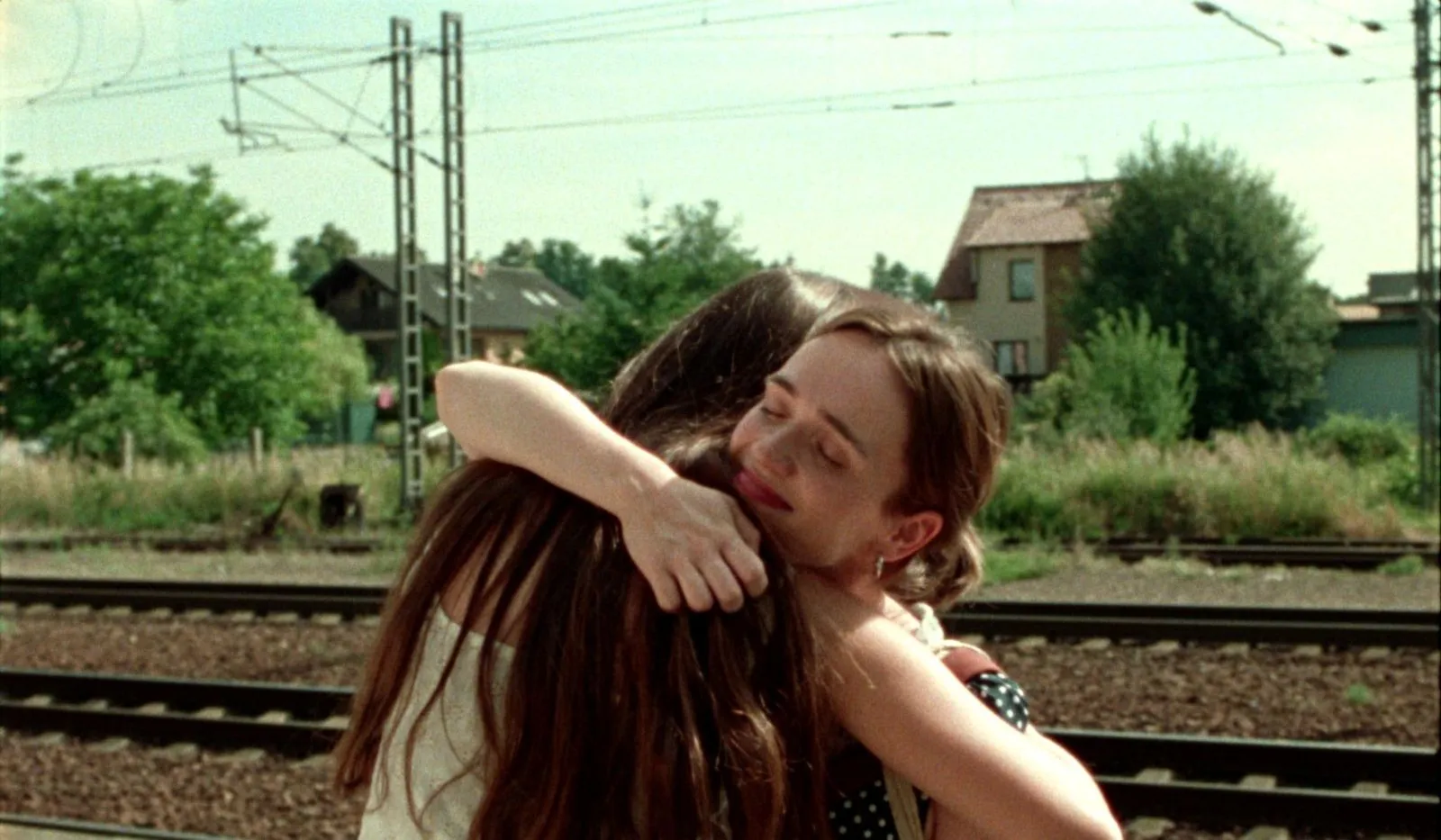
Alžběta Malá and Mia Celestina Ševčíková in Sisters (dir. Luca Pereș-Bota and Nikol Urbanová, 2026)
The 16mm cinematography from Tei Lee is very striking. The format fits the story and setting very well. How would you describe collaborating with Tei?
LP-B: I was supposed to work with him on a different short film a few years ago, but that didn’t go through. Since then, we’ve always been in contact about a future film or project we could work on. When Nikol and I started working on this, we basically had only one choice, and it was Tei Lee. We also met him at FAMU in Prague. I was super impressed with the way he thinks about story and characters, not necessarily about how beautiful an image can be. That’s a specific sensibility and skill that’s very important for cinematographers. He has that, and he was such a joy to work with.
He exudes a calm that calms everyone around him. Even though shooting on film is stressful – you only have, say, six rolls, and that’s about 50 minutes in total over five days, so you have to be really sure about what you’re going to shoot. You rehearse before shooting and create a workflow that suits the film and, most importantly, the actors, so that you can build a scene and shoot around that. We hope to work with him in the future, although he’s in South Korea, which makes collaboration a bit difficult. You never know.
NU: He flew over specifically for this project, so we’re very grateful he took the time. We love working with him. The rest of the crew felt like a small family. It wasn’t a big crew, but everyone seemed very happy to be there, and it wasn’t very stressful. It’s important for us to create a nice atmosphere on set, because that’s the priority, to be honest. Of course, the finished film is also a priority, but you have to be able to work and love working on set.
Watch Sisters on Klassiki until 3 December as part of our partnership with FilmFestival Cottbus 2026.


 Go back to journal home page