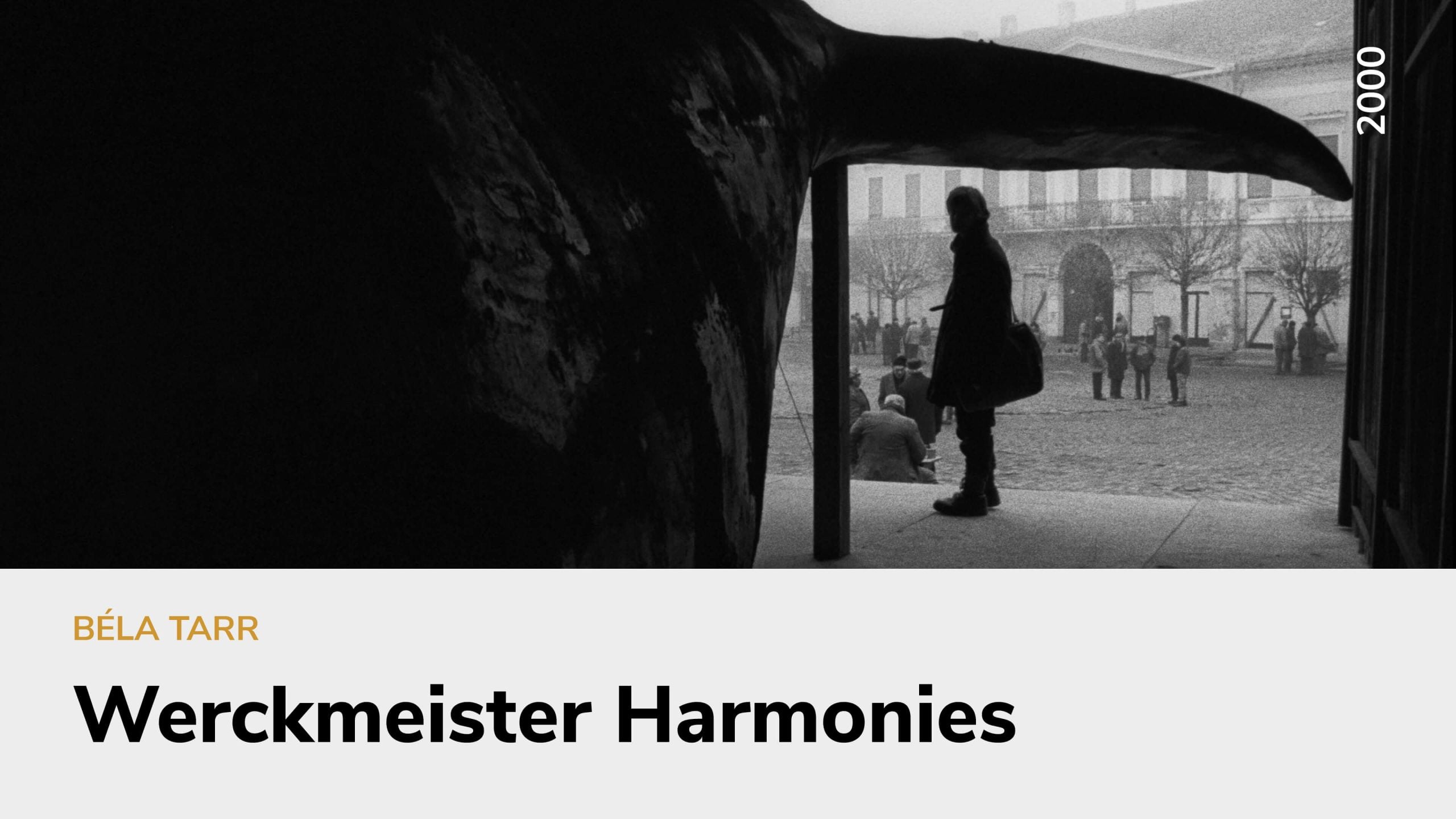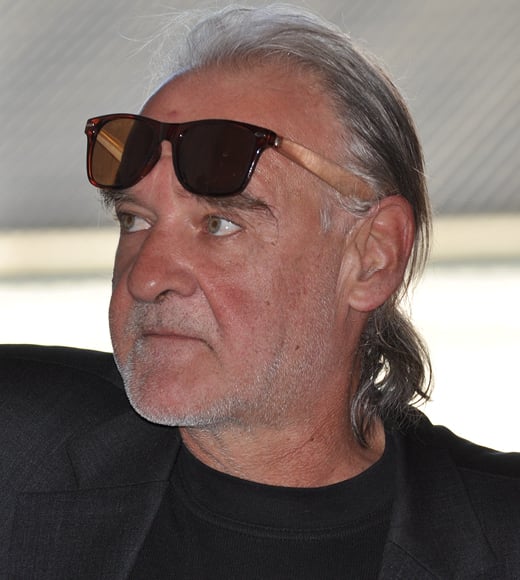
Béla Tarr is a Hungarian filmmaker and artist. One of the most celebrated and distinctive directors of the late twentieth century, his best-known work is characterised by extremely long takes, black and white cinematography, and bleak philosophical outlook. Tarr made his name with cinéma verité “social cinema” pictures under the influence of the so-called “Budapest school” of nonfiction filmmaking. His 1979 debut feature, Family Nest, was followed by The Outsider and The Prefab People (both 1982). Following political pressure, Tarr retreated from cinema until he returned in 1988 with Damnation, his first “mature” film and the first to feature a quartet of long-term collaborators: his wife, the editor (later credited as co-director) Ágnes Hranitzky, composer Mihály Víg, and novelist and screenwriter László Krasznahorkai. Tarr’s international reputation was confirmed by his epic adaptations of László Krasznahorkai’s novels Satantango (1994, a seven-and-a-half hour film) and Werckmeister Harmonies (from The Melancholy of Resistance, 2000). Following his Georges Simenon adaptation The Man from London (2007) and The Turin Horse (2011), Tarr retired from filmmaking. He later established a film school, film.factory, at the Sarajevo School of Science and Technology and has produced short films and multimedia pieces for exhibitions in Amsterdam (2017) and Vienna (2019) as well as acting as executive producer on the films of several of his former students.