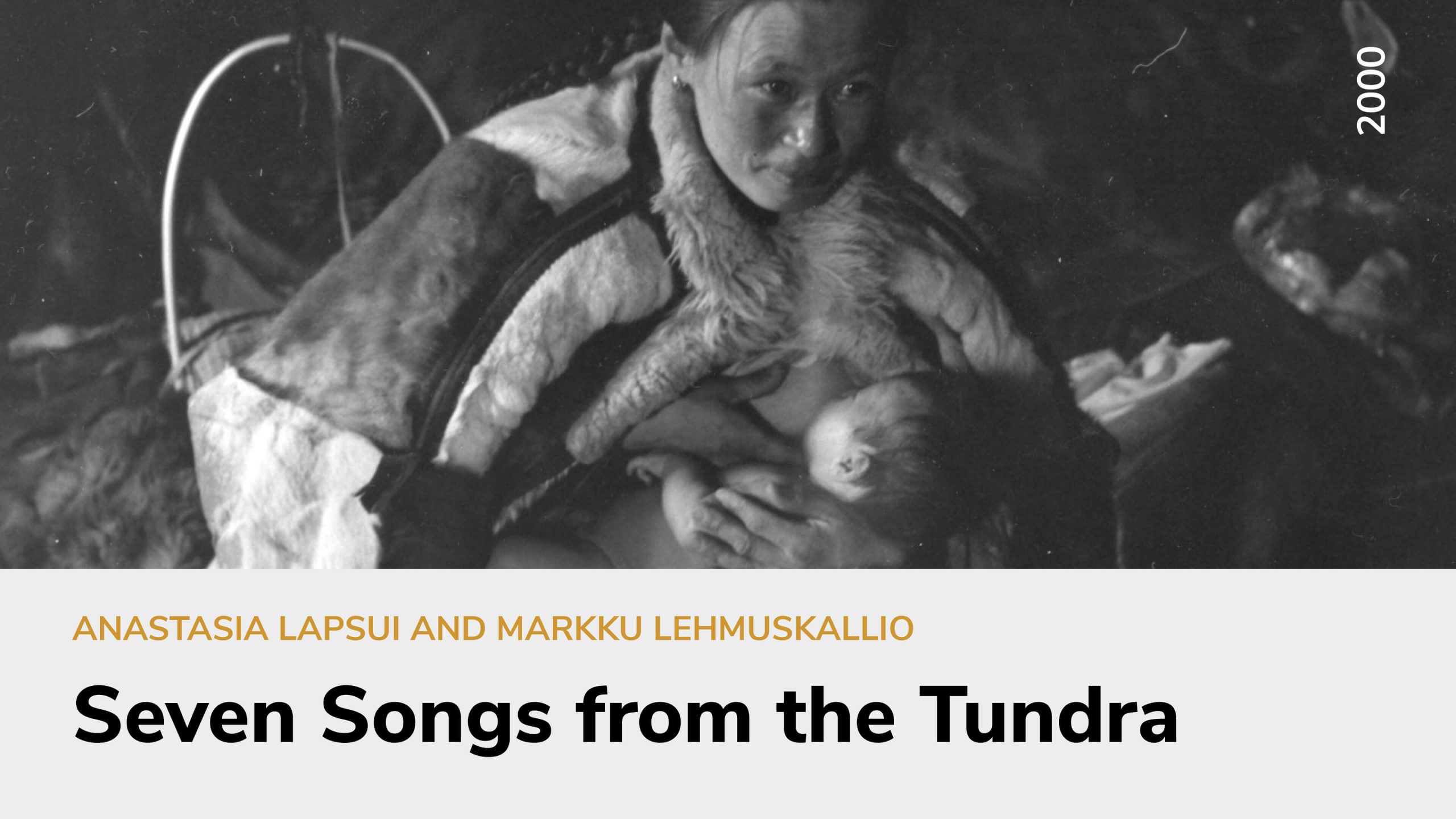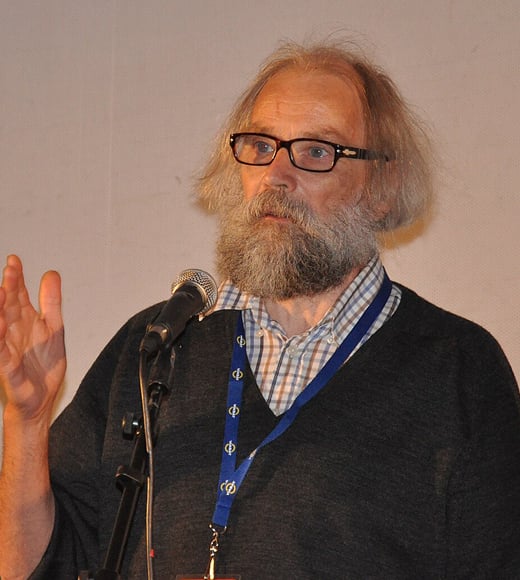
Markku Lehmuskallio (b. 1938) is a film director and cinematographer from Finland. His entry point into filmmaking began while working as a forester in Finland, where he created instructional films for farmers to teach them how to plant pine seedlings. Lehmuskallio met the Nenet filmmaker and journalist Anastasia Lapsui while working on his 1992 film I Am. The pair went on to develop a distinctive co-directorial practice that blends documentary and narrative filmmaking, incorporating traditional folktales and spiritual customs with observational attention to the everyday lives of their subjects. While they have made films about a number of Arctic Indigenous peoples, including the Sami native to northern Finland, much of their work has been concerned with the Nenets and other Indigenous groups from Arctic Russia: the Chukchi, the Nganasan, and the Selkup. Their films include Tsamo (2015), Eleven Images of a Human (2012), Travelling (2007), Fata Morgana (2004), A Bride of the Seventh Heaven (2003), Shepherd (2001), and Seven Songs from the Tundra (2000). Lehmuskallio is the recipient of numerous awards including Jussi Awards for Best Short Film (1973), Best Cinematography (1975), and Best Documentary Film (2003); an Honourable Mention from the Berlinale (1980); the Aho & Soldan Lifetime Achievement Award (2002); the Jury Prize Région de Nyon from Visions du Réel (2020); and the Finland Award (1998).