The Care Package (dir. Vera Shysh, 2025)
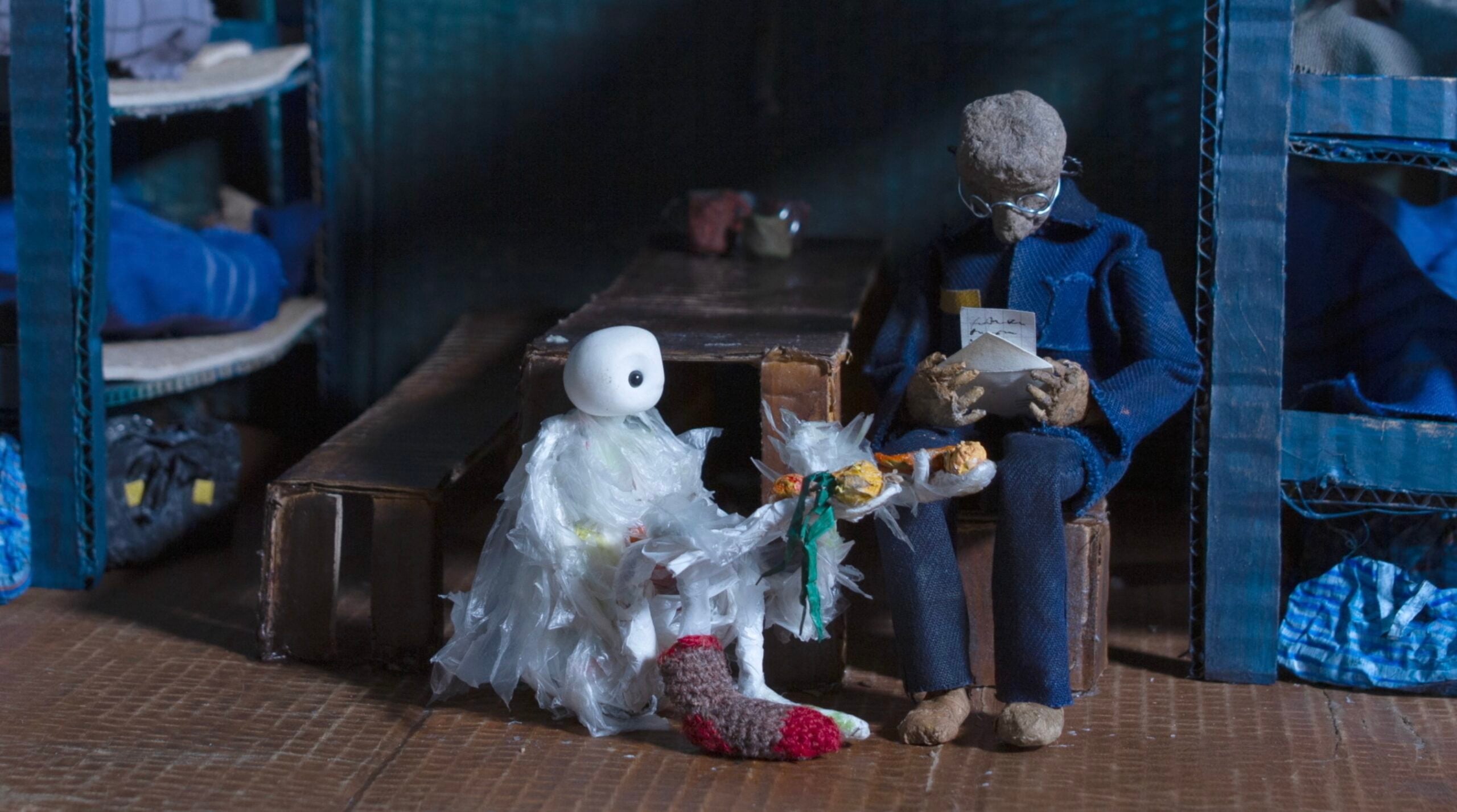
Since the regime was rocked by protests in 2020, political repression in Belarus has reached unprecedented levels. There are currently over 1,000 political prisoners being held in the country’s jails; for the most part, they are denied any right to visitations or phone calls. One of the few comforts available to these prisoners is the peradachka or care package: deliveries sent by loved ones containing carefully arranged selections of clothes and foodstuffs that function as an emotional and material link to the world outside their cells.
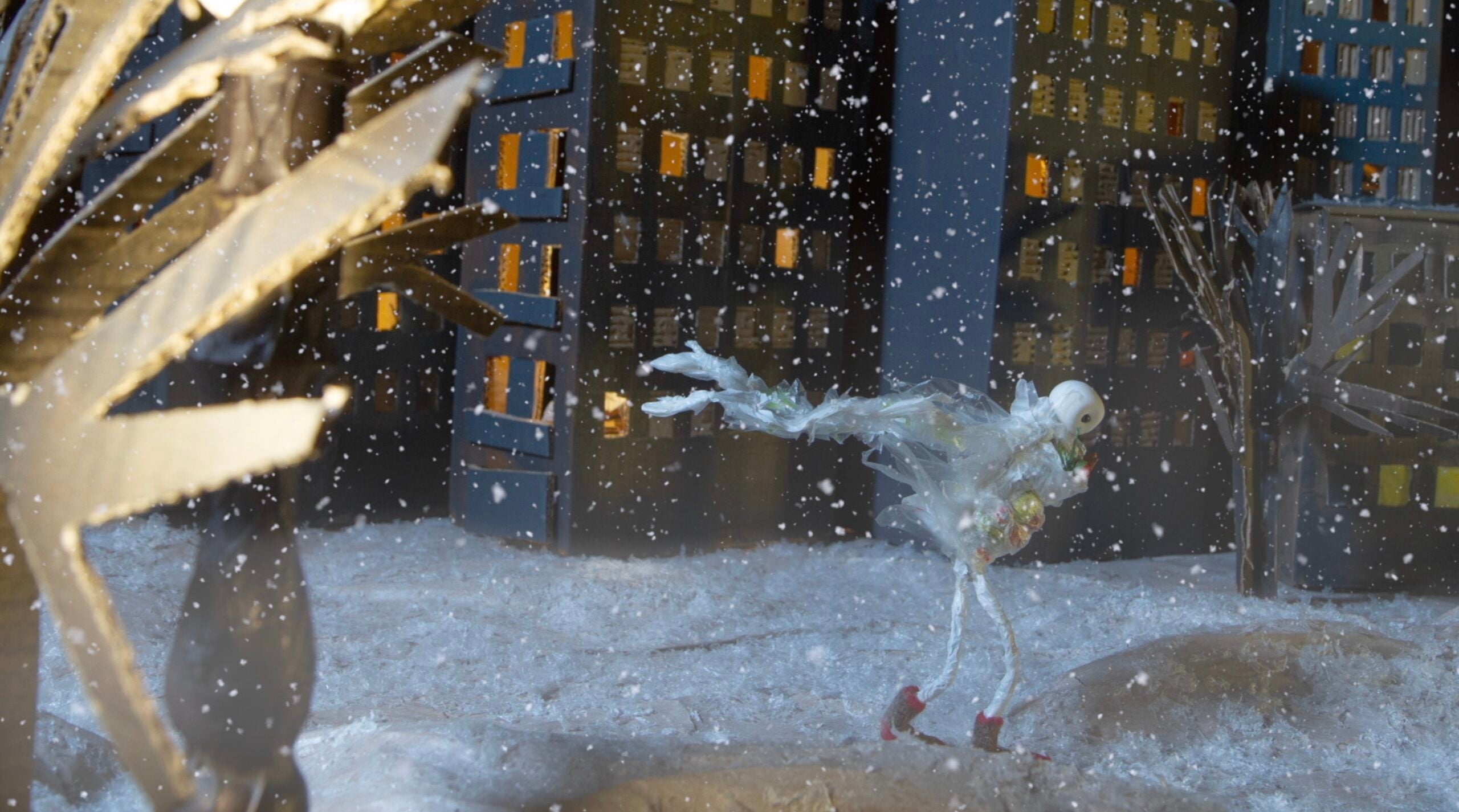
In Vera Shysh’s stop motion short The Care Package, the titular parcel becomes a character in its own right, coming to life as it lightens the harsh world of the prison cell. Based on a letter sent to an imprisoned friend of Shysh’s by their sister, the film juxtaposes the brutality of the Belarusian regime with the tenderness and resilience of its citizens. The Care Package is screening at this year’s edition of goEast Film Festival and screens on Klassiki until 21 May as part of our partnership with the festival. We spoke to Shysh about the world of the political prisoner in Belarus, using stop motion to create a “fairy tale for adults”, and working in the new Belarusian diaspora.
The Care Package (dir. Vera Shysh, 2025)
What exactly is a care package, or peradachka? Why is it such a significant and symbolic item and act in Belarus?
It is a very significant item right now in Belarus, with the level of repression [we’re facing]. Sometimes it’s the only item that connects political prisoners with their families, because often they are deprived of calls and visits. They have special yellow badges on their uniforms; the attitude towards political prisoners is special. So, when someone creates a care package, they try to put as much as possible, to pack it with the warmth of home, to make their friends feel cared and thought about. A close friend of mine was sent to prison for political reasons. His sister wrote him a letter as part of a care package, and that’s how I came to this story. Since 2020, many people have been repeating and repeating this [process of sending care packages] – it’s the reality now in Belarus.
Presumably the care package is a precarious thing, too. The prison authorities must block a lot of attempts.
There are a lot of special rules concerning what you can and cannot put in a care package, and everything that goes to a prison goes through controls: some fruits and vegetables are prohibited, every candy has to be unwrapped. I know this story through a lawyer in Belarus who was brave enough to take political cases; she’s now outside Belarus, of course. She told me this story about a tangerine. In Eastern Europe, the tangerine is a symbol of Christmas. At the time, it was prohibited to include tangerines in care packages, but they risked it and the prisoner managed to hide the tangerine and get it to the cell. They divided the tangerine between all the cell mates and kept the skin to give the scent of Christmas. It’s very touching, the way people unwrap every candy, place everything in plastic bags. When I was thinking about the character [of the package] and how it could look, of course it came down to plastic bags – it’s just something very comforting.
Most people don’t know much about Belarus; in this current political situation, it is related to the Ukrainian war, and how our regime allies with Russia. But behind that, there is a story of resistance
You mentioned that one of the motivations for the film was this story of the sister of a friend of yours. How did that one instance of the broader phenomenon in the country inspire you to make this work?
Well, in 2020, members of my family were also arrested during the protest. It was a huge thing for us, but then [people were only being sentenced to] 10-15 days in prison. Many people were arrested for wearing a white bracelet, which was a symbol of the protests, or just for being outside. I myself was at risk of being caught many times. Many people during those protests would have a special bag prepared in case they ended up in prison: hygienic items, toothbrushes. Lots of friends and friends of friends went through that. In Belarus, everyone knows what is happening. The country is under repression that hasn’t been this bad since Soviet times. It’s much worse that in Russia: the number of political prisoners has always been highest in Belarus, usually around 1,500 people [at a time].
This story that I read was so touching – it was probably the only thing that kept me alive and normal [after I had left Belarus]. I felt that it was very important to share it, because it wasn’t aggressive or political, it was just a story about this love which gets through behind bars, packed in plastic bags.
You were talking before about the emotional and symbolic importance of the material in the package; the way that the prisoners related intensely to simple items like a tangerine. With that in mind, stop motion seems like a really appropriate format: it’s so tangible, you can see and feel the artist’s tactile relationship to the material on screen.
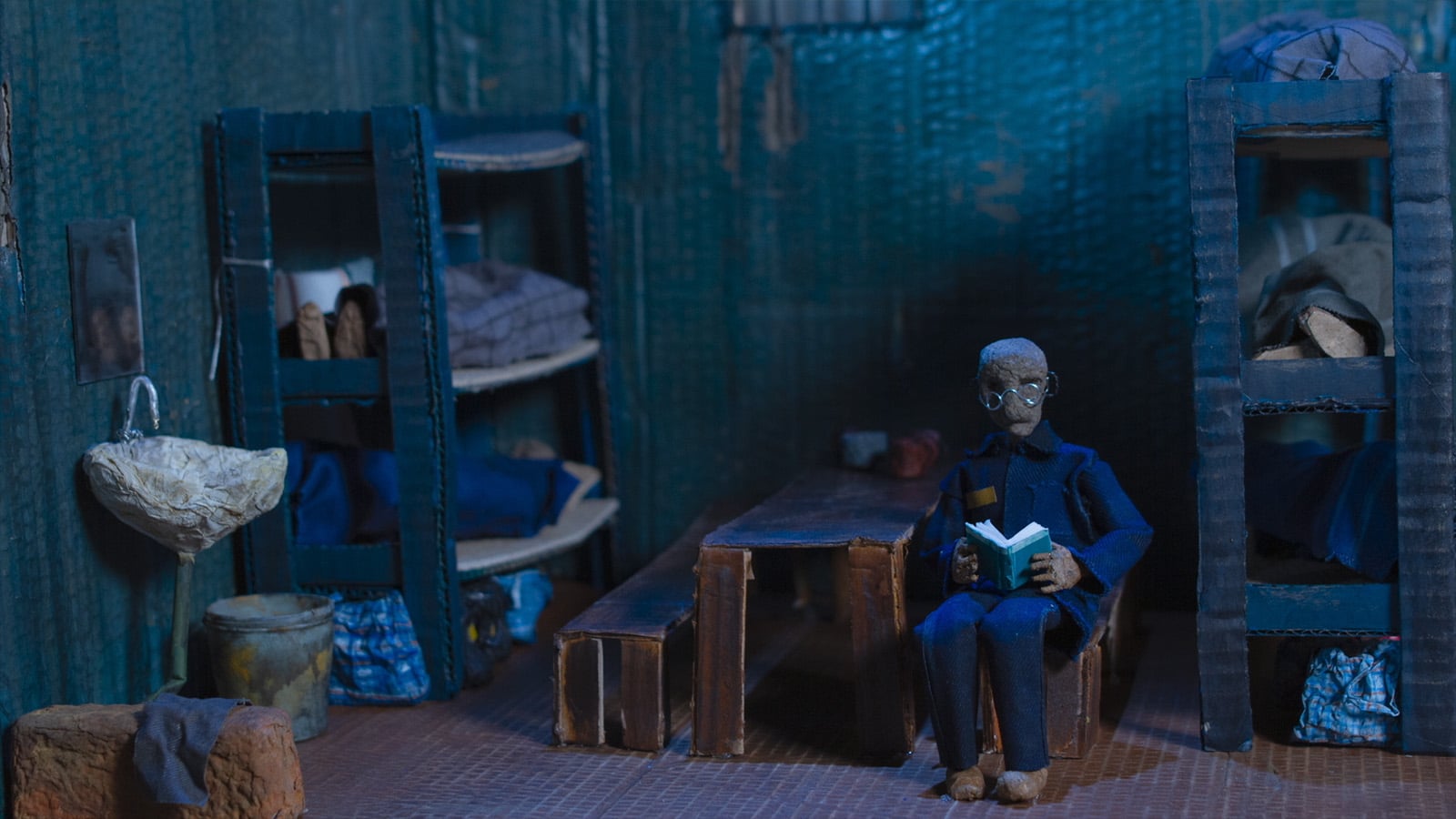
Yes, it was absolutely clear that this story should be done with stop motion and puppets. I couldn’t see another way of making it. Also, when I was making the prison cell, I was using a 3D model of a real cell made by a prisoner after his release. Political prisoners are kept in harsh conditions; the cells themselves are quite harsh – that’s the polite way of putting it. The cell will be for six people and there are ten people in there, people sleeping on the floors. So, I was trying to recreate this atmosphere. I was taking photos of real locations in Minsk that the care packages go through: real prisons, the city. I was using drawings made by real prisoners; we now have this collection of prison art, an online museum.
The Care Package (dir. Vera Shysh, 2025)
You also describe the film as a fairy tale. What does that signify for you?
It was a fairy tale. It was initially written as a fairy tale from the sister to the brother. The text itself was very textural: talking about the hands, the sounds of the onion skins. I wanted to keep it as a fairy tale, not to make any statement or claim there. It’s a fairy tale for adults.
I was reminded while watching your film of Mara Tamkovich’s Under Grey Skies, which we previously covered on our podcast: another film made by a Belarusian artist outside of the country, about a real-life political prisoner. Since 2020, I’ve spoken to a number of Belarusian filmmakers who now live abroad; at Klassiki, we’ve spoken to people behind the creation of the Belarusian Independent Film Academy. I wondered whether you consider your work to be part of a broader filmmaking diaspora – this second Belarusian cinema that’s now produced abroad?
Of course, I know Mara’s works. She was a judge on the panel when Care Package received a special mention at the Northern Lights Festival. There is the Academy, though I’m not related to them; I work independently. The European system is a new thing for us. This film was made on a minimal budget. As to how I feel now, in the Belarusian immigrant artistic scene, everyone dances how they can. It’s been six years [since the 2020 protest movement], so it’s not so long. Some institutions work for a while and then collapse. I see myself for now as an independent filmmaker. This wave of immigrants from Belarus, since 2020, this is my new reality. I can’t go back now, so I’m trying to find a new way of working in an international context. But it’s not easy.
Sharing this story for me is very important. My country is going through very dark times. Most people don’t know much about Belarus; in this current political situation, it is related to the Ukrainian war, and how our regime allies with Russia. But behind that, there is a story of resistance. Many, many people sacrificed years of their lives, convicted for political reasons. My goal was to share that other side of Belarus which isn’t that visible now. We have two Nobel Prize winners from Belarus: one is in exile [author Svetlana Alexievich], and one was sentenced to ten years and only recently released [human rights activist Ales Bialiatski]. It’s my privilege to be able to share this side of the current history of Belarus.
Watch The Care Package on Klassiki until 21 May as part of our partnership with goEast Film Festival 2026.
You can find out more about political prisoners in Belarus from the Viasna Human Rights Center here.


 Go back to journal home page