Inside Amir (dir. Amir Azizi, 2025)
The Golden Apricot International Film Festival, which runs every summer in Yerevan, Armenia, is one of the most prestigious films festivals in the Caucasus. Each edition plays host to the GAIFF Critics Campus: an extensive workshop run by critic and mentor Leonardo Goi that provides emerging film writers a vital entry point into the festival circuit. Each year, a select cohort of young critics travel to Yerevan to hone their craft, discussing and reviewing the most exciting titles from the Caucasus and beyond.
After hosting writing from the Campus during the 2023 and 2024 editions, we are delighted to be heading back to Golden Apricot this year with another batch of exclusive reviews from the festival’s 2026 programme. This year’s offerings flit between the Caucasus and the Middle East, with films about the ethnic cleansing in Nagorno-Karabakh, the Armenian diaspora in Georgia, the politics of filmmaking in Palestine, and three titles from Iran that capture the turbulent nature of life in an aggressed and aggressive regime.
Gone but still bleeding: Sanaz Sohrabi’s An Incomplete Calendar
Volodymyr Chernyshev
What binds culture, politics, and oil together? At the very least this: in the glossy blackness of these three substances, people may glimpse their own dim silhouettes. In these equally sticky, slippery, thoroughly toxic matters all our evils show through. And beyond this shared murk, the three feed on one another. An encyclopedia of these blacknesses’ affinities and entanglements, rendered in the idiom of the video essay, is what Iranian artist and filmmaker Sanaz Sohrabi offers us in An Incomplete Calendar.
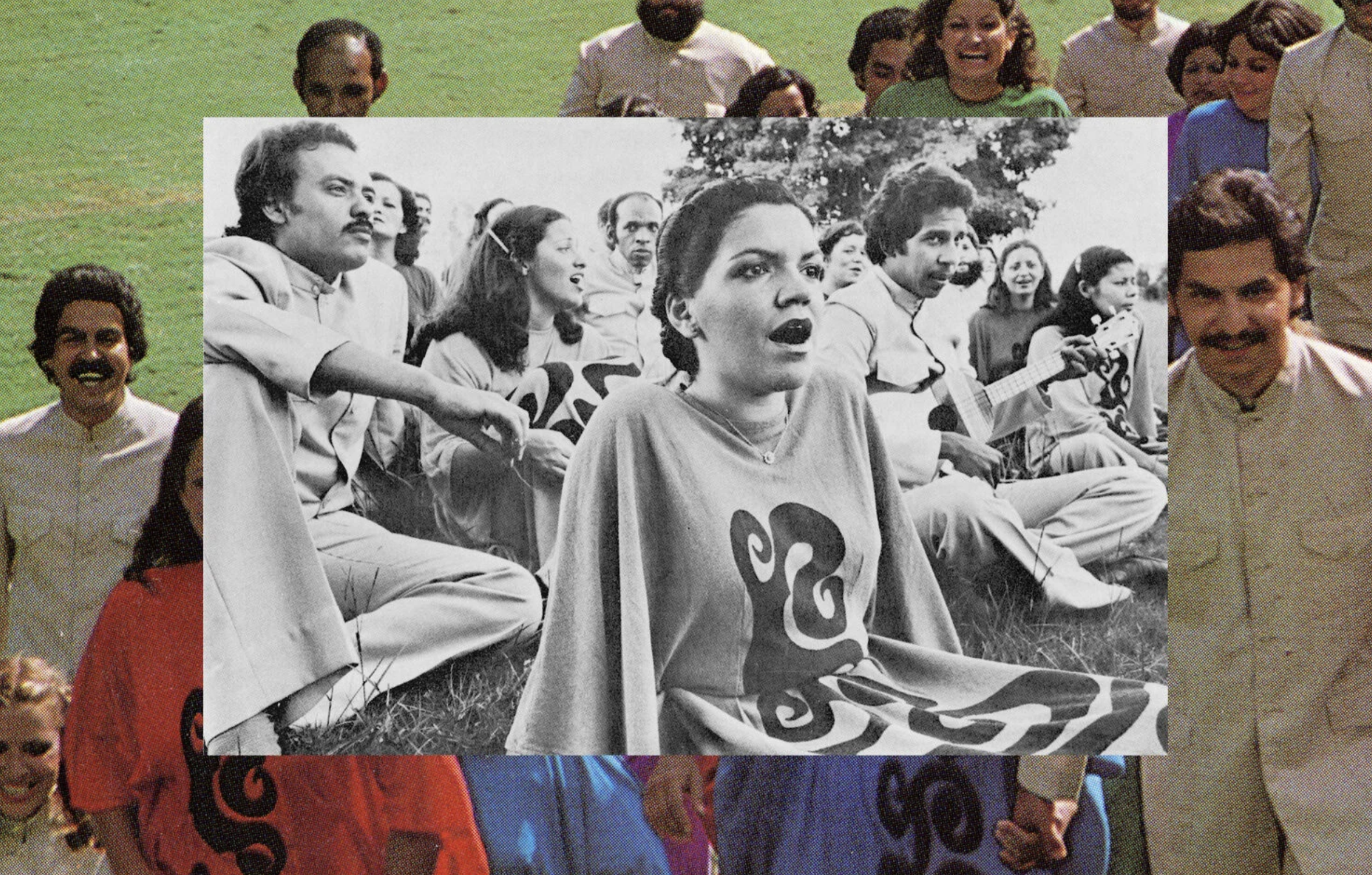
Parading forgotten artifacts – leaflets, envelopes, stamps, magazines, songs, artworks, archival footage – Sohrabi tells the story of OPEC: how the Global South’s struggle to escape the colonial extraction of the North, to build a family of cultural and geopolitical solidarity, shattered against the brutal reality of things left unsaid, leaving only fragile shards behind. The story’s guide is a forgotten Venezuelan record, pressed in vinyl – that is, in petroleum – in 1980, on which the university choir of Caracas performs member states’ folk songs from phonetic transcriptions, scarcely grasping the meaning. Students singing someone else’s anthems of unity, pressing lovely sounds into a petrifying crude oil – one could hardly find a more profoundly exact image of the twentieth century.
An Incomplete Calendar is a beautiful, remarkably chipped audiovisual monograph, building connections beyond the reach of textual syntax or the syntagms of speech. Its method holds Mikhail Romm’s monumental political vision, Esfir Shub’s faith in the document’s interpretive power, and Frank Capra’s propagandistic (in the best sense) plasticity. But this melancholy gaze lies closest to Godard and Marker: to their gift for turning warehouse remainders into private memory, where behind every frame of old newsreel beats the pulse of an epoch gone but still bleeding. Perhaps that is the finest thing an archival essay-film can offer us today.
Volodymyr Chernyshev is a film critic, scholar, and contributor to major Ukrainian publications such as Ukrainska Pravda and LB.ua.
An Incomplete Calendar (dir. Sanaz Sohrabi, 2026)
How to build a life: Marlene Edoyan’s A Fire There
Mane Harutyunyan
Deliberate. Meditative. Poetic. Rather than relying on dramatic plot twists, with A Fire There Marlene Edoyan crafts an impressionistic portrait of an Armenian diasporic community in rural Georgia. Vibrant vignettes steeped in melancholy become the backdrop against which three young men carve their paths, and the film asks real patience of its viewers, unfolding as something closer to a string of resurrected memories than a three-act drama.
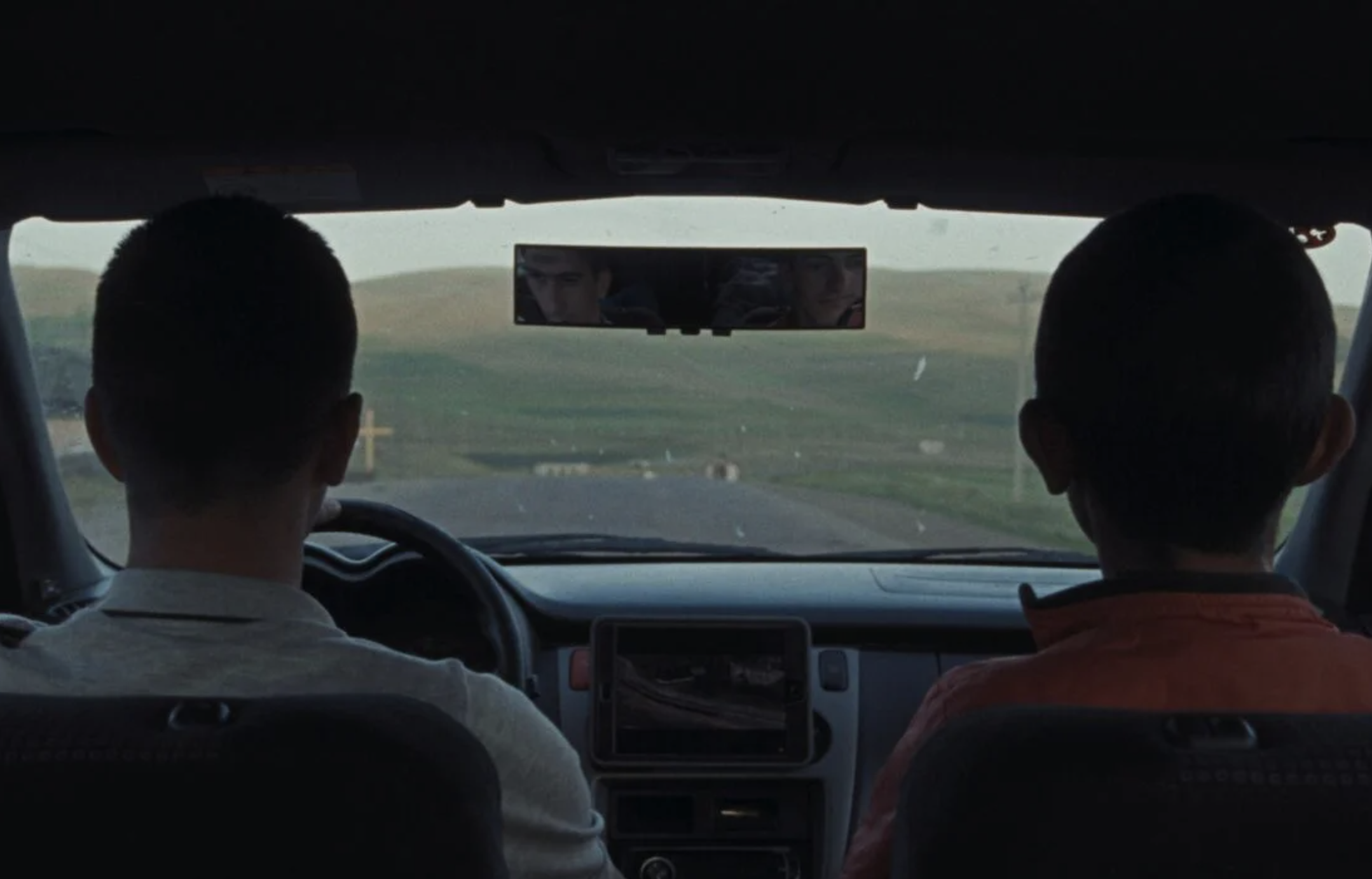
Edoyan synthesises the central conflict in two contrasting moments. One scene follows the three youngsters as they drive through the village hoping to meet some girls; another finds them around a bonfire discussing politics, emigration, and where in the world they might settle. It is in this contrast that A Fire There locates its emotional core. Edoyan deftly captures the dilemma of being young and hopelessly lost, where the longing for love goes hand in hand with a search for identity, home, and a future.
Beyond its coming-of-age trappings, the documentary doubles as a rendezvous with Armenian culture. The village itself teems with old Armenian traditions and relics of the Soviet era. Edoyan shows a keen eye for ancient rituals: sheep farming, women washing traditional rugs in the river, children celebrating the traditional festival of Vardavar, and coffee grounds read in the hope of hearing, “You’ll have two unexpected achievements.” Perhaps the film’s greatest stylistic success lies in the way Étienne Roussy’s cinematography captures these moments. Rather than embracing the restless handheld style commonly associated with documentaries, the camera remains composed and patient, immortalising landscapes and the creatures roaming them through painterly shots.
With A Fire There, Edoyan redefines documentary storytelling through a cinematic language so meticulously crafted it often feels like fiction, revealing the form’s extraordinarily expressive potential. Beneath those elegant compositions lies a portrait of a generation searching for where – and how – to build a life.
Mane Harutyunyan is a film critic with background in animation, currently interning as a pre-screener at the Savannah Film Festival, and always on the hunt for soul-crushing movies.
A Fire There (dir. Marlene Edoyan, 2026)
Projecting power: Alex Bakri’s Habibi Hussein
Yasmine Chan
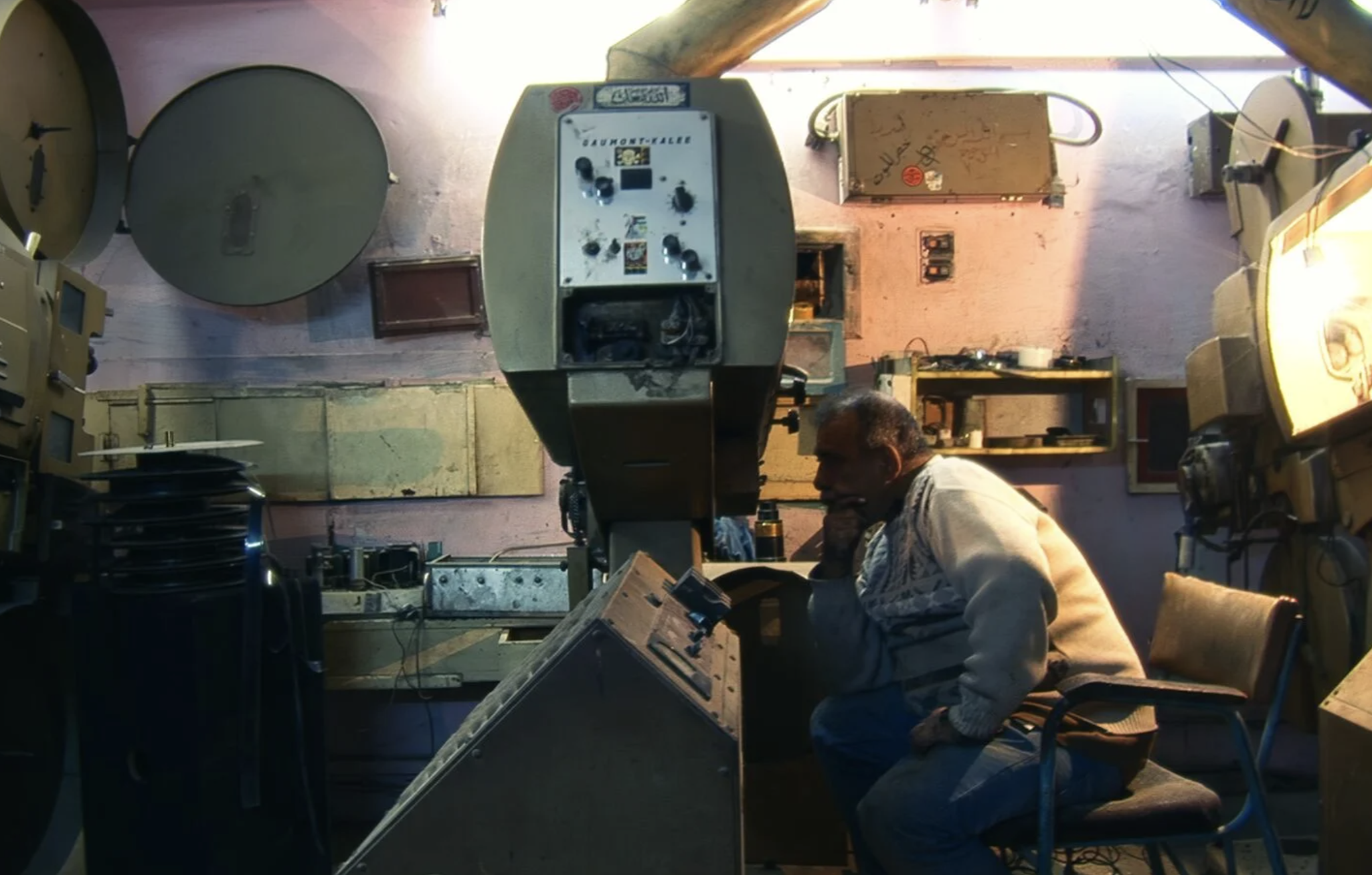
Reopened in 2010 three decades after it was shut, Cinema Jenin in the West Bank was restored under the initiative of German filmmaker Marcus Vetter and a group of Palestinian and international volunteers. On the surface, Alex Bakri’s Habibi Hussein documents a project that celebrates the magic of cinema. We follow the titular Hussein Darbi, a film projectionist with over 40 years of experience, as he travels across the country to gather components for a non-operational projector. But as the film progresses, Bakri’s criticism of the cultural imperialism and exploitation inherent in the renovations comes fully into focus.
The Cinema Jenin project initially opted to source local materials whenever possible, claiming that only technical equipment would be imported from Europe. However, as Vetter told the crew and press several times, Europeans are supposedly more advanced, and Palestinians always on the receiving end. Yet the film juxtaposes these condescending remarks with scenes that underscore the Palestinians’ diligence, slyly turning the tables on Vetter. More astutely, by structuring the film such that this revelation comes after the audience has already formed a connection with the endearing Hussein, Bakri makes it impossible for viewers to ignore the blatant power imbalances.
The exploitation is most apparent with Hussein, whose efforts warrant only a vague promise to be prioritised for employment afterwards. As the man remarks, the town is “only good for strangers” and locals “can’t find their bread in it.” The asymmetries are brought to light on the cinema’s opening day, when, behind a barbed wire fence, a local watches foreigners relaxing on the premises. Originally the cinematographer of Vetter’s own inspiring documentary, Cinema Jenin: The Story of a Dream (2011), in Habibi Hussein Bakri reveals how power and competing narratives can infect a seemingly harmless peace project.
Yasmine Chan is a film critic and film programmer based in the Netherlands whose writing explores cinema through social, cultural, and political perspectives.
Habibi Hussein (dir. Alex Bakri, 2025)
To film and to endure: Comes Chahbazian’s Here, Elsewhere
Anahit Poghosyan
Given the freshness of the collective trauma, documentaries about the 2020 Artsakh war and the subsequent forced displacement of the indigenous Armenian population often tread a fine line between authenticity and sensationalisation. Many filmmakers have crossed it. Belgium-based, Armenian-by-descent Comes Chahbazian’s Here, Elsewhere, however, takes a different path. The self-portrait of a family – Artsiv, Tatev, and their five children – exposed by the amateurish yet intimate lens of a smartphone, prunes out political polemics, laying bare in diary-like sequences the unvarnished reality of a single household and by extension the fate of an entire nation.
Here, Elsewhere captures the family’s hometown, Stepanakert, as though frozen in time. The capital of the Republic of Artsakh has become an isolated, anachronistic island. Chahbazian entrusted his subjects to film themselves during and after the blockade imposed by Azerbaijani forces, and the documentary finds them as they try to make ends meet with dignity, cope with the war’s aftermath, and brace themselves for the loss of their motherland. Though Artsiv and Tatev never intended to be filmmakers, the stylistic differences between the shots hint at their gradual refinement: some are unplanned, chaotic, raw; others subtly “staged,” static, symmetrical. Oscillating between being in front and behind the camera, they manage to create an emotional portrait of resilience, manifested in their daily routines.
Similar to Shoghakat Vardanyan’s 1489 (2023), Here, Elsewhere is a work that stems from the necessity to document and to reflect. And like that film, it tells a universal story embodied in one family: people who are grieving all while trying to survive in an indifferent world. “What remains,” narrates Artsiv, “is hope that one day we will rediscover our land.” Toward the end of the documentary, the family, already in Armenia, carefully plants seeds in the soil brought from their backyard, and in this symbolic gesture, one can’t help but recall the adage: to plant a garden is to believe in tomorrow.
Anahit Poghosyan is a Yerevan-based film critic, film event organiser, and student at the American University of Armenia, whose interests include comparative literature and translation.
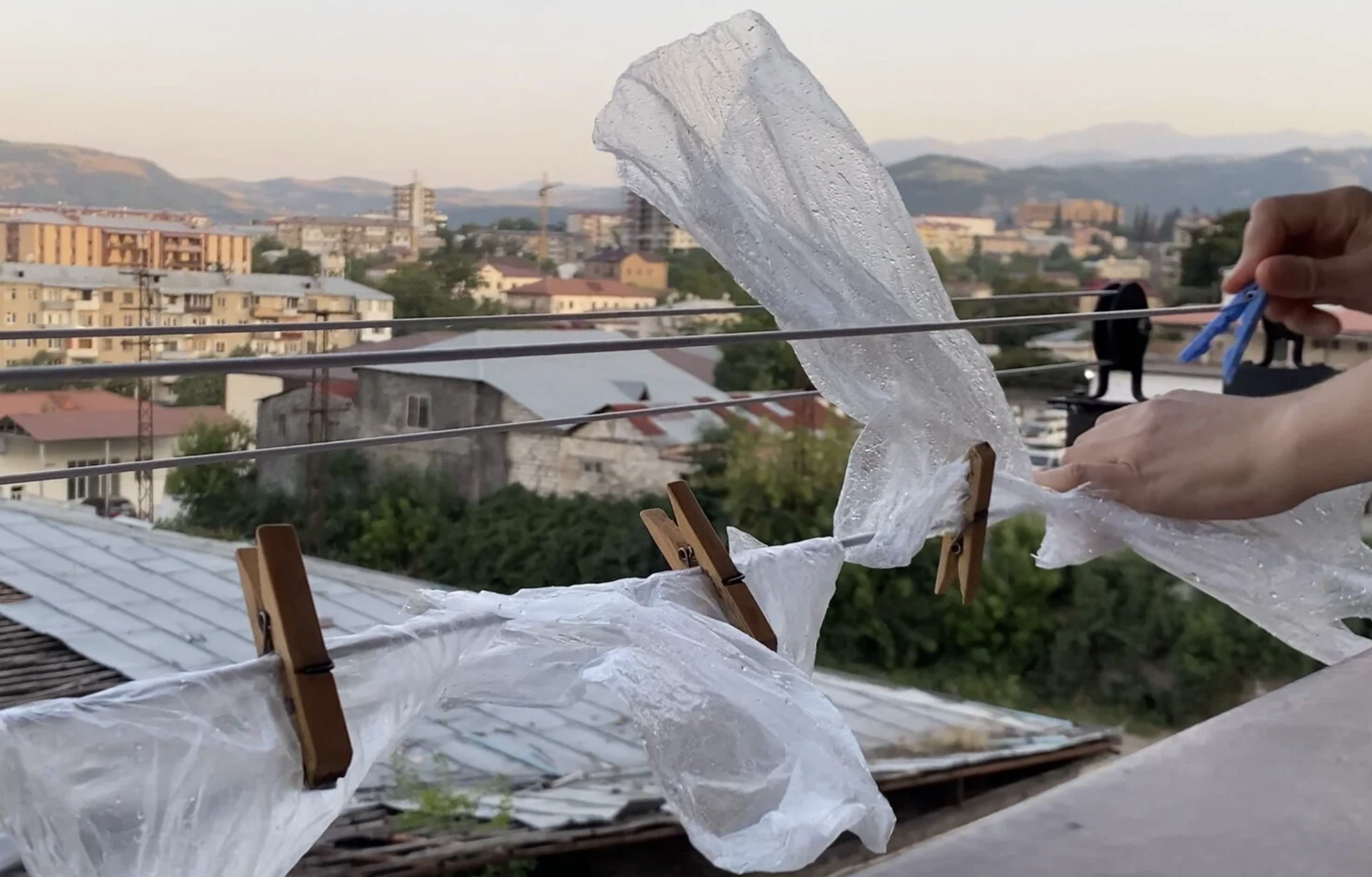
Here, Elsewhere (dir. Comes Chahbazian, 2026)
How rock intoxicated the youth: Gilda Pourjabar’s The Westoxicateds
Magdalena Nieświec
In his 1962 book Occidentosis: A Plague from the West, Jalal Al-e-ahmad wrote that “a westoxicated person is rootless; neither Eastern nor fully Western; aimless and uncritical.” In her 2025 film The Westoxicateds Iranian director Gilda Pourjabar objects to that definition, claiming that the youth who grew up playing Western music around her apartment complex, who exchanged burnt cassettes on back alleys or hid their long hair from police officers, were much more determined and politically engaged than all the other generations that came before them.
The Westoxicateds is a biographical documentary divided into two parts. The first focuses on the Western culture that appeared in Iran in the 1970s and slowly started to “intoxicate” the country’s youth with its values and beliefs – antithetical to those promoted by the Islamic regime. The second centers on the direct repercussions of that cultural transformation, singling out the director’s brother, Siamak Pourjabbar, who went on to become a painter and a cartoonist.
Yet the film is much more than a portrait of two individuals living through tough times. It’s an actual time machine designed to unearth the moments, experiences, and feelings that shaped an entire generation, and eventually gave birth to present-day Iranian society. A mosaic of personal photographs, found footage, archival materials, and even hand-drawn animation, The Westoxicateds weaves family memories into Iran’s own history, and melds Siamak’s artistic journey to the evolution of Western music in the country. As a result, Pourjabar delivers a documentary rich in form and ideas.
Too rich, perhaps. Instead of jumping across five decades of Iranian history in only 87 minutes, the director might have spelled out some of the key historical events she briefly mentions, or discussed in greater detail her career path, which the film’s second part largely sidelines. That said, listening to rock music, personal anecdotes, and watching Siamak’s cartoon characters grow up on the screen makes for an enjoyable experience.
Magdalena Nieświec is a Kraków-based film scholar and critic who specialises in Asian cinema and youth perspectives in socially and politically challenging times.
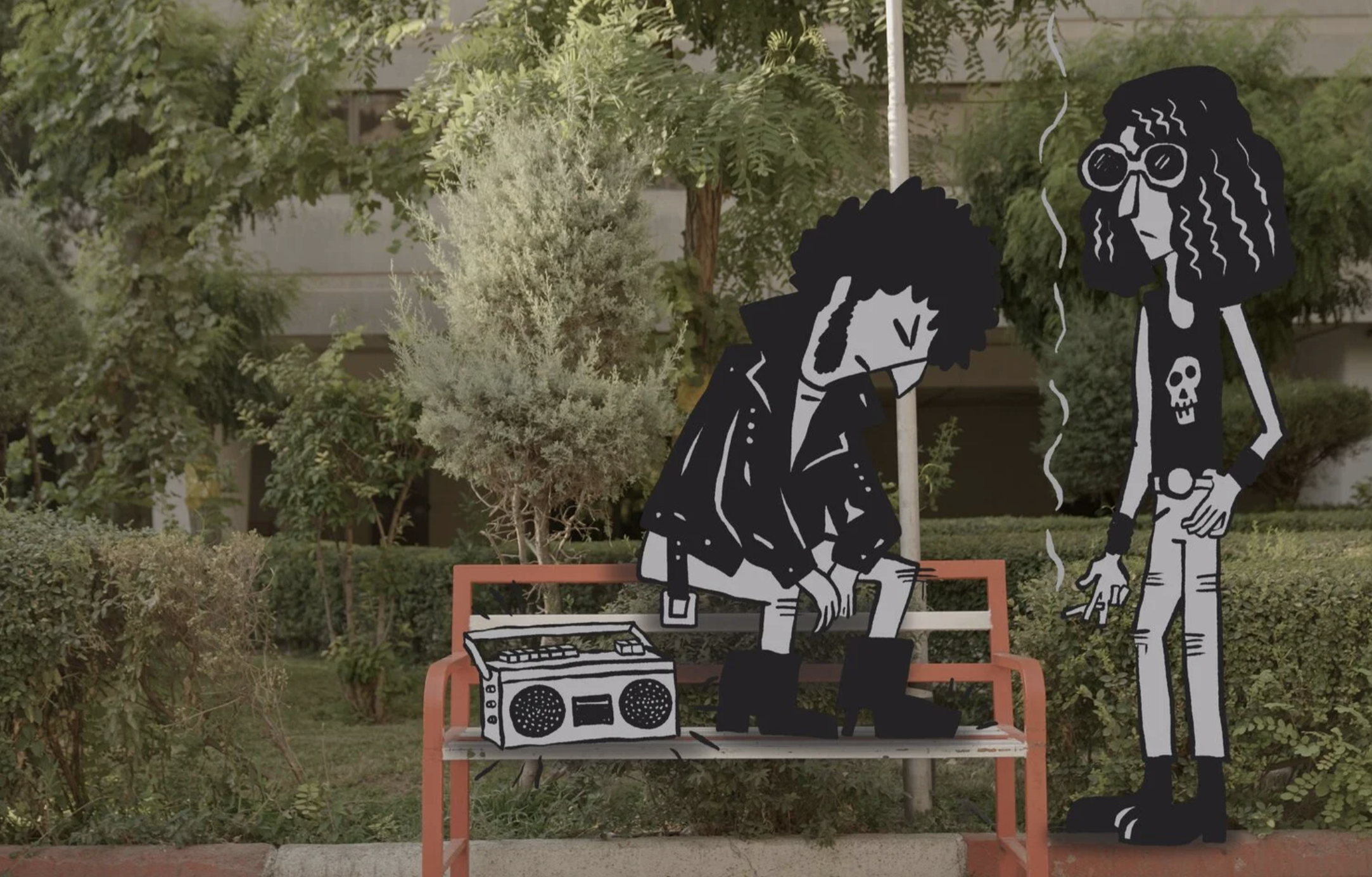
The Westoxicateds (dir. Gilda Pourjabar, 2025)
Love between one-eyed cats: Amir Azizi’s Inside Amir
Ariunzaya Ganaa
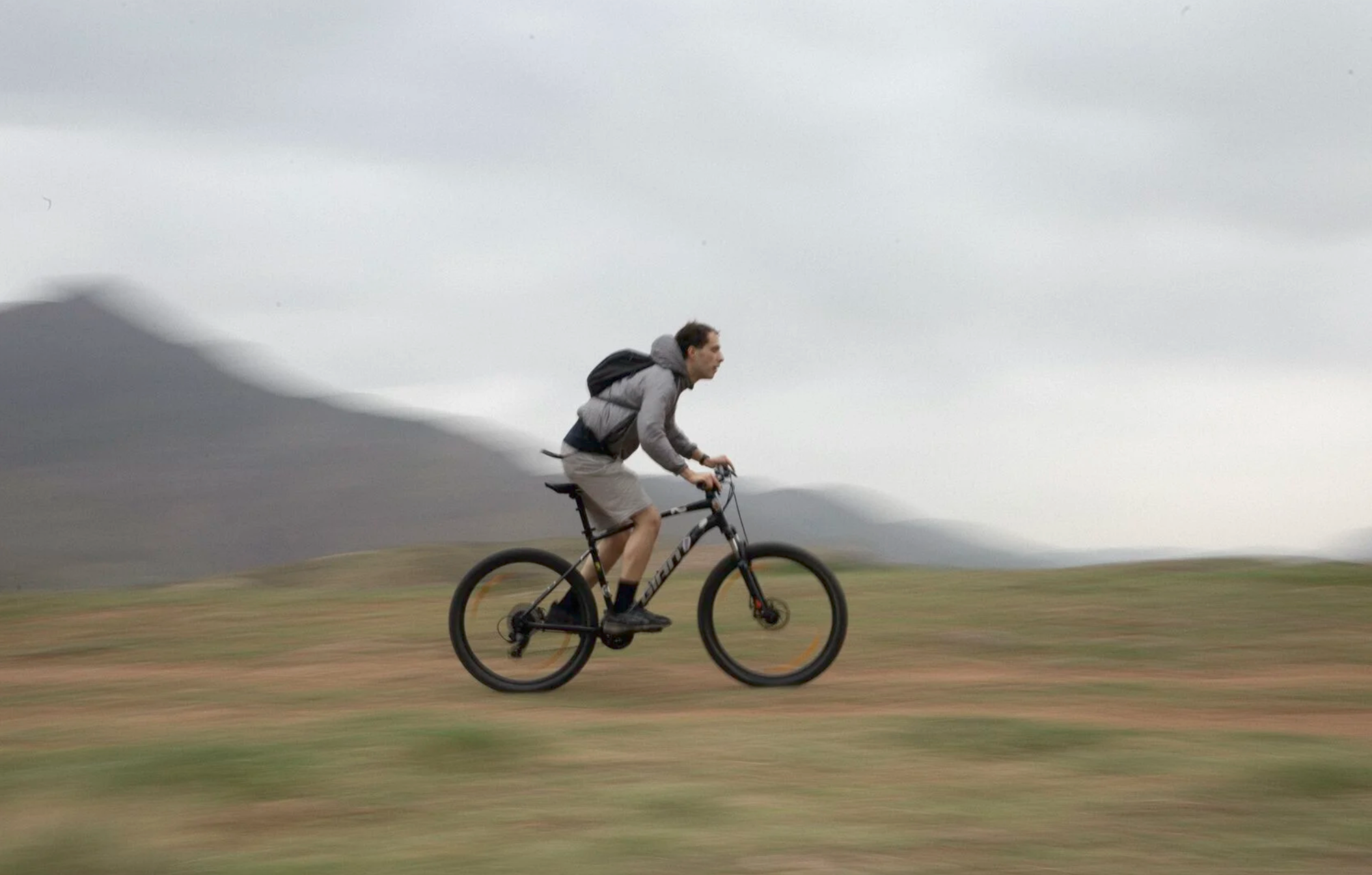
A twenty-something from Tehran, Amir Hossein (Amirhossein Hosseini) works as a delivery man, riding his bike through the city and spending his free time with friends. But his ordinary life is upended by a difficult decision: whether to leave Iran to join his girlfriend, Tara (Hadis Nazari), who has moved to Italy to finish her studies.
Amir Azizi’s Inside Amir sees this personal conundrum as a much broader existential dilemma. Humans are not born with a predetermined purpose or identity; instead, they define themselves through their choices and actions. Through Amir’s uncertainty, Azizi reflects the kind of anxiety described by thinkers like Søren Kierkegaard and Martin Heidegger – the fear of choosing a path without certainty. Amir must decide between comfort and fear, love and separation, and take responsibility for the choice.
The film’s power comes from its singular cinematic language. Azizi does not rush its most emotional moments, and allows everyday spaces and objects to gradually reveal inner conflicts. From the opening shots, doors occupy a significant place within the frame, suggesting different directions and possible paths in life. Recurring shots of curtains, buildings, and bicycles form a visual rhythm that speaks to the film’s concern with movement and stillness.
Amir has two one-eyed cats, which become one of the film’s most memorable symbols. They represent quietness, dignity, and self-sufficiency, but also incompleteness. Like Amir and Tara, lovers separated by distance, they continue living in the present while embodying a void that cannot be filled. As someone currently living in Italy and questioning the meaning of home and belonging, I found Inside Amir deeply personal: an honest reflection on the difficulties of choosing one’s future and the emotional weight that comes with every decision.
Ariunzaya Ganaa is a Mongolian interdisciplinary conceptual artist, cultural writer, and filmmaker, based between Italy and Mongolia.


 Go back to journal home page