Pelikan Blue (dir. Lászlo Csáki, 2024)
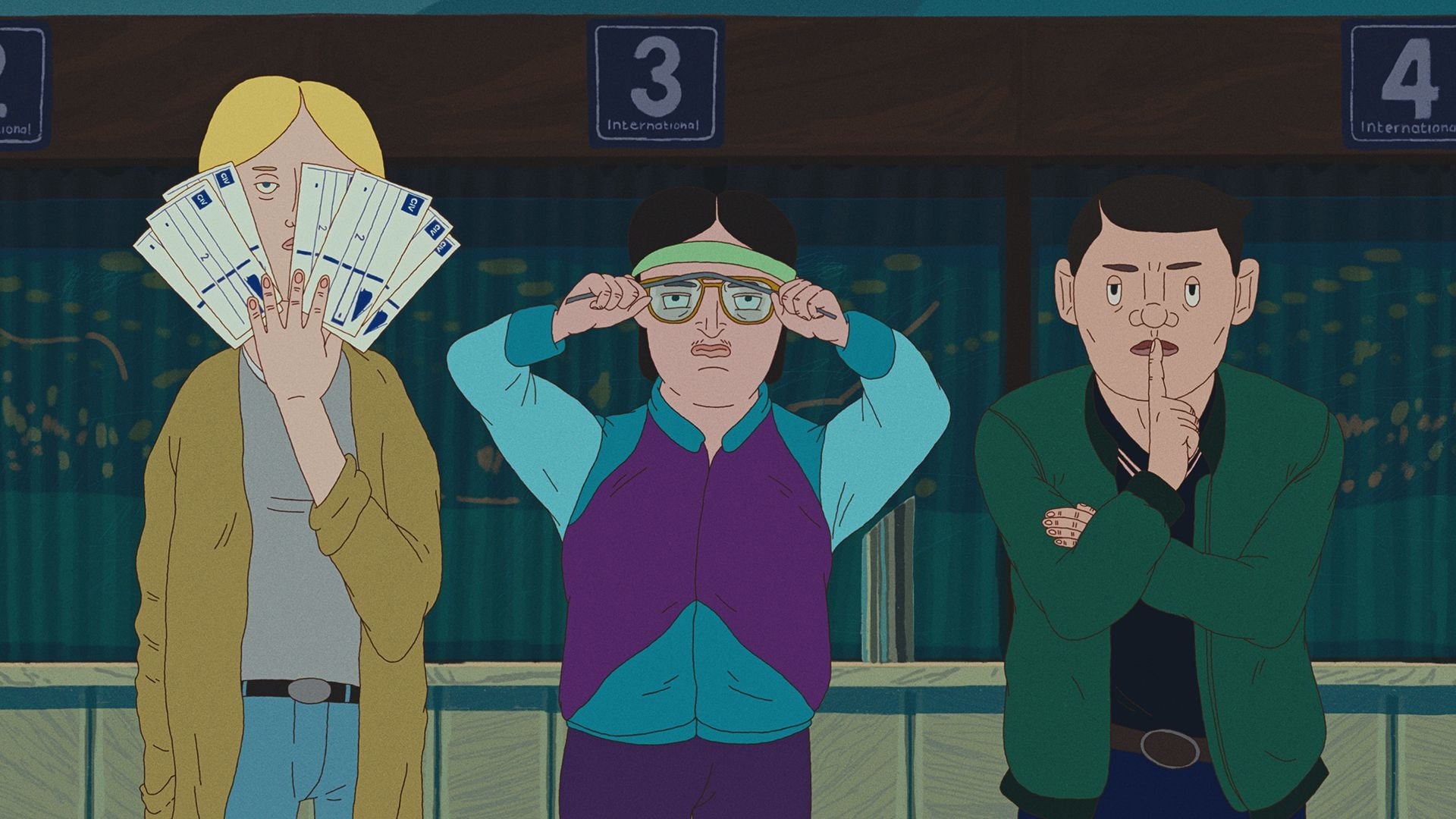
With the fall of the Iron Curtain, new possibilities for international travel opened up for the residents of the former socialist bloc. There was a snag, though: few could afford the tickets. László Csáki’s livewire animated documentary Pelikan Blue recreates the anything-goes atmosphere of those early post-communist years. Based on extensive real-life testimonies of the period, the film depicts a trio of enterprising friends in Budapest who decide to take matters into their own hands in their efforts to head west. An opportunity presents itself thanks to the crude way in which Hungarian Railways produces international tickets: hand-written on paper, with the titular carbon paper used to make copies, protected only by stamps. Our trio quickly devises a scheme involving domestic bleach, indigo paper, and copied stamps to forge their own. Soon they’re enjoying trips across the continent, but the tale doesn’t end there. Before too long, the friends are operating a large-scale clandestine operation that attracts the attention of the authorities, threatening the very friendships that had produced the whole madcap scheme in the first place.
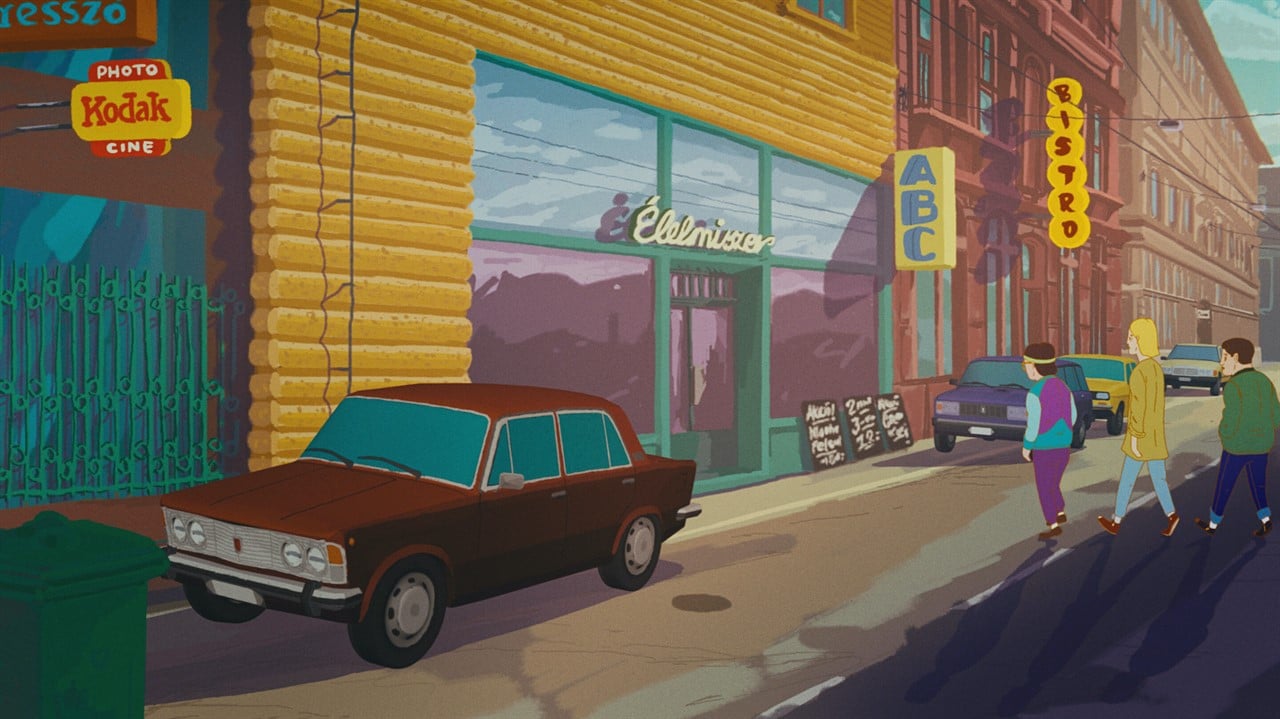
Jumping between two timelines (the eighties and nineties on one hand, the 2010s on the other) and blending basic 2D animation with figurine work and occasional archival footage, Csáki and his team never lose sight of the kind of period details that capture the sense of a world in transition. The soundtrack’s reference to the cavalcade of pop music that emerged in the nineties also helps in this respect. The result is Hungary’s first feature-length animated documentary. To mark our selection of Pelikan Blue as a Klassiki Pick of the Week, running until 26 December, we spoke to Csáki about the film’s long gestation period, transitioning between audio and visual material, and nineties nostalgia. With thanks to producer Ádám Felszeghy for help with translation.
I understand that the work on this film began all the way back in 2006. What was the original conception at the time?
The original idea was a live-action feature film based on the true story of train ticket forgery. However, as we were gathering material and recording interviews with our subjects, we realised that this story is much stronger when told in their own voices and performances. That’s when we decided to preserve the original audio recordings, which led us to create an animated documentary. This filmmaking technique allowed us to combine authentic voices with an animated world.
Pelikan Blue (dir. Lászlo Csáki, 2024)
How much of your own experiences from the period did you bring to the research process – for instance, in those interviews you mentioned with the former ticket scammers and railway workers?
I drew heavily from my own experiences, as I also used these forged train tickets, so I knew the process from the user’s perspective. I was aware of a few things from the forgers’ side as well, but very little – which is why we made this film, to uncover things even we didn’t know. Most importantly, I had personal experience of Budapest in the 1990s and the twenty-something generation of that time, as I was part of it.
At what point did you realise that you wanted to turn this into a feature-length animated documentary, something that had never been done in Hungary before?
At a certain point, it became entirely clear that we wanted to keep the original audio recordings and build the film around their edited versions. From that moment, the possibilities for format and genre narrowed considerably, and the hybrid technique of animated documentary was an obvious choice. This gave us immense creative freedom, as we could combine real audio recordings – essentially documentary material – with elements of fiction and animation in Pelikan Blue.
Animation is a true wild card, allowing us to depict things in a visual style perfectly tailored to the theme and tone of the film. Even straightforward interview setups work better when the figure is portrayed as an animated character instead of being filmed
What was the artistic process of transitioning from the audio material you had gathered to an animated visual world? Could you tell us a little about your work with the storyboard artist Máté Horesnyi, who I believe was a former student of yours?
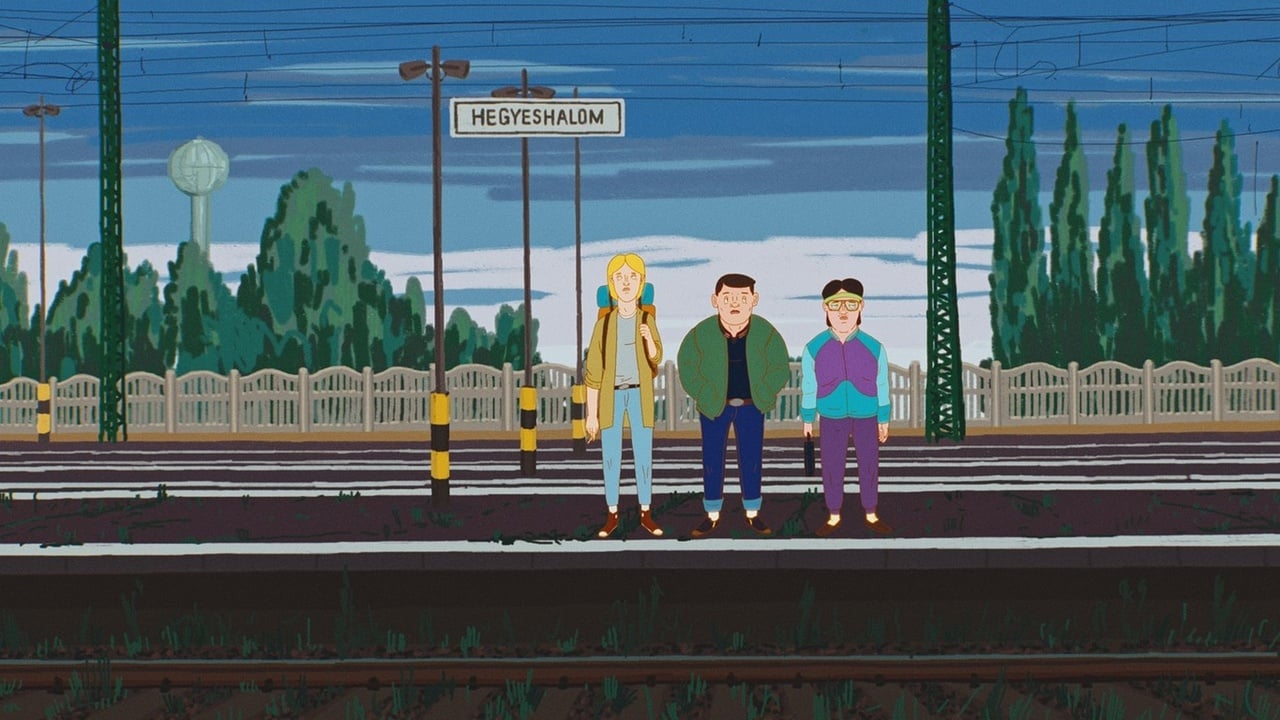
Due to the sensitivity of the topic and the need to protect the interviewees’ identities, we used animation. This allowed us to tell the story honestly and authentically while portraying the characters as drawn figures. These characters only vaguely resemble the original interviewees because Máté Horesnyi, who designed them, didn’t know them personally. Our method involved me sharing a lot about [central characters] Ákos, Petya, Laci, and Rozi with Máté and asking him to listen to the recordings while drawing. He created the animated characters based on their voices, capturing their essence rather than aiming for physical likeness. We didn’t think it was important for the animated figures to resemble the original people. Yet small details – like a nose, ear, or head shape – still match reality.
How do you understand this story as it relates to contemporary Hungary? Is there a nostalgic aspect among Hungarians now when it comes to the 1990s – and do you think that the society you capture in this film explains in some way how Hungary got to its current state?
A lot of people used forged train tickets in 1990s Hungary. For the university-age generation and their friends back then, Pelikan Blue has a nostalgic impact. But even their children, who are in their twenties now, find the film interesting because it reflects the youthful stories (and stumbles) of their parents. The social circumstances and characters depicted in the film are easy to relate to, as the protagonists are ordinary people who could be our friends. Through their stories, we experience both the euphoria of the first years of freedom and the later disillusionment when things took a turn for the worse. Unfortunately, that feeling lingers today, as does the direction we’ve been heading in.
Pelikan Blue (dir. Lászlo Csáki, 2024)
Animated documentaries are becoming more and more common in recent years. As someone who has worked in animation for a long time, what do you think animation has to offer to non-fiction filmmakers?
Animation clearly provides creative freedom to nonfiction filmmakers. It isn’t limited to live-action scenes or archival footage, which can restrict possibilities. Animation is a true wild card, allowing us to depict things in a visual style perfectly tailored to the theme and tone of the film. It enables us to represent things that would be almost impossible to show through live action, adding a poetic quality to the content. It can illustrate, dramatise, and even enhance a simple interview. Even straightforward interview setups work better when the figure is portrayed as an animated character instead of being filmed. Animation is also effective in delivering a lot of information in an abstract way within a shorter runtime, as its pacing can be faster than live-action films.
Finally, I’d love to know a little more about the thinking behind the reference in the film to Jiří Menzel’s Czech New Wave classic Closely Observed Trains, one of the all-time great train films…
When we were planning the film and drawing the storyboard, Jiří Menzel passed away. The homage to Closely Observed Trains was included in the film as a tribute to the master. Feature-length animated films take a long time to complete – three to four years – so events and new ideas that emerge during production can find their way into the film. That’s one of the reasons I love animation: it’s a slow process that allows you to reflect on decisions and leaves room for fresh ideas and experimentation.
Watch Pelikan Blue on Klassiki until 26 December. Explore our collection of animated titles here.


 Go back to journal home page