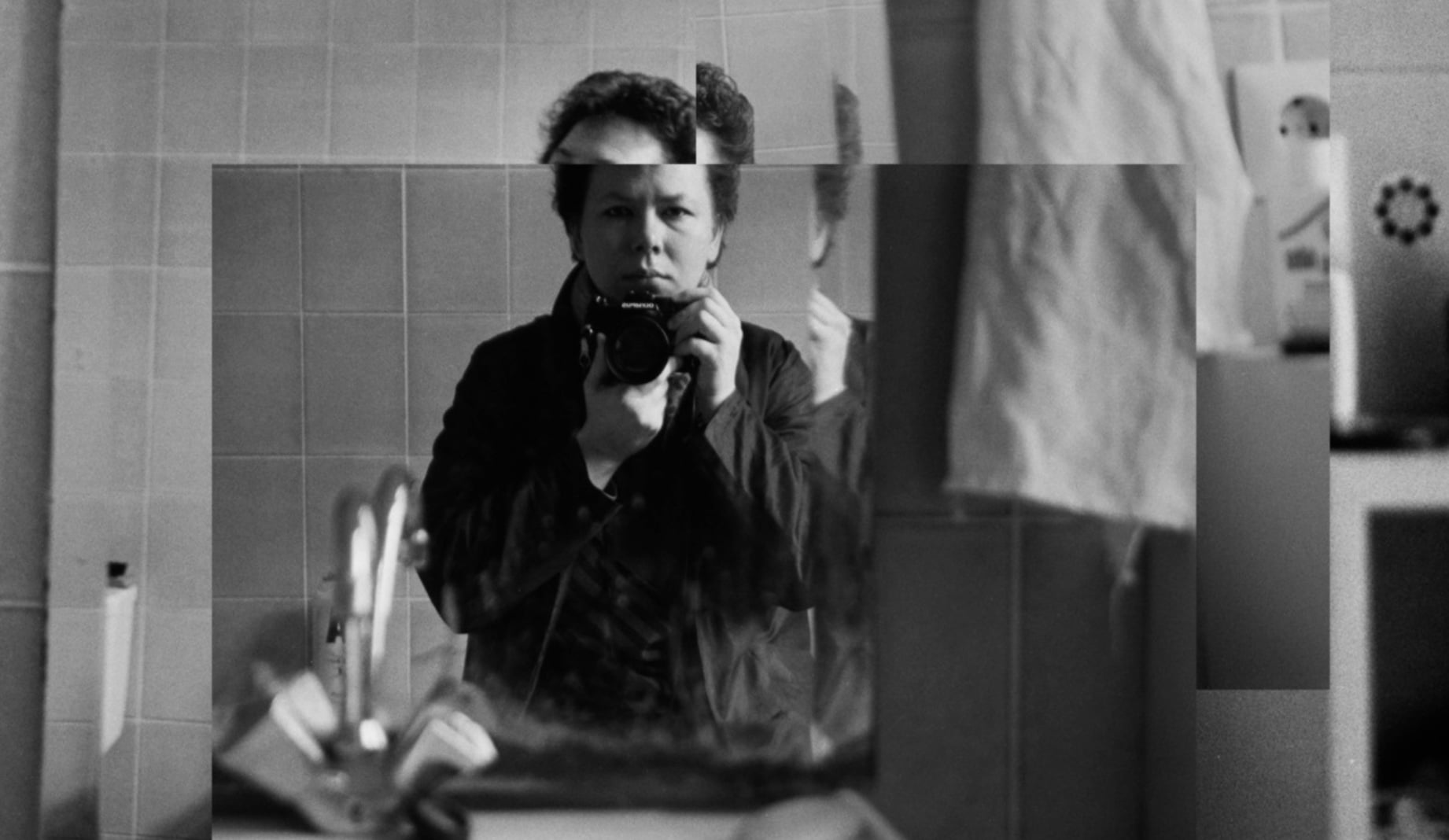
Libuše Jarcovjáková in I’m Not Everything I Want to Be (dir. Klára Tasovská, 2024)
In 2019, Libuše Jarcovjáková was a breakout star of the Rencontres d’Arles, one of the world’s most important photography festivals. Edgy, unromantic, and brutally honest, her raw, black and white images of 1970s and 1980s Czechoslovakia wowed critics, prompting new interest in a veteran photographer previously largely unrecognised by the international art world. Fiercely subjective in her approach, Jarcovjáková predominately photographed her friends, lovers, and acquaintances, offering a defiantly unpretty vision of the country’s underground queer scene which has seen her described as the “Nan Goldin of Soviet Prague.”
That Goldin comparison is both reinforced and expanded on in I’m Not Everything I Want to Be, an engrossing 2024 documentary directed by Klára Tasovská, which charts the course of Jarcovjáková’s life – from ambitious teenager, through decades of obscurity, to late career success. The film opens with Jarcovjáková receiving the news that she has been invited to exhibit at Arles, a potentially career-changing opportunity for which she feels she has been “waiting for 50 years.” We then jump back to 1968, where a 16-year-old Jarcovjáková is walking the streets of Prague, experimenting with her camera and dreaming of becoming an artist.
Over the years, we follow Jarcovjáková as she struggles to find her voice and identity, cycling through manual jobs and a dispiriting art degree, bad relationships and mental health struggles, bouts of hedonism and addiction, and lonely but mind-expanding periods in Japan and West Germany. All the while she takes pictures with obsessive urgency, charting life for herself and her peers under totalitarianism and, as a first-hand witness to the fall of the Berlin Wall and the collapse of the communist government in Czechoslovakia, capturing personal images of profound historical moments. Composed entirely of Jarcovjáková’s photographs, accompanied by diary extracts read by the artist, the film unfolds in the present tense in the artist’s own words, inviting us to see through Jarcovjáková’s eyes. The result is an immersive and intimate artistic coming of age story.
I’m Not Everything I Want to Be is streaming on Klassiki from 17 July – 14 August. To mark the occasion, we‘re republishing our interview with Jarcovjáková following the film’s festival premiere, where she discusses her work with Tasovská, exposure, intimacy, and hope.
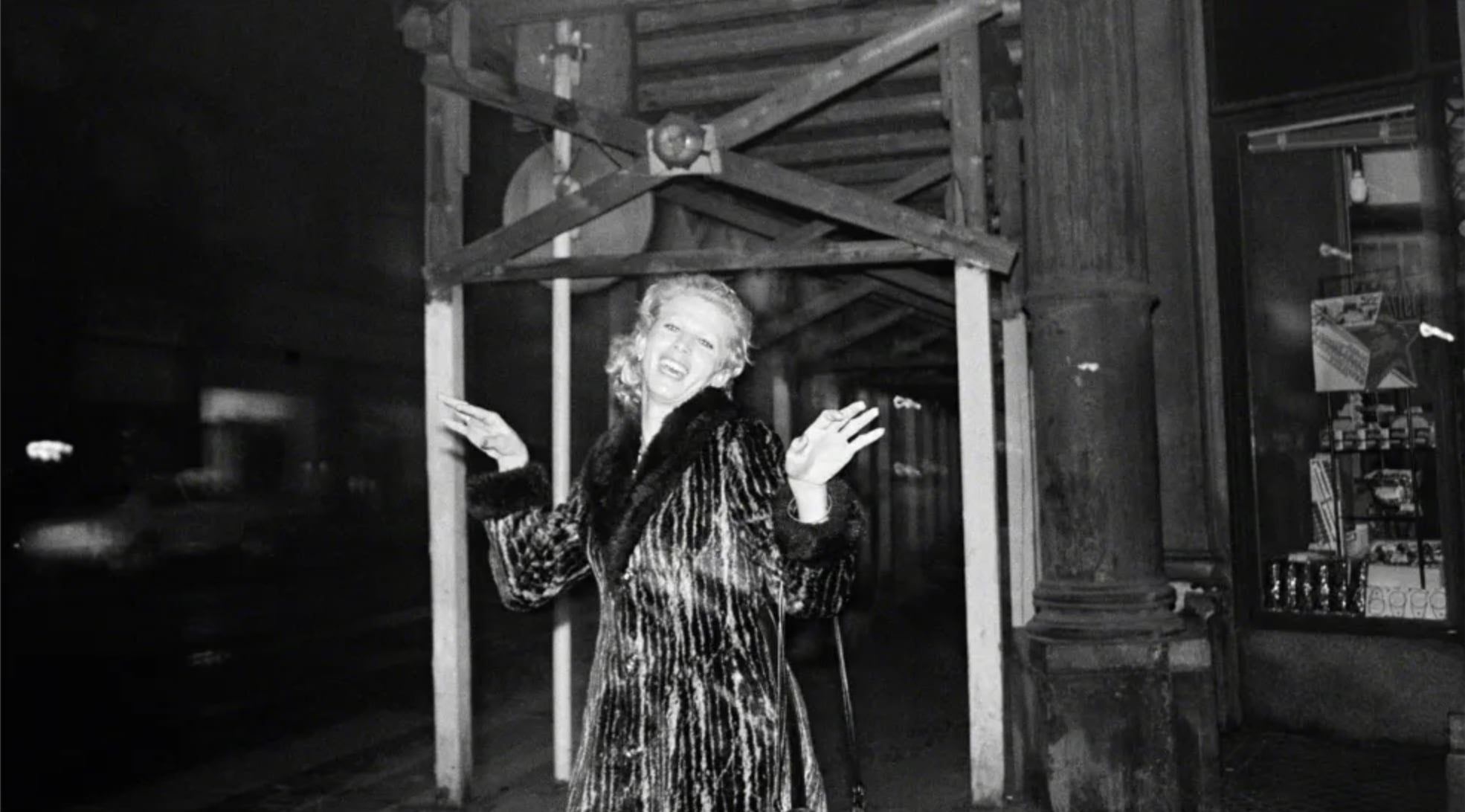
I’m Not Everything I Want to Be (dir. Klára Tasovská, 2024)
How did this documentary come about?
I was approached by Klára four and a half years ago. She had been asked by Czech television to make a short film about me, but she decided she wanted to make a feature, so that was the beginning. We had several meetings, and I recognised that Klára was an interesting person, the right person. I gave her free access to my archive, and first she worked with all the material, especially the diaries, from which she made a script. Then we searched through the photographs together. Then, she and her editor, Alexander Kashcheev, worked for almost two years, day after day, editing the movie.
There are thousands of images in the final cut. How did you choose which pictures to use?
There are 3000 photographs included in the finished film. They initially worked with 7000 images, then reduced that down. Klára decided from the beginning that she would work only with photo and voiceover from the diaries. That decision was partly because of COVID, but I also didn’t want to be a talking head, speaking about my work, pretending to take photos. So, this is how the movie was done, and I love it because it’s really based only on photos and voice, with music and sound design. I was mainly working with Klára and Lucie Černá, my curator, on the photo selection. They needed very specific photos: they had to be dynamic, with some movement. Normally, when you have an archive, you are concentrating mostly on the iconic work, but we worked with the whole archive. There are a lot of ordinary photos which are not iconic, but are important to show the atmosphere, the political situation, the feeling of the time.
this movie starts when I was 16. You are watching all the mistakes you made, the crossroads you faced. At one point, I decided that if I was going to show something, I have to show everything
It must have been really intense to go back into your archive and your diary.
It was really emotional, and surprising as well. I didn’t realise how intensively I made those self-portraits, all this personal stuff. I was really surprised that there are so many photos from my personal life, this subjective work. It’s very emotional, because this movie starts when I was 16. You are watching all the mistakes you made, the crossroads you faced. At one point, I decided that if I was going to show something, I have to show everything. I don’t want to hide anything. My idea is that the material is somehow universal, and it makes no sense to censor.
The film opens with you aged 16, already taking photographs. Do you remember when you first picked up a camera?
I was around 13 years old. I got a primitive camera for Christmas, and I started to develop the negatives. Both my parents are painters and I needed to express myself visually. I wasn’t able to paint or do graphic design, so photography was my own tool, only for me. I started to study photography at secondary school, and soon I saw that I had a specific visual language. Already at that time I was dividing what I was doing for school and what I was doing for myself. I’m really happy that I can use a lot of photos from this early period, from the age of 16. Photography is not something you have to learn for 10 years before you have something with validity to present. And the first day in the dark room, it’s mysterious, really mystical.
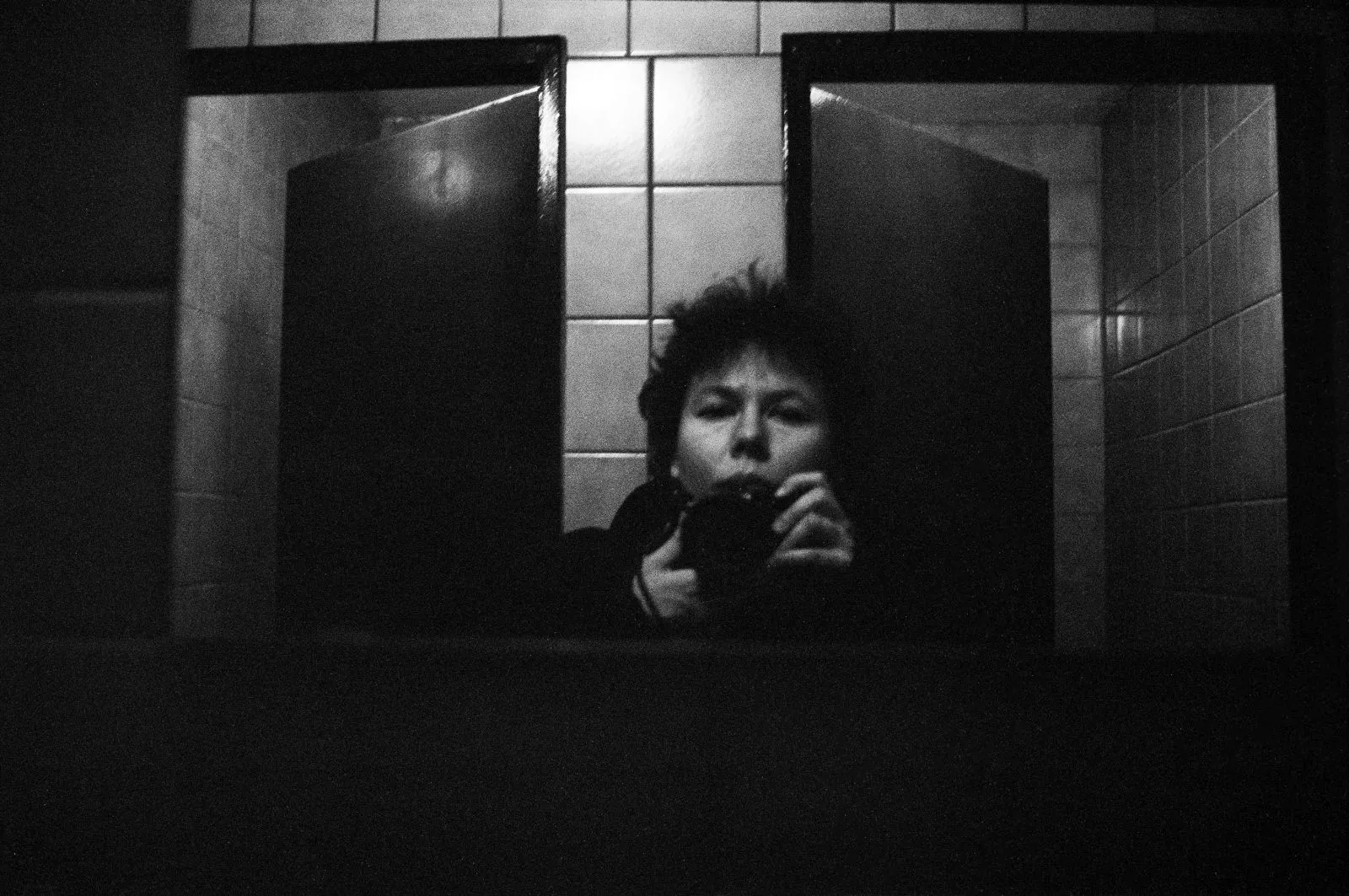
I’m Not Everything I Want to Be (dir. Klára Tasovská, 2024)
I’m interested in your relationship to your parents, who were both artists, but who didn’t necessarily encourage you to pursue your ambitions
My mother was afraid that it would be too challenging, especially for a girl, in the commercial business. She wasn’t happy when I told her I wanted to be photographer. During my studies at art school, I also was not happy, because it was very technical and not creative. They were preparing us to be technical artists. So, it was a little bit of a struggle, studying photography. But having a camera for expressing my feelings was really a big gift.
Someone who did encourage you was the filmmaker Ester Krumbachová, who was a family friend. We are big fans at Klassiki, so it was thrilling to see images of her appear in the film! What was she like in person?
Ester was a very important person for my childhood and for my whole life. She was a close friend of my mother, they studied together. It was very lucky for me that I could meet her from an early age, and when I started photography, she was an important support. She gave me very good advice. I loved her, she was a big inspiration, a person who was able to push you, in a soft way, out of your comfort zone. She was absolutely original in her speaking and thinking. It was a really great stroke of luck that I could be so close to her.
The film is a real historical document, as well as a personal one. Did you feel this sense of being caught in the tides of history at the time?
Yes and no. My work is a combination of the conscious and unconscious, intuitive and conceptual. Across my whole archive, these two lines are somehow connected. I know what I’m doing, what I’m aiming for. I have my idea, but at the same time I work in a spontaneous way. I just reacted to the situation, to the people, to my emotions. The photographs, especially the self-portraits, are a navigation tool for me. They are how I understood the situation, and got distance from myself, so I could better understand what I was living. Something pushed me to do this work. I had no exhibitions for many years and little possibility to share what I was doing, so the only reason I kept working throughout the years was this deep inner necessity. I couldn’t live without doing it.
The photographs, especially the self-portraits, are a navigation tool for me. They are how I understood the situation, and got distance from myself, so I could better understand what I was living
At what point did your work begin to find that audience?
For most of my career, I did very little commercial work, apart from a short period in Japan. There was a loneliness – I really worked just for myself for decades. I started to publish my photos for the first time around 2008, and then again in 2014. Little by little, I got more of an audience, and suddenly I had big opportunities like Arles. Before the political changes of the 1990s, I was absolutely OK with working for myself. But later I started to be a little bit frustrated, if that’s not putting it too strongly. Finally, I got this opportunity again.
There’s a powerful sequence in the film when you watch the Berlin Wall come down, and then you travel to Czechoslovakia to chart the fall of the regime there. How has your relationship with your birth country evolved?
For me, the connection with my home country was always very strong. This is also the reason why, when I went to West Berlin, I didn’t just illegally escape, because I needed to keep some contact with my country, my family, and friends. I found a husband and emigrated in a semi-official way. I have always felt that the right to go somewhere for several years, to collect experiences and spend time outside of the country, is absolutely legitimate. It’s a normal human right that wasn’t allowed during the totalitarian regime in Czechoslovakia. So, my decision was to go for several years and then come back. I knew I was living in an oppressive regime, with limited freedom, but I was very strongly connected to my country. After the political break [the fall of the Soviet Union], I came back for two reasons. One was that I had fallen in love with Magda [Jarcovjáková’s partner]. And the second was that it was enough. I had already spent years away, and it was time to come back.
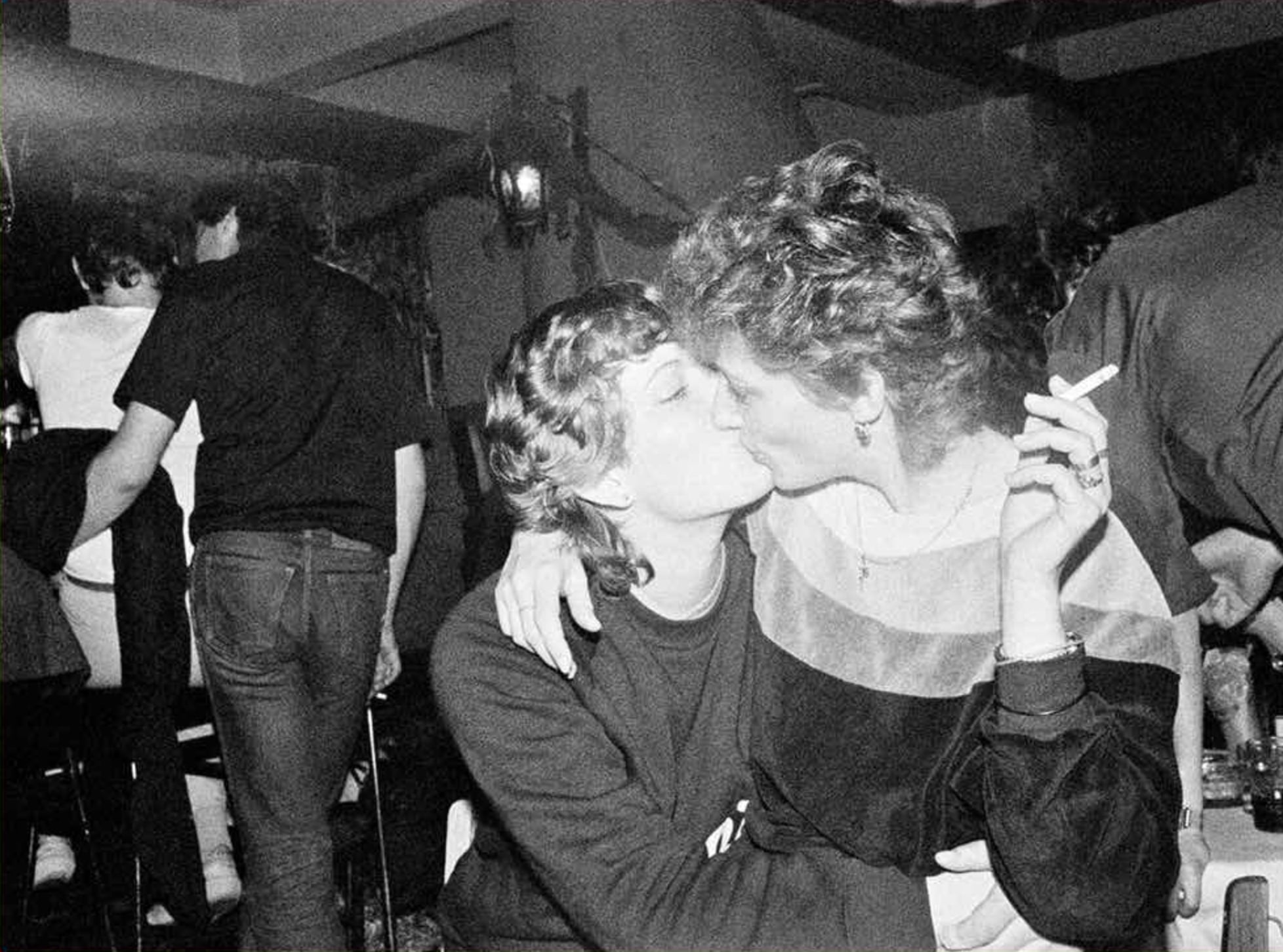
Photograph from Prague’s T-Club, from I’m Not Everything I Want to Be (dir. Klára Tasovská, 2024)
Some of your most striking photographs are of the queer underground scene in Prague, particularly of the T-Club – a legendary underground bar which became a hub for the LGBTQI+ scene in 1980s Prague. In the film, you describe a moment when the police asked for your images, and you had a realisation that the camera could become a weapon.
When I came first to the T- Club, I really wanted to document it. I was in love with the people and the atmosphere, but it was long process. I knew I needed to get permission, some trust. For months I went there every night, and made many friends. When I began to take photos, I was very cautious. I used a flashlight, because I wanted to be seen taking photos and I wanted people to have the choice whether they wanted to be in the photos or not. Then a situation came, when the police wanted to see my work from one night. Somebody had been murdered, and they wanted to see if it was possible to find this person. For me this was a big problem. I gave them an overexposed negative, and it was the last day I took photographs there. Suddenly I realised that there was the potential for these photos to be abused. I was lucky that this happened towards the end of that period of my life, it was just before I left for Berlin.
I wonder how you feel now that photographs you took that you never thought would be seen now have an audience? Do you have any reservations about sharing images of yourself – when you were struggling with mental illness, for example?
When I’m working with my personal stuff, it’s totally up to me and I have to make the decision if I want to share this or not. I am no longer doing the kind of documentary photography that I was, with Roma communities for instance, or at T-Club, because nowadays it’s problematic. For me, it’s important to have people’s permission. I can’t do this kind of street photography as before because times have changed. It used to be that you would go somewhere, take a photo without asking, and use it, but that’s not happening anymore. Times have changed, and I respect that. It’s a good thing.
I’m Not Everything I Want to Be is available on Klassiki from 17 July – 14 August. Explore our collections of Czech and Slovak titles and documentary films.
Rachel Pronger is a freelance writer and curator based in Berlin. Her writing has been published by outlets including Sight & Sound, The Guardian, MUBI Notebook, Art Monthly, Elephant Art, and BBC Culture. Rachel is also co-founder of the archive activist feminist film collective Invisible Women.

 Go back to journal home page