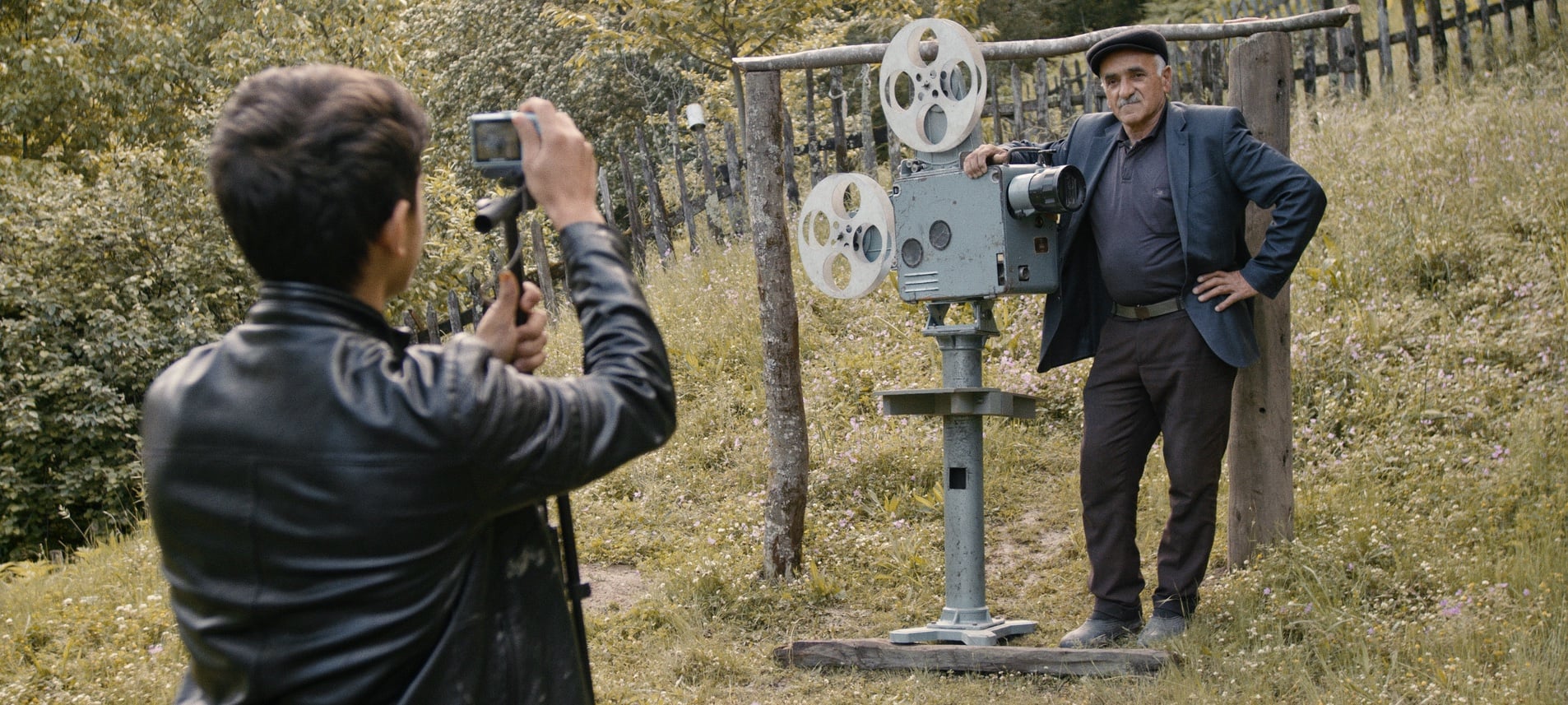
The Return of the Projectionist (dir. Orkhan Aghazadeh, 2024)
Premiering at Visions du Réel in 2024, Orkhan Aghazadeh’s moving, meta-cinematic docufiction The Return of the Projectionist is a worthy entry into the canon of films about the unique, communal magic of the cinema screening, locating a universal story of isolation and connection in the remote mountains of southern Azerbaijan.
In Soviet times, Samid worked as a village projectionist. Nowadays, the cinemas are long gone, and he gets by repairing TV sets, beset with grief at the loss of his adult son. But a run-in with local teenager Ayaz, a passionate DIY filmmaker, reawakens Samid’s own cinephilia, and sets this unlikely duo off on an odyssey to resurrect film screenings for their remote community. Set against the stunning backdrop of Azerbaijan’s Talysh mountains, The Return of the Projectionist is a film about nostalgia that complicates the boundaries between past and present, youth and experience. Critics have been quick to compare Samid and Ayaz to Toto and Alfredo in Giuseppe Tornatore’s 1988 classic Cinema Paradiso. The Persian influence of neighbouring Iran is also felt, specifically the mordant village dramas of Abbas Kiarostami.
The Return of the Projectionist is screening on Klassiki from 29 May – 26 June. We spoke to Aghazadeh about the origins of the project, the state of cinema culture in Soviet and post-Soviet times, and the slippery nature of films about film. This is an abridged version of the interview; Klassiki subscribers can watch in full here.
I’ve read that this film emerged unexpectedly while you were researching a fiction film. How did you come across Samid and his story, and how did that develop into this documentary?
I met Samid when I was making my graduation film at the London Film School, back in 2017-18. We were location scouting in his village in winter, and we got stuck there because of the snow. He hosted us. When he found out that we were a film crew, he told us that he had this equipment and that he used to work as a projectionist in the Soviet Union and that he wanted to revive film in the village. That stuck with me, and when I returned [to Azerbaijan], I wanted to go back to the story. This is how it gradually evolved.
At what point did Ayaz, the other main character, enter your orbit?
I’d never met Ayaz before, even when we started filming. It was Samid who told me at the end of one of our shooting sessions, there is this young guy who’s really good at animation. He wanted him to be in the film as one of the young people from the village who the villagers were proud of. I realised how interesting it was, that he was allied with Samid, and also how he went about making films on his phone – it was fascinating. It was like he was sent by God; we needed some kind of relationship [in the film] to tell us more about Samid, his loneliness, his internal growth.

The Return of the Projectionist (dir. Orkhan Aghazadeh, 2024)
One thing I think it’s important to be aware of is the particular place of cinema in Soviet culture, and the way in which these kinds of remote areas would have had functioning cinema cultures, even cinephile cultures. Without that context, you don’t get the scale of the loss of infrastructure that informs Samid’s story.
Cinema was a very crucial part of the Soviet Union. In almost every village they had these clubs [Houses of Culture] where they would screen films. There would be projectionists in every village or region who would have this equipment that they carried around between the villages. Cinema was part of the cultural activity for people in these rural areas. They would show Soviet-produced films mostly, but also Indian films, Bollywood films – and since those films were different, they were very popular. Songs from those films were played at weddings in the Soviet Union, adapted to national musical styles. Then the Soviet Union collapsed, and the infrastructure collapsed as well. Life gradually became flat. Then with the coming of television and the internet, this kind of communal tradition was wiped out. Within the older generation there is this nostalgia for cinema. Can we call them cinephiles? I don’t know. It’s more to do with an interest in life, in a different kind of life – a communal experience that disappeared.
This isn’t an observational documentary. Some sequences feel staged, and the way in which they’re filmed suggests a degree of planning and intervention. Can you tell us how you went about capturing and presenting this material?
From the beginning, when I was talking to the cinematographer, and later when I was pitching it to producers, I would also say that this was a hybrid documentary, docufiction, whatever you want to call it. Observational documentary isn’t my thing, really. Since we had a certain number of shooting days, and a story that was dependent on [Samid’s attempts to acquire a new projector] bulb, I didn’t have the chance to just go and sit in the village with my crew and wait for events to happen. I also wanted to show the village throughout the four seasons, to capture all the beauty.
Say we were filming something. I would ask Samid: now that we’ve ordered the bulb, say, what would be the next steps? And he would say: OK, now we need a frame, I have to construct it, we need to tell people about the screening, etc, etc. This is how we structured things. After each shooting period, I would edit what we’d just shot. The strategy behind filming was that we always knew in advance where we would be shooting next; it’s a small village, if someone needs something there’s only one place to go and get it. We’d go in advance with Daniel [Guliyev, cinematographer] to find the best position, the best framing, to find the master shot. Then we would follow what played out when the characters arrived. The scenes weren’t written, they weren’t dialogues. But they were pre-planned, the shooting blocks were structured.
Within the older generation there is this nostalgia for cinema. Can we call them cinephiles? I don’t know. It’s more to do with an interest in life, in a different kind of life – a communal experience that disappeared.
Has the village seen the final film?
Yes, the first screening in Azerbaijan was in the village, and then the next day we showed it in Baku. It was so far the best screening we’ve had. Everyone was there who was part of the film. The day we planned the screening, someone died in the village. It’s a small community, and people were saying that a lot of people wouldn’t come – but they came, and they were very reactive to every second of the film. They would see each other and laugh. It was a really great screening.
It would probably be impossible to have such a sympathetic screening with any other film…
Yeah, and it’s where it all started as well. It was in that club where we were filming. We started there and then we screened it there. There was something sweet about it.
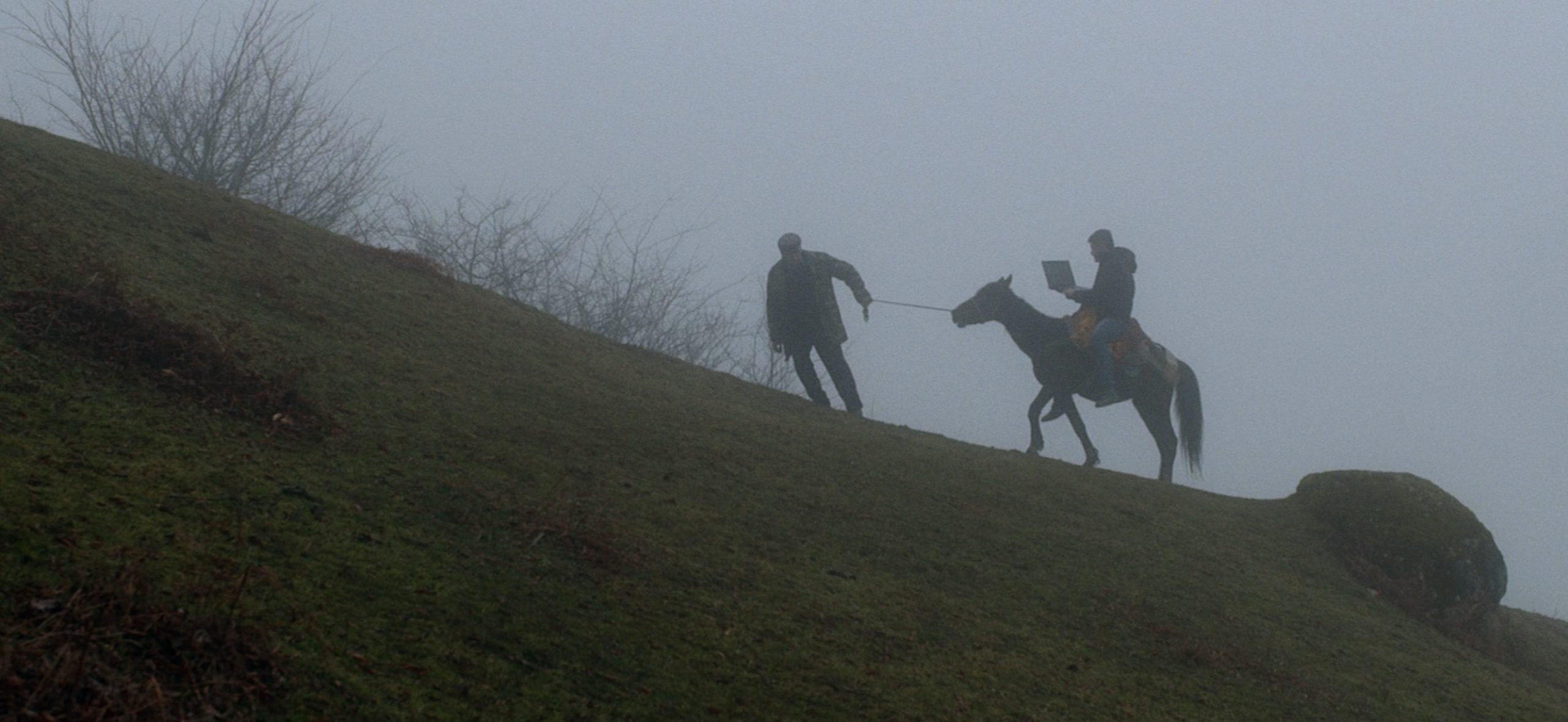
The Return of the Projectionist (dir. Orkhan Aghazadeh, 2024)
There are lots of films about the magic of cinema – Cinema Paradiso is the one that everyone always references. Cinema loves itself in that respect. How much did you have those films in mind? Did you have any reference points?
This question comes up a lot during Q&As when I screen the film, and Cinema Paradiso is often mentioned. Of course I like the film, but it’s not my favourite. For me, I didn’t have any references. I was actually trying not to watch many films at all, especially when I was planning the shoots. That can derail you.
How do you avoid the sentimentality that often informs those films? It is a sentimental issue for Samid and the villagers, but your film doesn’t settle for an easy, comforting idea about cinema and how it relates to these people’s lives.
It’s hard to answer that question. I think maybe it’s because, for me personally, this film wasn’t an exploration of nostalgia. For me, it was about why Samid was doing it. It comes from a midlife crisis and from village life. I was born in a village, and I know how boring and melancholic it can be. I was born in 1988, and at that time the Soviet Union was already collapsing. I didn’t have that experience myself. I don’t remember that experience of watching films in the village with other people. So, maybe it also comes from that – it’s not sentimental or nostalgic [for me].
Watch The Return of the Projectionist on Klassiki from 29 May – 26 June.


 Go back to journal home page