The Watchlist is Klassiki’s series of themed viewing recommendations drawing from the cinema of Eastern Europe, the Caucasus, and Central Asia. In this edition, we celebrate six lesser-known works of the great Věra Chytilová, the Czech icon behind New Wave feminist classic Daisies and one of the most vital female filmmakers to emerge from the communist bloc.
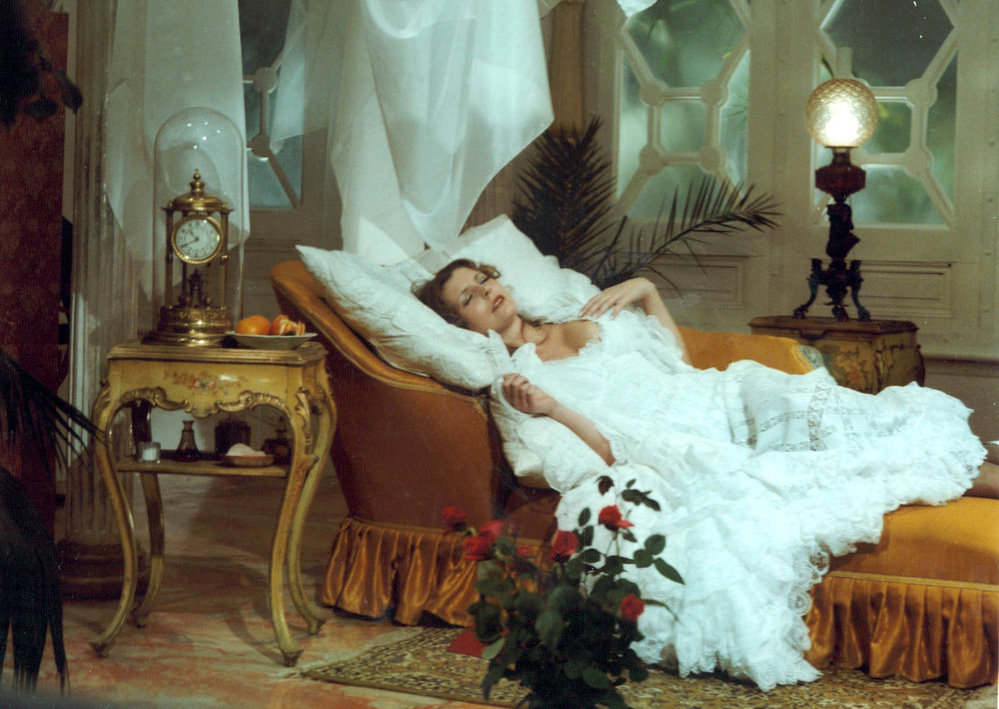
Dagmar Bláhová in The Apple Game (dir. Věra Chytilová, 1977)
Věra Chytilová’s filmmaking voice is unmistakable. Whether crafting a surreal feminist fairy-tale like Daisies (1966) or a biting social satire like The Inheritance, or Fuckoffguysgoodday (1992), she reshaped cinematic language to expose the mechanics of dominance, dependence, and desire. No one dissected modern relationships quite like she did – between men and women, parents and children, individuals and institutions. Most importantly, her work persistently foregrounded female experience. Anarchic in energy, Chytilová’s films often feel suspended somewhere between revolution and apocalypse.
Chytilová began making films in the early 1960s during a period of liberalisation in Czechoslovakia and continued to do so even after the crushing of the Prague Spring in 1968 – with a shift in tone, perhaps, but with undiminished urgency. Even when subject to censorship, her cinema celebrated the eccentric, the rebellious, and the poetic. While Daisies has long since been canonised as a feminist classic and a key document of the Czech New Wave, Chytilová’s long and storied career stretched into the 21st century and incorporated a dizzying range of themes and formal gambits. Here are six lesser-known titles from one of the most vital female filmmakers.
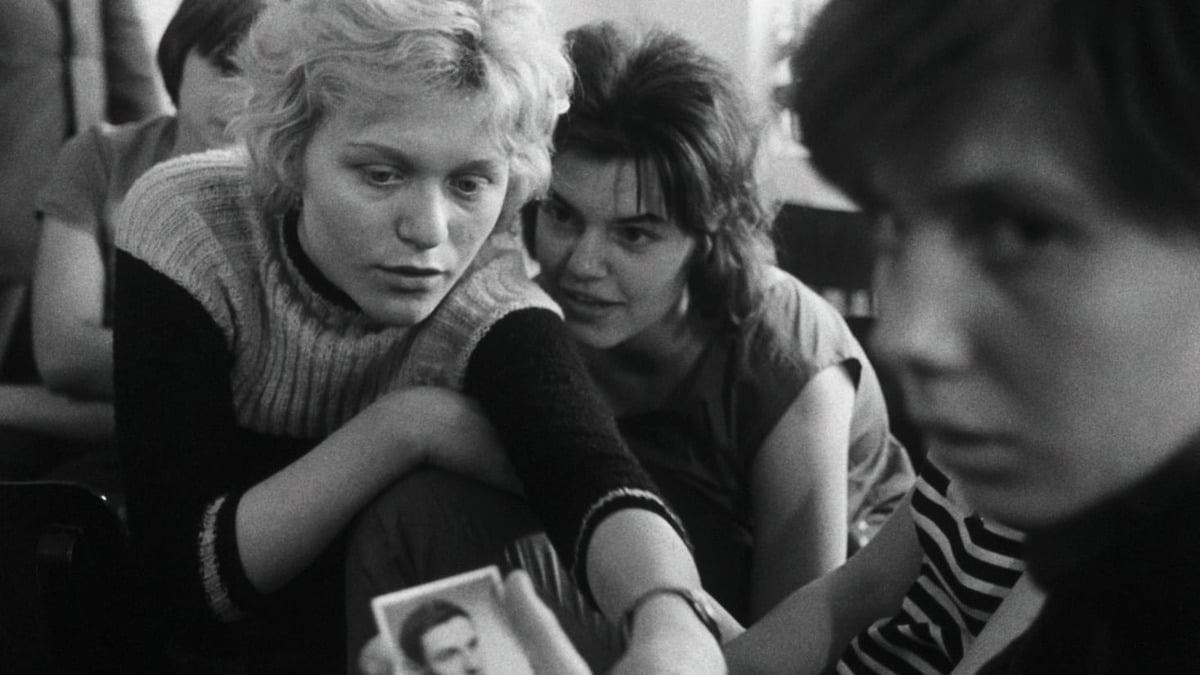
A Bagful of Fleas (dir. Věra Chytilová, 1962)
A Bagful of Fleas (1962)
An early, often overlooked work by Chytilová that already contains the essential hallmarks of her cinema in its portrayal of girlhood that is wild, free, and utterly alive. Set in a girls’ dormitory linked to a textile factory school, the film presents itself as a documentary, offering an observational look at the everyday lives of young female workers. But Chytilová gleefully disrupts this form with playful, stylised interventions. In part, she does so through her work with non-actresses, who bring raw, unpredictable energy to the screen. Elsewhere, it’s embedded in her cinematic language, especially her use of point-of-view shots, which inject a subjective presence that feels both intimate and poetic.
As in much of her later work, A Bagful of Fleas studies femininity in relation to the outer world. The factory and the school are not violently repressive, but they are coded with authority and control. And yet, the film resists becoming a political tract. Instead, it pushes back against governmental structures with something joyfully uncontrollable: an authentic, electric atmosphere that lifts the girls’ presence, gestures, interactions, and dialogue above any imposed force.
The Apple Game (1977)
After completing her landmark films Daisies (1966) and Fruit of Paradise (1970), Chytilová entered a period of enforced silence. The political climate had shifted sharply, and her formally anarchic style was no longer welcome on screen; indeed, she was banned from filmmaking for several years. The Apple Game emerges from this silence with a noticeably altered aesthetic: less abstract, but still crackling with subversive energy at its core. The film unfolds as a bizarre love story within the walls of a hospital. An experienced and somewhat arrogant gynaecologist – played by none other than fellow Czech New Wave luminary Jiří Menzel – meets his new assistant, a young woman who proves to be far wittier and more self-assured than he anticipates. Their dynamic quickly spirals beyond the professional, slipping into a charged, chaotic entanglement. What begins as flirtation becomes a power struggle, full of awkward, comic, and often uncomfortable reversals.
The stakes are set even higher by the fact that this screwball melodrama unfolds in a maternity ward – side by side with the raw, unmediated act of childbirth. And for Chytilová, this is not just a symbolic gesture. It becomes a tool that cuts sharply through the “game” between man and woman. She interjects the narrative with unfiltered, documentary-style footage of childbirth, collapsing the boundary between fiction and reality. These scenes don’t merely ground the film; they tear it open. It may all be just a game – but it’s a dangerous one to take lightly.
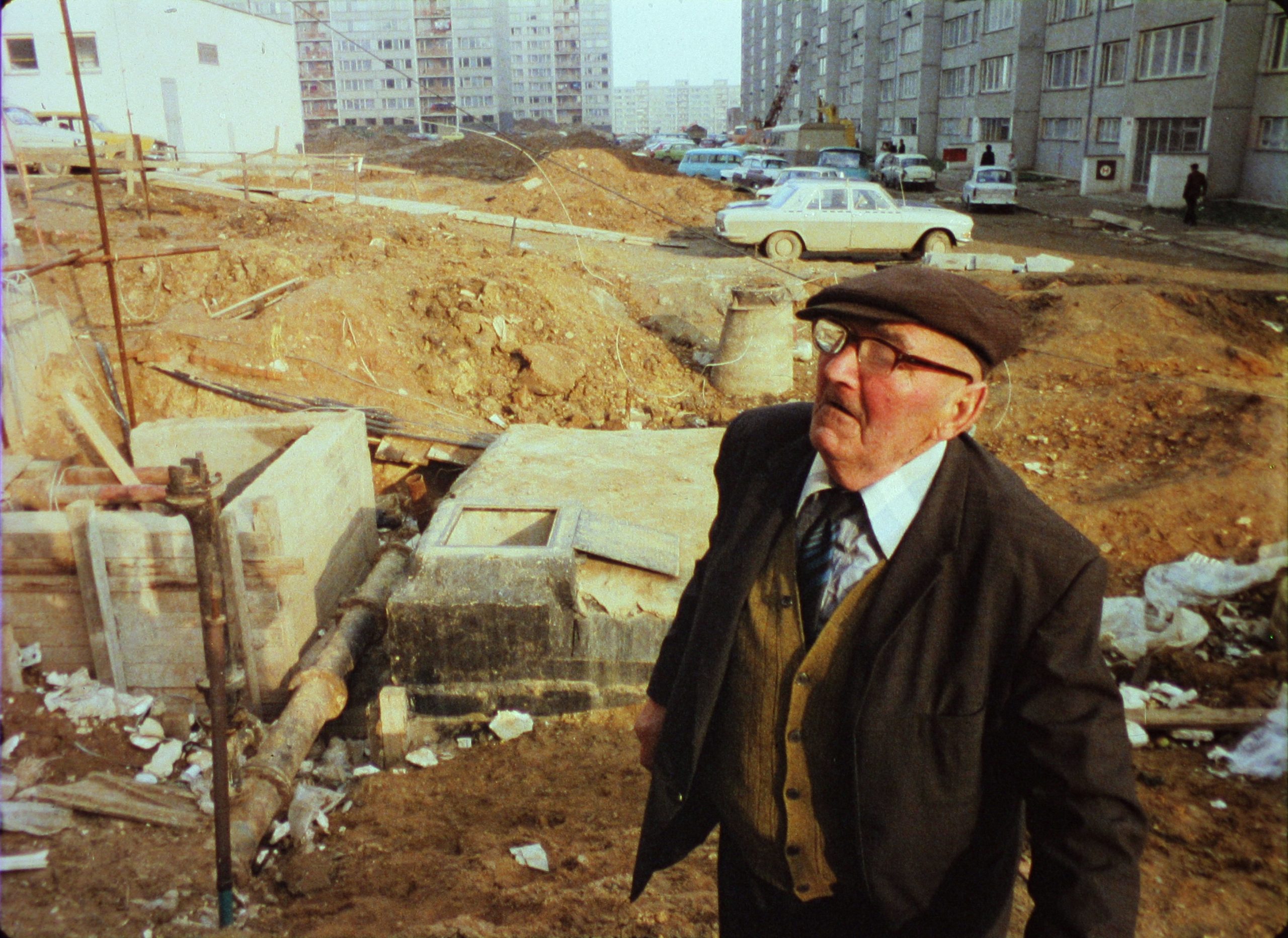
Antonín Vanha in Panelstory, or Birth of a Community (dir. Věra Chytilová, 1980)
Panelstory, or Birth of a Community (1980)
On the outskirts of Prague, a new neighbourhood is being born: an immense sprawl of prefabricated apartment blocks pressed together, waiting for new families to piece their lives together inside. Chytilová ‘s film, a collagistic, eccentric chronicle, captures the microcosms of daily life in this unfinished landscape, but any sense of natural rhythm remains elusive. Even the camera seems disoriented, spinning through the scenes like a merry-go-round. The imagery deepens this unease: it peers through identical windows, glides past slabs of concrete, piles of dirt, and half-finished structures. Private lives – marked by conflict, affairs, passions, and violations – dissolve into the architecture, becoming indistinguishable parts of a strange, impersonal machine. At the centre of this observation stands the panel house itself, a stark symbol of Eastern European frustration. It promises structure and stability but delivers absurdity and entropy. And that’s exactly what seems to provoke Chytilová’s interest: how something meant to impose order instead breeds collapse. When she pulls all these threads together – when she shapes this chaotic tapestry – she doesn’t tame the disorder, she orchestrates it.
Wolf’s Hole (1987)
A group of teenagers is selected to take part in a special course. They’re brought by three cryptic instructors to an isolated base in the snowy mountains, where they’re subjected to a series of increasingly disturbing tests, physical, emotional, and moral. What begins as an exercise in group dynamics quietly mutates into something far more sinister.
Wolf’s Hole, despite its raw, jagged editing, is one of the more grounded entries in Chytilová’s oeuvre. Here, she dives deep into human psychology, observing behaviour under pressure and in confinement. The teenage protagonists, dropped into a closed system, become unwitting participants in a social experiment, and Chytilová meticulously maps the shift from spontaneous camaraderie to internalised repression. It is all perfectly constructed against a backdrop of snowy isolation that amplifies the group’s paranoia. And yet, Chytilová never gives in to total bleakness. The adolescent energy she captures – hormonal, impulsive, unresolved – carries the potential for rupture. This is where Wolf’s Hole lands its hardest blow: not in submission, but in the desperate, necessary birth of resistance.
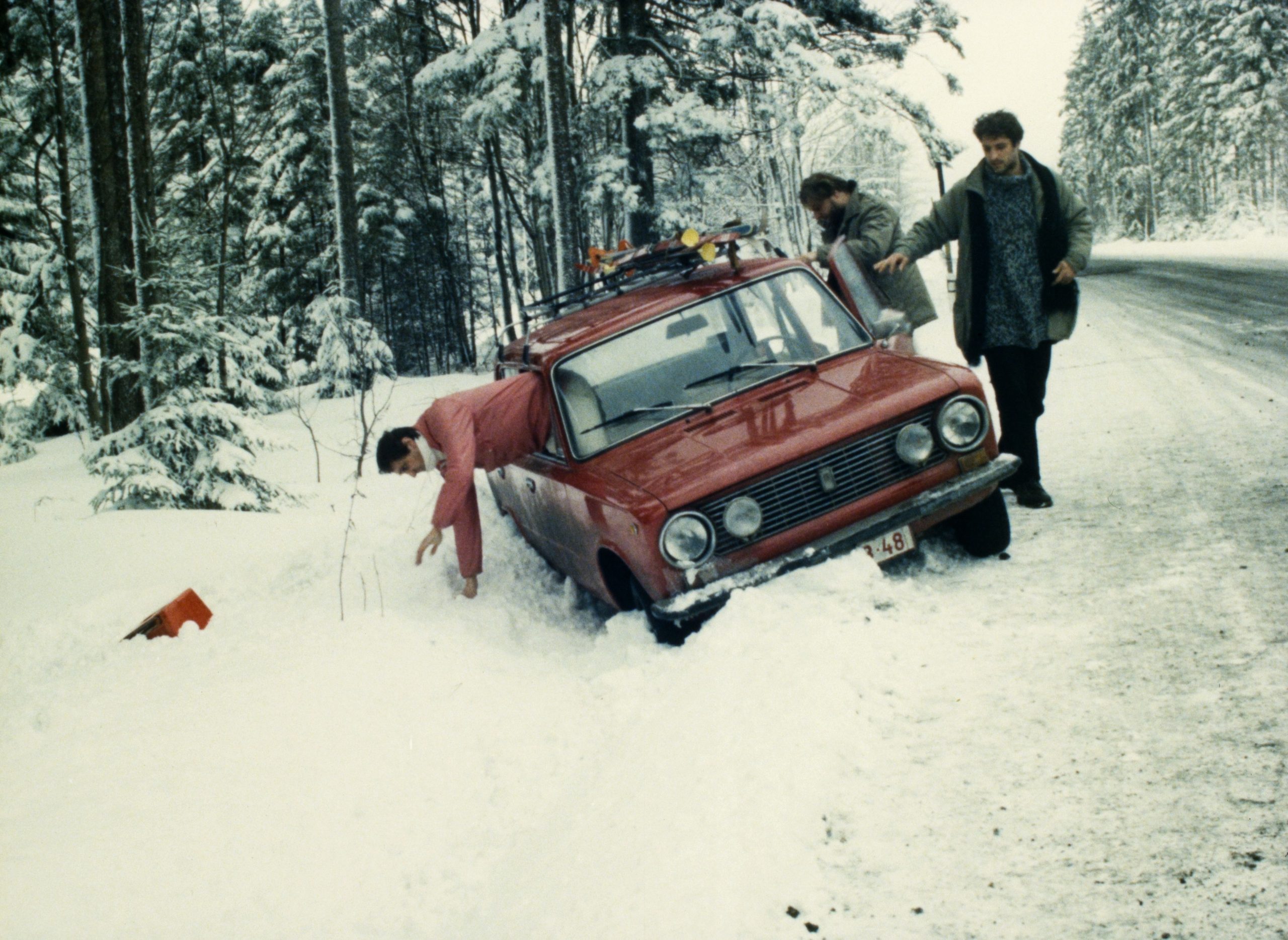
A Hoof Here, a Hoof There (dir. Věra Chytilová, 1989)
A Hoof Here, a Hoof There (1989)
Chytilová often placed male characters at the centre of her films – see The Very Late Afternoon of a Faun (1983), or The Apple Game and The Inheritance above – to expose the systems they both serve and embody. In A Hoof Here, a Hoof There, she sketches a series of fragmented interactions around a thirty-something man and his companions. The film unfolds as a hysterical chronicle, largely focused on romantic misadventures and leisurely self-indulgence. But as the “leisure” on display unravels into erratic, self-destructive behaviour, a darker tone begins to emerge, an unnamed but palpable illness that hangs over the group. Their camaraderie dissolves into disconnection, exposing the rot beneath the surface.
Few directors portray chaos as vividly as Chytilová. Her narrative style was never meant to console, but here it feels especially merciless, pushing her signature eccentricity into something nearly macabre. And, as always with Chytilová, it’s the laughter that wounds most deeply. Just as Daisies cloaked a desperate desire for rupture in anarchic play, A Hoof Here, a Hoof There wields humour like a scalpel. It verges on moral farce, because beneath the absurdity lies something profoundly tragic: abandonment, detachment, and slow collapse.
Searching for Ester (2005)
Ester Krumbachová was a remarkable figure, a visionary and self-propelled filmmaker in the fullest sense. She played a vital role in shaping many landmark works of the Czech New Wave, contributing to its bold, poetic, and politically charged aesthetics. Her credits include Diamonds of the Night (1964), A Report on the Party and the Guests (1966), Valerie and Her Week of Wonders (1970), and Daisies (1966) – and she even directed her own surreal gem, Murdering the Devil. Her collaboration with Věra Chytilová was particularly significant, introducing a visual language that felt both fiercely independent and strikingly original.
In 2005, nearly a decade after Krumbachová’s death, Chytilová set out to rediscover the singular trace her friend left behind. Searching for Ester is a relatively conventional documentary, built from interviews, voiceovers, and fragments of film, yet something in the way people speak about her, and in how Chytilová guides the process, animates Krumbachová’s playful, luminous presence. It’s more than a biography; it becomes a portrait of enduring energy. Through archival glimpses of Krumbachová herself, we witness a creative force whose approach to filmmaking extended beyond the screen into a full-blown philosophy of living.
Explore our collection of Czech and Slovak titles here.
Alisa Goruleva is a Berlin-based filmmaker and film scholar specialising in archival cinema and Soviet film history.

 Go back to journal home page