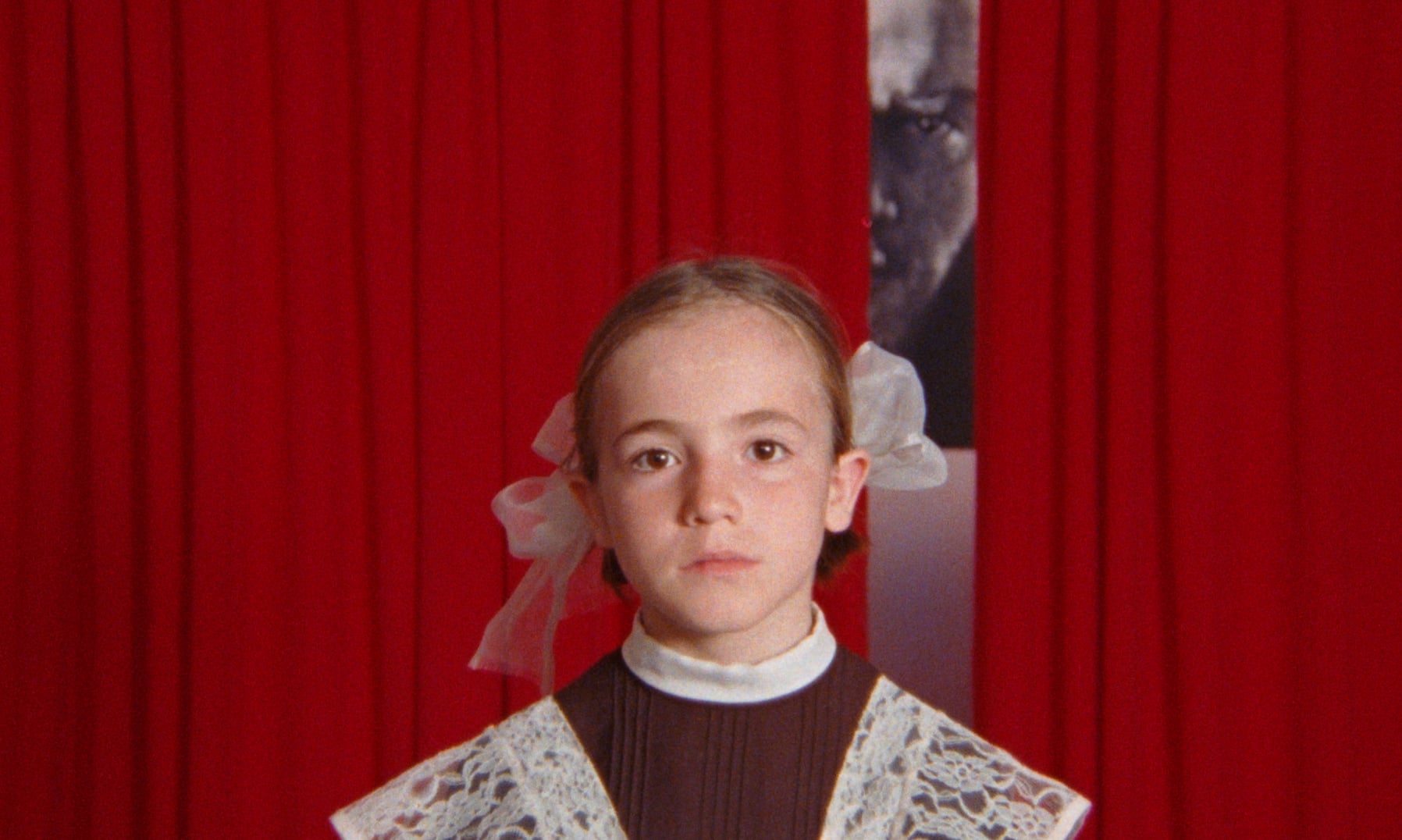
Memory (dir. Vladlena Sandu, 2025)
Memory, currently playing prominently on the festival circuit and having just wrapped its limited UK release at the Institute of Contemporary Arts in London, is an autobiographical account of filmmaker Vladlena Sandu’s traumatic coming of age during the First Chechen War (1994–96). Dedicated to those who have lost their childhoods to armed conflict, it is an impressionistic, experimental film told from the perspective of a young Sandu in the mid-1990s.
Originally from the major port town of Feodosia in Crimea, Ukraine, currently occupied by Russia, Sandu spent her formative years in Grozny, the capital city of Chechnya; she then lived and worked in Moscow, where she studied at VGIK, Russia’s leading film school, and is now in political exile in Amsterdam. Memory was close to 10 years in the making, with Sandu directing parts of it remotely, as well as narrating and editing. In this interview, which traverses all of Sandu’s previous contexts, film critic Misha Zakharov spoke to Sandu and her collaborator, cinematographer Liza Popova, in conjunction with the film’s screening at Qyzqaras, a women’s film festival in Almaty, Kazakhstan, and one of the most innovative platforms for cinema in Central Asia. They discuss the film’s troubled production process, which began before the full-scale invasion of Ukraine and continued in exile; its collaborative process and the formal innovations and subterfuge Sandu and Popova had to employ to film what is impossible or prohibited to film; and the site-specific post-colonial reverberations the film had with audiences across different contexts.
Vladlena, could you tell our readers, very broadly, what Memory is about?
Vladlena Sandu: This is a simple question and, at the same time, a very hard one. If we’re talking about the narrative, it’s a film about me and my family. At the same time, it’s a story about trauma and its cycles between generations. The film starts in Crimea, Ukraine, in the mid-1980s – this is where I was born, in Feodosia, in 1982. I lived there until I was almost seven years old. After my parents divorced, I moved to Grozny, to my mother’s family’s home, where I grew up. At the same time, it was the period when Russia launched its military intervention in Chechnya in December 1994, beginning what became known as the First Chechen War.
I have a few questions about the production of this film, which was quite an extended and laborious process. From what I gathered online, it began in 2018 and lasted for about seven years in total, including filming in Crimea and Chechnya before the full-scale invasion of Ukraine, before entering a lengthy post-production process after you left Russia.
VS: I started to think about this film when I graduated from the University of Cinematography in 2016. At that time, I made my graduation film, Holy God (2016). That was the first of my films in which I started to talk about living through the war with my grandmother. Then I went to the TASS [Russian News Agency] archives and found a lot of photographic footage from that time in Chechnya. Back then, the Russian authorities also avoided calling it a war, using terms such as “restoring constitutional order” and referring to it as a military operation. But I realised that what I was looking at was, in fact, a crime. And this is how I got the idea for Memory. The first pitching session took place in 2018. So, in total, it took us about 10 years.
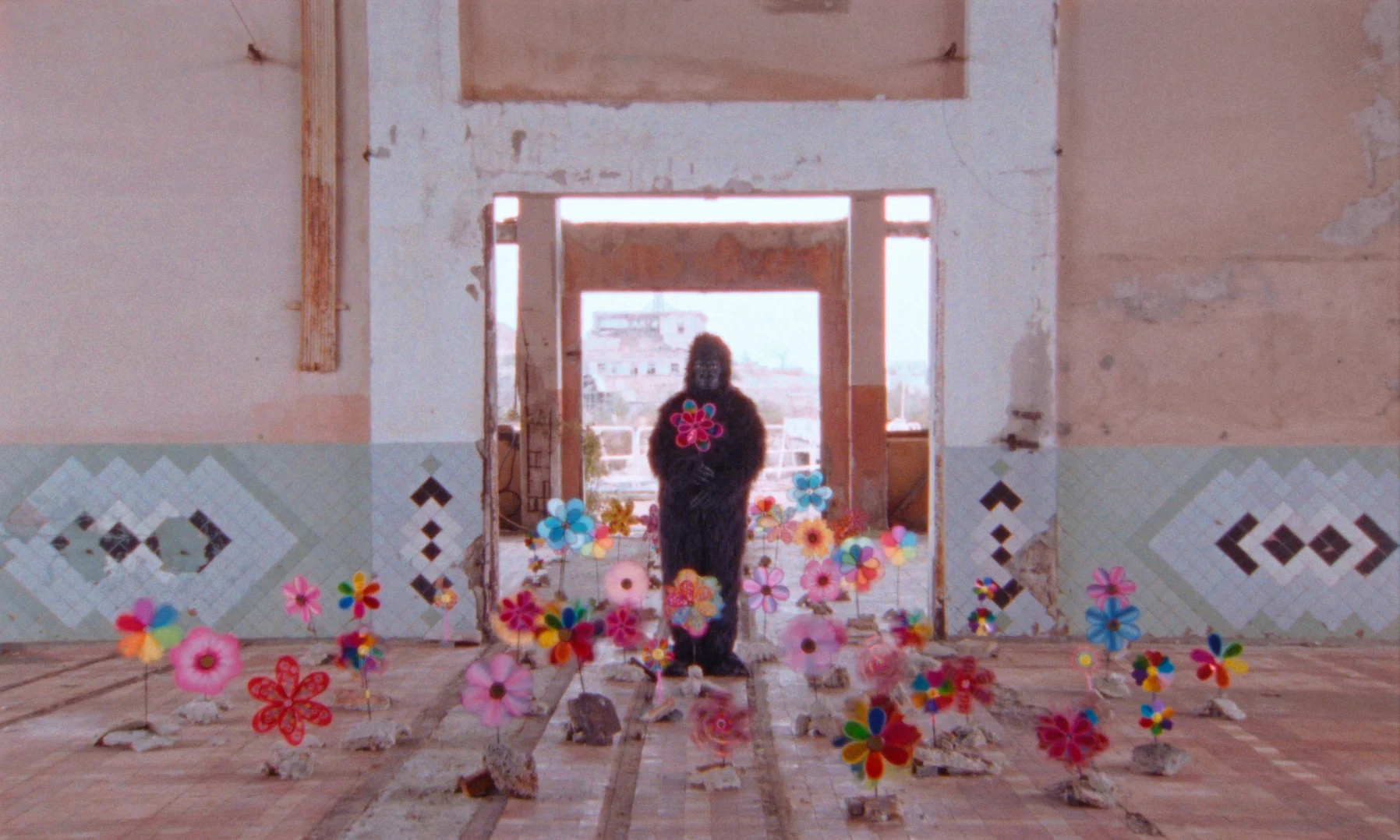
Memory (dir. Vladlena Sandu, 2025)
You left Russia for the Netherlands in 2022. Did you find it difficult to finish the film in exile?
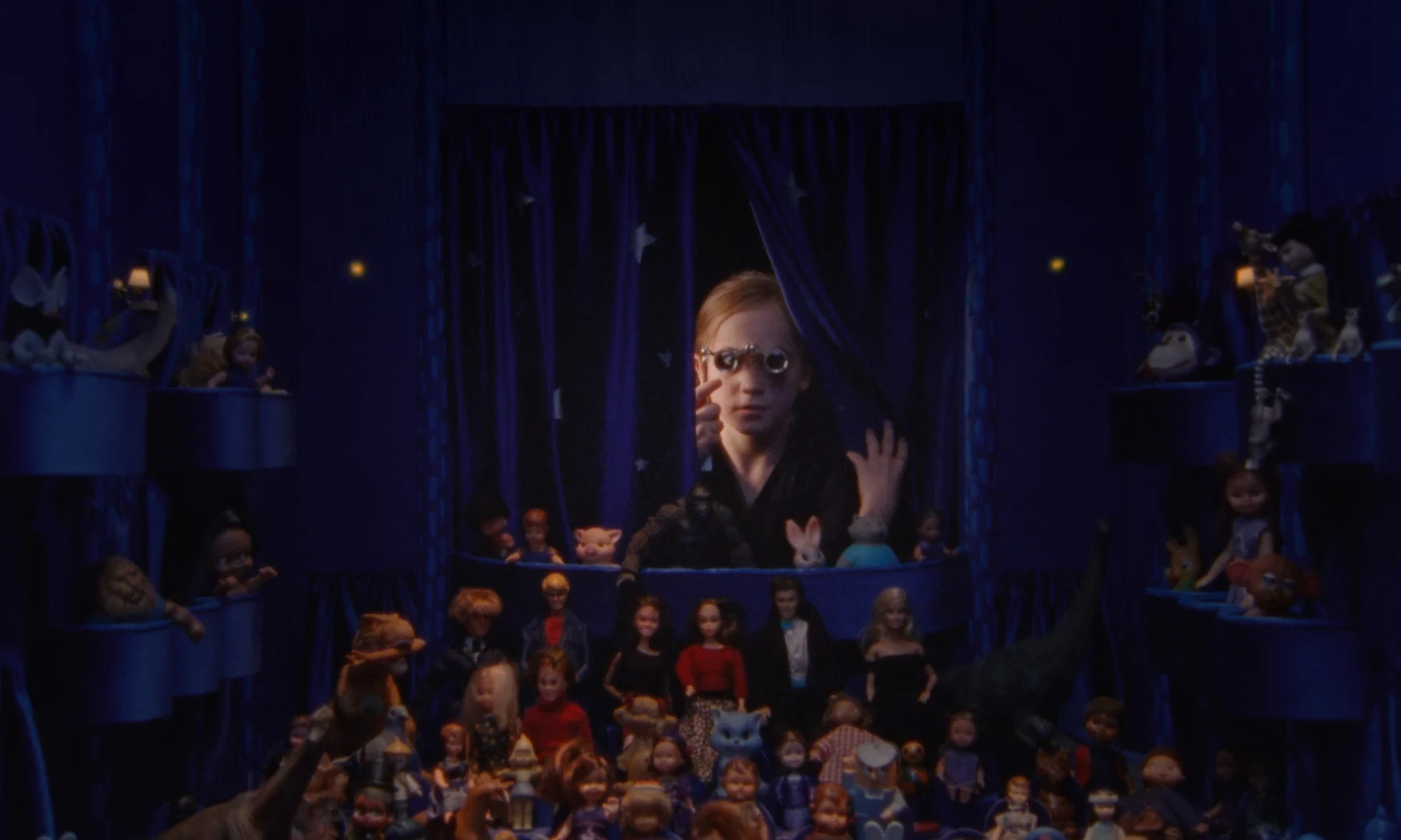
Liza Popova: We finished filming Memory in Moscow with a scene where a fire takes place in a miniature theatre and puppets are burned [which doubles as a metaphor for the devastation during the Chechen War]. By that point, Vladlena was already in Amsterdam and was directing the scene remotely, via Zoom. It was bizarre, but at the same time there was something magical about it.
VS: In March 2022, I left Russia for the Netherlands in protest against the full-scale invasion of Ukraine. For the first half a year, I lived in different places in Amsterdam thanks to the organisation Transartists. They give you an address where you can stay, and I was basically living out of my suitcase. During the first year, I stayed in maybe eight or ten different places. In June 2022, I was given a new address by Transartists. When I arrived, a woman opened the door and led me into what turned out to be a children’s theatre. While walking through the stage area, I noticed huge bottle decorations, and a portrait of Tsar Nicholas II hanging on the wall. It was so fucking crazy. The sets, and even the colours, in this big theatre in Amsterdam looked exactly like those in the miniature one in Moscow, but we had prepared the Moscow set a few months earlier – a crazy coincidence.
In the scene, a candle falls and the fire overtakes the theatre. It’s around 10.30pm, it’s already dark, and I’m alone on the centre stage, directing the scene in Moscow. And all of a sudden, an alarm goes off in my theatre. I look at my phone and there’s a message from the Dutch government, but I don’t understand Dutch. We start filming the scene, and the actress who plays a younger version of myself creates the fire. But a friend in the Netherlands calls me, saying that the alarm has started because there’s a fire somewhere and that I should leave. This is just one example of how crazy the production process was.
The film is extremely visually inventive. It combines puppetry, reenactment, an early post-Soviet Russian TV aesthetic, an arthouse sensibility, elements of diary and photo film, and even characters from B-movies – a human-sized King Kong figure, an unlikely childhood friend that you made at the Raduga, a local cinema in Grozny – to unpack the layers of war-related trauma. I was wondering whether you had all of these ideas for the film from the very beginning, or whether any of them were motivated by this protracted and complicated experience of making it.
VS: During the pandemic, I was doing research on Instagram and I saw Liza’s account. She was posting pictures from Chechnya, and they had a similar look to what I was doing, but she was working with film photography. I watched a film where Liza was the cinematographer [The Year of the White Moon by Maxim Pechersky] and thought she was very good. I DM’d Liza on Instagram, we had a chat via Zoom, and so the preparations for the film began. The process was very collaborative. Together, we spent one month in Crimea and a week or so in Chechnya, and did a lot of research – walking, talking, taking pictures. My family house was still there, and I wanted to use it as a set for Memory. Location scouting took place in 2020, while production itself mostly took place in 2021. We were very deep in the same vibe.
LP: Initially, we’d watch a lot of films while on Zoom calls. We’d watch Chantal Akerman, [Apichatpong Weerasethakul’s] Uncle Boonmee Who Can Recall His Past Lives, and more, to develop a common visual language. Then the long work on the script began, and for many months we’d meet at the office, like office workers, but doing very artistic work. Vladlena would read the script to me and production designer Dasha Litvinova in her voice, with her emotion. And after that, we’d negotiate what we could do about it together.
“we used film stock because it translates the workings of memory very well. It’s like we have a film reel in our head, and sometimes the light is turned on and we remember something. I think analogue film can help us reconstruct this process”
And you also chose to shoot on film stock rather than digitally. I was wondering why you decided to do that – was it 16mm?
LP: Yes, it was. It was filmed on two cameras, one of which was a Krasnogorsk-3, a Soviet camera that was very popular in the 1990s and which we used for dynamic shots – for instance, to convey Vladlena’s subjectivity in the most emotional moment of the film, which takes place towards the end. I think we used film stock because it translates the workings of memory very well. It’s like we have a film reel in our head, and sometimes the light is turned on and we remember something. I think analogue film can help us reconstruct this process, how people remember something. Film was also good for bringing archival materials and our own contemporary footage together organically. When you shoot on film, it doesn’t exactly have a time; it’s neither here nor in the past, but somewhere outside of time. Not only that, but film helped us to work safely, since we would shoot in Chechnya and then ship the materials to Moscow for development. Lastly, film conveys colour really well, and because of the child-like perspective in the film, colours were important to us.
What I also found fascinating while conducting some research is that you, Vladlena, had to undergo hypnotherapy in order to unblock some of the most traumatic memories from that period. And then you, Liza, also mentioned the role of oral testimony in creating the script. Could you perhaps speak more about the audio dimension of the film as well?
VS: The script was based on three levels of research. The first was my diary; the second was the sessions with the hypnotherapist. Many hours of these sessions were recorded, and afterwards we worked with this material. The third level was an interview with my friend, who could be called a co-author of the script, but she still lives in Russia and asked us to leave her name out of the project. With these three levels of detail and information, we built the script. But the script was not really a script in the conventional sense: the voiceover in the film – the storytelling – was the script. I think the script was bigger than what we see in the end because a few stories had to be excluded, there was simply too much.
Memory (dir. Vladlena Sandu, 2025)
I feel like it’s great that you decided to record the voiceover yourself rather than hire an actor, because it just adds a more personal touch to it. Not only that, but you also appear in the film yourself. I feel like, on the one hand, you’ve made this film an extremely personal one, but then the more personal it became, the more dangerous it became for you to stay in Russia and also to distribute the film. I was wondering whether you were conscious of all these risks from the beginning, or whether this is something that came into the picture later.
VS: I think I knew about the risks from the beginning, because it was impossible to find money in Russia for that kind of film in the first place. That’s why I created a fake script for the Russian Ministry of Culture – not to get money from them, but to obtain an exceptional permit to film in Chechnya and Crimea. In Russia, most producers are scared to work with this kind of story, and I really appreciate that Yanna Buryak came on board.
We finished the Chechen block in spring 2021; in autumn, we filmed in Crimea. Then the full-scale invasion started, and to be honest, in the first few months I was like, what’s the reason to even continue this film? I was deeply depressed and even contemplated suicide. Then my best friend called me, a political refugee from Chechnya. He supported my move to the Netherlands, and he supported Memory as well. And I told him, “I’m so sorry, I can’t keep doing this. I’ve lost all the reasons. I’ve lost myself.” We spent a few hours talking, and he said, “OK, maybe you can try something. Just try something. Maybe you can start editing.” After the conversation, I was like, OK, maybe I really need to try. And then, wow, the film became even more meaningful than before. Through editing Memory, I recovered my sense of self and found a reason to continue my artistic practice.
There is very little violence shown – instead, you mostly convey violence through photographs from that era, some of which I imagine you probably found in the TASS archive. This makes the juxtaposition between fantasy and grounded reality, or violence, especially jarring. Was it a deliberate decision for you to omit or limit depictions of violence, especially reenacted violence?
VS: Yes, it was a big question for me: what do we do with this trauma, and how do we avoid repeating cycles of violence? In the production process, it’s almost like I invited everyone to play a game, and we actually had a lot of fun. It was very intimate – a maximum of eight to ten people on set, or fewer sometimes, because we all did a lot of things at the same time. We spent just one month in Chechnya together shooting this film.
You might say I was born in the theatre, because my mum was an actress and, on the first day of my life, she brought me to the theatre. Theatre, for me, is a place to reconstruct and rebuild something. It’s probably one of the few places where you can do anything. The miniature theatre really opened a lot of doors. We could be crazy enough to create different characters. I think that means that, to reconstruct something, we don’t need reality. In a play by the French dramatist Jean Anouilh, called Eurydice, one of the characters says: “Only an artificial moustache looks like a real one.” And I think this sentence is really important for understanding art in general. If you make art, you should be further from reality. You need to believe that the artificial moustache looks more real than a real moustache. We used this principle to depict violence as well.
“If you make art, you should be further from reality. You need to believe that the artificial looks more real than the real. We used this principle to depict violence as well”
I have a few more questions about the Chechen wars, and how they have been represented historically as well as how they are depicted in your film. These wars [1994–96; 1999–2009] are notoriously under-documented conflicts, and people have lost their lives trying to highlight them – the Russian journalist Anna Politkovskaya comes to mind. You mentioned that you visited the TASS archives to collect material, and in general, these wars have been depicted not from below, by the people themselves, but rather from above: either through documentary footage made by TV crews; by Russian auteurs such as Alexei Balabanov [Brother, 1997; War, 2002], who showed little empathy for the people of Chechnya and instead identified more closely with the Russian occupiers; or even in the dubious British biopic of Politkovskaya herself [Words of War (2025), dir. James Strong], shot in Latvia a few years ago.
Your perspective is very different from all of this because it is a very personal one, created from below, by a person who actually lived through all of this. In that sense, I find it similar to the perspectives of artists such as Aslan Goisum or writers like Mikail Eldin. So, my question is: did you find balancing the personal (honouring your family story) and the political (representing the Chechen wars, especially for audiences unfamiliar with them) a tricky thing to pull off?
VS: It’s true that these archives mostly reproduce the point of view of official Russian propaganda at the time. Take Alexandra (2007) by Aleksandr Sokurov, in which a grandmother travels to Chechnya to visit her grandson, a Russian soldier stationed there. The film approaches Chechnya through the perspective of someone who arrives from outside. Its protagonist did not grow up there and has no personal connection to the place. My perspective is fundamentally different because I grew up there and experienced the war as a child. I realised that I was a witness to what happened, and that I needed to bring my own voice to it. That felt important for the historical record. I don’t think we have another film quite like Memory, and I wanted to create a testimony of what it was like from my perspective. It’s my memory, and my own perception of memory and reality, but I tried to be honest and preserve everything that exists in it.
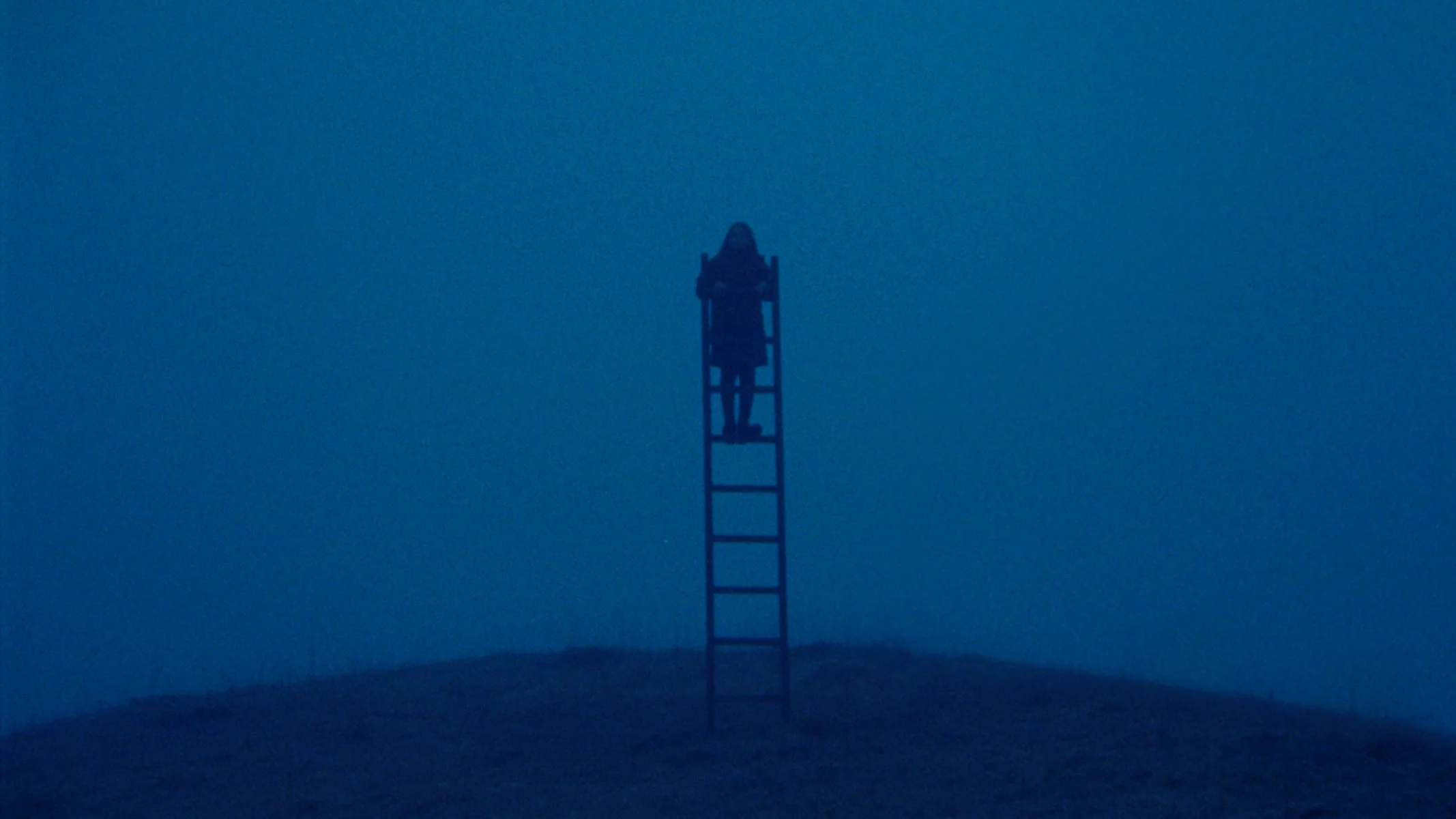
Memory (dir. Vladlena Sandu, 2025)
My final question is about the audience reception of Memory. While touring with the film, what kind of feedback did you receive? And did you receive any feedback specifically from people with refugee or migratory experiences – people who had been displaced themselves, perhaps, or whose ancestors had been displaced? In this regard, I’m especially interested in Ukrainians and Chechens.
VS: Yeah, after one year of travelling with the film around the world, I’ve met a lot of people, and for me, it’s very important to have these conversations. Before, I couldn’t imagine getting this kind of feedback. I see this film as a kind of bridge, a tool for creating dialogue with audiences. I’m really happy to have had this experience over the past year, and I’m still travelling with the film. In New York, I met a woman from Grozny who sent me a message saying, “I remember the Raduga Cinema, which you mentioned in your film. I lived there.” We started to talk, and she said, “It’s also a film about me.” She also started thinking about her family and trauma. The other week, I was at a festival in France where they screened the film under the open sky. I met a Ukrainian woman who lives in France but was due to visit her family in Kyiv a week later. She said, “Thank you so much. With this film, I started to analyse what’s going on more deeply, even my own trauma, my relationship with my family and what’s going on.”
I’ve also met people from the Chechen community, and for them it’s very important because they miss this kind of story, a story told by people from there, and to see how it was, not only during the Chechen War, but throughout the longer history of Russian imperial expansion and colonisation in the Caucasus, which began earlier but intensified dramatically in the nineteenth century. It’s very important to talk about this region through its history. To go further, we need to reconstruct history and analyse these [colonial] processes. For me, it’s very important that people start to talk and go back to their memories. They start to think about themselves. That’s the mirror. Andrei Tarkovsky made Mirror (1975), and he called it Mirror because it could be a mirror for everyone. And Memory is also kind of universal. It’s about us.
LP: I’ll just add that after the screening in Kazakhstan, where I was an after-screening panellist, the audience in the theatre was very focused on the film. There was complete silence, and the tension remained after the screening. When I went out to discuss it, it was very difficult to start the conversation. Even the film critic Oraz Kereibayev, who watched it for the second time, was in a very depressed state, and so was the whole room. The finale had a strong emotional impact. Afterwards, I began to think about why the film provoked such a strong reaction. It seems to me that for a Kazakh audience, the film is inevitably perceived through the country’s own historical and political context. Kazakhstan is mentioned in the film as a place that once received deported Chechens [after their forced deportation in 1944 by Joseph Stalin’s government], and in that sense, viewers may see their country from a position of solidarity and support. At the same time, the story told in the film can also touch on a more contemporary anxiety: the fear of finding oneself under political pressure or losing one’s own agency. Concerns of this kind periodically surface in Kazakhstan’s public discourse, and I think they are also connected to the growing decolonial discourse in the country.
Misha Zakharov is a Russian-born, queer-identifying person of Korean descent and a pro-Ukrainian political refugee based in London. He is an author and film worker, with a particular interest in refugee world-making from below, South-South solidarity, and queer and decolonial perspectives on Eastern Europe, the Caucasus, and Central Asia. He is currently completing a PhD at the University of Warwick.

 Go back to journal home page