Wind, Talk to Me (dir. Stefan Djordjević, 2025)
The nominal borders between fiction and non-fiction, reality and performance, break down in the face of an experience like grief: something universal but profoundly strange, a process that rewires one’s sense of self. This is one of the principles that motivates Serbian filmmaker and photographer Stefan Djordjević’s feature debut, Wind, Talk to Me, which premiered in competition at the 2025 edition of the prestigious International Film Festival Rotterdam and won the Heart of Sarajevo for best film at this year’s Sarajevo International Film Festival.
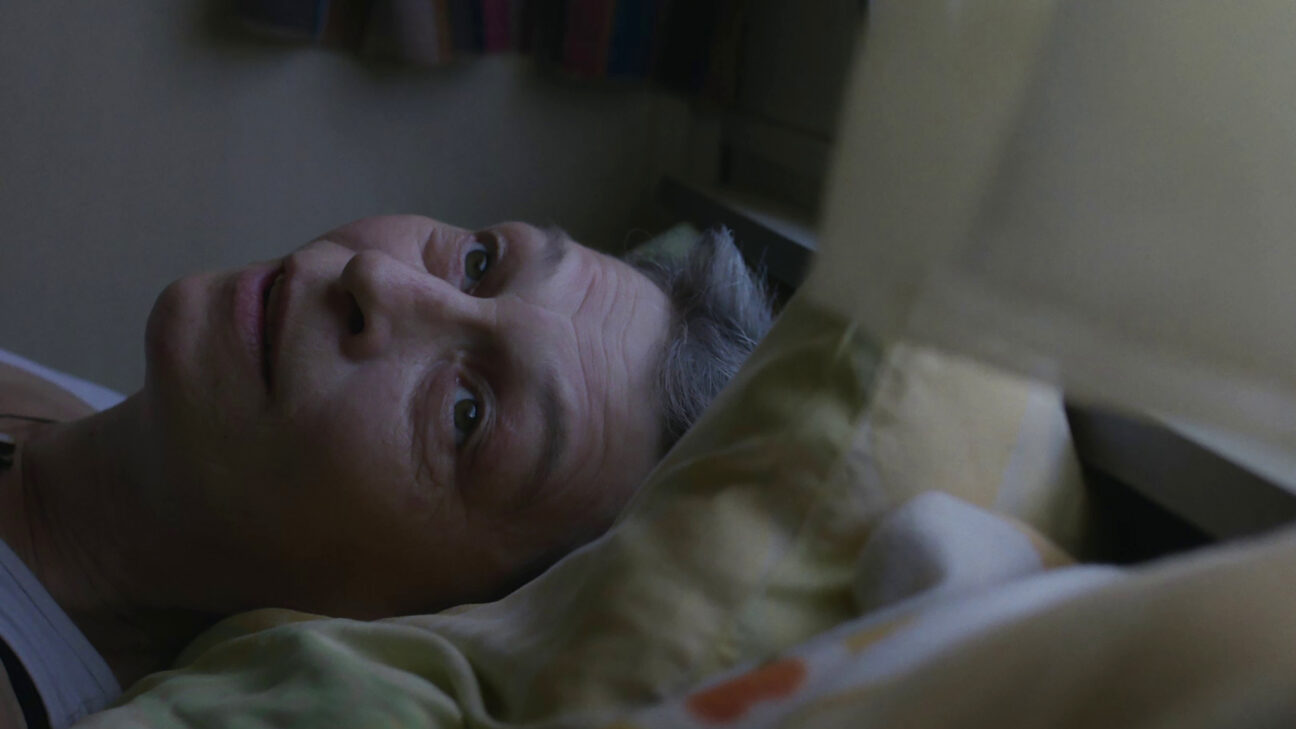
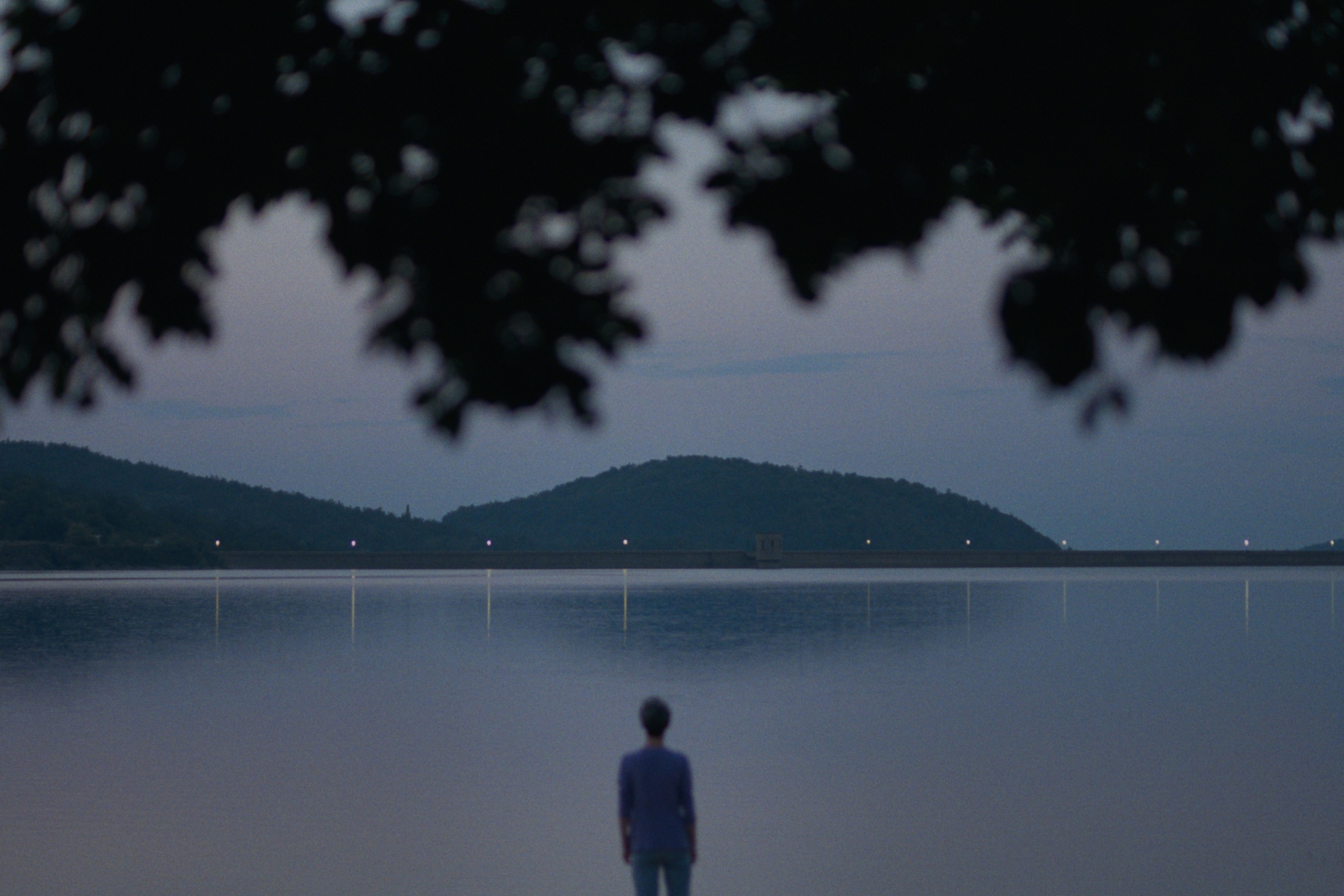
Djordjević’s late mother Negrica was a non-conformist: a single mother who raised two sons in post-Yugoslav Serbia, she chose to respond to the cancer that would ultimately take her life by retreating to the serenity of the family’s lakeside summer house, where she rejected modern medicine in favour of non-traditional healing methods. While Negrica was still alive, Stefan had begun a documentary project about her illness, interviewing his mother in the caravan where she lived in an attempt to make sense of her approach to her illness. When she passed, the idea was put aside.
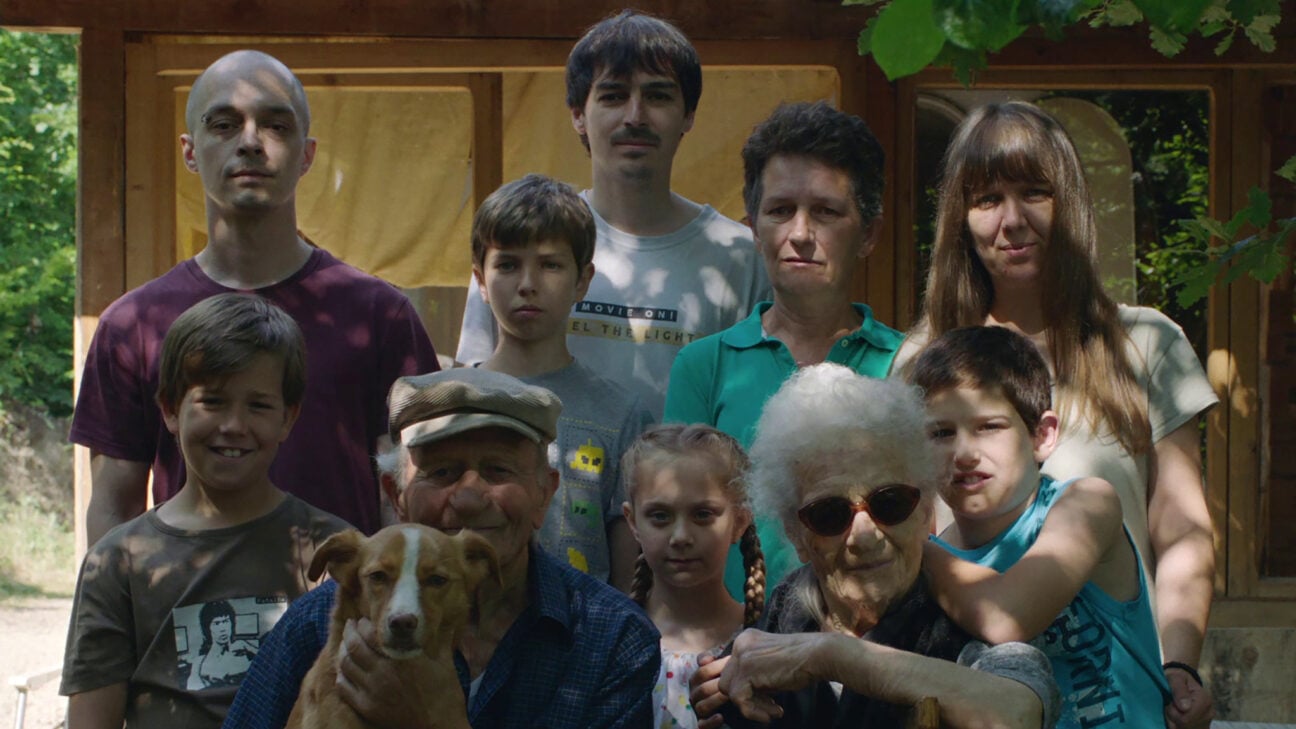
At the beginning of Wind, Talk to Me, we see Stefan driving back to the summer home to meet with grandparents, brother, aunt, cousins, nieces, nephews to mark his grandmother’s eightieth birthday. En route, he hits a stray dog, who he will gradually nurse back to health over the course of the film. Reunited with his family, Stefan reveals his intentions to resurrect the film about Negrica. Only now he plans to cast the Djordjević clan as themselves, in what will be a blend of fictional scenes and documentary footage, in an effort for them to make sense of their shared grief. Interwoven with the archival footage of his earlier encounter with Negrica – whose stated belief in the power of the natural world and our innate connection to it lends the final film its title – this tender, occasionally unnerving, and always compelling material becomes a kind of cinematic reliquary in which Negrica is a character in the story of her own absence.
Wind, Talk to Me is screening on Klassiki from 16 October. To mark the occasion, we spoke to Djordjević about his background in skate culture and still photography, involving his family in the film, and the porous boundary between fiction and real life. This is an abridged version of our exclusive video interview; Klassiki subscribers can watch in full here.
Wind, Talk to Me (dir. Stefan Djordjević, 2025)
You’ve said that you received your initial exposure to film through the world of skateboarding in Serbia and what you’ve called Jackass-style DIY filmmaking. I was curious what you learned from Jackass and shooting skate videos – and whether there’s a direct line between that and something like Wind, Talk to Me.
This was so long ago, maybe 20 years. From the point of view of style, I don’t think I got anything from it. What I did get was exposing myself to uncomfortable situations, let’s say. I experienced physical pain as a teenage skateboarder; with my mum passing away it’s pain that I feel emotionally and psychologically. And then how I transform it, in a way, into art. It’s a therapeutic experience for me: something happens to me that I can put into another form so I can discuss and explore it with other human beings. I think that is very special. I just came from the Taipei Film Festival. A lady came up to me there after the film screened and said, “thank you for dealing with this important subject. In our culture, it’s not so common to talk about it.” I told her: “it’s not that common anywhere on the planet.” My grandparents, who are in the film, don’t feel so open talking about their daughter. So, I feel very privileged that I can exchange these kinds of feelings and that people are open to me.
As I understand it, the film began as a photography project – you have a long history as a photographer as well as a filmmaker – and then as the situation with your mother developed, it became a film. How did that happen, and what was the timeline there, in terms of the switch from still photography to film?
In the beginning, I wasn’t thinking about any kind of project. I just wanted to spend time with my mother. When me and my brother got the news that the cancer had come back 15 years after she healed herself the first time, we thought that this woman can win any battle. But when I saw her and saw how the pain came, I just wanted to be with her. I started thinking that there was a chance to lose her, so I started taking photographs of her, to keep her forever. After she passed away, I wanted everyone to get to know her. This is when I started developing it in my mind, how the idea for the film came out. While I was photographing her, I also shot some dialogue scenes with her; I had that material. When I was missing my mother so much I went back to that material and started thinking about how I could incorporate it in a film. My family all had the need to be together, so we gathered in this time of grief. We were exchanging all the dreams and memories we had about my mother, and this is what inspired me the most.
When we were talking about my mother, we felt her presence. I wanted to audience to feel it in the sense that we did. So, I put a lot of thought into the overlapping and passage of time, how to go with the emotions more than the chronology
I’m interested in how you arrived at the final form of the film. When you began shooting with your family, I presume you didn’t go into those sessions with a clear narrative in mind – so how did you get from a lack of structure to the narrative lines that do exist in the film, such as your relationship with the dog, or the task of mending the house?
The process of writing the script was very complicated for me. I was dealing with my own emotions and also those of my family. I thought that if I just make it out of the memories and emotions that we have, it wouldn’t be very easy-going for the audience. I was thinking about the form of the film for several years. It took me five or six years to make this film. I was thinking that there’s no need to pressure myself to do anything fast, so I was taking my time and following myself into the process. I had the archive I shot with my mother, and I was thinking to myself – and I don’t want to discredit actors – but the power of the words and the energy my mother shared with me would not be possible for any actor to create. That realness. That’s my mother. So, I was like, OK, I need to use this material so that she’s in the film. But there’s my voice in it, so I should be in the film too. But this isn’t just a film about my relationship with my mother, it’s also about the family. So, OK, this needs to be a family film. I should listen to all of them, how they’re expressing their feelings about her. While thinking about the form, I only had one idea, which was that I didn’t want to make a film about the past and the present. When we were talking about my mother, we felt her presence. I wanted to audience to feel it in the sense that we did. So, I put a lot of thought into the overlapping and passage of time, how to go with the emotions more than the chronology.
Wind, Talk to Me (dir. Stefan Djordjević, 2025)
Did you have to approach the process differently depending on the family members involved? I imagine the crew had to develop quite an intimate relationship with them.
It was complex. All of them needed their own approach. First of all, I didn’t let them read the script, even though I structured it very tightly. The most important thing about the script was how to make the connection between the archive material and the “fictional” sections where we are portraying events from our lives. Everything that was written by me was reconstructed [from things that] had already happened. But I didn’t want to give them words they’d already said: I wanted to make these situations very organic, so that everyone could be themselves. I could find the connections [later] in the editing. I was on two fronts at all times: I was directing the film, but I was also acting. I’m in most of the scenes in the film. It was very complex to be behind and in front of the camera. I think I have much more understanding of actors after this: especially how important it is to believe in the moment of creating something, to be present in it, so you can find truth in the moment. Sometimes I would just let go, sometimes I would say: we need to do this or that. If you ask me now after the fact, the scenes where I just gave them space are much better because there you can feel the real feelings, that somebody is present in the shot.
There is one scene in the film I have with my grandmother which is very special for me. I didn’t know the moment would go in that direction. I didn’t give her anything. She took it. She didn’t know the camera was there because her sight isn’t so good. But she became very open, so emotional, so I let her go in the moment and shared it with her. I’ll share it for the rest of my life. We took inspiration from life and made it into fiction, but inside this fiction, life itself flourished again. For me, it’s the most beautiful thing art can give you. We only shot one take, and afterwards I said: we can’t do that again. This is life and we can’t repeat it. I don’t care if it’s in the final cut or not, I shared something very beautiful with my grandmother.
We took inspiration from life and made it into fiction, but inside this fiction, life itself flourished again. For me, it’s the most beautiful thing art can give you
Reading other interviews you’ve given, I found a very moving line where you talked about how you didn’t understand this as a film about death, because for you, death isn’t as inspiring as life, and your mother represents this link to life, this vitality. Can you tell us a little about the philosophy of life that you connected to while making the film?
This is something that came from my mother. We were experiencing these moments with her in the last year of her life. She wanted to be alive so much. She was always very lively, very energetic, but we never talked about it in this way, about the appreciation of life itself. Watching how she fought in her own way against the illness, she was trying to find ways that weren’t there before. She tried everything she could. Even if she didn’t get the results she wanted, she told people that she had cured herself and that she would be there forever. It was so lovely to see how much hope she had, despite how the world is turning and what is happening right now in Serbia. She wanted to be there and share these little moments, to be in nature, to hug trees, to pet cats. I was the simplest approach to living.
Because of her, my perspective towards life totally changed. I try to be much more relaxed, not to pressure myself to do anything. OK, we all need to make a living, but for me it became very important to be present, to be calm, to try to enjoy life. I think the more present you can be in the surroundings, the more you can hear yourself. Then you can be a better version [of yourself] not just for you, but for other people around you. I’m not sad that my mother isn’t there anymore, because she gave me so much life while she was. It’s important to go through these processes because after the pain you will be much more open.
Watch Wind, Talk to Me on Klassiki now.


 Go back to journal home page