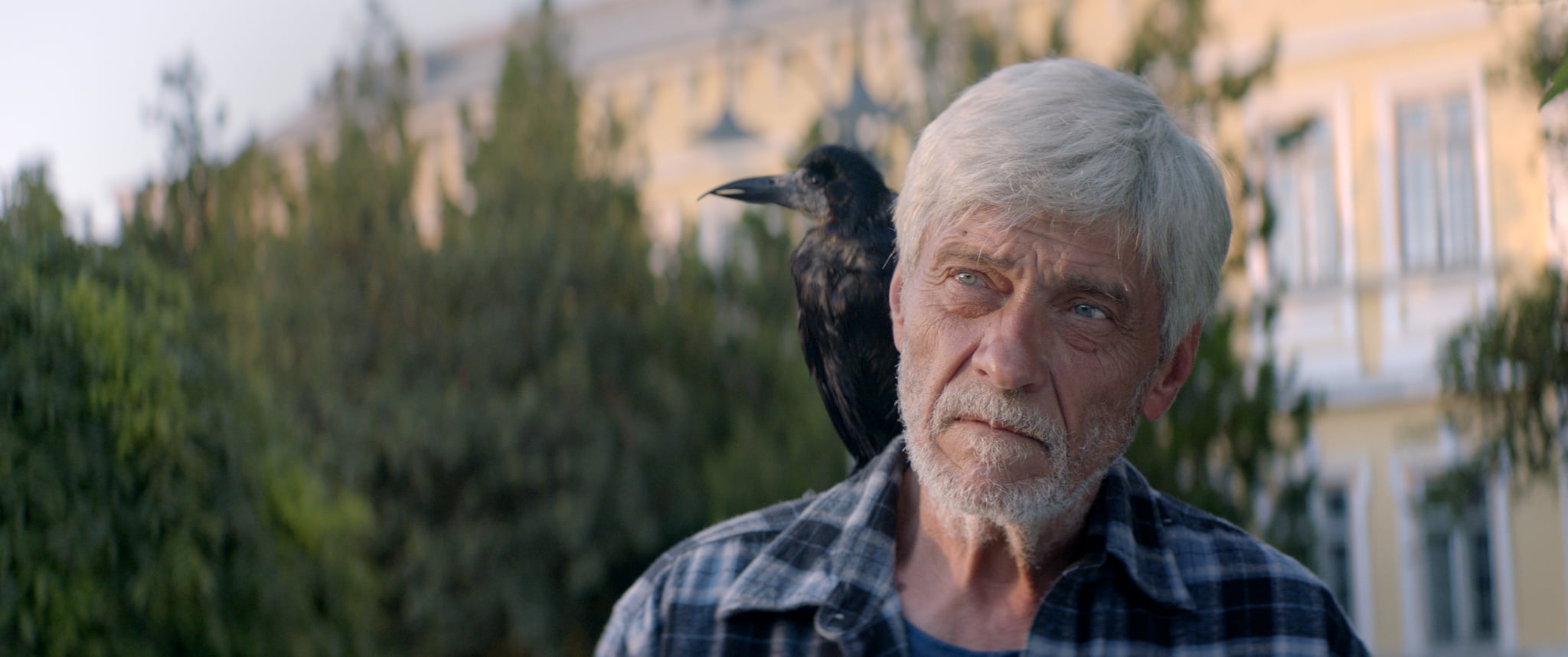
Alexander Trifonov in The Trap (dir. Nadejda Koseva, 2024)
In recent years, Bulgarian filmmakers have done well for themselves on the international scene with a slew of features which have dissected the country’s post-communist social ills. In the words of critic Savina Petkova in an essay for the Klassiki Journal: “being Bulgarian means walking the tightrope between past and present. In spatial terms, the country’s cultural and industrial divides have produced a wealthier, vibrant centre and a countryside that functions like a time capsule… recent Bulgarian cinema [uses] abjection to explore contradictory feelings towards its own identity.” This tendency was highlighted in 2016 by Ralitza Petrova’s Locarno win for Godless and Eliza Petkova’s Berlin Jury Prize for Zhaleika and has continued since with titles like Dragomir Sholev’s Fishbone (2021) and the ripped-from-the-headlines “fake democracy” trilogy from Petar Valchanov and Kristina Grozeva.
The films of Nadejda Koseva belong to the same stable. Her sophomore feature The Trap concerns Yovo (Alexander Trifonov), a taciturn but poetic loner who has retired from mining to run a small private zoo on the idyllic banks of the Danube. His romantic relationship with the natural world sets him at odds with the forces of local power when his faithful dog is enlisted for a ritualistic trophy hunt in honour of a French investor who plans to dump nuclear waste in the unspoiled surroundings. The growing tension between Yovo and the investor’s shadowy local representative Glukhov (Kamen Kalev) unearths long-held enmities and threatens to destroy our hero’s precarious existence.
The Trap is screening at this year’s edition of FilmFestival Cottbus and runs on Klassiki until 28 November as part of our partnership with the festival. We spoke to Koseva about capturing human-animal relationships onscreen, working with Bulgarian screen legend Bojan Papazov, and the complex dynamic between Western and Eastern Europe. This is an abridged version of the interview; Klassiki subscribers can watch in full here.
There’s a cliché in English that you should never work with children or animals. How difficult was it wrangling your non-human cast?
It wasn’t difficult at all. I’m really connected to nature. I do believe that all human relationships and characteristics have their essence in nature. In a way, it’s the same with art: sometimes a falling leaf can be a sculpture. It all just fell in place. Of course, the producer and all the crew were thrilled, because we expected to have a lot of problems with the animals – but we were blessed. The only problem we had was with the mosquitos on the Danube, which are devastating in June. For the rest, no.
The wild boar was not Bulgarian, because no one in Bulgaria could guarantee the crew’s safety. A wild boar can kill you, and it had a very complicated role in the film. It was a tough task. Then I thought of a very dear friend of mine, Kornél Mundruczó, a Hungarian filmmaker, who made a beautiful film several years ago called White God. I called his producer and said: “I need help.” She put me in touch with an animal handler. So, the wild boar was trained in Hungary: it was easier for the crew to go to the wild boar than for the boar to come to Bulgaria, so all those scenes were shot in Hungary.
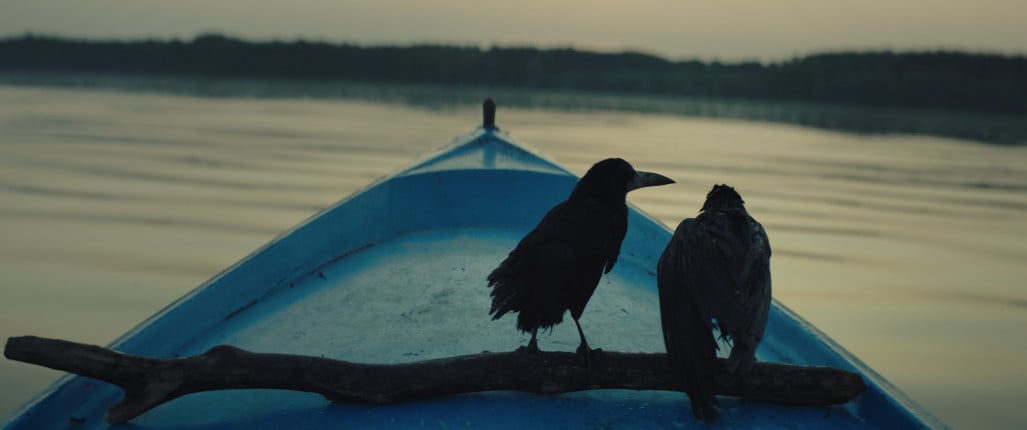
The Trap (dir. Nadejda Koseva, 2024)
What was it like for Alexander Trifonov, who plays Yovo, to deal with all of these animals? And what was it like for you to direct those performances?
In this film there are no professional actors. It was a deliberate choice. It’s not a film that deals with nuances of psychological drama. For me, it was more like myth: the good are good, the bad are bad. And I wanted to have a strong presence rather than nuances of acting. That’s why I cast according to the people’s true nature in life. Alexander Trifonov is quite a character. He can drive a boat and an airplane, he’s very good with children and animals. For him, the camera was probably the scariest creature on set.
The Danube setting: was that a region that you had a connection to beforehand? Did you build the story out of a desire to work there?
The Danube was part of the script. My father was born and raised by the Danube, so there was a true connection for me. In Bulgaria, we are lucky to have the seaside, the mountains, and the Danube, but the Danube isn’t actually that popular, including for filmmakers. I spent two years location scouting, living in small villages, because I needed to feel the atmosphere, to smell the mud, to see the people and how they live. And then I remembered a line from Herman Hesses’s Siddhartha: the river is the image of perfection because it’s always on the move, but it stays the same. For us, the creative team, it was extremely important to make the river a character in the film, and to connect the emotions of the main characters to the river. To make it vivid, human, in a way. We spent a lot of time looking for the exact location. The house of the main character is a set built on a specific spot where the light is really magical. The river there is huge – it’s only a few kilometres upriver from the delta. I was amazed being there: it’s like the Amazon or a jungle.
The most important thing in the film was to show the animal parts of the human character and the human parts of the animal character.
The screenwriter for this film, Bojan Papazov, is quite an important figure in Bulgarian film history. In the seventies and eighties, he made films like Strong Water (1975), All Is Love (1979), and A Woman Aged 33 (1982) that were very striking and unusual for the late socialist era. How did you come to work with him?
Indeed, he’s a figure in Bulgarian theatre and cinema. I was invited by the producer and Bojan to make this film. I didn’t have the honour to know him before. He himself is quite a character. Deep inside, I think he is Yovo. He’s truly connected to nature; most of the time he lives in a very isolated place in the Balkan Mountains. He has the courage to preserve his beliefs.
The film explicitly makes a connection between the struggles of the communist and post-communist periods in Bulgarian history with this question of the generational conflict between Yovo and Glukhov. Was that something that you discussed with Bojan?
The most important thing in the film was to show the animal parts of the human character and the human parts of the animal character. That’s what I promised to Bojan, and I hope I delivered. Besides this, I believe that this is a film about human dignity, about preserving dignity back then during communist times and now in these extremely hard times that we’re facing in Bulgaria. It’s based on the way we live. Actually, a huge part of today’s oligarchy in Bulgaria are the children or grandchildren of the socialist oligarchy. So, it’s not just a connection in terms of ideas, it’s a blood connection. Nowadays in Bulgaria, a lot of people are losing faith that they can change anything. We need to bring back the hope and show people that their lives and their dignity matters.
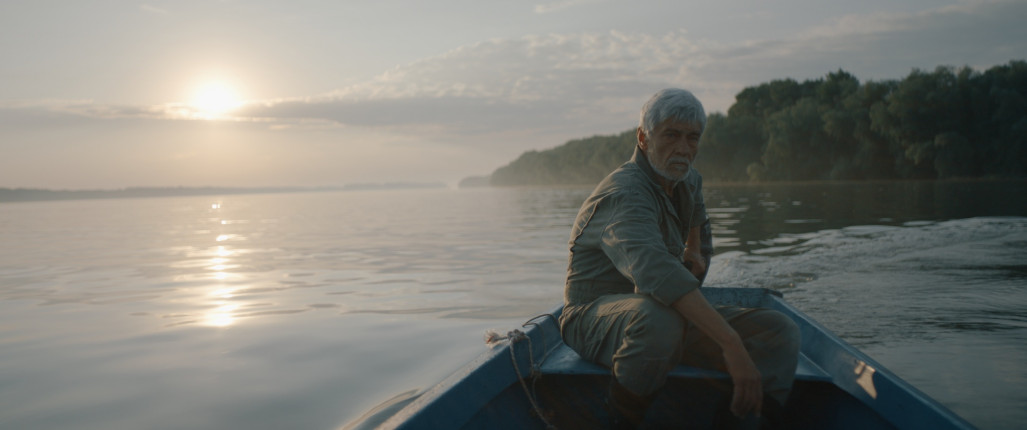
Alexander Trifonov in The Trap (dir. Nadejda Koseva, 2024)
Related to that is the relationship between Western Europe and Western capital and a country like Bulgaria, which you also explore in the film.
It’s complicated. I studied abroad myself, in Holland, so I know that Bulgarian people who travel abroad always have to face some prejudice at first. At the same time back in Bulgaria, we face interest from the Western world. Some things are cheaper or easier to provide [here]. For example, a lot of foreign film crews come to shoot in Bulgaria. Sometimes there is this feeling – I don’t want to say that we’re taken advantage of or used…
Is it more that there’s a thoughtlessness to that relationship, even if it’s not intentionally exploitative or abusive? There’s a lack of consideration?
A lack of consideration, and a lack of the feeling that we’re on the same level. We always have the feeling that we’re smaller and less important, which brings its own complexes.
And that brings us back to the question of dignity, as you say.
Yes. That is the word for this film, I hope.
Watch The Trap on Klassiki as part of our partnership with FilmFestival Cottbus until 28 November.


 Go back to journal home page