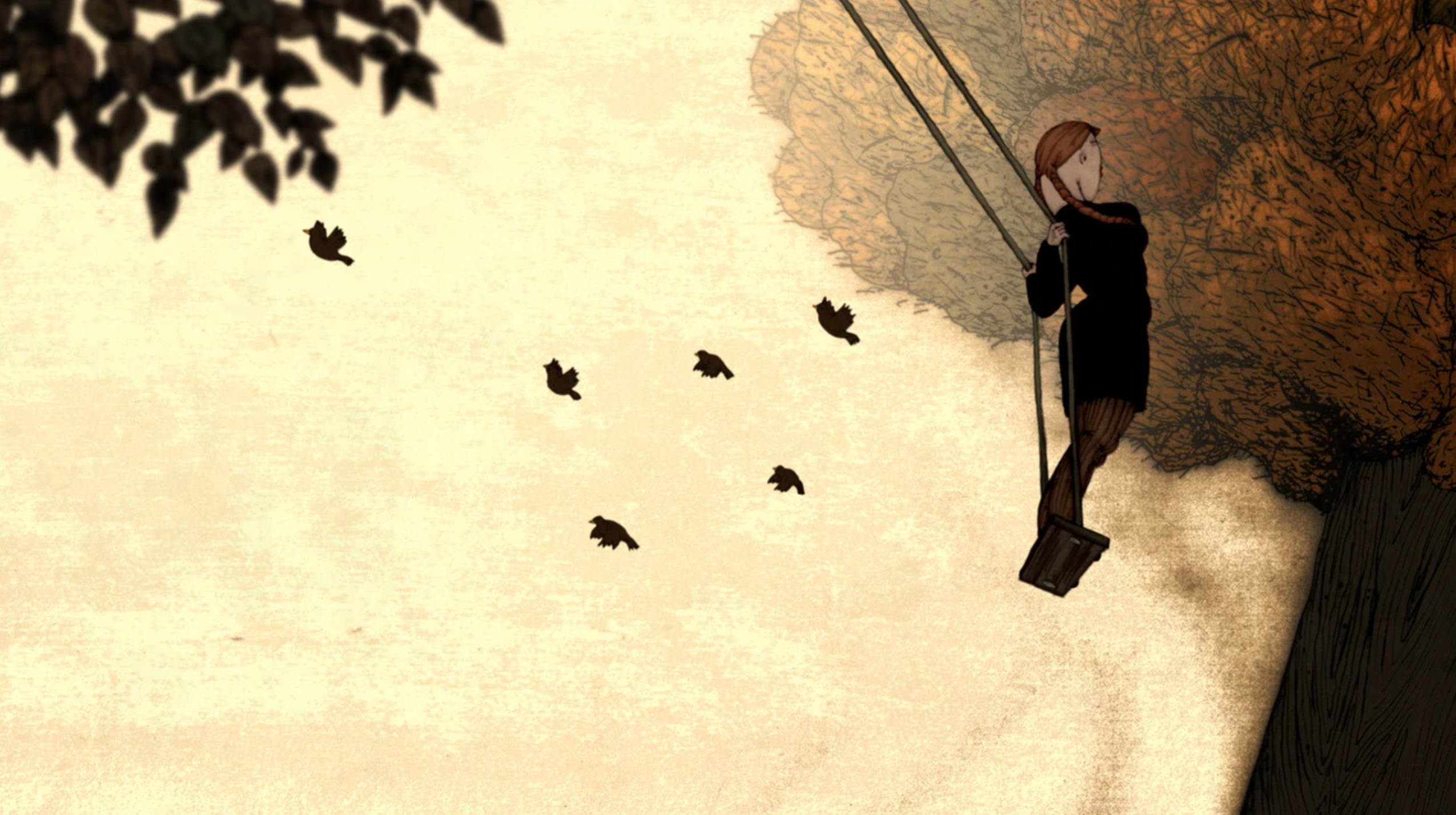
Milch (dir. Igor Kovalyov, 2005)
From Soviet counterculture to Nickelodeon and back again, Igor Kovalyov’s career has traced a strange, parabolic orbit in keeping with his often absurdist animated creations. In his youth, he was at the forefront of perestroika-era rejuvenation of Russian visual culture; a few years after the collapse of the Soviet Union, he directed The Rugrats Movie for a gross of $141 million. Born and raised in Kyiv, his first job in animation was at the Kyivnaukfilm studio, which was tasked with creating popular science educational films, but which in fact served as a hotbed of animation talent in the 1970s and ‘80s. His brother in arms in these formative years was the great Ukrainian animator Oleksandr Tatarsky, with whom he created the DIY shorts that would eventually see him accepted to work in Moscow under the tutelage of Soviet icons like Yuri Norstein and Fyodor Khitruk. In 1988, the duo would found Pilot, the first private animation studio in the USSR. It was there that Kovalyov would create the shorts that ultimately landed him in Los Angeles at the famous Csupó-Klasky studio behind The Simpsons.
As part of their Klassiki Picks season, the Quay Brothers have selected three shorts from Kovalyov that span this peripatetic career: Hen, His Wife (1990) and Andrei Svislotskiy (1991) from his Russian days, and Milch (2005) from his stateside sojourn. All three capture his unique blend of the domestic and the absurd, the ordinary and the grotesque. To mark this rare opportunity for audiences to connect with Kovalyov’s work, we spoke to the director about his formative experiences in the Soviet system and his ground-breaking work in both Russia and the US.
You began working in animation back in the early 1970s at Kyivnauchfilm. This was a studio dedicated to popular science films, but it became a hotbed of animation. How did that happen, and what do you remember about the atmosphere there when you started?
When I was 14, I was certain that I would become a zoologist – more precisely, a herpetologist, a reptile expert. I was committed to that. After school, I wanted to study biology at university, but I decided to wait for a year and work somewhere in the meantime. Since I was a child, I had always drawn a lot, and I was invited to Kyivnauchfilm. I was introduced to the director David Cherkassky, who would go on to make a famous Soviet cartoon on which I also worked, The Adventures of Captain Vrungel. I was very young, and I was immersed in a very creative atmosphere. I got to know very interesting people, virtuoso artists – the kind of happy, free people that I hadn’t encountered before. I was swept up in that atmosphere and immediately forgot about zoology. I completed animation school there at the studio, where I met my future friend and kindred spirit, Oleksandr Tatarsky. Already, neither of us could imagine our lives without animation.

Hen, His Wife (dir. Igor Kovalyov, 1990)
How did your creative partnership with Tatarsky take off? You were making “underground” animations in your home studio: what could you practice there that you couldn’t do professionally?
While we were still in animation school, Oleksandr and I were already dreaming of making our own shorts. We began writing scripts and producing designs for future projects. We were kindred spirits who really understood and empathised with one another. By day, we worked at the studio, by night, we did our own thing. We rented a 35mm camera and did everything ourselves: directing, artwork, animation, cinematography. That’s how we made our first, amateur animation, Speaking of Birds. It was thanks to that film that I got into the VGIK film school in Moscow.
You studied in Moscow with some of the most famous establishment Soviet animation artists. What was it like working with people like Yuri Norstein and Fyodor Khitruk?
I was very lucky to be a student of the great Norstein and Khitruk! At VGIK, we were shown masterpieces of live action and animated film that we had never seen before. A wonderful world of cinematography opened up before me. I got to know directors who completely changed my understanding of filmmaking. I cannot describe the feeling I had when I first saw the films of Robert Bresson.
I remember the sensation I felt when I first saw the Quays Brothers film Street of Crocodiles. It was like a kind of orgasm
How would you describe Soviet animation culture in the 1980s? Many people have noted the influence on your early work of Priit Pärn, for instance. Were there other figures or developments that you felt close to?
It’s true, Pärn had a huge influence on me! Above all, I was fascinated by the style, the manner of his drawing. His art left me restless – I couldn’t wait to see his latest films. I also remember the sensation I felt when I first saw the film Street of Crocodiles. It was like a kind of orgasm. That was my entry point into the creative world of the Quay Brothers; of course, they also had a great influence on my work.
During the perestroika period, you and Tatarsky founded Pilot Films, the first private animation studio in the USSR. What was the atmosphere in Soviet film culture at that time, and what was your vision for Pilot?
With the founding of Pilot, my artistic life with Oleksandr changed completely. It felt as though the whole world around us was changing. This coincided with the advent of perestroika, when we suddenly had a great deal of freedom and largely forgot about censorship. At Pilot, we opened an animation school and discovered very, very talented young people who were enamoured with animation. Some of them very quickly became directors in their own right. Many are now working for American companies on famous shows. Dima Malanichev, a leading art director on The Simpsons, was one of the stars of Pilot. He was an artist on all of my early films, apart from Hen, His Wife; I don’t know what I would have done without him.
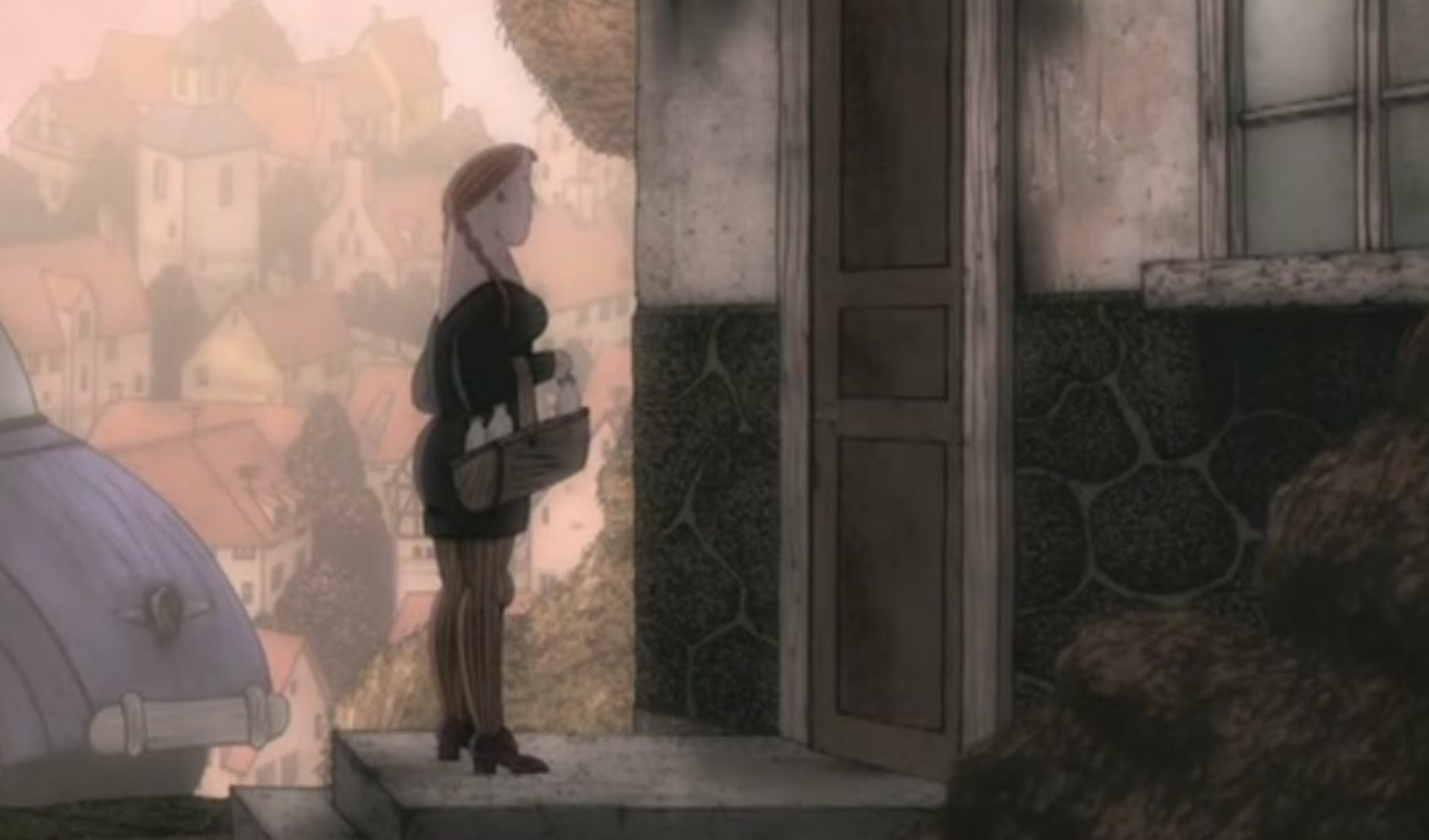
Milch (dir. Igor Kovalyov, 2005)
What was the reaction when Pilot began to release your renowned shorts, for instance Hen, His Wife? It was these films that landed you a position at Csupó-Klasky in the US, where you assembled a team of Russian animators, including a number of former Pilot colleagues.
When Hen, His Wife was shown at festivals, the critics began to write that this was a very “avant-garde” film. I completely disagreed – I didn’t see anything avant-garde in it at all.
Of course, I was very lucky when I got to Los Angeles to work with animators from Pilot, mine and Tatarsky’s students. That’s why our little team felt a little different, a little at odds with the American company we were part of. Many people on the team helped me with my film Milch. It would have been very difficult to make that film without their help.
Watch Igor Kovalyov: three animations now as part of Klassiki Picks with the Quay Brothers, available until 6 March.


 Go back to journal home page