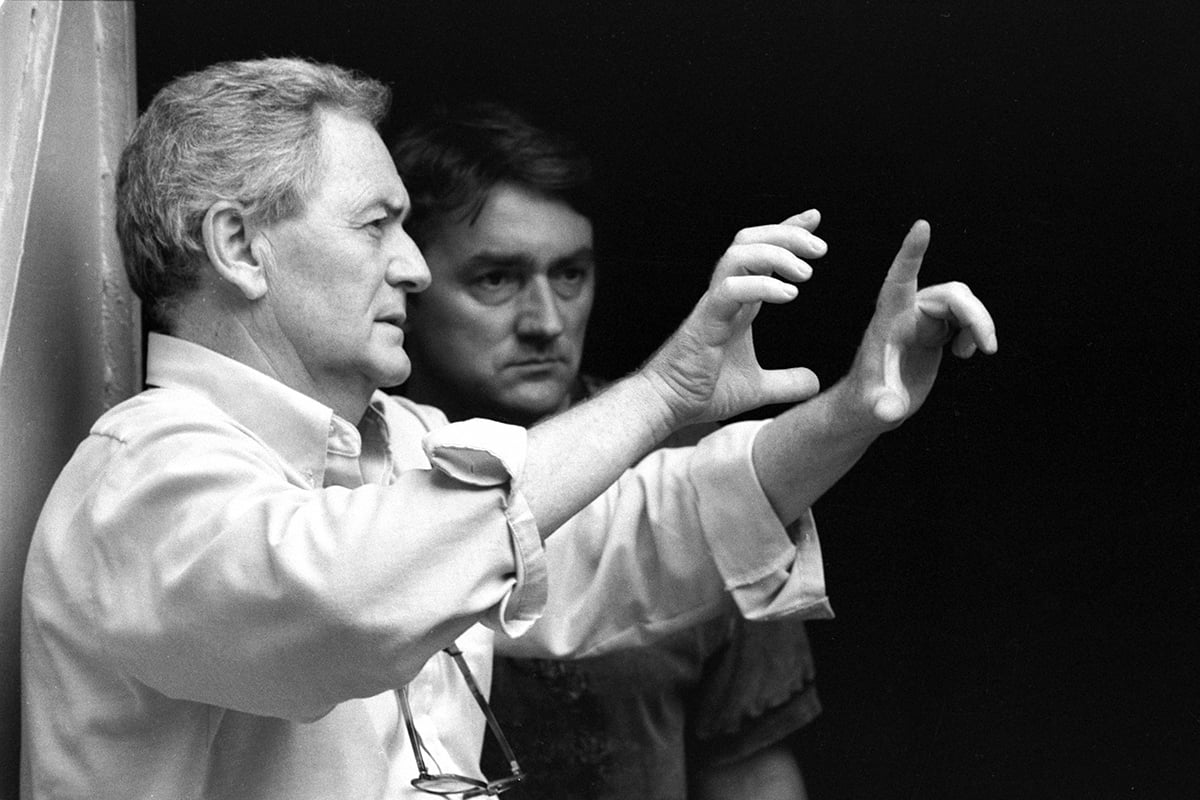
István Szabó
István Szabó is a Hungarian filmmaking icon; which is to say, a Central European one; which is to say, a continental figure. According to Richard Thompson, “few directors have addressed the realities of twentieth-century Europe with such sensitivity and grace.” Across a filmography spanning six decades, Szabó has considered in kaleidoscopic detail the intersection between private lives and national drama, the home and history, Hungary and the wider world. His lifelong subject is the dual history of cosmopolitanism and authoritarianism that has shaped the Central European region through its imperial, fascist, and communist eras – a history with a cinematic aspect. In 2014, he told Moritz Pfeifer: “I believe that Central Europe is a unique part of the world, which has given birth to people like Franz Kafka, Sigmund Freud, Gustav Mahler, but which was also the place of origin of two World Wars. We even created Hollywood! Paramount was created by Adolph Zukor, Twentieth Fox was created by Fried Vilmos, and many more Polish, Czech, Austrians, Hungarians, like Billy Wilder, Michael Curtiz, Ernst Lubitsch…”
Szabó’s creativity is inseparable from the tragedies and crimes that have been inflicted on and by the Hungarian state, from his family’s persecution during the Holocaust to the fluctuating repressions of state socialism. In an interview from 2011, he puts it laconically: “I was born in 1938 and since then I have experienced a royal Hungary, a fascist government, the war; then we had a very short democratic period, then the Stalinist dictatorship, then 1956 and the second communist period; and then the last political change now… It’s quite funny that without moving from your flat you had six, seven, eight different addresses.” From Budapest to Berlin and back again, Szabó’s freewheeling films are marked by a literary sensibility, expressionistic intensity, and rushes of historical detail. But they also retain a simple, humanist core. In his own words: “If I’ve found out only one thing, it is that a living human face with emotions that change can only be shown in the cinema.”
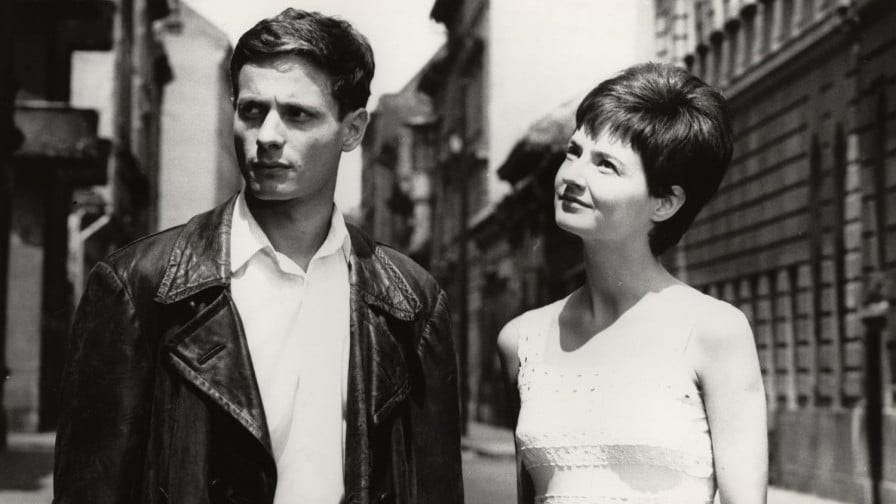
András Bálint and Kati Sólyom in Father (dir. István Szabó, 1966)
Budapest new wave
Szabó was born in 1938 in Budapest, the city that would define the first period of his filmmaking career. He came from a family of doctors, admitting later in life that he would have preferred to follow his father into medicine, “what I have in my blood.” His family had converted from Judaism to Catholicism in the nineteenth century, but this was not enough to deflect the murderous intentions of the fascist Arrow Cross party, who were installed in power by the Nazis in October 1944. At this point, Szabó went into hiding in an orphanage, emerging after the Soviet siege of Budapest in February 1945; his father survived the war, only to perish from diphtheria shortly after the Arrow Cross were routed. This traumatic family history – one with parallels in the lives of so many of his compatriots – is crucial to understanding the motivating themes and settings of Szabó’s artistic career.
Early forays into student theatre convinced Szabó that while he was no actor, he had a capacity for direction. At 19, an encounter with The Visible Man, his compatriot Béla Balázs’s seminal text on silent cinema, was enough to send him to film school. After his thesis film, the playful musical short The Concert (1963) was feted at the International Short Film Festival in Oberhausen, progress through the ranks came rapidly, helped along when he was apprenticed to the head of the minor Hunnia studio, which resulted in his receiving the opportunity to direct a fiction feature at just 25.
That debut was The Age of Illusions (1964), which established with impressive clarity the terms of Szabó’s early career. Over the course of the sixties and seventies, he directed five features. All are set in and around Budapest, featuring a number of returning actors – Károly Kovács, Judit Halász, and most importantly András Bálint. These features are, for the most part, quasi-autobiographical accounts of the years of war and reconstruction that chart their devastating impact and lingering aftermath on the private lives of Szabó’s and his parents’ generations. Coming-of-age narratives and love stories intertwine with the flow of history, from the Arrow Cross dictatorship to the failure of the 1956 revolution against Soviet domination. Szabó himself recalled his mother telling him of these febrile years: “We had a nice childhood and our youth was beautiful, but our life was destroyed by politics and history.” He himself described the subject matter of his films as “the biography of a Middle European generation. I can show you people from Prague, from Vienna, from Krakow, from Trieste, that can tell you very similar stories. I remember when I was a schoolboy, they wanted to give us some aid packages with sugar and chocolate, so they asked us: ‘Who lost his father during the Second World War?’ Seventy per cent of my schoolfriends stood up.”
“when I was a schoolboy, they asked us: ‘Who lost his father during the Second World War?’ Seventy per cent of my schoolfriends stood up”
The elusive nature of memory is also at the heart of these early films. In Father (1966), a Szabó stand-in whose father perished at the end of the war constructs an elaborate fantasy of the deceased man as the mutating moral core of Hungarian society: from resistance hero during the war to political figurehead in the post-1945 state. It is the protagonist’s burgeoning relationship with a young Jewish woman that finally breaks the illusion and propels him into adulthood. Lovefilm (1970) likewise plays off romance in the post-war present against recollections of the dictatorship. Szabó’s most profound engagement with the politics of memory is perhaps 25 Fireman Street (1973), a near-experimental chamber piece in which the residents of the titular apartment building ponder three decades of personal and national tumult, from the First World War to 1956, over the course of a single summer night. The film won the Golden Leopard at Locarno (following on from jury prizes for Father and The Age of Illusions), but Szabó was stung by its lacklustre domestic performance and dialled down the structural playfulness in Budapest Tales (1976) and Confidence (1980).
In form and content, these Budapest films have often been compared to the more whimsical end of the French New Wave, in particular François Truffaut. Szabó was one of a number of Hungarian directors to emerge in the second half of the 1960s as part of the nation’s own putative “new wave” – Miklós Jancsó, Márta Mészáros, and Judit Elek among them. Across Eastern Europe, national cinemas were revitalised by post-Stalinist liberalisation drives, from the Polish Film School of Andrzej Wajda et al to the Soviet Thaw. In Hungary, the post-1956 installation of János Kádár as party boss eventually produced what became known as “goulash communism”, a less intrusive form of state socialism that allowed for limited private enterprise. Szabó has spoken at length about the emancipatory if qualified effect that these reforms had on Hungarian film, describing the “cultural freedom” that he and others felt at the time and refuting claims that he was toiling within a totalitarian system. He has often cited Jancsó’s 1966 classic The Round-Up as an example of the new wave’s ability to criticise the regime from within – if only indirectly. (Jancsó’s film is set in the nineteenth century, evoking parallels between political persecutions then and now.) It was the ingenuity of the filmmakers themselves that made something of the political climate: “I think the freedom of the Hungarian film industry, or the secret of that freedom, was not only in the wish of the regime to sell itself as liberal. The other part of the secret is that the Hungarian filmmakers found a ‘flower language’ to tell the story that we wanted to tell.”
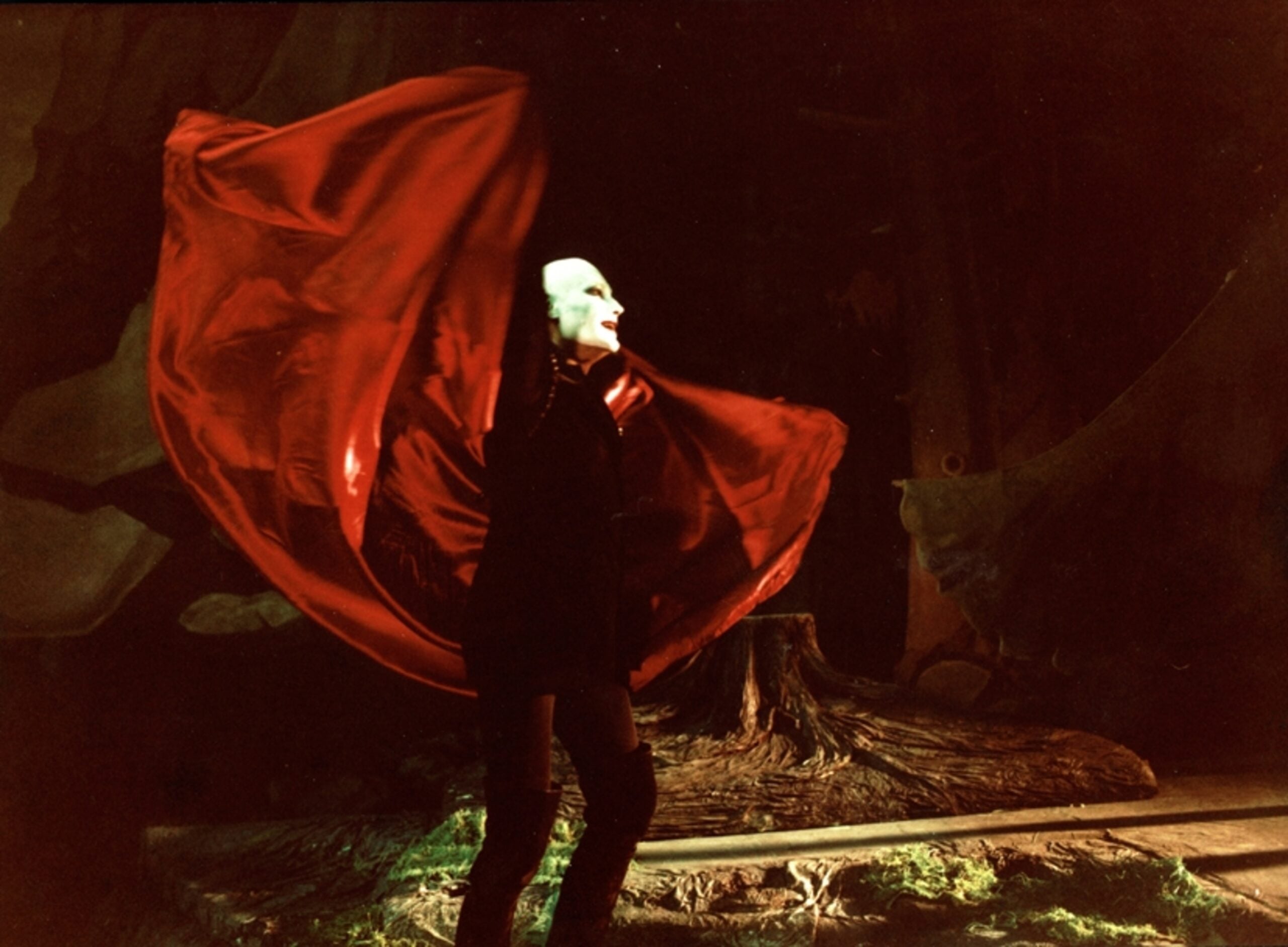
Klaus Maria Brandauer in Mephisto (dir. István Szabó, 1981)
The Brandauer trilogy
The 1980 Cold War romance The Green Bird, made in West Germany and starring the Hungarian Péter Andorai and the Polish Krystyna Janda, is often passed over in accounts of Szabó’s career, but it set the stage for a decade in which his international reputation would soar. Over the next eight years, Szabó made a trilogy of films starring the Austrian actor Klaus Maria Brandauer, co-written with Péter Dobai, with cinematography by Lajos Koltai; all three were international co-productions, with casts stacked with luminaries from Hungary, Poland, and Czechoslovakia dubbed into German. Mephisto (1981), Colonel Redl (1985), and Hanussen (1988) trade the structural playfulness of the Budapest films for epic scale and expressionist intensity, and the specificities of Hungarian history for the grand sweep of Central European tragedy. All three films star Brandauer as a fictionalised version of a historical figure whose professional or artistic rise and fall parallels the tides of political authoritarianism that defaced the region from the nineteenth century to Second World War. In each case, an elaborate historical narrative replete with lurid period detail and cartoonish supporting players is combined with a delicate psychological portrait of the ways in which talented individuals navigate their own moral compromise with political power. In Szabó’s words, “I don’t think that life is possible without making compromises. The question is only one of limits: how far to go.”
In Mephisto, our protagonist is Hendrik Höfgen, an actor whose ambition sees him move from provincial fame in Hamburg to the Prussian State Theatre in Berlin, where he is co-opted by the rising Nazi party in exchange for professional privileges. The film adapts the eponymous 1936 novella by Klaus Mann, which in turn fictionalises Mann’s own relationship with and break from the actor Gustaf Gründgens. Those with an interest in the cultural history of pre-war Germany will enjoy deciphering the real-life inspirations for the film’s dramatis personae – Hermann and Emmy Göring, Hans Otto, Max Reinhardt, Klaus’s sister (and Gründgens’ former wife) Erika Mann – all of whom are caught in the orbit of Brandauer’s intensely charismatic and brutally flawed impresario. Mephisto takes its name from the demon in the Faust legend, which serves as the skeleton key for the entire Brandauer trilogy. Its winning the Academy Award for Best Foreign Language Film (to go with a Cannes screenplay prize) established Szabó as an international cinematic brand and helped to ensure that the following two instalments in his decade-long exploration of power could come to fruition.
“I don’t think that life is possible without making compromises. The question is only one of limits: how far to go”
Colonel Redl takes a chronological step back from the Nazi era to capture the moral and political decline of the Austro-Hungarian Empire in the years before the First World War. Adapted from John Osborne’s play A Patriot for Me, the film acts as an exaggerated biopic of the career military officer Alfred Redl, who rose from humble origins in Galician Lviv to become the head of imperial counterintelligence. Szabó and Dobai take the historical fact of Redl’s homosexuality – as a result of which he was blackmailed into handing over Austrian war plans to Russia, leading to his capture and death in 1913 – as the basis for a careful exposition on the nature of self-deception. Colonel Redl also offers Szabó’s most explicit reckoning with the implosion of the dream of Central European cosmopolitanism into imperial and nationalist bloodletting. “I only know the problems of Hungary and Central Europe,” he once claimed: “Hungary, Czech Republic, Slovakia, Austria, Germany, Poland, which are countries with similar historical, ideological, and political difficulties.” Elsewhere: “history marches relentlessly through Central Europe.” In the film, this reckoning plays out in the push and pull – sexual, professional, and political – between the Austrian, Ruthenian, Czech, and Hungarian officers nominally united in service to a doddering monarchy.
Szabó and Brandauer returned to the fervent atmosphere of Weimar Germany to round out their trilogy. Hanussen is based on the life of Erik Jan Hanussen – actually Hermann Steinschneider, a Moravian Jew – a celebrated Austrian occultist performer who gained notoriety for predicting Hitler’s rise to power. The real Hanussen was an enthusiastic supporter of the Nazis; Szabó’s version is more circumspect, a prisoner to the accuracy of his own visions of an impending conflagration. As such, the trilogy closes with its most morally obscure instalment, one which suggests that the almost supernatural force of historical progress renders even exceptional individuals spiritually bankrupt. In a recent interview with The Guardian, Szabó noted that none of his protagonists are fatally flawed from the start: “The desire for self-assertion is a human trait that can create many positive values. The problem arises when it is used for the sake of a wrong ideology or policy… This still exists in the 21st century, and it does not necessarily require a dictatorship. The power of business is enough. Or some other motive.”
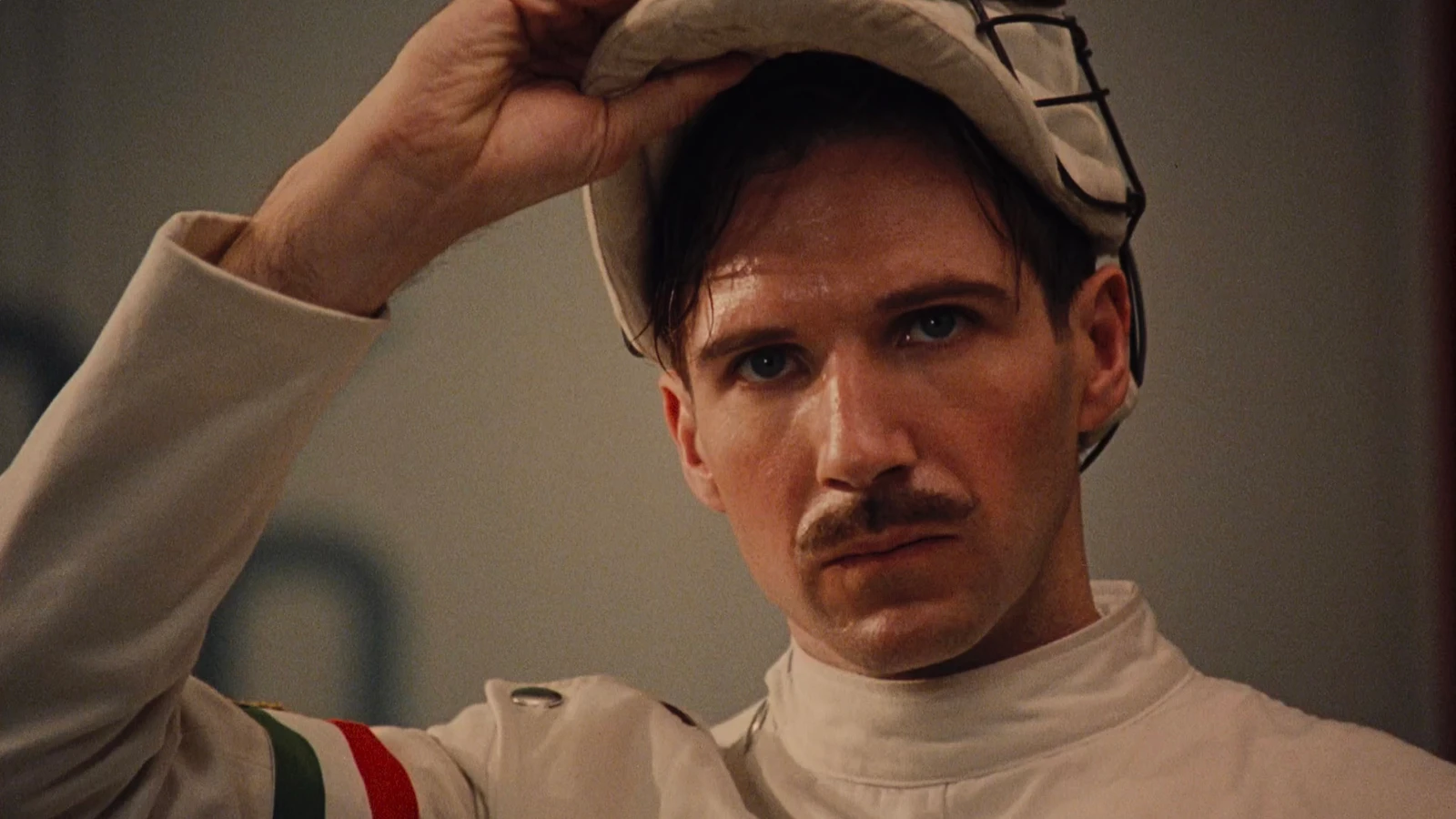
Ralph Fiennes in Sunshine (dir. István Szabó, 1999)
Post-communist international
The end of Szabó’s trilogy with Brandauer was followed closely by the fall of communism in Europe. Szabó has worked at a steady pace since, directing nine more fiction features, often co-productions with French and German partners featuring starry casts. In common with many of the auteurs who made their name as part of the communist state studios, however, his international reputation has receded as the market economy has overtaken the cinema industry. While few would claim that the later entries into his filmography bear comparison with the early masterpieces, there is much to recommend them: they reveal a director freshly invigorated by the social and political life of his homeland, while still retaining a fascination with the history of the continent writ large.
Szabó quickly proved himself an adept chronicler of Hungary’s adaptation to post-communist life and its return to the European family of nations: whether viewed through an autobiographical lens – 1991’s Meeting Venus, his first English-language film, is based on his own experiences directing Wagner’s Tannhäuser at the Paris Opera – or from a more mundane perspective. Sweet Emma, Dear Böbe (1992), which follows two women whose jobs as Russian teachers are on the line following the fall of the old regime, won the Golden Bear at the Berlinale. He has also turned to Hungarian literature for inspiration, adapting twentieth-century favourites like Zsigmond Móricz (Relatives, 2006) and Magda Szabó (the Helen Mirren vehicle The Door, 2012). There has been room, too, for less homegrown literary material; Annette Bening won a Golden Globe for her role in Being Julia (2004), Szabó’s take on W. Somerset Maugham’s Theatre.
“If I’ve found out only one thing, it is that a living human face with emotions that change can only be shown in the cinema”
As the curtain fell on the twentieth century that had been Szabó’s lifelong subject, he released a film that in many ways stood as a summation of his historical concerns. Sunshine (1999), a lengthy period piece starring Ralph Fiennes, was his belated attempt to reckon with the place of the Jews in Hungarian history – a subject that he had been able to address only obliquely in his communist-era work. Fiennes reappears across three generations of the Jewish-Hungarian Sonnenschein family – one member of which had played a minor role as a military doctor back in Colonel Redl – living through the fall of the Hapsburgs, the Holocaust, and the advent of communism. While Sunshine lacks the narrative ingenuity and cinematographic spark of Szabó’s earlier period dramas, it is nonetheless a moving experience to see him finally able to refract his filmmaking through the deeply personal and profoundly political lens of the Jewish experience.
Given the depth of Szabó’s engagement with questions of compromise and complicity, there was a stinging historical irony to the revelation in the Hungarian press in 2006 that he had been an informant for the AVH, the communist secret police, between 1957 and 1961. According to reporting by András Gervai, Szabó had submitted reports on staff and fellow students while studying at the Academy of Drama and Film, in one case leading to the denial of a passport. The most thorough English-language account of the controversy comes courtesy of the historian István Deák, who notes that Szabó’s initial response was to claim that this informing had been an attempt to protect his classmate Pál Gábor – a claim that he later retracted. (A parallel self-defence was deployed after the war by his Mephisto inspiration Gustaf Gründgens, who worked behind the scenes to save the life of the socialist actor Ernst Busch. An important point of contrast: Gründgens also worked after the war to rehabilitate the reputation of Nazi cultural luminaries like Veit Harlan and Emmy Göring.) With Szabó still alive, and still working, it is perhaps too early to tell how this episode will affect his standing in the eyes of Hungarian and international cinephiles – although a number of cultural figures, including some of those he had informed on, have published letters in his defence. But it serves as a reminder of the message of Szabó’s own films: that the past is never dead, and that personal motives are inextricable from the malevolent forces that shape our lives.
Budapest Tales: two films by István Szabó is available to watch on Klassiki now.
Explore our full collection of Hungarian titles here.


 Go back to journal home page