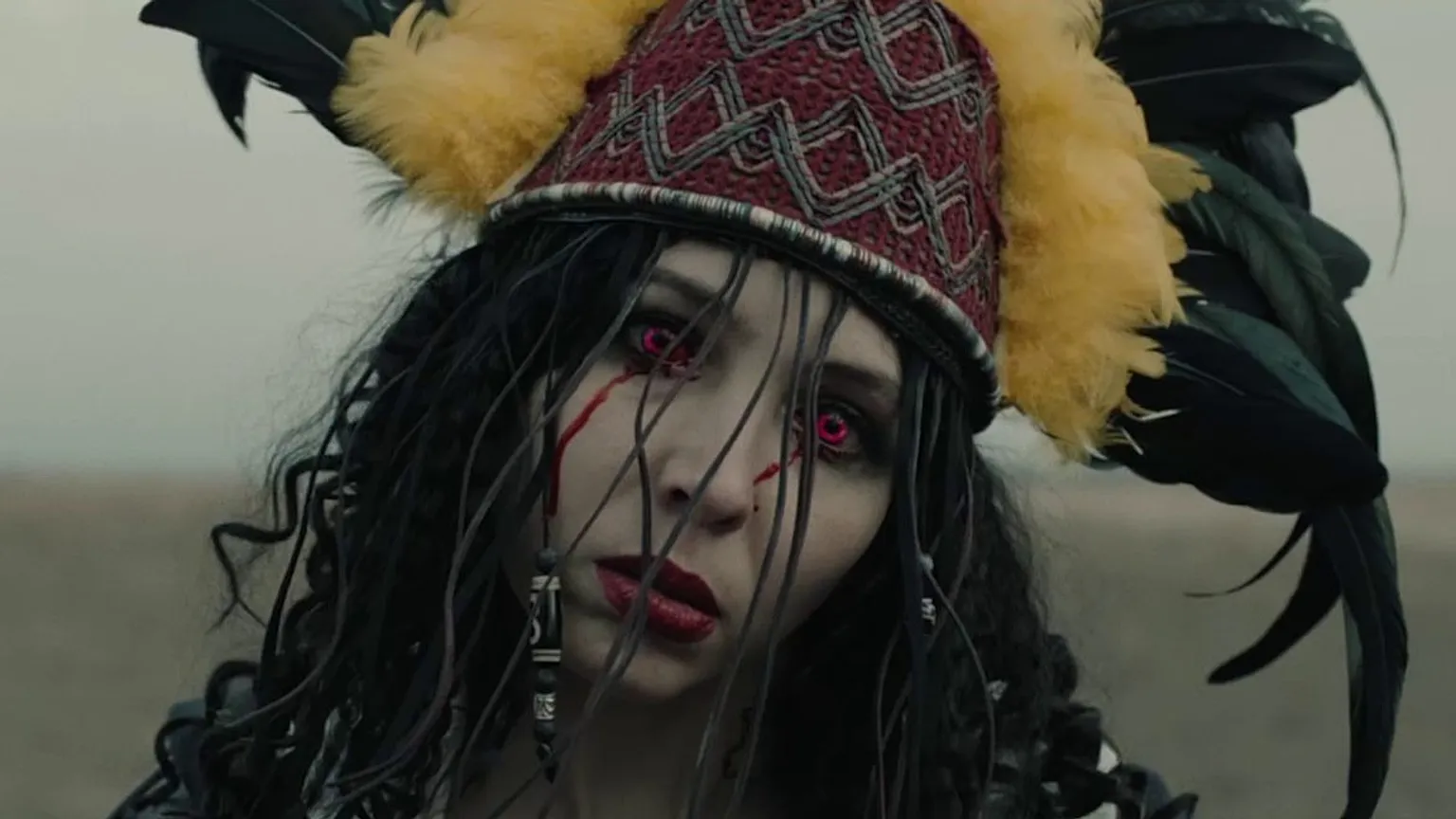
Kazakh Scary Tales (dir. Adilkhan Yerzhanov, 2025)
Adilkhan Yerzhanov has long been Kazakh cinema’s genre maestro. In the past decade, he has moved freely through romantic comedies, gangster capers, and crime thrillers. Yerzhanov is an auteur in the old-school sense that his filmmaking personality is legible no matter the material: sweeping but minimal, naïve but cynical, populist but absurdist, blending humour with violence. Most of his films take place on the vast Kazakh steppe, often in and around the fictional village of Karatas, and are concerned at heart with the struggle of morally upstanding individuals against the petty corruption and social cynicism of modern Kazakh life.
If Yerzhanov has always had an eye for violence, he had never made an outright horror film before last year’s Kazakh Scary Tales. As it happens, this was not intended as a feature film at all: the version that has had a successful run at specialist festivals comprises the first three episodes of what was originally a ten-part television series; when the series’ distributor got cold feet following test screenings, the director repackaged it in this standalone anthology form. The result lands somewhere between a Kazakh take on the small-town conspiracies of Twin Peaks or True Detective and a much bloodier reimagining of the Ur-text of folk horror, Robin Hardy’s The Wicker Man. Kuantai Abdimadi stars as a laconic city detective dispatched back to his hometown of Karatas following a series of mysterious deaths at a rural maternity hospital. With the help of a troubled local clairvoyant (Anna Starchenko), he learns that the locals are in thrall to violent supernatural forces straight out of Kazakh folklore.
With the feature film version of Kazakh Scary Tales now screening on Klassiki as our Halloween special, we spoke to Yerzhanov about playing with genre tropes, the potency of his nation’s folk legends, and the trouble involved in getting his gruesome vision to audiences.
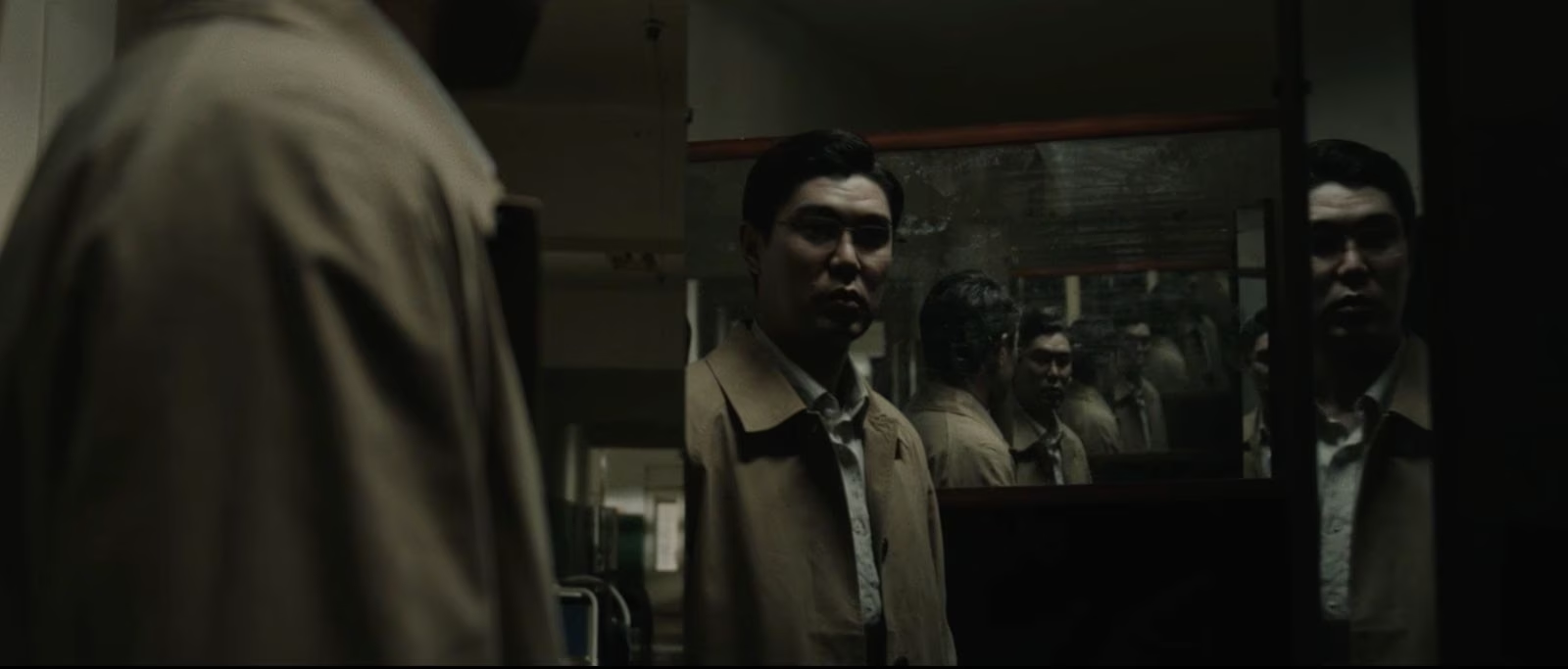
Kuantai Abdimadi in Kazakh Scary Tales (dir. Adilkhan Yerzhanov, 2025)
Kazakh Scary Tales was shot as a ten-episode TV series, but from what I understand, the distributors pulled out over concerns that it was too intense for television audiences. How did you go about getting the project out there for audiences to see, and why did you decide to compile the first three episodes into this feature film that we’re screening on Klassiki?
At first, it was important to me to show the film at a festival, because there are more critics and cinephiles there, and their reviews can later draw more audiences to streaming platforms. Fantasia Film Festival [a genre specialist event based in Montreal] asked to screen only the first three episodes, and I agreed. In the end, those three episodes became the basis for the feature film. Yes, some scenes seemed sensitive to viewers in test screenings. But I’m sure the Brothers Grimm tales are much bloodier. These are scary stories, and they should be scary.
Do you think there’s a problem with Kazakh media and their willingness to deal with these kinds of genres and material? What are your future hopes for the series now?
Unfortunately, censorship keeps tightening. I remember the days when Clint Eastwood smoked a cigar and blew a cowboy’s brains out at the same time. Now they’ll blur the cigar and leave the brains. These new ethics make cinema toothless. Before a film reaches big or small screens, it goes through many prohibitions, and the situation is the same all over the world. The author has to take that into account. The series is doing well on the Freedom Media platform, and I hope it will gradually spread worldwide. Klassiki is the first foreign streaming service to pick it up, and I’m very glad about that.
“I remember the days when Clint Eastwood smoked a cigar and blew a cowboy’s brains out at the same time. Now they’ll blur the cigar and leave the brains. These new ethics make cinema toothless”
For viewers who might not be aware of your career to date, can you explain the significance and symbolism of the setting of the small, remote town of Karatas, which recurs throughout your films?
Karatas is a fictional place. But it’s a place that could exist. It has all the hallmarks of the country’s provinces: steppe, mysteries. I like setting stories there, and I keep returning to it, because Karatas already implies a certain genre and atmosphere. Karatas is a toponym where anything is possible, any absurdity.
You’ve really delved into Kazakh folklore for this film – what English-language audiences call a folk horror. Do you think that these local tales and characters are particularly well-suited to horror?
I really like folk horror, and I’m glad my film fits that category. I hope it does. Everything folkloric and archetypal is very cinematic. While working on Kazakh Scary Tales, I immersed myself in the study of Turkic folklore and learned a lot of interesting things. But my main source is my mother. When I was a child, she told me myths that came from the depths of the villages, legends and tales. Folklore is the subconscious, and it often frightens.
Like so many of your films, Kazakh Scary Tales is also a deconstruction of the petty corruption and cynicism of modern Kazakh society: how did you balance that contemporary commentary with the older, more traditional material?
From the start, I defined this series as horror-noir. Everything social and detective-like comes from noir, and everything magical comes from horror. The hero, a cop, is an aspect of noir. The witch comes from horror. The whole structure of the style is built on this contrast, I think.
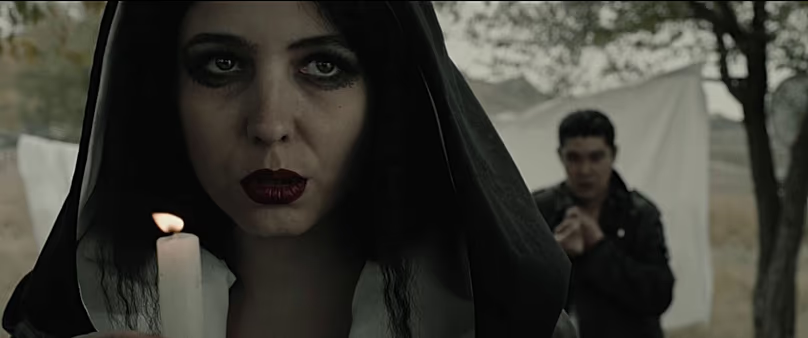
Anna Starchenko and Kuantai Abdimadi in Kazakh Scary Tales (dir. Adilkhan Yerzhanov, 2025)
At one point, the pathologist character makes an important observation: “There have always been demons on the steppe,” and “they’re always women – probably because they don’t have any rights.” Could you tell us a bit about both the nature of the steppe and the folk tales it produces, and how fear and distrust of women creates these mythologies?
Eastern mythology, whether Japanese or Kazakh, is full of female characters. Their most frightening figures are always women. Zhezkyrnaks [creatures from Turkic myth who appear in the form of beautiful women with bronze noses], demons, witches. I think this reflects the fear of patriarchal consciousness face with what it cannot control. My mother used to tell me as a child that you must not let your hair down at night by the water. Water and hair are archetypes, and they carry a lot of anxiety. I think many of the horrors about women emerging from wells with loose hair grew out of exactly this fear. That’s my interpretation, not the final word.
Watching the film, I was put in mind of American serials like Twin Peaks and True Detective, which explore the dark, conspiratorial underbelly of small-town life. Did you have any particular television inspirations while developing the story?
Of course, True Detective is a model to emulate. Style dictates content, and that rarely works. And it fits our steppe perfectly. Yes, it was my main reference point. And to some extent, [David Lynch’s 1990 film] Wild at Heart. Humour, genre, irony, and fear: the combination of the incompatible.
Watch Kazakh Scary Tales on Klassiki until 26 November and read our profile of Adilkhan Yerzhanov here.


 Go back to journal home page