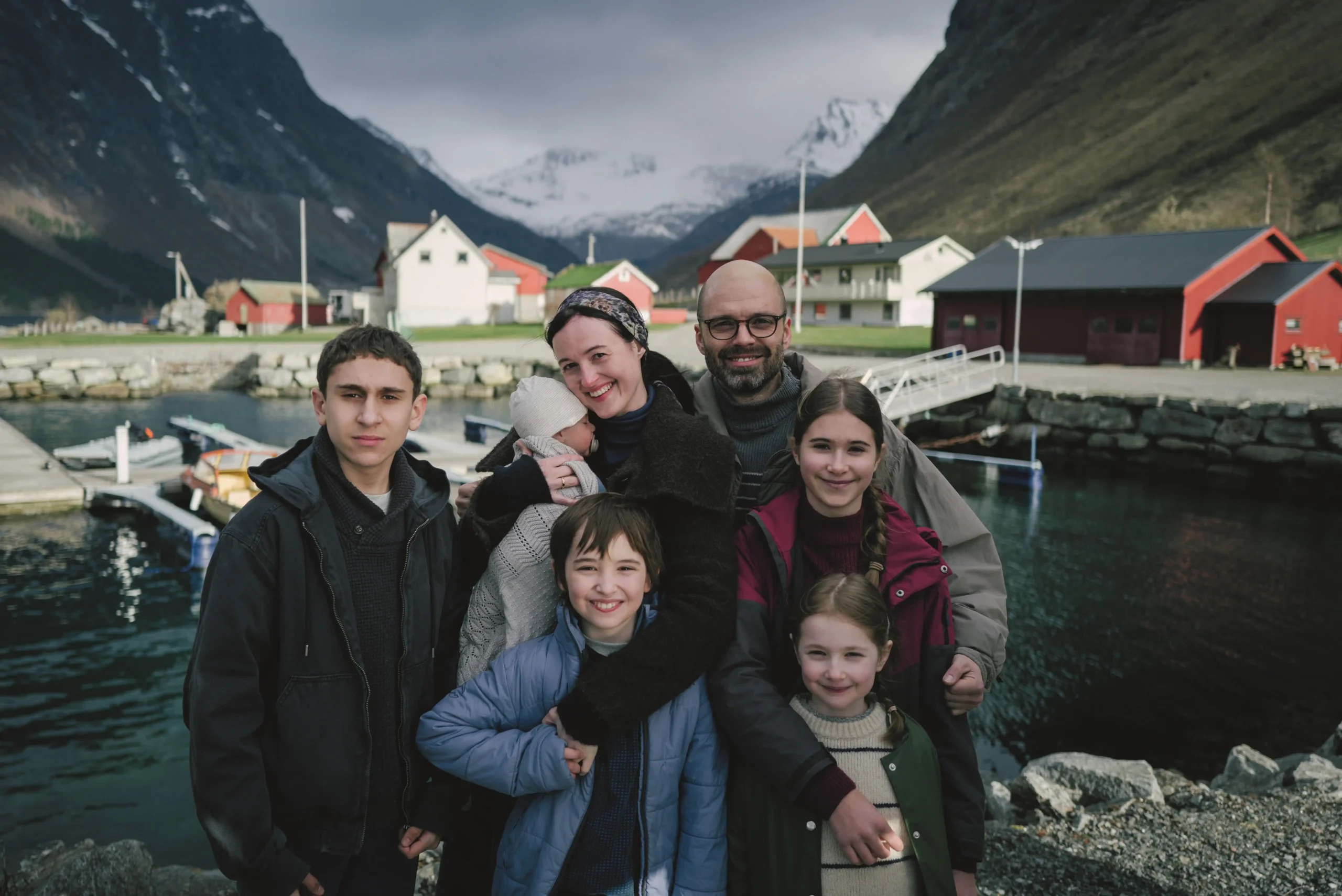
Fjord (dir. Cristian Mungiu, 2026)
The Golden Apricot International Film Festival, which runs every summer in Yerevan, Armenia, is one of the most prestigious films festivals in the Caucasus. Each edition plays host to the GAIFF Critics Campus: an extensive workshop run by critic and mentor Leonardo Goi that provides emerging film writers a vital entry point into the festival circuit. Each year, a select cohort of young critics travel to Yerevan to hone their craft, discussing and reviewing the most exciting titles from the Caucasus and beyond.
After hosting writing from the Campus during the 2023 and 2024 editions, we are delighted to be welcoming back the critics this year. Here, the six participants correspond with one another on the highs and lows of their festival experience and their reflections on local and international titles from the likes of Cristian Mungiu, Pedro Almodóvar, and Paweł Pawlikowski.
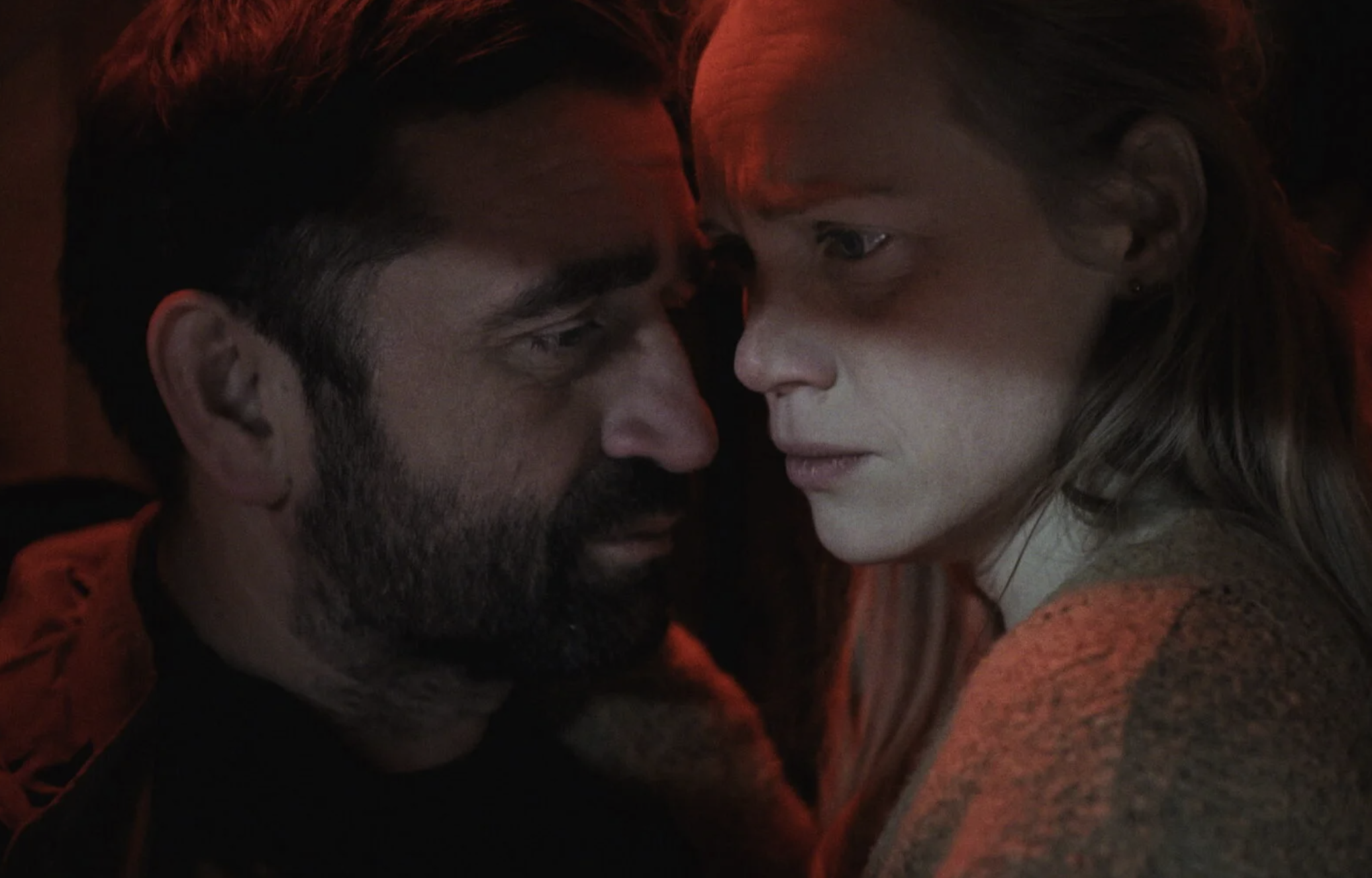
Father (dir. Tereza Nvotová, 2025)
Dear Anahit,
Golden Apricot brings me to Armenia for the first time, and, coincidentally, I arrived on the day of Vardavar, when people drench each other with water in the streets. As I stepped into the opening ceremony the next day in my still-damp sneakers, I was engulfed by immersive instrumentals from musicians scattered throughout the lobby. The ceremony itself is a blur for me, as it was mostly conducted in Armenian and Russian, but I was particularly struck when a singer rapped along to the end credits of the opening film, In the Land of Arto. It may very well be the first Armenian film I’ve seen (do not fault me for not having seen classics like The Colour of Pomegranates), yet I am reluctant to see this as a representative of Armenian cinema. We’ve discussed a bit at the afterparty about its foreign gaze, but I’m curious to hear more of your thoughts, especially from an Armenian perspective.
I showed up the following morning at Nairi Cinema to see Tereza Nvotová’s Father, and Jessica Hausner, jury president of the international competition, was sitting two rows in front of me. Father begins with an anxiety-inducing long take that follows Michal’s (Milan Ondrík) morning routine as he readies himself for a stressful workday and dropping his two-year-old, Dominika (Dominika Zajcz), at daycare. At one point during his day at the office until he realises his child is still in the backseat of his car. It is unfortunately too late for Dominika; what follows is a couple trying to reconcile with this tragedy and a father trying to make sense of his actions. Sometimes filmmakers employ continuous shots purely as a technical show-off, but that is not the case here for Nvotová, who justifiably uses them to build tension and dread. The film introduces the idea of “forgotten baby syndrome”: parents around the world inadvertently leaving their children in their car due to memory failure. If this phenomenon is truly as similar as leaving your keys or phone behind, who is to blame when someone dies as a result?
My day continues in the Moscow Cinema with a sold-out screening of Fjord, the newly minted Palme d’Or winner. There were no seats allocated to accredited guests, and I ended up sitting on the aisle for two-and-a-half hours straight. I did, on another occasion, sit in the most uncomfortable chair in Cinema House, where director-screenwriter Mohammed Hammad introduced his film Safe Exit to a nearly empty room. A young Christian security guard, Samaan (Marawan Walid), is hiding a wanted terrorist in his apartment complex in Cairo, out of fear that his religion may get him into trouble, as his father was killed several years prior by a terrorist group in Libya. Roughly told in three uneven chapters across the longest 114 minutes I have experienced, Safe Exit does not reward its viewer in any formal aspect. There was a moment when red rectangles started flashing on the screen, and I thought, finally, something interesting is happening. So imagine how disappointed I was to realise it was just an issue with the projector. Someone once told me there is a reason behind every filmmaking choice, and there is no such thing as a careless mistake when so many people are involved in the process. But I simply couldn’t wrap my head around Safe Exit – does that make me a bad critic?
I worried a lot before coming to Yerevan. Caucasian cinema has always been a blind spot for me, and the unknown is always a bit daunting. This trip leaves me with more questions than answers about the meaning of cinema and my own future as a film critic. Maybe it’s okay not to have it all figured out.
Warmly,
Yasmine
Yasmine Chan is a film critic and film programmer based in the Netherlands whose writing explores cinema through social, cultural, and political perspectives.
Someone once told me there is a reason behind every filmmaking choice, and there is no such thing as a careless mistake when so many people are involved in the process. But I simply couldn’t wrap my head around this film – does that make me a bad critic?
Dear Yasmine,
Golden Apricot has already passed the midpoint, and after four days of sprinting from one screening, talk, and rendezvous to another while trying to survive Yerevan’s unbearable heat, it still feels like the festival has only just begun. I have attended Armenia’s biggest film fest for many years – it takes place in my hometown and has become an integral part of my life and the city itself, so I often wonder how the experience differs for international guests like yourself. This year, more than ever, Yerevan has been transformed into a cinema town; the festival buzz is felt on every corner. Guests with badges wander through the city, posters with the pithy tagline Be a Poem line the streets, and infectious conversations about film spill out into cafes and sidewalks. It is inspiring to see the festival grow and occupy such a huge part of Armenia’s cultural life.
Although the festival started on Sunday, on the day of Vardavar (which I am sure was a culture shock for most of our peers), it officially kicked off on Monday with the screening of Tamara Stapanyan’s latest feature, In the Land of Arto (2025), which had premiered at Locarno the previous year. The opening ceremony, held at the cavernous Karen Demirchyan Sports and Concerts Complex, was a success, if we shut our eyes to some organisational mishaps and somewhat chaotic interpreting.
The main character of the film is Céline (Camille Cottin), a French woman who travels to Armenia after the suicide of her husband to get his birth certificate and obtain Armenian citizenship for their children. Once in Gyumri, the husband’s hometown, she discovers that her partner had changed his name to bury his dark past connected with the first Artsakh War. The synopsis of the plot may sound intriguing, but the film itself felt underdeveloped, awkward, and rather illogical. The topic is evidently close to Stepanyan’s heart, yet the numerous inconsistencies with reality (such as a foreign woman being able to drive a car loaded with drones through the checkpoint into Artsakh during the conflicts with Azerbaijan, or inhabitants speaking perfect English and singing La Marseillaise, to name a few) will make an informed viewer either roll their eyes or wince in pain. Ultimately, the film is made for audiences unfamiliar with the country, for whom Armenia is, and will remain, a faraway fairy-tale land.
Another film I was happy to get a ticket for was Pedro Almodóvar’s Bitter Christmas (2026). I went into the screening purposefully not having read anything about it, and I was surprised by the sheer metatextuality. Its myse-en-abyme nature keeps on pulling the viewer out of the fictional realm and compels us to reflect on Almodóvar himself. The film spans over 22 years and centers on Raúl (Leonardo Sbaraglia), a famous director struggling with writer’s block, who is writing a new script, feeding on his and his assistant’s (Aitana Sánchez-Gijón) lives. The film is typical Almodóvarian – filled with amusingly unusual characters, playful sequences, and vibrant colors. At times so engaged that we are on the edge of our seats, drawn into the tense journey of both the fictional and the “real”; but Almodovar withholds the light at the end of the tunnel, leaving the narrative frustratingly open – through incompetence, rather than stylistic vision.
Sincerely,
Anahit
Anahit Poghosyan is a Yerevan-based film critic, film event organiser, and student at the American University of Armenia, whose interests include comparative literature and translation.
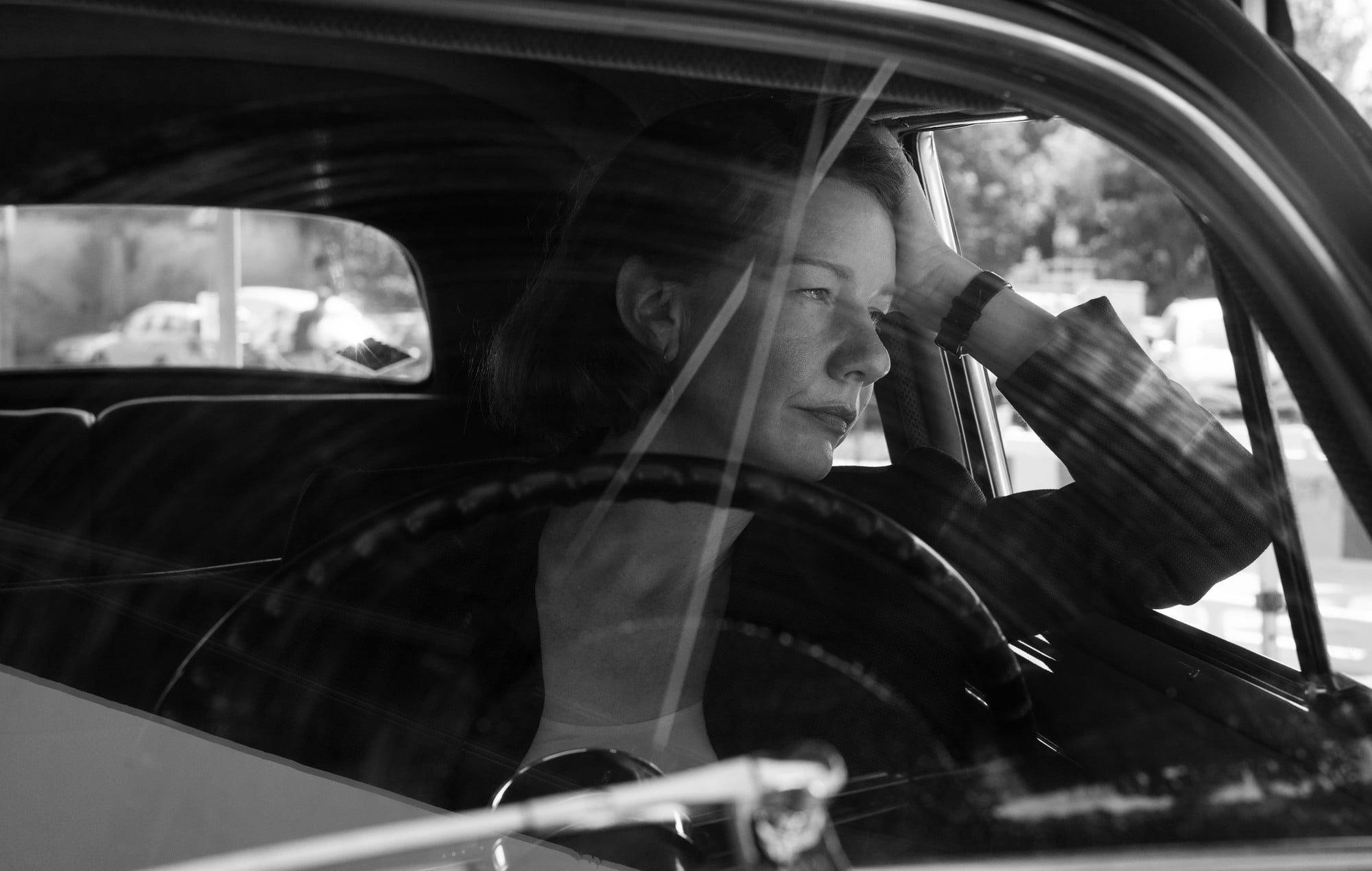
Fatherland (dir. Paweł Pawlikowski, 2026)
Dear Volodymyr,
Just two weeks before Golden Apricot began I went to see Steven Spielberg’s Disclosure Day with my best friends, and was very disappointed to find out we were the only ones in the newly-renovated Nairi Cinema. Maybe that’s partly why I didn’t connect with that film very much: it’s an entirely different experience to be part of a full house filled with people coming from various parts of the world. For two hours, you’re living through something with complete strangers: watching them laugh, get frustrated, or sometimes simply stay silent.
When I stepped into Nairi Cinema three days ago with the same friends, it felt like an entirely different adventure. The screening was sold out. Curry Baker’s Obsession screened as part of the Twisted Apricot program, which makes room for cinema that is a little weird and not to everyone’s taste. Sure, Obsession is funny, but its psychology is what stayed with me. It takes emotions as simple as jealousy and insecurity and pushes them just far enough to become absolutely terrifying. A One Wish Willow turns your crush-who’s-not-so-into-you into an obsessive lover who won’t leave you alone. And voilà.
Now, Vova: I know you have very strong opinions on cinema, and I have a feeling we’re about to disagree. I watched Fjord two days ago (which I know you weren’t a big fan of), yet I can totally see why it won the Palme d’Or. It touches on topics that are so controversial they’re a little hard to talk about. A heavily religious but quite loving family moves from Romania to Norway where their way of disciplining their kids is considered way over the line (no music, no YouTube, bible studies, and… slight slapping). The family is literally on the brink of ruin.
Different as they might seem, Obsession and Fjord are both essentially pure horror. Maybe Fjord is even more horrifying because the chances of experiencing something like your children being taken away because you lightly slapped them on the butt are much higher than accidentally conjuring a wish demon. With yet another powerful performance from Renate Reinsve as Lisbet, together with the recurring avalanches crashing down the snowy landscapes of Hjørundfjorden, Fjord creates an atmosphere that keeps you constantly on the edge. I really appreciated how it was choreographed. Every now and then the film would cut to a brief black screen for just a few seconds, giving the previous shot enough time to sink in before moving on. It’s such a small decision, yet it lets the movie breathe.
Volodymyr, I hope you had fun at Golden Apricot. I always have this lingering feeling of emptiness after a festival ends, so if that washes over you too, I hope it passes quickly. It was a pleasure to be in the Critics’ Campus group with you. Let’s hope next year’s festival brings us even more wonderfully twisted films.
Mane
Mane Harutyunyan is a film critic with background in animation, currently interning as a pre-screener at the Savannah Film Festival, and always on the hunt for soul-crushing movies.
Cinema is sleep, and film festivals are seasons of estranged anabiosis. How many times have I had to behold double reveries in a cinema’s gloom: eyes gluing shut, saliva welling, only the ears still on duty
Dear Mane,
Last night I drank deeply and wandered long through Yerevan, not returning to the hotel until five in the morning. Not that I relish losing myself in benighted rambling – I am simply sleep-weary nowadays. Cinema is sleep, and film festivals are seasons of estranged anabiosis. How many times have I had to behold double reveries in a cinema’s gloom: eyes gluing shut, saliva welling, only the ears still on duty, registering a sound that overlays itself upon one’s own private fantasies.
You know, incidentally, I used to feel deeply ashamed confessing to colleagues that I had slept through this or that picture. Not that I needed to feign cinephilia for their approval; I take a certain pride in my fundamental hatred of the cinematic medium, for that sentiment is no less noble than love, and in any case far superior to indifference. It is simply that escapism, in earlier days, was bad form: a childish, masochistic yearning to flee not merely one’s responsibilities but all the accompanying pleasures of reality besides. Now, though, it seems the sole means left of not losing one’s mind, of not cracking beneath the iron-shod boot of fury and senescent decay.
But it is as though we have all come to rely on estrangement as a modern opiate, forgetting that an overdose threatens a fatal end. This, it seems to me, is precisely what Arthur Harari cried out in his The Unknown, shown out of competition at the Golden Apricot. In this Antonioni-esque, grainy-sickly film, a melancholic and lost voyeur – the photographer David Zimmerman (Niels Schneider) – after a spontaneous coupling at a party with a stranger (Léa Seydoux), finds himself switched to her body. It would seem this is the event of blissful flight, when life is instantly reset to factory settings. But however obvious it may sound, in fleeing yourself you lose yourself in an abyss of oblivion.
What frightens me is not this narcolepsy itself so much as the understanding that it might outlast this chthonic eternity. That I might find myself in a conscious solitude, forced to mimic a fatalistic somnambulism. For sooner or later I too shall have to ask myself, like Klaus Mann (August Diehl) in today’s screening of Paweł Pawlikowski’s Fatherland, whether it is worth continuing this half-dozing existence in the shameful world of ex-criminals, ex-cowards, ex-heroes, ex-victims… We have found ourselves once more in a black-and-white world, and tomorrow’s armistice, should it even come, will not blaze into colour but will only bleach, treacherously, into myriad shades of grey. And do you remember in Ida and Cold War there still flickered a phantom chance of private salvation through faith and unbridled passion. But first, regardless, the end of the war must arrive, and we shall have neither the right to a coherent nostalgia nor the capacity for any reflection whatsoever.
At the close of Pawlikowski’s film, his half-fictional darling of German literature lies upon a bed, in no hurry himself to sink into eternal dreaming. Evidently, he believes that one day a golden apricot shall rise anew over somnolent, half-animate heads. And may that faith come unto me, then. And may it come unto you.
Volodymyr
Volodymyr Chernyshev is a film critic, scholar, and a contributor to major Ukrainian publications such as Ukrainska Pravda and LB.ua.
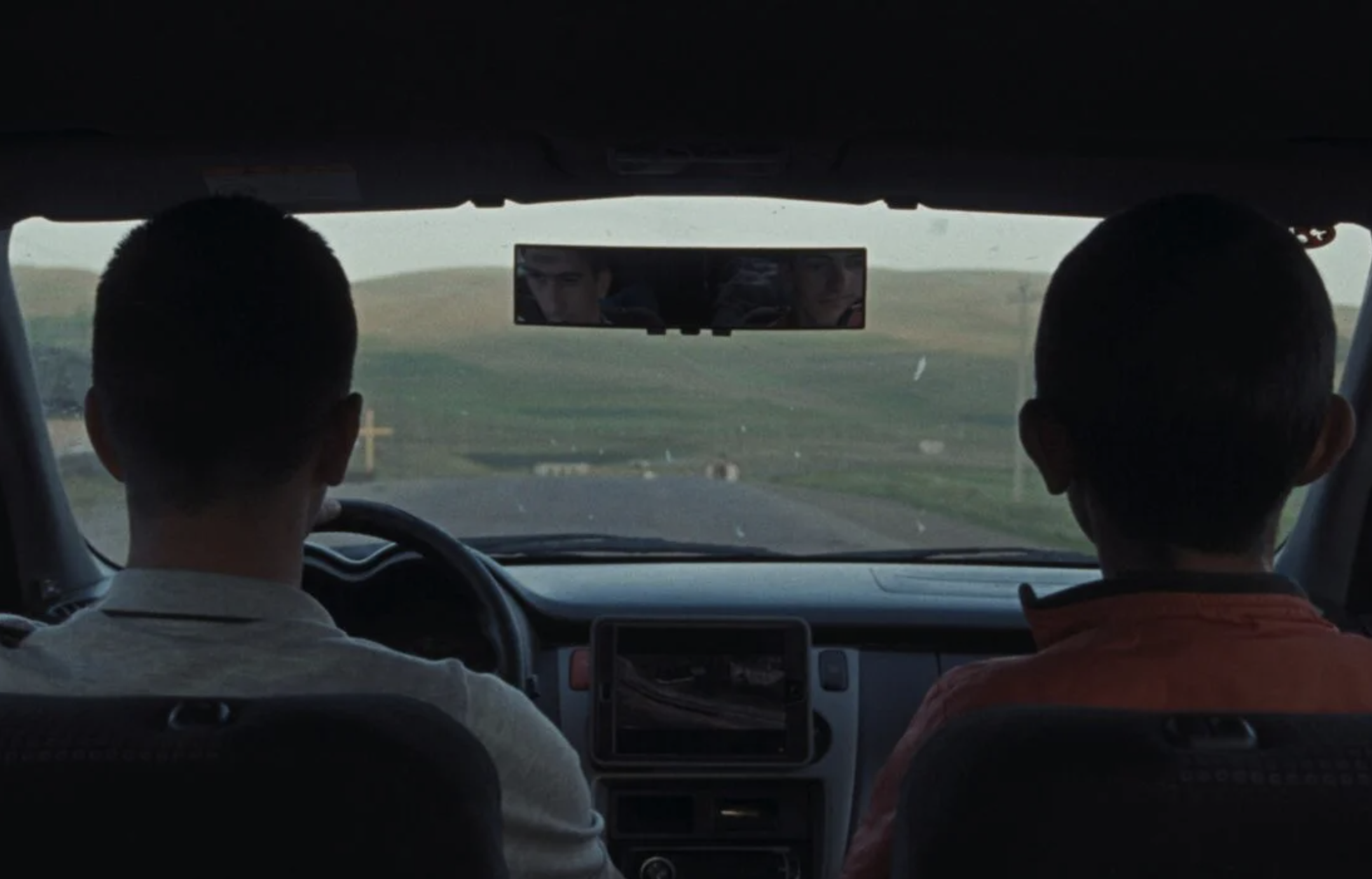
A Fire There (dir. Marlene Edoyan, 2026)
Hi Ariunzaya,
I am now sitting in the conference room of the Cinema House in Yerevan, patiently waiting for a trip to the Parajanov Museum. Armenian music is playing in my headphones – although most of the bands are diasporic, mixing the sound of their origins with the elements from different cultures. I think Armenia is a little bit like that after all. When I was accepted to attend the festival as part of the Critics’ Campus I was over the moon. I jumped onto the plane, with this diasporic music in my headphones, and my heart beating with excitement for the unknown. And so here I am.
If normally films work like a ship that takes you on a voyage all around the world – however clichéd that may sound – then those watched during film festivals are like a hypersonic rocket ship. They don’t let you sleep, and tell you thousands of stories in a span of a few days. One day I was in Palang, Malaysia with Michelle Yeoh in Sean Baker’s new short film Sandiwara, which premiered this year at Berlinale. Another day I was with Audrey Tautou in Paris in Jean-Pierre Jeunet’s 2001 mega-hit Amelie. In a few days I may visit Pawlikowski’s Fatherland in Germany.
But sometimes, films make you stay in one place and contemplate what moving forward actually means. That’s what Inside Amir (2025) by Amir Azizi did to me. As the plot was following the main character Amir (Amir Hossein Hosseini), who was waiting for a visa approval, I fell into this melancholic routine of his. It felt as if I was next to him when he was cycling through the streets of Tehran; I was sitting next to him when he was with his friends, laughing, joking, drinking with them, but sometimes also keeping silent and listening; or when he became one with the city, breathing in its aroma, I was almost part of that whole. Warm tones as if shot with an analogue camera bought by your parents in the eighties matched by a non-linear narration that recalls the way those recordings are played out of order at family parties: it all creates this homely atmosphere. When it was time to move forward, I was just as hesitant as Amir. But he did get his visa and went to Italy, and I also moved on with him.
The Palme d’Or at the 79th Cannes brought Cristian Mungiu’s Fjord to Armenia, and me, through the floors of the Moscow – the name of the cinema, where I ended up without a seat and automatically on the floor for two and a half hours – to Norway. Mungiu’s legal thriller focuses on the Gheorgiu family, who move to a remote village in Norway. They raise their children using different methods than the Norwegians are used to, leading to legal action being taken by the authorities. Where Inside Amir conjures Tehran through visual language, Fjord depicts Norway through actions, behaviours, languages, and cultural differences. This time I’m not part of the family. I am just a random observer, even if I deeply care about what is happening to them. Instead of melancholic nostalgia for a place we recognise and adore, we are thrown into this state of terrifying unfamiliarity, where everything is both disoriented and sanguine. In the end, the bubble of hope bursts, and the familiar question of whether to stay or leave lingers somewhere above. Maybe those two films are not that different from each other after all?
There are still a few more days of the festival for me. Maybe they will take me for another journey around the world, or maybe I will stay within the city of Yerevan, listening to interesting stories from strangers. Perhaps like Amir I will feel nostalgia even if it’s the first time for me here, or perhaps like the Gheorgiu family the expectation of something new will stay with me for longer. Or maybe I will discover a completely new emotion in this strange eclectic city from ancient times.
Magdalena
Magdalena Nieświec is a Kraków-based film scholar and critic who specialises in Asian cinema and youth perspectives in socially and politically challenging times.
If normally films work like a ship that takes you on a voyage all around the world, then those watched during film festivals are like a hypersonic rocket ship. They don’t let you sleep, and tell you thousands of stories in a span of a few days
Dear Magda,
How are you doing? A few days have passed since I came to Golden Apricot. I arrived in Yerevan after a long trip; one day before my arrival, the water festival of Vardavar was celebrated, and I am a little bit disappointed that I couldn’t see this beautiful tradition. On my first day, I attended a Q and A with [Austrian filmmaker] Jessica Hausner. She said that “eating in front of a camera is like sex” – a difficult task, something that leaves you nude. That core idea was incredible for me.
The next day, I watched the morning showing of Marlene Edoyan’s A Fire There. The film is a documentary about three young men – Henrikh, Karlen, and Hakob – who live in a small Armenian community in the south of Georgia. The boys need to herd sheep, work in the fields, and make cheese to maintain their finances and help their fathers. One of them is going to study in Tbilisi, eager to open more doors if they can refine their Georgian. At the beginning of the film, Henrikh’s grandpa tells him: “if you want to go to Georgia and build a good life, you need a connection there”. Henrikh replies: “maybe I can become famous and you’ll watch me on TV.”. These small conversations are never replaced by words of force; they are naturally beautiful.
Meanwhile, Hakob wants to build a family and live peacefully with his long-distance girlfriend Monika, a dance teacher. When Hakob talks about his girlfriend with his grandmother, she tells him they can kidnap Monika for him as they did with his mother. In my homeland of Mongolia, some provinces still have this tradition; recently, I met a person from the last generation to suffer kidnapping. She was my high school teacher. And when I was watching the film, the topic was a little sensitive.
My last film, but by no means the least, was The Westoxicateds by Gilda Pourjabar. You already wrote the capsule review of this film for Klassiki. I liked your idea of the culture and history of Iran being contained in 87 minutes. Yes, that was very true. My favorite choice was the decision to use animation as a guide to illustrate the plot. In my opinion, the main character was not the protagonist Siamak Pourjabbar (the director’s brother,) it was art and freedom. Art is freedom. But not in a moral sense. It’s more about thinking and seeing things differently. Not action, but existence. At the end of the day, we’re human beings: that’s why we need feelings and an understanding of our own world. That’s why I believe we need documentary films more than fiction films.
Sincerely,
Ariunzaya
Ariunzaya Ganaa is a Mongolian interdisciplinary conceptual artist, cultural writer, and filmmaker, based between Italy and Mongolia.


 Go back to journal home page