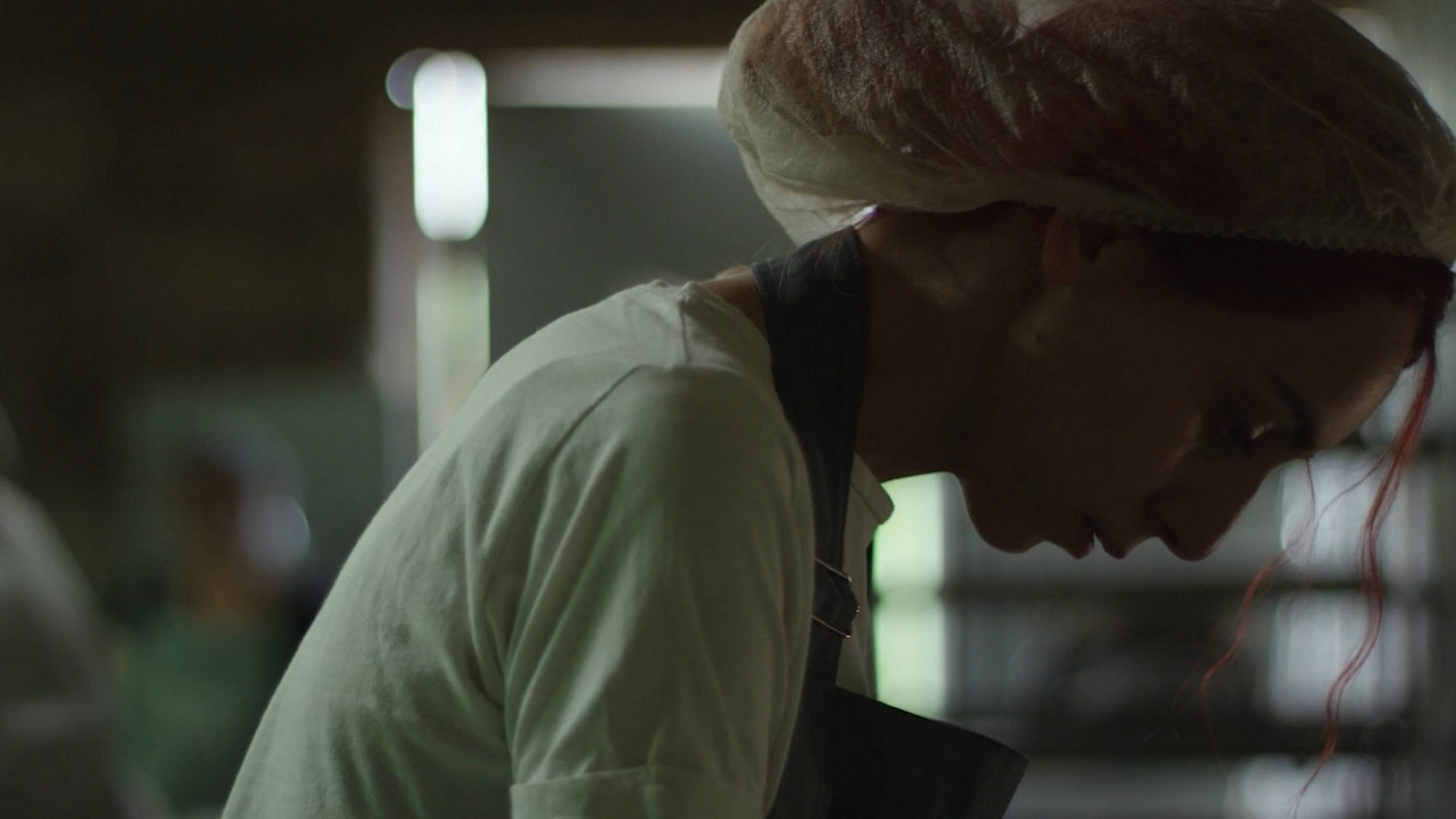
Annika Abrahamyan in Thus Spoke the Wind (dir. Maria Rigel, 2025)
One downstream consequence of Russia’s full-scale invasion of Ukraine in 2022 has been the dispersal of much of the country’s filmmaking talent across Europe and beyond. Countless film professionals have been among the hundreds of thousands of Russian citizens who have fled the country in the last three and a half years. The economic and social effect of such high volumes of new arrivals in neighbouring countries like Georgia and Armenia – many of whom have their own tortuous histories with Russia – has often been painful and remains unresolved. But those of us with an interest in the film culture of the region must now look to these countries for the present, if not the future of Russian filmmaking.
Moscow native Maria Rigel was a recent graduate of the city’s prestigious VGIK film school when she moved to Armenia in 2022. Cinematographer Ayrat Yamilov had honed his craft working in one of the most promising niches in contemporary Russian cinema in the 2010s – the mini-wave of young directors that emerged from Aleksandr Sokurov’s fabled masterclasses in the Northern Caucasus republic of Kabardino-Balkaria. Now Rigel, Yamilov, and American composer Steve Brand have come together in Armenia to produce Thus Spoke the Wind (2025): a mercurial crime drama that moves to the oblique rhythms of the country’s rural outposts while paying tribute to domestic trailblazers like Sergei Parajanov. Hayk (Albert Babajanyan) is an introverted child living in the care of his aunt Narine (Lusine Avanesyan) in a remote village. Their fragile order is upended by the sudden return from abroad of his absentee mother Anahit (Annika Abrahamyan): an impulsive figure with a shock of red hair whose attitudes to sex and work trouble the placid patriarchal surface of the village, inciting a conflict for which Hayk is ill prepared.
Thus Spoke the Wind is screening in competition at this year’s edition of FilmFestival Cottbus and runs on Klassiki until 4 December as part of our partnership with the festival. We spoke to Rigel about adapting to Armenian culture and the aesthetic demands of her visual style. This is an abridged version of the interview; Klassiki subscribers can watch in full here.
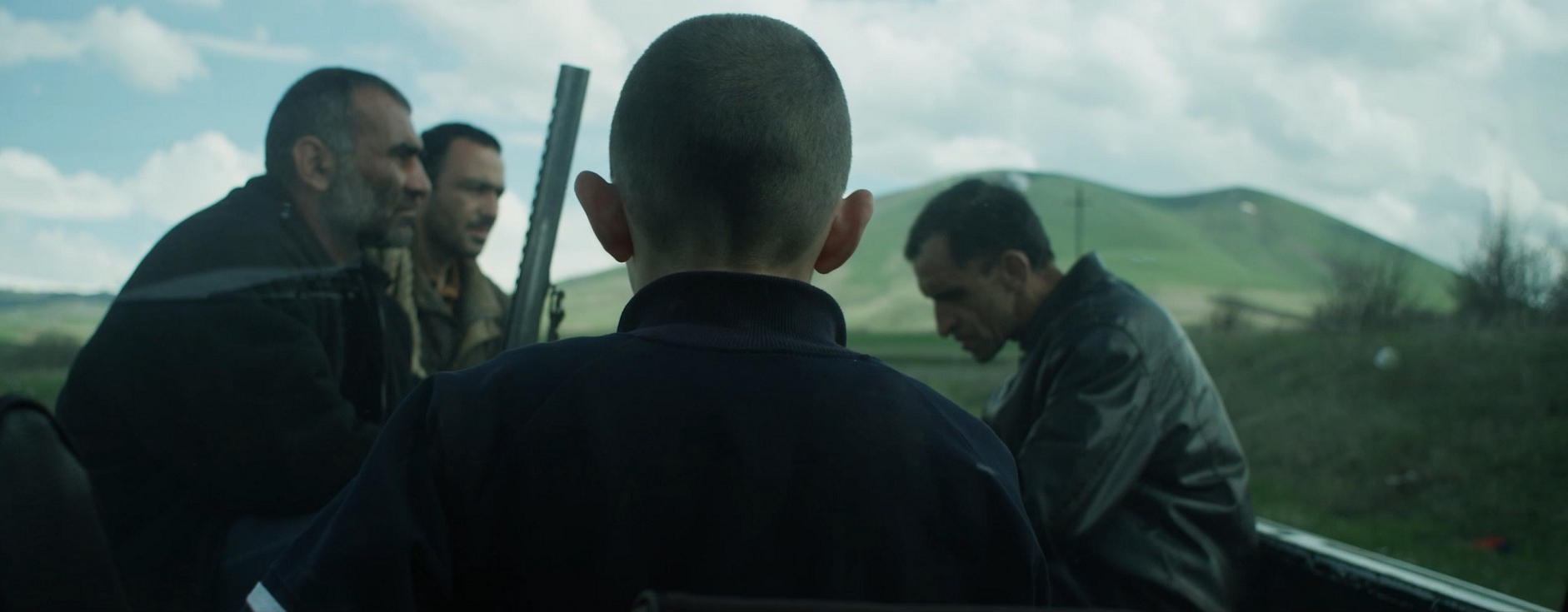
Albert Babajanyan (centre) in Thus Spoke the Wind (dir. Maria Rigel, 2025)
You were trained in Moscow, and now you’re based in Armenia. How did you end up there over the past couple of years, and how did you come to tell this particular Armenian story?
I moved to Armenia in 2022, and I was really inspired by the local culture, people, and nature. That’s why I decided to make my feature here. I also had experience producing my first film independently in Russia, so I was able to prepare for shooting seamlessly. I tried to immerse myself into the new society. It happened naturally: from my first days in Armenia, I had the strange feeling that I had known this place for a long time. The psychology of local people also feels familiar since it’s part of the post-Soviet space.
The film is set in a rural part of Armenia, and the setting is very important to the story. How did you arrive at that?
When I moved to Armenia, I lived in a village outside of Yerevan. It was a very interesting experience. I was inspired by that location. Of course, I spent time looking for locations, but in the end, it wasn’t very hard. There are a lot of beautiful landscapes and locations in Armenia.
Feminist discourse is growing in Armenian society, but it’s clashing with the traditional view of women. That’s a very interesting topic inasmuch as it concerns personal freedom and its impossibility at the same time
You’ve said that you were trying in the film to represent a generational clash that you identify in Armenia: an older, more patriarchal mindset and a younger, rebellious one.
This conflict is deeply felt in modern Armenia because it exists at a crossroads between two cultures: the culture of the past and the culture of the present. I can’t say that there in balance now, because the younger generation tries to express its individuality, while the older generation tries to preserve tradition. Feminist discourse is growing in society, but it’s clashing with the traditional view of women. That’s a very interesting topic inasmuch as it concerns personal freedom and its impossibility at the same time.
You’ve described the overriding emotion in the film as “quiet sadness”. How do you go about creating that feeling onscreen, capturing that emotion?
I think that this emotion grows naturally from the plot. We see the story through the eyes of a young boy who witnesses very complicated relationships within his family. He understands his aunt and his mother, but he can’t do anything with that [knowledge]. At the same time, the act of observing becomes a kind of punishment for him. I tried to use a minimalist visual language – for example, a lot of long takes that create a feeling of time passing slowly and of the emptiness that the boy feels inside.
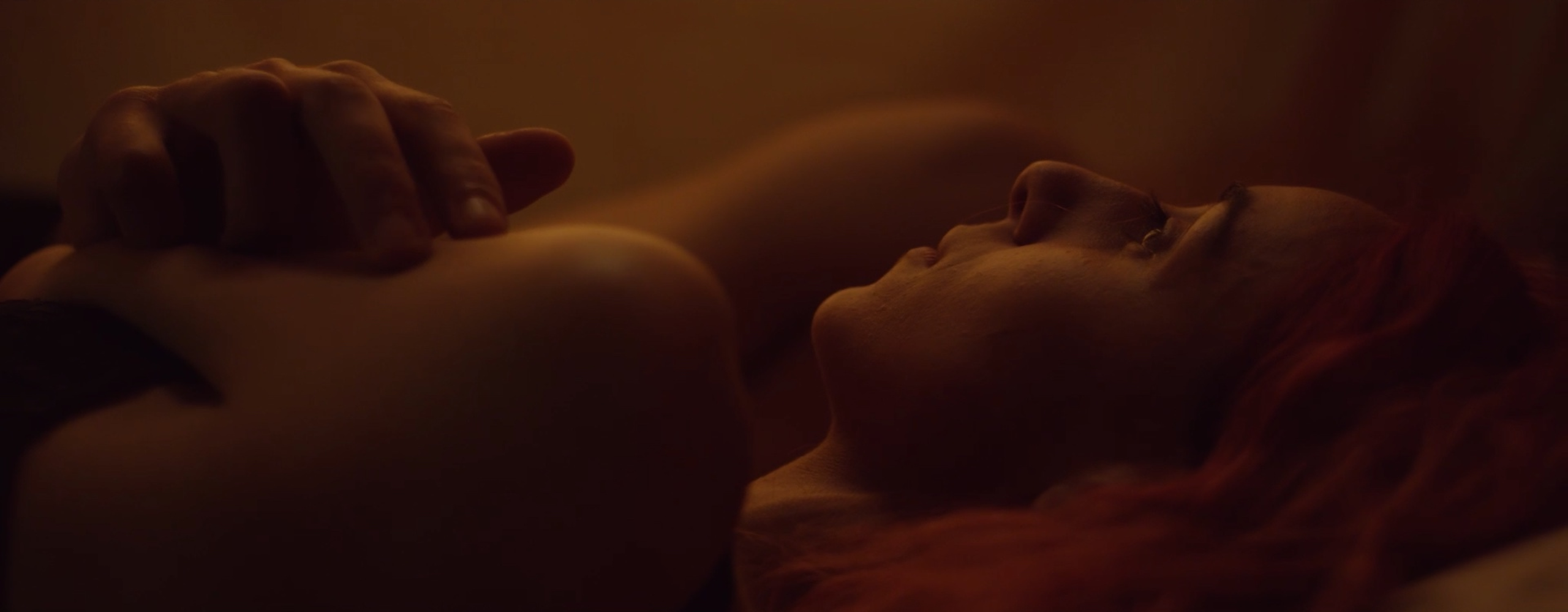
Annika Abrahamyan in Thus Spoke the Wind (dir. Maria Rigel, 2025)
In terms of the visual language: you’ve talked about the influence of Sergei Parajanov, always an important figure when we’re dealing with Armenian cinema. Where do you locate that inspiration in your film?
I think it’s an Armenian cultural code. For me, it combines minimalism, rawness, and poetic melancholy. I like this combination, I find it very beautiful, and I see it in Parajanov’s movies too.
You’re working here with the cinematographer Ayrat Yamilov, who did some great work with young Russian filmmakers at the end of the 2010s – Kira Kovalenko, Aleksandr Zolotukhin – who came out of a masterclass run by the great Aleksandr Sokurov. How did you end up working with him?
I really wanted to work with Ayrat, because he deeply understands Sokurov’s aesthetics, which was very important for me. But every film requires its own approach, and we were also inspired by directors like Bruno Dumont and Gaspar Noé. It was very important to find our own tone that reflects the Armenian cultural code.
Watch Thus Spoke the Wind on Klassiki until 4 December as part of our partnership with FilmFestival Cottbus 2025.


 Go back to journal home page