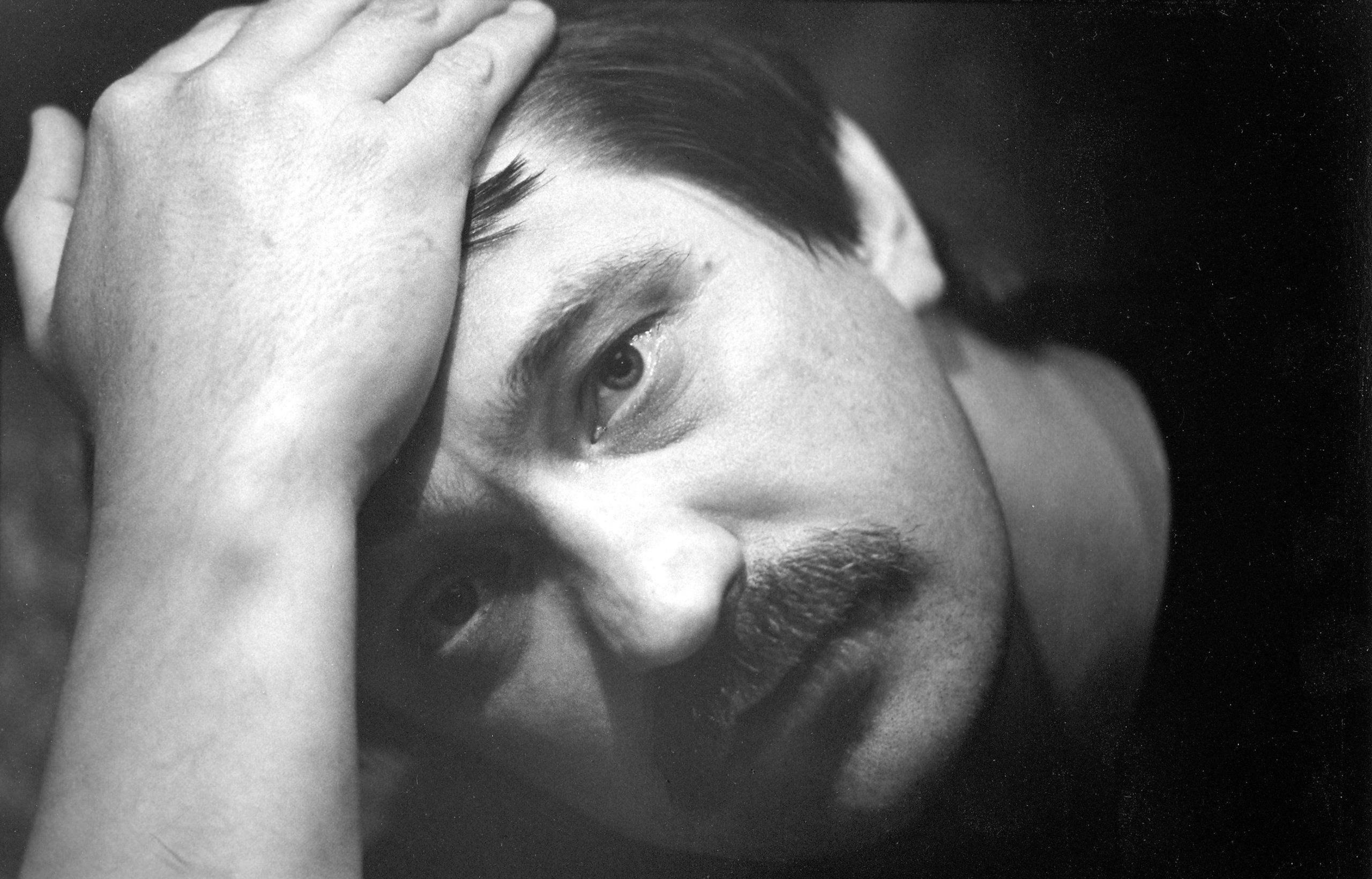
Aleksandr Sokurov
Aleksandr Sokurov is perhaps the last living embodiment of the classic Russian arthouse, with a career stretching back to Andrei Tarkovsky and forward to contemporary festival favourites. Since the seventies, his dreamlike films have investigated the surreal heart of family relationships, artistic inspiration, and political power. They also reveal a complex relationship with Russian military and imperial history. Our new double bill Russian Eclipse: two films by Aleksandr Sokurov features two of his most enduring works. Days of Eclipse (1988) is his uncanny adaptation of Soviet sci-fi icons the Strugatsky Brothers, drawing on his childhood in Central Asia; while his most celebrated work, the revolutionary period drama Russian Ark (2002), unfolds in a single unbroken take, transporting the viewer through three centuries of history as contained within St Petersburg’s famous Hermitage Museum.
During a 2024 retrospective of Sokurov’s work in London, we spoke to film historian and researcher Ian Christie about the director’s life and times for an episode of the Klassiki Podcast. Ian, a regular guest on the show who has also written for the Klassiki Journal, has been working on and with Sokurov since the 1980s and was involved in bringing his films to the UK for the first time during perestroika. To mark our new Sokurov double bill, we’re publishing this abridged transcript of highlights from that conversation.
You have a direct history and relationship with Sokurov’s works going back several decades. How did you encounter him in the eighties, and how did you come to bring him to Britain during perestroika?
He was part of a new wave of Soviet filmmakers that was there to be discovered, if you like, at the beginning of the eighties. In the case of Sokurov, he arrives on the scene with a film with many different translations of its title: it’s either called Anaesthesia Dolorosa or Painful Indifference or Heartbreak House, after the Shaw text it’s based on. I invited him to Britain in the eighties along with Kira Muratova and a number of other filmmakers. When he came, I took him to George Bernard Shaw’s house. It turned out that he knew an enormous amount about Shaw. The curator of the house was astonished that this Russian seemed to know so much about him. Sokurov has really gone on surprising me in many ways ever since, when I look back at the twists and turns of his career.
After Heartbreak House he made Days of Eclipse (1988), a very interesting vision of a kind of wasteland, inspired by his own childhood as the son of a military officer. I showed that film to Frederic Jameson, who was very interested in new Soviet cinema at the time, and he wrote a wonderful essay inspired by the viewing. That became a really important film for many of us. It was a completely new kind of film: Tarkovskian to an extent, but not Tarkovsky. For a long time, Sokurov’s reputation had to get out from under his being seen as a disciple of Tarkovsky.
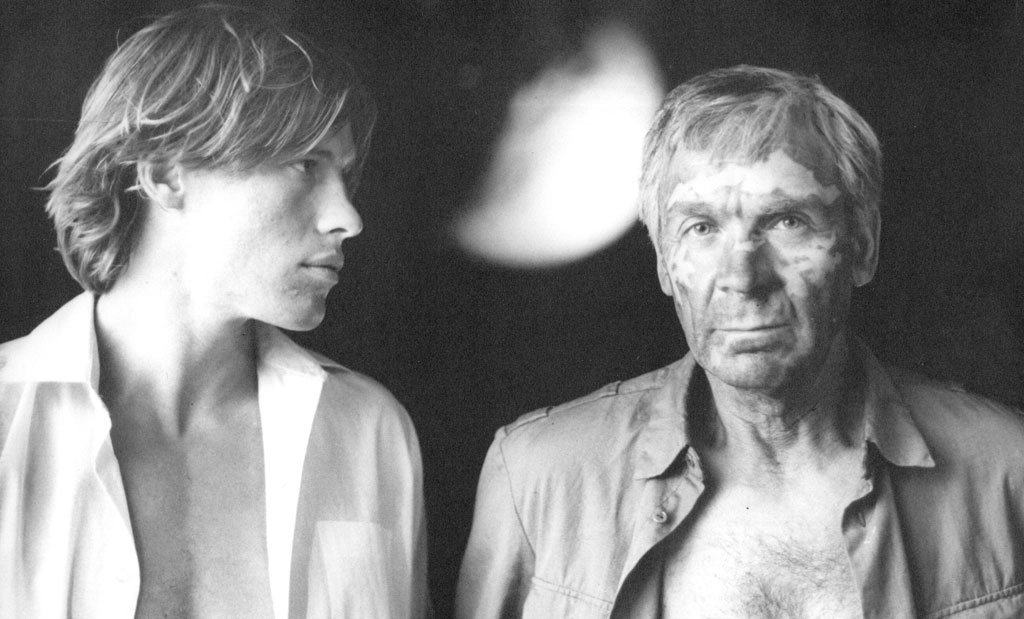
Aleksei Ananishnov and Aleksei Yankovsky in Days of Eclipse (dir. Aleksandr Sokurov, 1988)
They were close friends, no?
Well, no. If you believe Sokurov – and we did a lot of interviews together – I don’t think they were that close. He was very impressed by Tarkovsky, and Tarkovsky saw him as a fellow traveller, a very sympathetic figure. Sokurov tells the story of how he was suffering from a terrible headache, and Tarkovsky said, “I have the power to heal” and pressed his hands to his temple. Then he asked: “has that helped?” It hadn’t, but he wanted to please Tarkovsky… That was his way of saying that Tarkovsky had an aura about him and Sokurov didn’t entirely go along with that. He really wanted to make it clear that was not a disciple. He was always his own man, following very different directions. When I look back at the filmography, there are so many moments in Sokurov’s career where you think you’ve got him pigeonholed, and then he goes off and does something completely different.
Tarkovsky had an aura about him and Sokurov didn’t entirely go along with that. He really wanted to make it clear that was not a disciple. He was always his own man, following very different directions
What was he like when you met him?
I met him in Riga, at the avant-garde festival there in 1988. He was very much in the spotlight as a poster boy for perestroika. He was willing to speak his mind. In London, he was willing to be quite stroppy onstage. I remember I had a very tricky onstage event with him and Kira Muratova, who was also not a pushover, where they started disagreeing quite fiercely… The important thing is that it was a time when Soviet filmmakers felt an increasing freedom to speak freely and to be themselves. When Tarkovsky first came to London in the early eighties, he was like a frightened rabbit: he didn’t feel he could say anything, because he had his KGB minder watching him from the front row.
The only one who really made the transition wholly successfully from the Soviet to the post-Soviet period, I would say, was Sokurov, who embarked on a whole new course of production with significant support from Germany, Rotterdam – all sorts of western bastions of the avant-garde who were willing to support his very striking technical and aesthetic experiments.
He had graduated from the VGIK film school in the late seventies, but his diploma film, The Lonely Voice of Man, had been banned, and he’d struggled until the advent of perestroika to get anything produced in the USSR. Then he becomes recognised in the late Soviet period with films like Days of Eclipse. Into the nineties, he starts to be picked up in the West and to really embark on his career.
The breakthrough film was Mother and Son (1996). That had a really extraordinary response. I remember Paul Schrader was very vocal in supporting it, Martin Scorsese said how much he admired it. I think it collected a range of admiring responses unlike any Russian film since Tarkovsky.
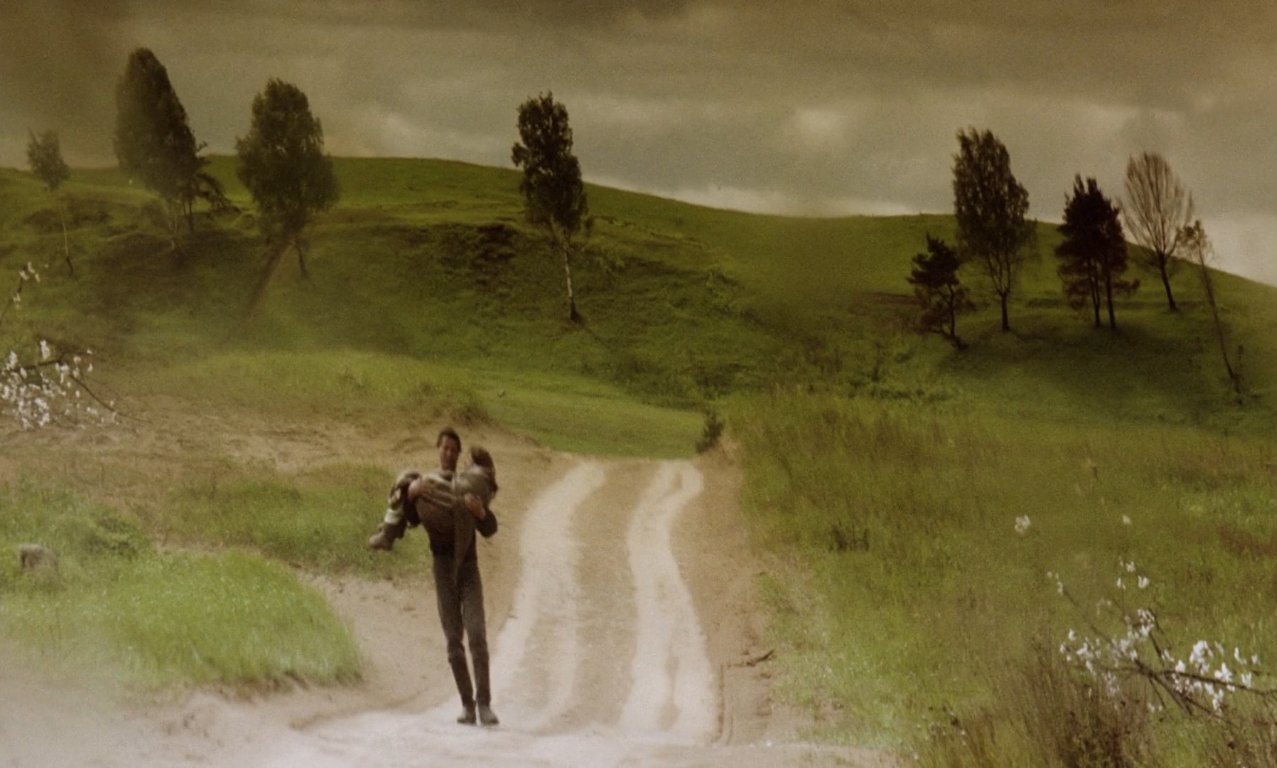
Aleksei Ananishnov in Mother and Son (dir. Aleksandr Sokurov, 1996)
To my mind, Mother and Son is the highpoint of the first stage of his artistry, which you can trace from, say, Days of Eclipse through to Father and Son (2003). We see the refinement of a slow, allegorical, oneiric cinema, with stripped back plots. There’s a kind of spiritual cynicism to it which fits with that post-Soviet sense of crisis in the nineties and distances him from Tarkovsky.
There’s also an eroticism, which people find exciting and disturbing. And the dreamlike aspect is emphasised by the way he starts to distort the image. In Mother and Son, he’s playing around with mirrors, and then he starts to get into digital transformations of the image as well.
There’s almost an American avant-garde heritage there, isn’t there: a Stan Brakhage quality.
Absolutely. He’s a very early adopter of distortion in service of an ultra-expressionistic aesthetic.
Sokurov told me once: “Whenever I go to the Hermitage and see Rembrandt and El Greco standing before me, I must always remember that I’m only a film director. Cinema is a very lowly operation. There is no tradition of totality or art in cinema.”
One thing that’s very interesting is that he’s made a lot more documentaries and documentary shorts than he has feature films. He made them in the Soviet period, and he’s continued to make them since. They often bear the subtitle “elegy”. What can we say about his documentary work and what it adds to our understanding of him as a filmmaker?
It’s unfortunate that we have this distinction between fiction and documentary. I think for Sokurov, that’s the wrong kind of distinction. His first place of employment as a filmmaker was Lendoc, the documentary studio in Leningrad. So, in a sense, that’s his background. It’s important to mention that there was a huge variety of types of production in Soviet documentary. People used to say that there was where you’d find the greatest freedom of treatment. In a way, Sokurov takes that relative freedom and runs with it. The films are cheaper and quicker to make. He hits on the idea relatively early on of calling them “elegies”. The first one of those is 1986, very early on. There is something elegiac about his treatment of many different themes. He makes a memorial film about Tarkovsky, for instance, which is sometimes called Moscow Elegy, made after he had died in exile. The theme of how much Russian culture had lost by forcing out its great artists comes back again and again.
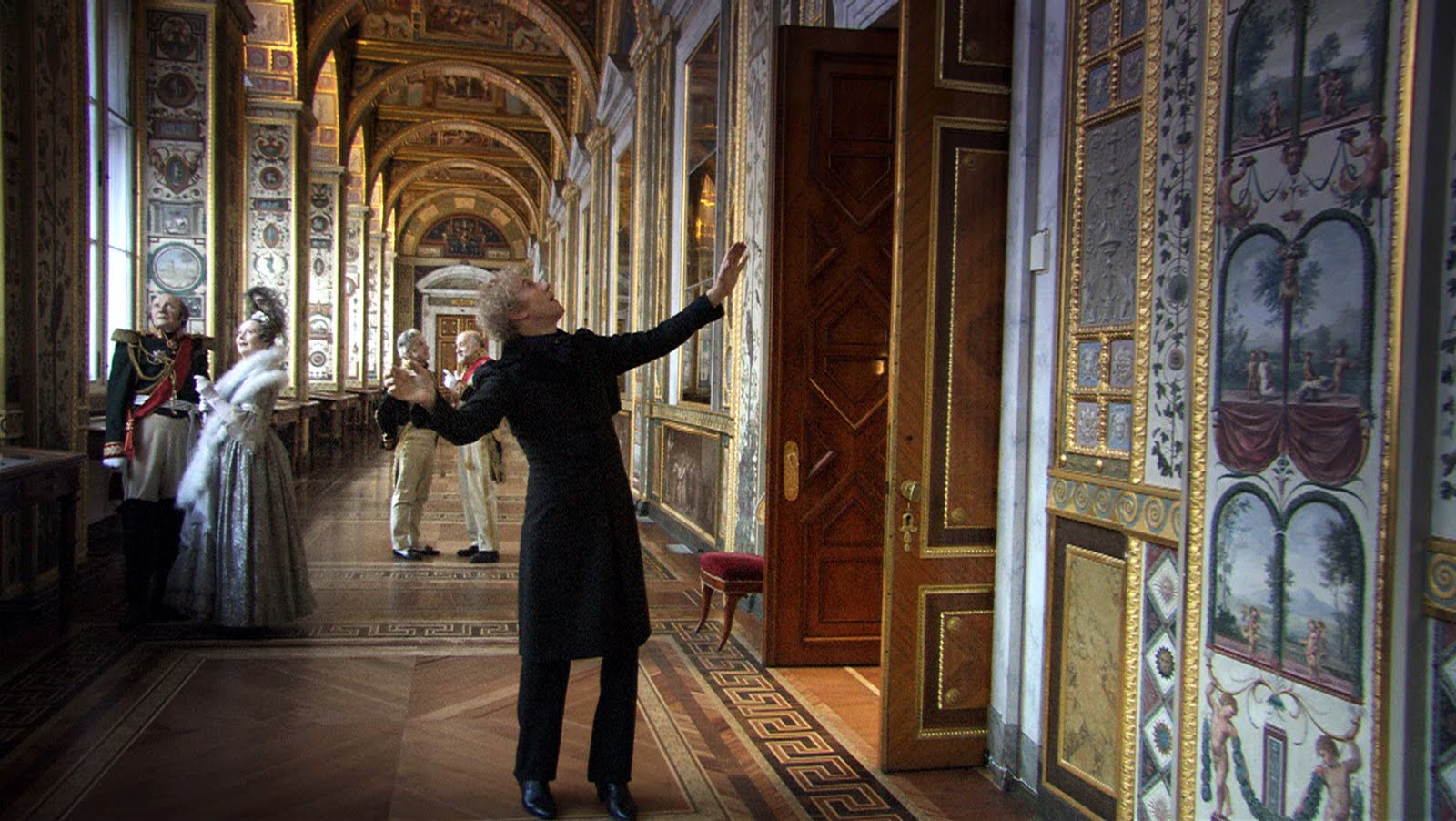
Sergei Dreyden in Russian Ark (dir. Aleksandr Sokurov, 2002)
There is certainly something about the idea of Russian cultural history that is important to him, that he feels the need to return to… For Western audiences, the film for which he is by far the best known in Russian Ark (2002), which is a tour through the Hermitage Museum in St Petersburg, and through Russian history, constructed out of a single unedited shot.
A very particular and partial tour. I think I introduced that film and discussed it with audiences more than any other single film in my entire career. There’s a piece I wrote for Sight & Sound about Russian Ark that opens with my saying to Sokurov: “this is a very experimental film.” And he looks at me and says: “Experimental? Never! It’s a serious film. Whenever I go to the Hermitage and see Rembrandt and El Greco standing before me, I must always remember that I’m only a film director. In human terms I can be more, but cinema is a very lowly operation. There is no tradition of totality or art in cinema.”
It’s both a technical tour de force, one of the first films that uses the possibility of a very high-definition video image to give this illusion of continuity – the phrase he used was “a film in a single breath” – and it also played an important part at the beginning of the new millennium. It did throw us back into a partial history of imperial Russia, but it also took us back to a moment of transition. The ending of the film, which I think is immensely moving – that sense that this is all disappearing as the characters present at the great ball go out into the outside world, the mist rising off the Neva – it really is an elegy for the end of the imperial period. That’s quite a provocative thing to do; you might say it’s paving the way for the wave of renunciation of the whole Soviet era that Putin stands for.
Trying to pin a simple position onto sometime like Sokurov is difficult. I think the experience of watching his films is a different one from trying to summarise where they “stand”
We should touch on the so-called “tetralogy of power”, four films made between 1997 and 2011, each one about a famous dictatorial figure: Moloch (1999), about Hitler; Taurus (2001), about the dying days of Lenin; The Sun (2005), about Emperor Hirohito in Japan; and then Faust (2011), which is obviously about a fictional character. That wins him the Golden Lion at Venice, a second capstone on his career after his successes in the nineties and early 2000s. What is behind his desire, over such a long period of time, to make films about the characters of these grand historical figures? Is there a political philosophy that informs them?
I interviewed him at various points during this process, and at one point he said that absolute power has a deforming distorting quality. That’s why, for instance, in Moloch he has the figures of Hitler and his court as physically grotesque figures.
There’s a lot of Hitler in his pants in that film.
Yes. They’re very stylistically different, even though they’re lumped together in people’s minds. When we move to The Sun, which I think is one of his masterpieces, it’s almost like a cinéma verité film, in part.
There’s an interesting paradox to the task he’s set himself: attempting to treat these figures like psychologically defined individuals while admitting that they’re unapproachable, that they exist in a void that can’t be breached precisely because of this absolute power they inhabit. Which is why they have such a dreamlike quality; narrative reasoning doesn’t seem to have a place in these spaces. The films have to unfold according to the strange internal logic of a Hitler or a Hirohito.
They’re mythological figures, but they’re also real. That’s why you can add Faust on to the series. He’s real enough to us because of the dramas that have been mounted around his character.
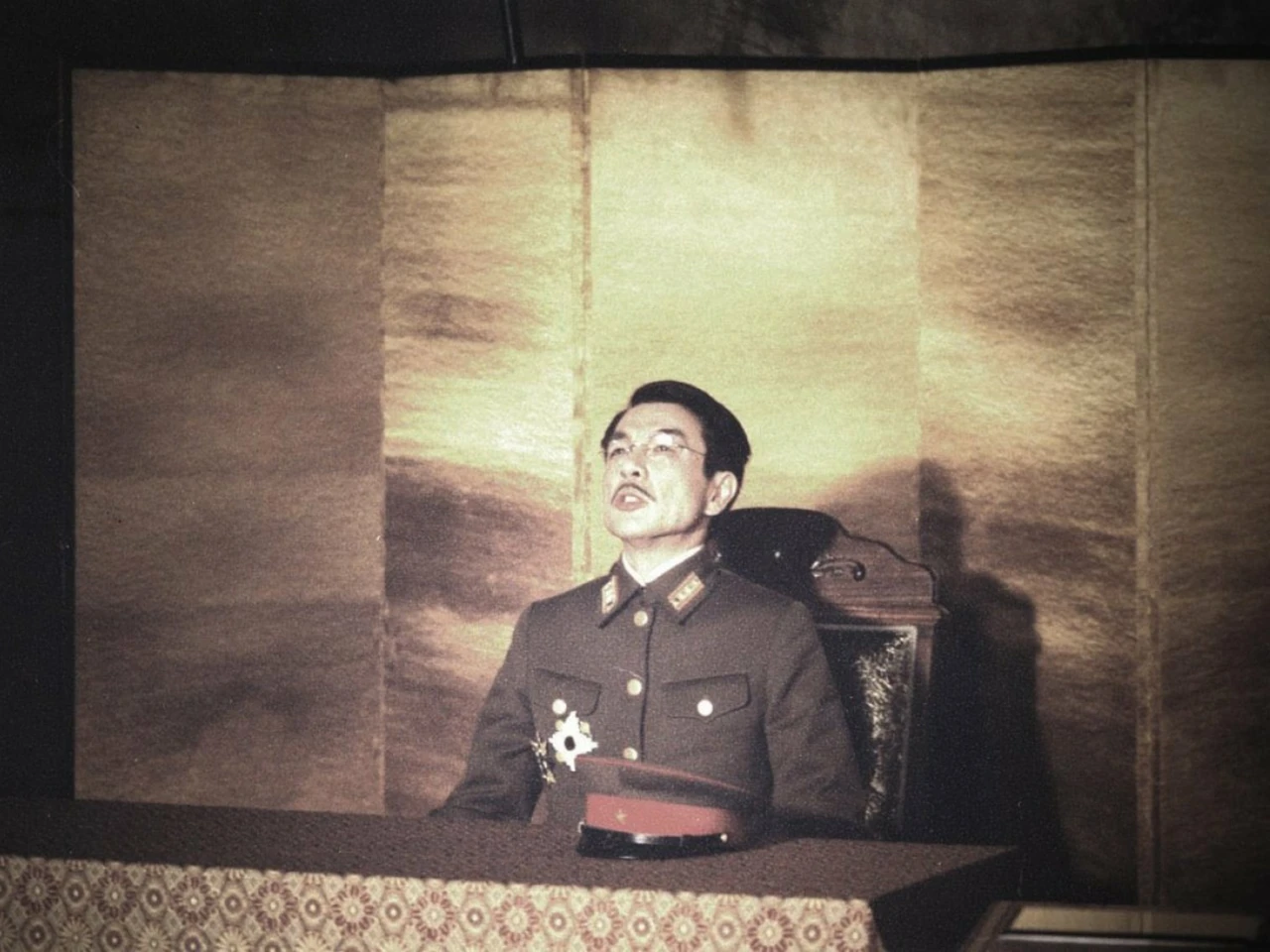
Issey Ogata in The Sun (dir. Aleksandr Sokurov, 2005)
Sokurov has criticised the war on Ukraine and is currently banned from travelling outside of Russia. But the question of his relationship to Russian power and Russian military power in particular is, I think, a lot thornier. He is the son of a military officer, and he has returned to the Russian armed forces a number of times in his films. When Putin was waging war on Chechnya in the early 2000s, Sokurov was pretty vocally supportive of that. How do we make sense of him now, in this sense? He’s a figure out of time. He’s the last Soviet-raised Russophone auteur. Kira Muratova has died. Aleksei German has died. Aleksandr Askoldov, Marlen Khutsiev, Georgii Daneliya… There’s a sense that he’s an anachronistic figure and that his politics in a post-2022 world are anachronistic as well.
This is true, though it’s a heavy burden that Russian artists carry. I’ve spent a large part of my life trying to explain aspects of Russian culture to people in the West. I think it’s complex. Trying to pin a simple position onto sometime like Sokurov is difficult. I think the experience of watching his films is a different one from trying to summarise where they “stand”. If you summarise them, they seem to be on the “wrong” side politically; but if you experience them, and they’re very beautiful in aesthetic terms, then it’s different. He takes you inside.
There is also something interesting in his relationship with the part of the Caucasus that’s under Russian control. A number of years ago he ran this masterclass in Kabardino-Balkaria, a federal republic in the North Caucasus, which was brief but has produced a number of celebrated young filmmakers: Kantemir Balagov, who made Closeness (2017) and Beanpole (2019); Kira Kovalenko, who made Unclenching the Fists (2021). It’s not just an extractive or nakedly imperialistic relationship he has to these places. He’s had this third or fourth stage to his career as a mentor to this new generation.
I think it’s a really interesting development. These young people aren’t making “Sokurov-like” films, but he’s been instrumental in opening the way for them. It’s good to know, if you like, that the great tradition of the Russian intelligentsia is alive and functioning in cinema, and I think he’s the main representative of that.
Russian Eclipse: two films by Aleksandr Sokurov is available to watch on Klassiki now.


 Go back to journal home page