The Watchlist is Klassiki’s series of themed viewing recommendations drawing from the cinema of Eastern Europe, the Caucasus, and Central Asia. In this edition, we take a trip with six films about summer holidays: from bad trips to halcyon days, summer romance to family fallouts.
Fucking Bornholm (dir. Anna Kazejak, 2022)
The summer holidays are upon us once again. There’s a rich tradition of vacation cinema, and Eastern Europe is no exception: from children’s films to travelogues and domestic dramas, stretching back into the communist era and forward to some of the most exciting new filmmaking voices. To mark the launch of our new Holiday Special collection, here are six films about the joy of getting away from it all – and the baggage that comes with it.
Blue Horizon (dir. Vytautas Mikalauskas, 1957)
A delightful example of the Soviet “children’s film” genre, this is a charming, wistful seaside adventure in which two boys, Vytukas and Saulius (Eustachijus Aukštikalnis and Gražina Balandytė), decide to run away to the sea to become sailors. Aided by the wily swindler Tiburtius, they take to the road. Blue Horizon was also the first feature film produced solely by Lithuanian artists, and one of only two features directed by the pioneering Vytautas Mikalauskas. Screenwriter Romualdas Lankauskas, cinematographer Algimantas Mockus, composer Eduardas Balsys, and assistant director Henrikas Šablevičius would all borrow from the film’s lyrical imagination in their future careers, setting the tone for Lithuanian film in the Soviet period. The film’s easily worn charm belies the obstacles faced during production in the still-underdeveloped post-war Lithuanian industry. “There was no decent equipment,” sound recordist Petras Lipeika later recalled. “Using our knowledge, ingenuity, or experimenting, we ‘improved’ amateur cinema equipment. I used to stick shiny chocolate wrappers into the microphone to amplify the voices of the actors on set.”
Explore our collection of Lithuanian titles here.
The Last Day of Summer (dir. Tadeusz Konwicki, 1958)
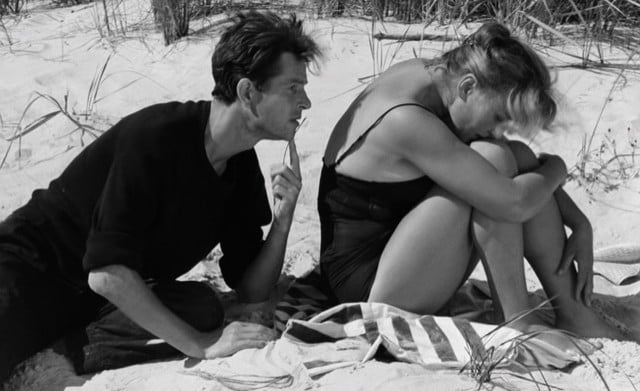
The Last Day of Summer (dir. Tadeusz Konwicki, 1958)
Sticking with the Baltic Sea and released just a year later, but otherwise in stark contrast to the light-hearted atmosphere of Mikalauskas’s film, is Tadeusz Konwicki’s unsparing examination of romantic despair in the aftermath of great tragedy – one of the most exacting and enthralling of the early masterpieces of the Polish Film School. Made with a crew of just five, with no artificial lighting and no sets, the film uses the conceit of the holiday season as an existentialist metaphor for the dark night of the soul. Among the blasted dunes and crashing waves of the Baltic coast, a nameless man and woman (Jan Machulski and Irena Laskowska) chance one upon the other. This meet-cute by way of Beckett sets up Konwicki’s alternately modernist and primordial allegory for a nation brutalised by the Second World War, as the pair, each haunted by memories of the conflict, try and fail to communicate their desires. The Last Day of Summer forms the first half of Konwicki’s diptych of films about abortive relationships hindered by the ghosts of the war, along with All Souls’ Day (1961).
Watch The Last Day of Summer on Klassiki now and explore our collection of Polish titles here.
Happy-Go-Lucky (dir. Vasily Shukshin, 1972)
Leo Tolstoy famously said: “A quiet secluded life in the country, with the possibility of being useful to people to whom it is easy to do good, and who are not accustomed to have it done to them… such is my idea of happiness.” In his 1972 travelogue, Vasily Shukshin puts these words to the test with this tale of a Siberian tractor driver and his wife travelling to the Black Sea riviera for the first time. Along the way, our rural couple collide with various urban archetypes, including a linguistics professor and a con artist, their humorous interactions providing a cross-section of life in the USSR and the subtle classism of a supposedly classless society. Shukshin, one of Soviet cinema’s most reliable performers, writers, and directors, imbues every characters, however minor, with his trademark melancholy good humour.
Watch Happy-Go-Lucky on Klassiki now and explore our collection of Russian titles here.
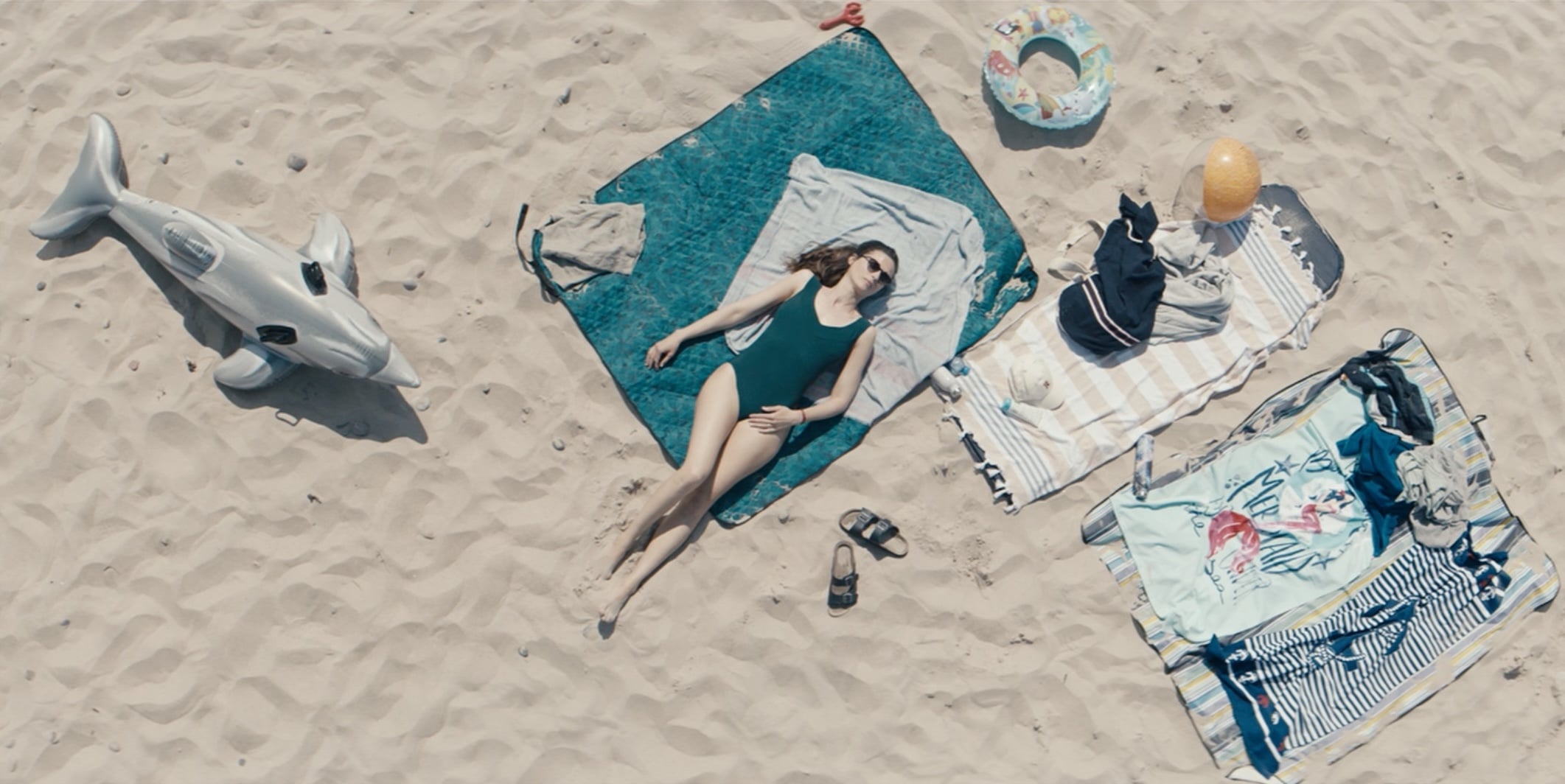
Fucking Bornholm (dir. Anna Kazejak, 2022)
Polish director Anna Kazejak crafts a bad trip for the ages in this caustic satire on masculinity, motherhood, and middle class disintegration that plumbs comically deep depths of toxic behaviour. The film takes place on the titular Danish island in the Baltic Sea, where two Polish couples and their children have arrived for their traditional camping trip. On the one hand are Hubert (Maciej Stuhr), his wife Maja (Agnieszka Grochowska), and their prepubescent sons Eryk (Oliwier Grzegorzewski) and Wiktor (Marceli Sinora). On the other are freshly divorced father Dawid (Grzegorz Damięcki), his son Kaj (Borys Bartlomiejczyk), and his new partner, Nina, a much younger psychology graduate (Jasmina Polak). When an unseen, traumatic nighttime incident in the children’s tent causes Eryk to withdraw, the cracks in the group quickly begin to appear, and before long a full-blown civil war is unfolding among the dunes as Maja begins to question the most basic tenets of her domestic world. Perhaps unusually, the film was adapted from a podcast version of the same material that Kazejak and co-writer Filip K. Kasperaszek produced while waiting for funds to bring it to the screen. Their screenplay is a marvel of economy, conveying enough of the shared history at work to up the tension while withholding enough to maintain an air of tense unpredictability.
Watch Fucking Bornholm on Klassiki until 3 September.
My Late Summer (dir. Danis Tanović, 2024)
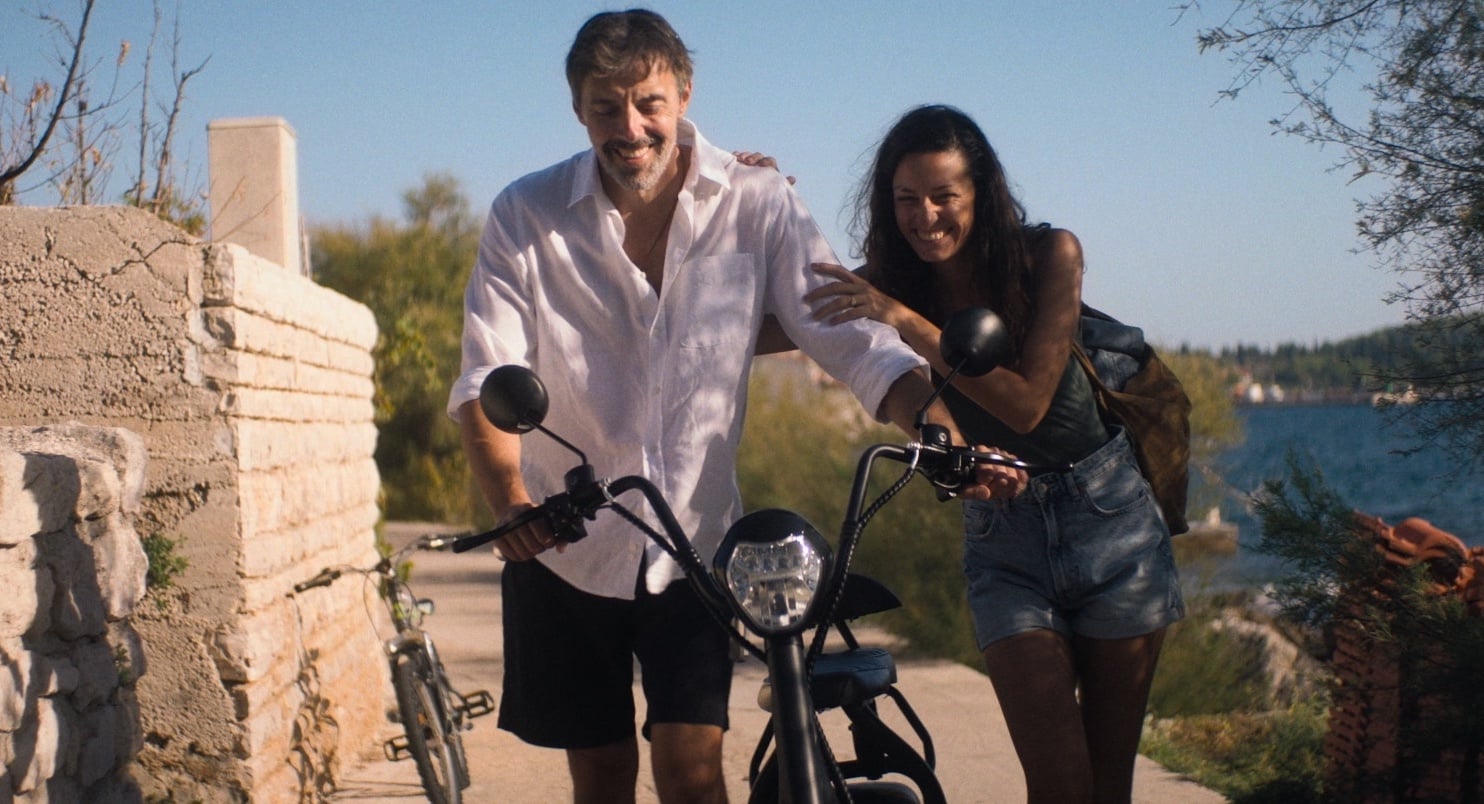
My Late Summer (dir. Danis Tanović, 2024)
Danis Tanović remains best-known for his Oscar-winning 2001 feature No Man’s Land, about the war in his native Bosnia – but he’s been putting out films at a steady click in the 24 years since, all of which are well worth your time. His most recent sees the director take a late season trip to the picturesque islands of neighbouring Croatia for a tale of middle-aged romantic longing and familial disruption. Anja Matković stars as Maja, a Zagrebian who travels to an anonymous island to claim her share of estate of a local grandee who years ago impregnated and then abandoned her mother. While she waits for her moment, she begins a passionate but problematic affair with a local writer. Tanović captures perfectly the muggy, desultory atmosphere of the insular lifestyle in the absence of tourists, and his reworking of the “vacation fling” trope away from youth towards middle age is refreshing.
Watch My Late Summer on Klassiki now.
Drowning Dry (dir. Laurynas Bareiša, 2024)
For years a realiably excellent cinematographer for filmmakers from across the region, Lithuania’s Laurynas Bareiša established himself as one of the Baltics’ most promising directors with this elliptical family holiday drama. Sisters Ernesta (Gelminė Glemžaitė) and Justė (Agnė Kaktaitė) are spending a weekend away at their family lake house with their husbands, mixed martial artist Lukas (Paulius Markevičius) and businessman Tomas (Giedrius Kiela). Out of nowhere, tragedy appears to strike, only to be narrowly averted, as Justė’s daughter is rescued from drowning by Lukas. At this point, Bareiša makes a daring formal gambit, breaking the previous linearity of the narrative and seemingly slipping ahead in time. Now Ernesta and her son are taking a swimming lesson back in Vilnius. What did we fail to pick up on back at the lake? And where is the suddenly absent Lukas? Bareiša, who also wrote the screenplay and served as his own cinematographer, unspools narrative information carefully, skilfully maintaining the difficult balance between intrigue and outright obscurity. “Dry drowning” is a medical phenomenon in which one survives an initial plunge only for the vocal cords to spasm, cutting off air from the lungs. In an interview with Cineuropa, the director expands on the metaphor: “I began to see parallels between this condition and human relationships, when you live close to someone but still continue to feel lonely, to feel like you’re drowning. In society, we try to be good people, but deep down, we are aggressive towards ourselves. Why do we, humans, find it so hard to be honest with ourselves and other people?”
Watch Drowning Dry on Klassiki until 3 September.
Our new collection Holiday Special: four bad trip classics for the summer season is available until 3 September.


 Go back to journal home page