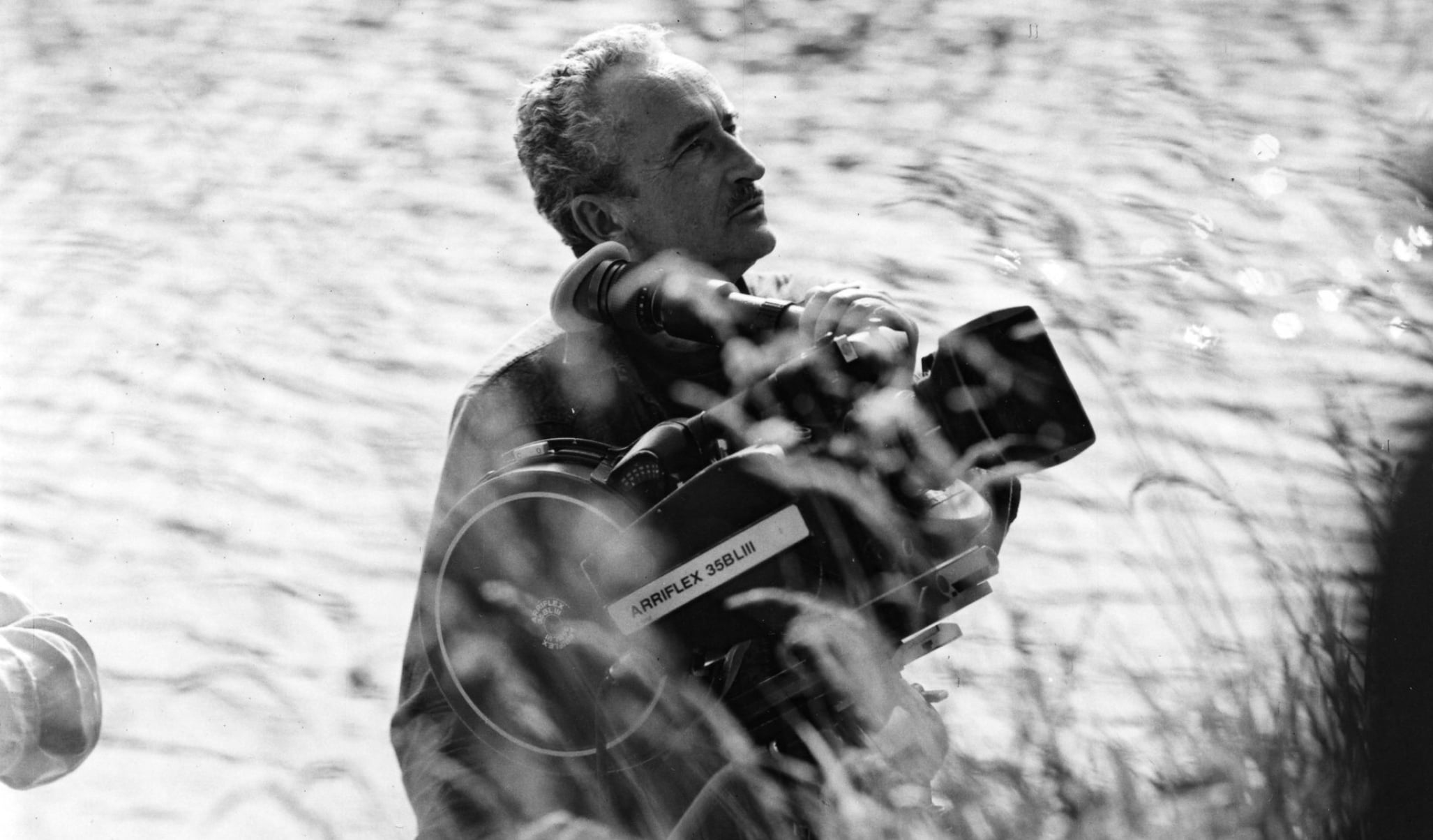
Vytautas Žalakevičius. Image: Lithuanian Museum of Theatre, Music and Film
In 2019, national broadcaster LRT marked Lithuanian Statehood Day with a screening of Nobody Wanted to Die (1965), a moody, post-war neo-Western from Vytautas Žalakevičius. This programming quickly came in for heated criticism from journalists, historians, and even elected officials, all incensed at the decision to commemorate Lithuanian sovereignty with a film that not only dated from the days of Soviet occupation, but which glorified that occupation and defamed its opponents. Andrius Tapinas, an influential writer and TV presenter, captured the mood: “There is nothing complicated… One side is directly responsible for the fact that we did not have a state for 50 years, that we were raped, that we lost two generations and the opportunity to be a prosperous state for the sake of our children and grandchildren. They were enemies of the state and must remain such in the memory of all generations.” LRT quickly apologised for their misjudgement.
That the broadcaster would have plumped for Žalakevičius’s film in the first place, and that it would then have prompted such outrage, is ironic. As director, screenwriter, and administrator, Žalakevičius did as much as anyone to modernise Soviet Lithuanian film in the sixties, helping to instigate a “Baltic New Wave” that realigned the cinemas of Lithuania, Latvia, and Estonia with international trendsetters. In his most potent creative years, he did so by grappling directly with subjects that were – and evidently remain – thorny for both Vilnius and Moscow: the thin line between accommodation and collaboration, the contested legacy of Baltic nationalisms, the bitter recriminations that followed Soviet re-occupation after the Second World War. The attempts by Tapinas and co to flatten out the debate around Žalakevičius’s place in Lithuanian film history, to insist that “there is nothing complicated”, are telling. As author Leonidas Donskis put it in an article criticising the backlash against LRT, the issue with Nobody Wanted to Die was rather that “nobody wanted to remember.”
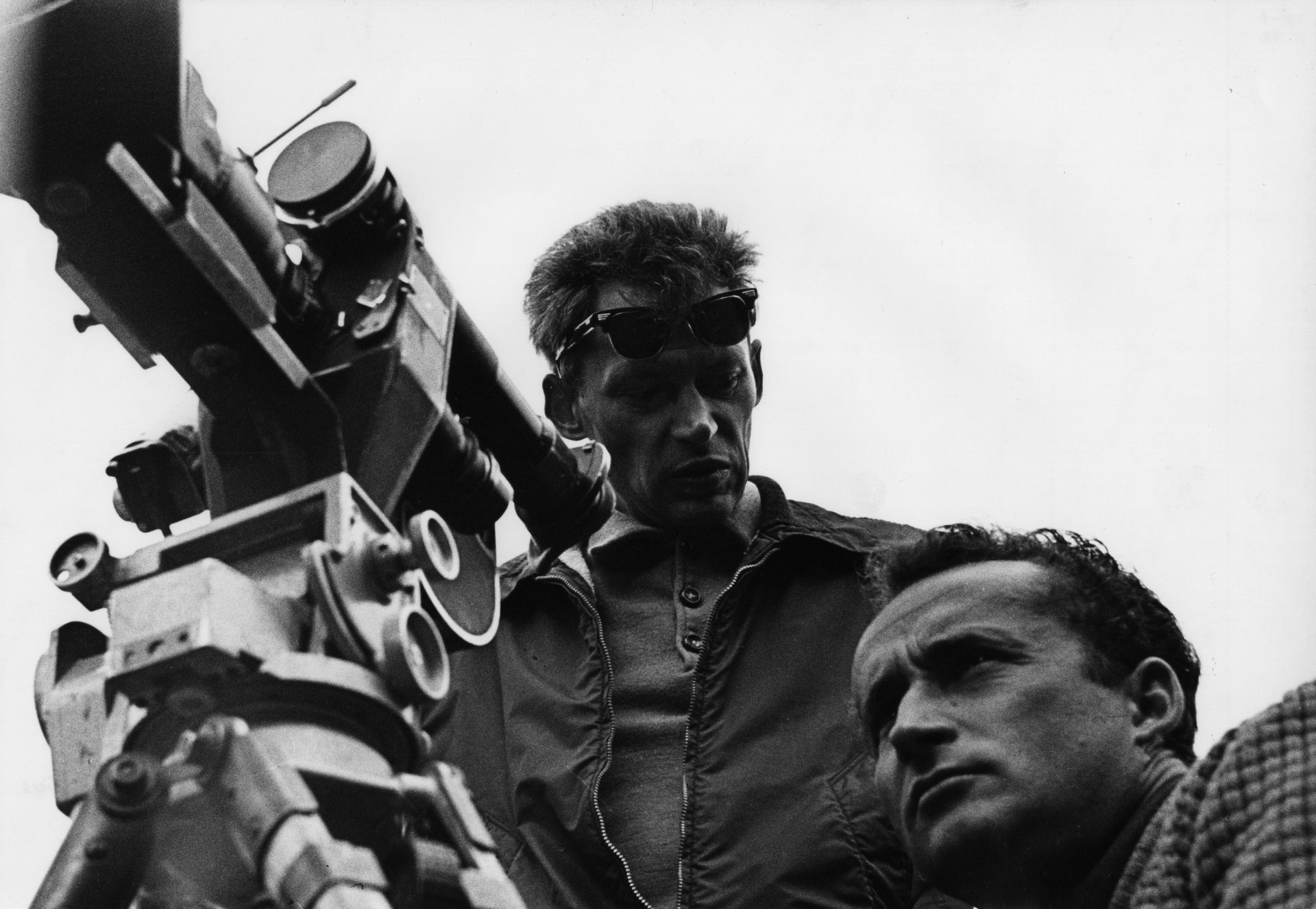
Vytautas Žalakevičius and cinematographer on the set of Nobody Wanted to Die (1965). Image: Lithuanian Museum of Theatre, Music and Film
Born in Kaunas in 1930, Žalakevičius studied radio engineering in his home city in the years of Soviet consolidation after the war. In 1951, he moved to Moscow to enrol at the prestigious VGIK film school, studying directing under luminaries including Mikheil Chiaureli and Grigori Aleksandrov; the move presaged a career spent shuttling between Lithuania and Russia. Graduating in 1956 with his short film The Drowned, he returned to Vilnius as a member of the national film studio. The breakthrough moment came with his 1959 feature Adam Wants to Be a Man, starring his namesake Vytautas Puožiukaitis as a drifter meandering through the underworld of interwar Kaunas. As he would later do to great effect in the sixties, Žalakevičius applied the conventions of American genre fare – here the pre-war crime film – to homegrown subject matter. Soviet cinema was not known for its sympathetic portraits of criminals, but Žalakevičius managed to avoid censure for the film’s less than flattering portrayal of social malaise by arguing that it depicted the petty bourgeois discontent of the pre-Soviet state. Adam Wants to Be a Man also marked the start of his fruitful collaboration with actor Donatas Banionis – perhaps the most widely recognised Lithuanian screen presence thanks to his starring role in Andrei Tarkovsky’s Solaris (1972).
Žalakevičius did as much as anyone to modernise Soviet Lithuanian film in the sixties, and he did so by grappling directly with subjects that were – and remain – thorny for both Vilnius and Moscow
With Adam, the almanac film Living Heroes (1959), and the revolutionary war drama Chronicles of One Day (1963), Žalakevičius set out his stall within a burgeoning post-Stalinist “thaw” in Baltic cinema: a period of liberalisation and experimentation, represented elsewhere by the “poetic documentary” movement of Uldis Brauns in Latvia and Henrikas Šablevičius in Lithuania, or else the modernist moves of Kaljo Kiisk and Arvo Kruusement in Estonia. It was in this potent if precarious moment of licentiousness that Žalakevičius made his most potent cinematic statement. Like Adam Wants to Be a Man, Nobody Wanted to Die deployed Hollywood genre conventions to explore the emotional landscape of recent Lithuanian history – only now, the period in question was not the more distant, pre-Soviet twenties, but the febrile early years of post-war occupation and resistance. Žalakevičius, who also penned the screenplay, was staking his growing reputation on his ability to thread the ideological and aesthetic needle.
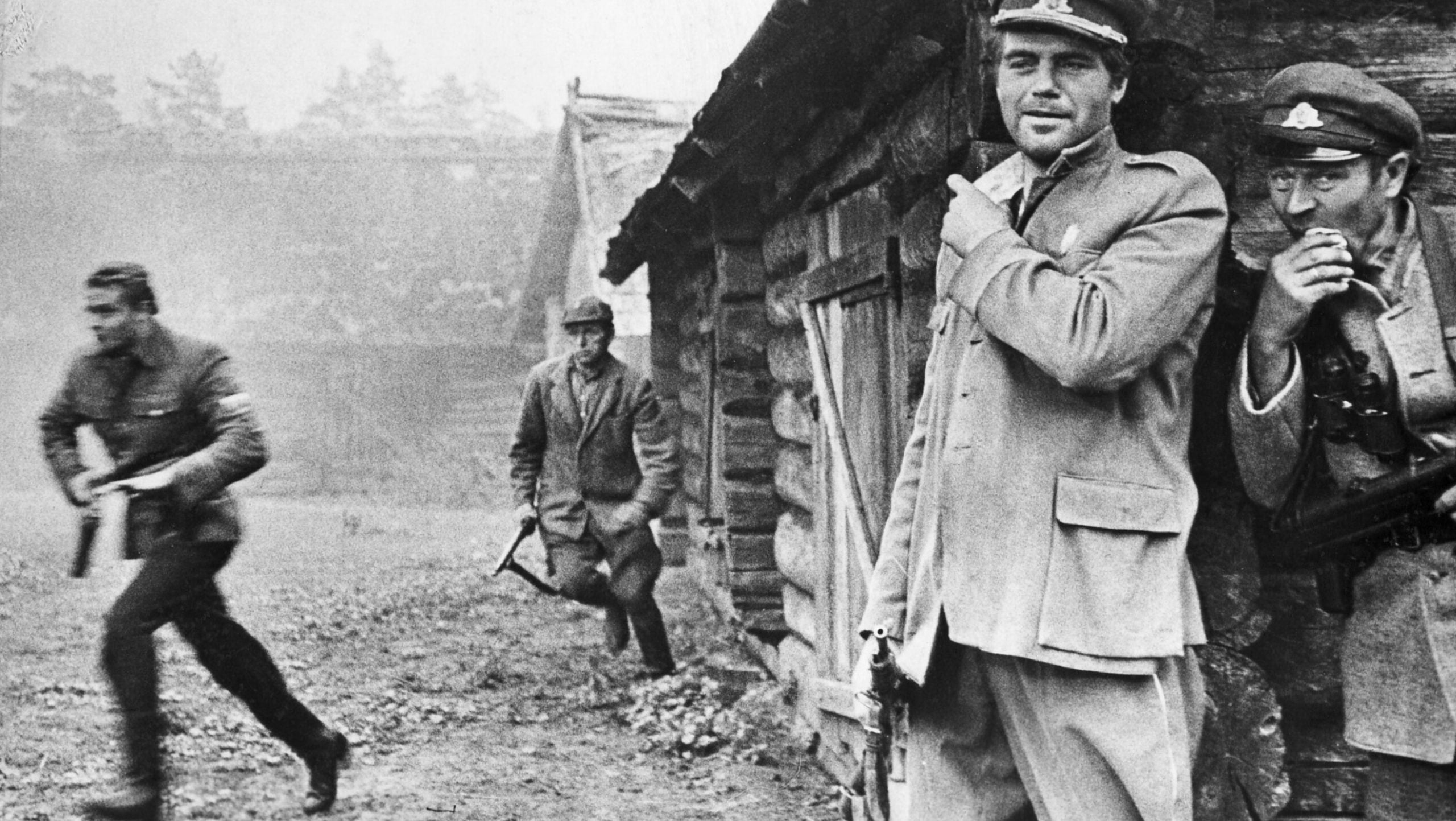
Nobody Wanted to Die (dir. Vytautas Žalakevičius, 1965)
A non-Lithuanian coming blind to the film might find themselves disoriented. It does not help that we open in media res in the throes of an ongoing secular conflict, the players introduced with what we soon learn is Žalakevičius’s laconic disinterest in exposition. The necessary historical context, roughly put, is as follows. Lithuania, like its Baltic neighbours, gained independence from the Russian Empire in 1918, only to lose it again when the Soviets occupied the region in 1940 following the Molotov-Ribbentrop Pact; a year later, Germany broke the Pact, invading the Baltic states, driving out the Red Army, and establishing their own puppet states. When the Soviets drove west in the final years of the conflict, they once again occupied the region – this time integrating the Baltics into the Soviet Union as republics until 1991. Nationalist resistance campaigns sprung up across the three countries during the war, often referred to collectively as “Forest Brothers” in reference to their use of woodlands to engage in guerrilla tactics (in Lithuania, the most common term was žaliukai, or “Green People”). Some Baltic nationalists had welcomed the German occupiers in 1940 as liberators from Russian rule, and the anti-Soviet guerrillas were occasional collaborators with, even outright conscripts of, the Nazi armed forces. From 1944 until the mid-50s, Forest Brothers funded by UK and US intelligence fought with Soviet forces across the Baltic states, with casualties in the tens of thousands.
Nobody Wants to Die is set in 1947, at the height of this violence, somewhere in the Lithuanian countryside. The film opens on the murder of the village Soviet council chairman Lokys by the local Brothers. Lokys’s four sons converge on the village seeking vengeance. In order to draw the battle lines more clearly, they force known nationalist sympathiser Vaitkus (a superbly weaselly Banionis) to take up their late father’s position. As the village falls under siege of the Brothers and their shadowy leader “Puck”, Žalakevičius adopts the tropes of the American western: an isolated outpost of (Soviet) civilisation hunkering down against the encroaching forces of darkness. And if the Reds win out in the end, the sheer lack of triumphalism on display is striking. A chilly air of futility hangs over our anonymous village as an eye for an eye leaves the world blind and many men dead. Žalakevičius’s moral equivocation is hardly subtle. At one point, the schoolteacher Lokys brother Mykolas laments: “There are so few Lithuanians, but we kill each other more than the Germans… Maybe my heart is my class enemy.”
with Nobody Wanted to Die, Žalakevičius was staking his growing reputation on his ability to thread the ideological and aesthetic needle
The film won Žalakevičius, Banionis, and cinematographer Jonas Gricius an All-Union State Prize, to go with the director’s earlier Lithuanian State Prize for Adam. Indeed, Žalakevičius was well on his way to becoming an establishment figure within Soviet cinema. From 1961 until 1974, and again from 1980, he was the artistic director of the Lithuanian state studio; in the interim, he returned to Moscow, where he was head of Mosfilm’s Experimental Association as well as leading the Higher Courses for Screenwriters and Directors of the USSR Cinematography Committee. These were weighty positions within the artistic nomenklatura; no doubt Žalakevičius’s less than rosy reputation in modern Lithuania derives in part from his having embedded himself within the apparatus of the Soviet system. It is also true that “memory politics” are fraught in Lithuania, especially as concerns the Second World War, with state intervention operating at a higher level than elsewhere. (Lithuania was the first Baltic state to ban Soviet symbols, while numerous attempts have been made to criminalise deviations from the official historiography of the war, in which the anti-Soviet partisans were blameless victims of circumstance and the question of native collaboration in the Holocaust is skirted.) It is precisely the moral murk of his war films – which could well have seen Žalakevičius shunned by the Soviet establishment – that now tars him in the eyes of his vehemently anti-Soviet successors.
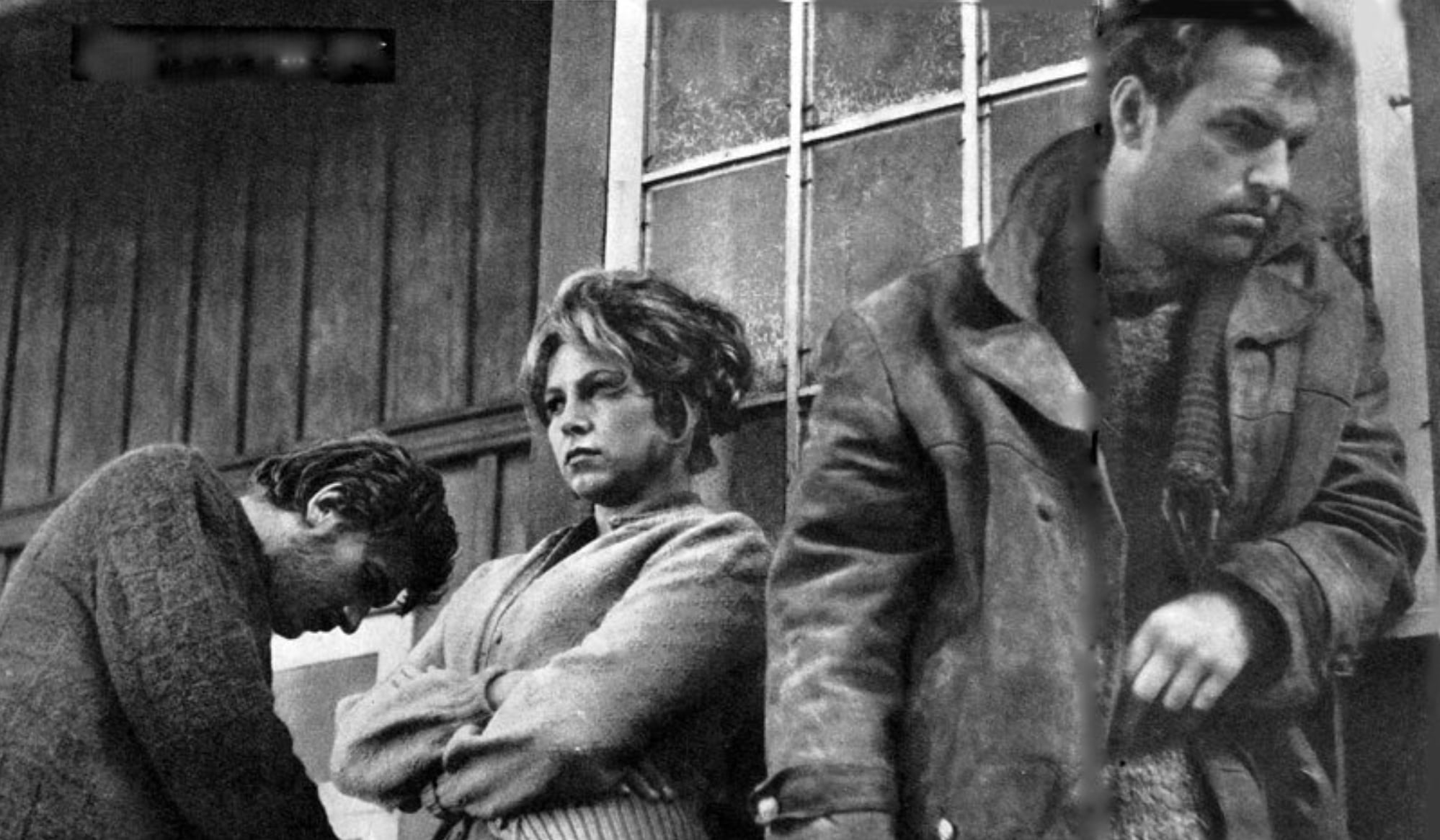
Feelings (dir. Algirdas Dausa and Almantas Grikevičius, 1968)
This murk also hangs over Feelings (1968), a film very much in what we might call the “Žalakevičius tradition” and a kind of spiritual sequel to Nobody Wanted to Die, even if in this instance the man himself was not behind the camera. As a figurehead within the studio system, Žalakevičius often wrote screenplays for other less established directors – in this instance, the duo of Algirdas Dausa and Almantas Grikevičius, young directors primarily known at that point for their documentary work. Like Nobody, Feelings is less concerned with the crucible of battle than with its aftermath. What happens when ravaging armies are in retreat, when the stark loyalties created by outright conflict melt back into everyday confusion, when borders are shifting beneath one’s feet? The film is set on the Curonian Spit, a near-100-kilometre-long stretch of sand dunes in western Lithuania that separates the Baltic Sea from a large inland lagoon. The year is 1944: the Germans are in retreat, while the Red Army advances from the East. One side of the Spit is occupied by the collapsing Nazi forces, while the other is already under the control of the Soviets. Fisherman Kasparas (Regimantas Adomaitis), recently widowed and with left to care for new-born twins, moves to the Soviet side of the Spit to stay with his brother, Andrius (Juozas Budraitis) and sister-in-law – and ex-lover – Agnė (Regina Paliukaitytė). Agnė’s unresolved feelings for Kasparas and the widower’s wounded diffidence create cracks in the impromptu domestic set-up; these interpersonal issues then become enmeshed with urgent political questions when Kasparas is drawn into the orbit of a group of disgruntled locals who fear the Soviet presence and plan to escape into emigration.
Feelings is less concerned with the crucible of battle than with its aftermath. What happens when ravaging armies are in retreat, when the stark loyalties created by outright conflict melt back into everyday confusion, when borders are shifting beneath one’s feet?
Žalakevičius adapted the screenplay from the novel The Devil’s Ridge by the Latvian author Egons Līvs, finding in his Baltic neighbour’s prose a means of continuing his exploration of wartime Lithuanian identity, caught between collaboration and resistance. The cold mist that hangs over the Bergmanesque seascapes functions as a kind of pathetic fallacy: as in Nobody Wanted to Die, this is an alienated world in which familial and national identities are alternately enmeshed and at odds, in which theological archetypes (the Cain-Abel dynamic between Kasparas and Andrius, the theme of exodus, the destructive/seductive female presence) are drained of reassuring moral clarity. This time, however, Žalakevičius was unable to avoid censure. Perhaps the script was assigned to duo of Dausa and Grikevičius because their lack of stature within the studio system made them relatively uncontroversial; if so, the gambit backfired, with the film receiving limited distribution within Lithuania and banned in the rest of the USSR.
Žalakevičius did not suffer too harshly as a result. He was able to move to Moscow and continue working at a high level for the rest of the Soviet era, even after the post-Stalinist thaw had resided and the chill of Stagnation had set in; his 1973 account of Latin American revolutionaries That Sweet Word: Liberty! won the Golden Prize at the Moscow International Film Festival. After the fall of communism, he established a private studio back in Vilnius, but died in 1996 before having had the chance to mould post-Soviet Lithuanian film. Nonetheless he casts a long shadow, even if his most potent works continue to leave a bitter taste, recalling as they do a time where lines of good and evil could not be cartoonishly drawn in official culture. In his defence of Žalakevičius in the wake of the LRT scandal, Leonidas Donskis writes that, “whether we like Nobody Wanted to Die or not, only a person who is simply ignorant of the language of cinema… can call it bad, or one who seeks to belittle it for political and other reasons. It is possible that for many more decades Lithuania will not have such a film director and screenwriter as Žalakevičius. Nobody Wanted to Die is a testament to the maturity of a generation of artists.”
Watch Nobody Wanted to Die on Klassiki now as part of our new collection Baltic Spirit: three classics from Lithuania. You can also explore our full collection of Lithuanian and Baltic titles.


 Go back to journal home page