The Watchlist is Klassiki’s occasional series of themed viewing recommendations drawing from the cinema of Eastern Europe, the Caucasus, and Central Asia. In this edition, we celebrate the spooky season with six classic and contemporary folk horror films.
November (dir. Rainer Sarnet, 2017)
Happy Halloween, horror fans. We’re celebrating the season with our latest Pick of the Week offering, a collection of three classic animated horror shorts. Recent years have seen a resurgence in interest in folk horror, with American indie-turned-mainstream directors like Robert Eggers (The Witch) and Ari Aster (Midsommar) reappropriating the subgenre’s play on superstition, paganism, tradition, and isolation. Folk horror’s place in Eastern European film history has long gone underappreciated – in part because the then-socialist bloc, where it could be hard to get grisly material past state censors, was not known for horror filmmaking. Framing their genre fare in the respectable terms of national folklore was one way for filmmakers to circumvent this squeamishness. While British cult classics like Witchfinder General (1968) and The Wicker Man (1973) are usually cited as ground zero for folk horror in film, a parallel tradition was already underway at the same time in Central and Eastern Europe. Today, a new generation of filmmakers is once again returning to local legends and customs to interrogate questions of identity and wrest control of their screen image back from Western stereotypes. Here are six titles old and new that highlight the best of this folk horror history.
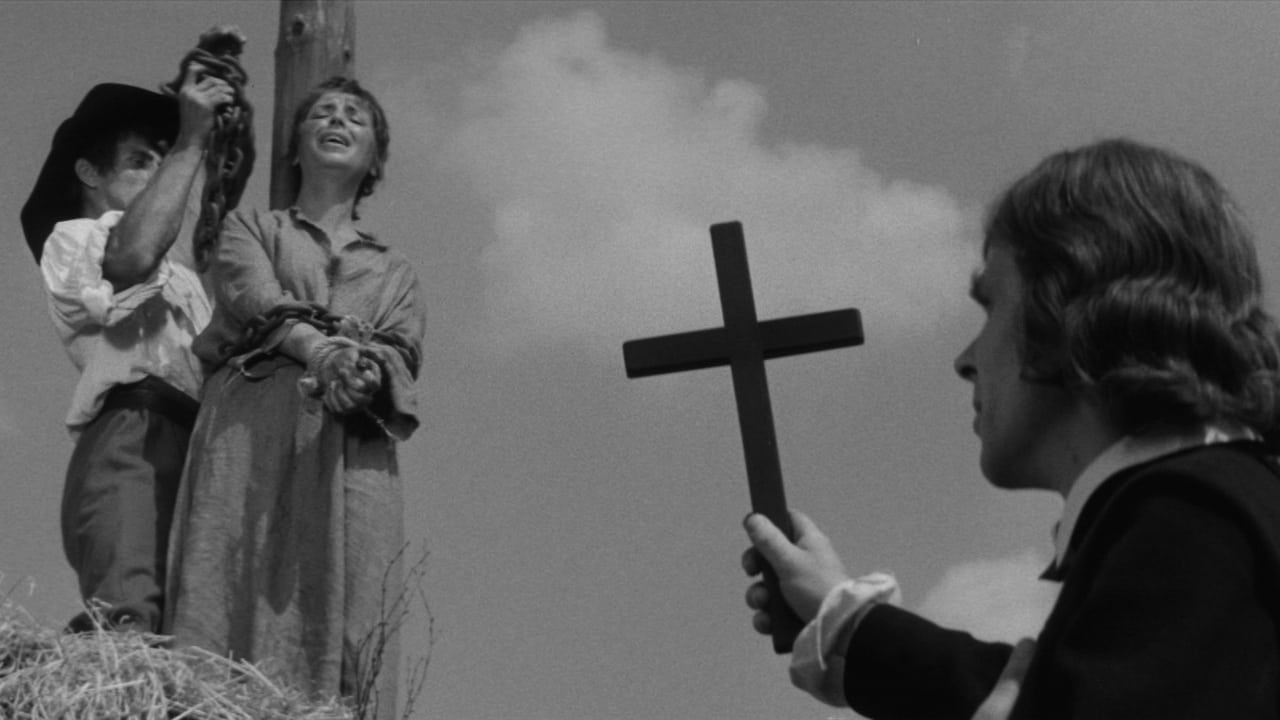
Witchhammer (dir. Otakar Vávra, 1970)
There’s something of the stylised energy of the Czech New Wave in this seminal “witchsploitation” film, often cited as the Central European answer to foundational British folk horrors like Michael Reeves’ Witchfinder General and Michael Armstrong’s Mark of the Devil. Where Reeves in particular used the witch hunt narrative as a means to explore the violent paranoia of the English Civil War, Vávra’s reimagining of the 17th-century zealot Jindřich František Boblig as an agent of otherworldly suffering recalls the more immediate context of communist-era persecution. Like all good witch hunt films, it also functions as a biting critique of the patriarchy and the irrational violence deployed against women perceived as “deviant”.
Explore our collection of Czech and Slovak titles here.
Witchhammer (dir. Otakar Vávra, 1970)
You Won’t Be Alone (dir. Goran Stolevski, 2022)
North Macedonia-born and Australia-based filmmaker Goran Stolevski turns to the folklore of his homeland for this genre-bending exercise in arthouse provocation and metaphysical exploration. A blend of psychodrama, visceral horror, and period drama, You Won’t Be Alone puts the world of the nineteenth-century Balkans on the big screen for foreign audiences with unprecedented affection and accuracy. The circuitous plot tells of a curse placed by the witch “Old Maid Maria” (Anamaria Marinca) on a young mother. The terrified woman hides her daughter, Nevena (played in different incarnations by Sara Klimoska and Noomi Rapace) in a cave for 16 years; but when Nevena is released into the world, she is forced to accompany the Maria, learning how to live while acting as an agent of evil. Stolevski commits to the logic of the folk tale, capturing bodies in the act of transformation, merging the human and the animal. The result is an unnerving but compelling, a horror film with heart.
Read our interview with Goran Stolevski about You Won’t Be Alone here.
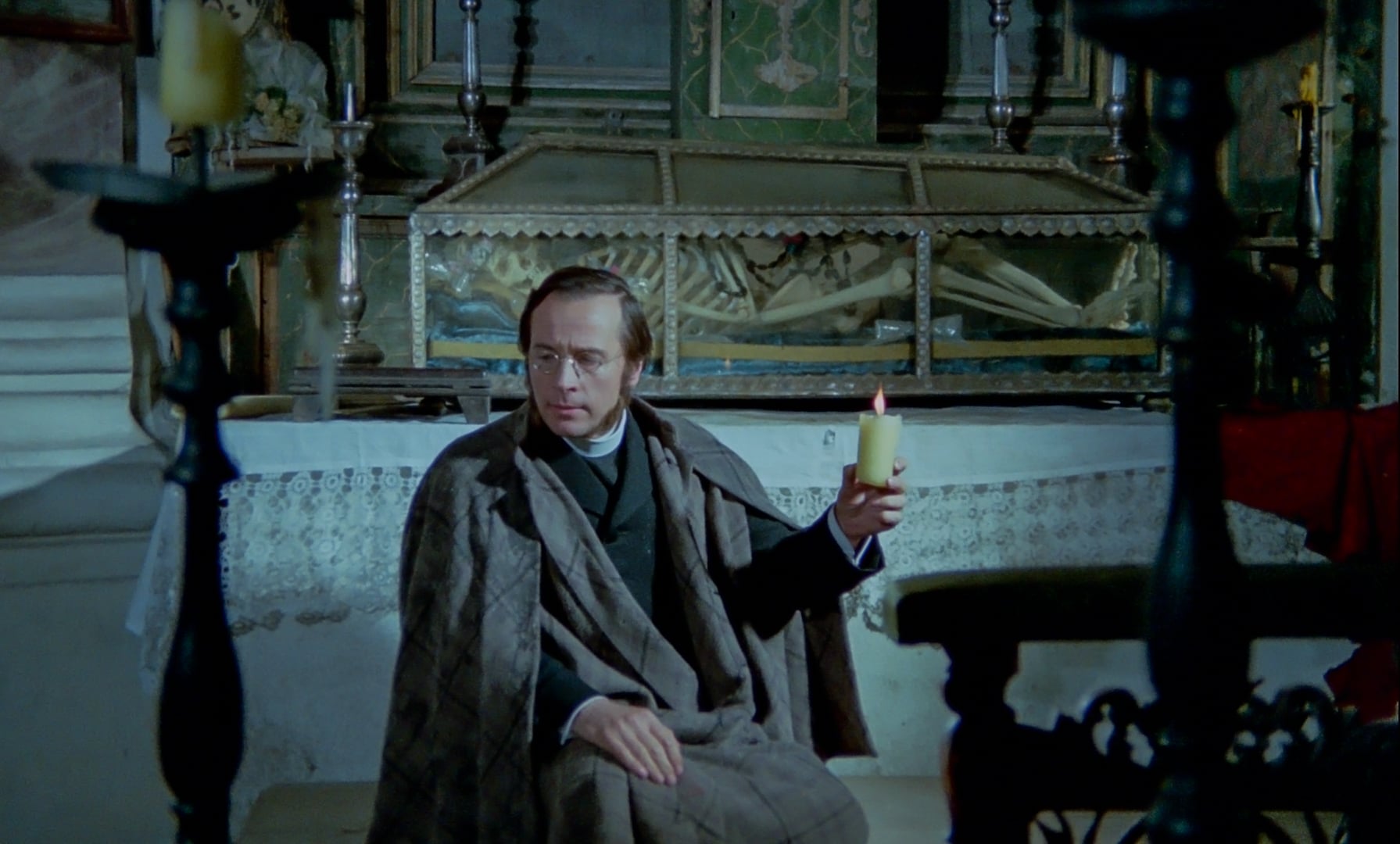
Lokis: A Manuscript of Professor Wittembach (dir. Janusz Majewski, 1970)
There are shades of Dracula in the premise for Janusz Majewski’s gothic fantasy: in the late 19th century, a pastor and ethnographer travels to an isolated corner of Lithuania where folk customs still hold sway. He finds himself holed up in a classically creepy castle, the guest of the local Count and his deranged mother – who, it transpires, may have conceived her son after being ravaged by a bear on her wedding night. Lithuania has a proud tradition of animist, pre-Christian spirituality that Majewski mines to great effect. The symbol of the rapacious bear at the heart of the story seems to stand for the degradation and tainted inheritance of the rural aristocracy, echoing H. P. Lovecraft’s cosmic horror Arthur Jermyn and foreshadowing the erotic chills of fellow Pole Walerian Borowczyk’s 1975 The Beast.
Explore our collection of Polish titles here.
Lokis: A Manuscript of Professor Wittembach (dir. Janusz Majewski, 1970)
Leptirica (dir. Đorđe Kadijević, 1973)
As this list suggests, the pioneering historical achievements of Eastern European artists often go unacknowledged in Western accounts. For instance: Serbian author Milovan Glišić’s 1880 vampire story After Ninety Years – adapted for Yugoslav television as Leptirica by Đorđe Kadijević in 1973 – preceded Bram Stoker’s Dracula by nearly two decades. Kadijević draws out the comedic and erotic elements of Glišić’s tale, about a vampire named Sava Savanović who takes up residence in a rural flour mill, and the young man who must tackle this supernatural threat in order to win his true love’s hand. Kadijević produced a string of similar TV projects in the 1970s, but Leptirica was his biggest swing. Watching now, it is striking how much of the runtime is devoted to hanging out with the bumbling villagers, getting a feel for the rhythms and irrationalities of rural life – an exercise in scene-setting that too many folk horror filmmakers neglect.
Explore our collection of Yugoslav titles here.
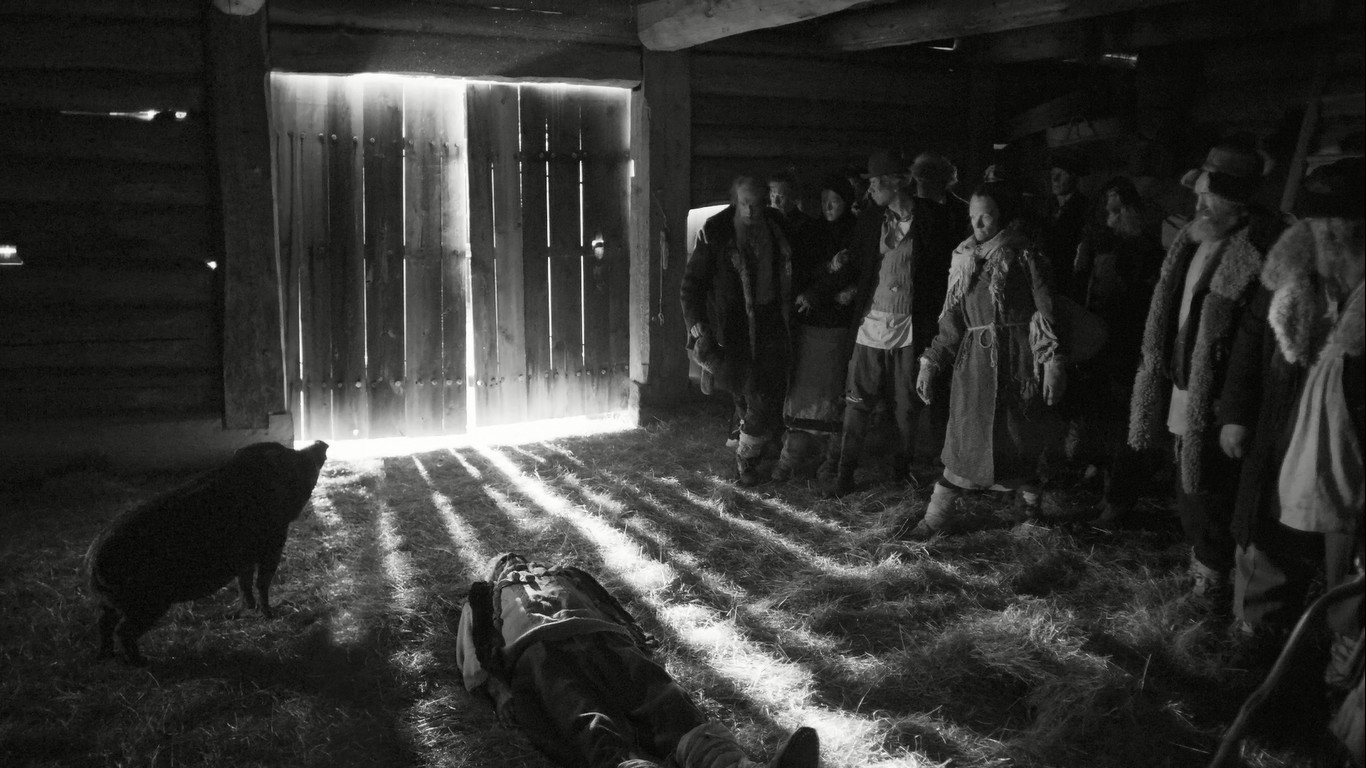
November (dir. Rainer Sarnet, 2017)
One of the most beautiful and disturbing folk horror features of recent years, November saw eccentric Estonian auteur Rainer Sarnet turn to the legends of his homeland for inspiration after a series of more worldly literary adaptations. Based on Andrus Kivirähk’s popular novel Rehepapp, the film conjures up an allegorical world of wonder and terror, in which lowly peasants must enlist the help of Kratts, animal-skulled automata powered by dark magic, in order to survive the winter and stave of the unwanted attention of ravenous wolves and black-eyed woodland ghosts. Shot in crystalline monochrome by veteran cinematographer Mart Taniel and elevated by the eerie score from Polish electroacoustic composer Michał Jacaszek, November speaks to the profound connection between the Estonian people and their native landscape: a connection that is experienced as both reverence and fear.
Read our interview with Rainer Sarnet about his latest film, The Invisible Fight.
Spirit of Itchi (dir. Kostas Marsan, 2020)
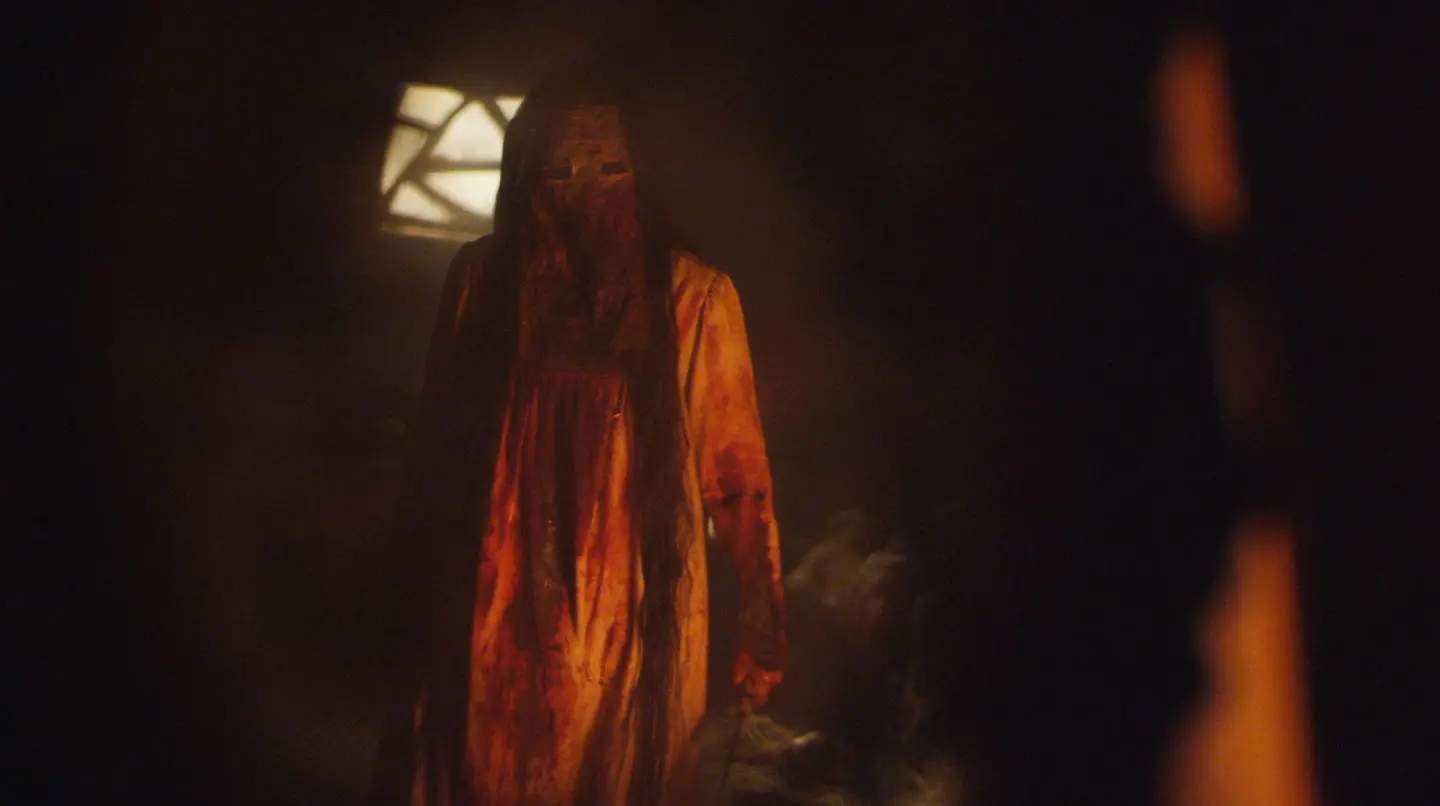
Spirit of Itchi (dir. Kostas Marsan, 2020)
In the past decade, the Sakha Republic – a semi-autonomous region in north-eastern Siberia – has developed a remarkable homegrown film industry. Drawing heavily on non-professional actors and the beauty of the tundra landscape, Sakha film has revived interest in the local language and local stories; and, given that filmmakers have made a point of dipping into traditional Sakha culture for inspiration, the republic has also become a hotspot for contemporary folk horror. Indeed, this tendency has been present in Sakha film since the beginning: Anatoly Vasiliev’s ground-breaking made-for-TV film Summer House (1992), often cited as the first Sakha feature, contrasts city-slicker arrogance with local belief in the power of spirits. Three decades on, 2020 saw the release of two such Sakha horror hits: trailblazing director Dmitry Davydov’s Scarecrow, and Kostas Marsan’s Spirit of Itchi. The premise may sound predictable – a family discovers that the malign ghosts of a past tragedy haunt their land, with events descending into ritualistic bloodletting – but Marsan knows how to make the most of the snowbound setting, crafting some delightfully unsettling nocturnal sequences and drawing out the contemporary relevance for Sakha audiences of the role that settlement and extraction have played in disrupting our relationship to the landscape around us.
Explore our collection of Sakha film here.
Hand-drawn Halloween is screening on Klassiki from 31 October – 20 November.


 Go back to journal home page