The Watchlist is Klassiki’s series of themed viewing recommendations drawing from the cinema of Eastern Europe, the Caucasus, and Central Asia. For the latest edition of Klassiki Picks, our series of curated watchlists personally selected for our subscribers by celebrated filmmakers, writers, and actors, we’re delighted to welcome legendary animation artists the Quay Brothers. Below is an abridged introduction to the Brothers’ selections; Klassiki subscribers can watch their fascinating video introduction in full here.
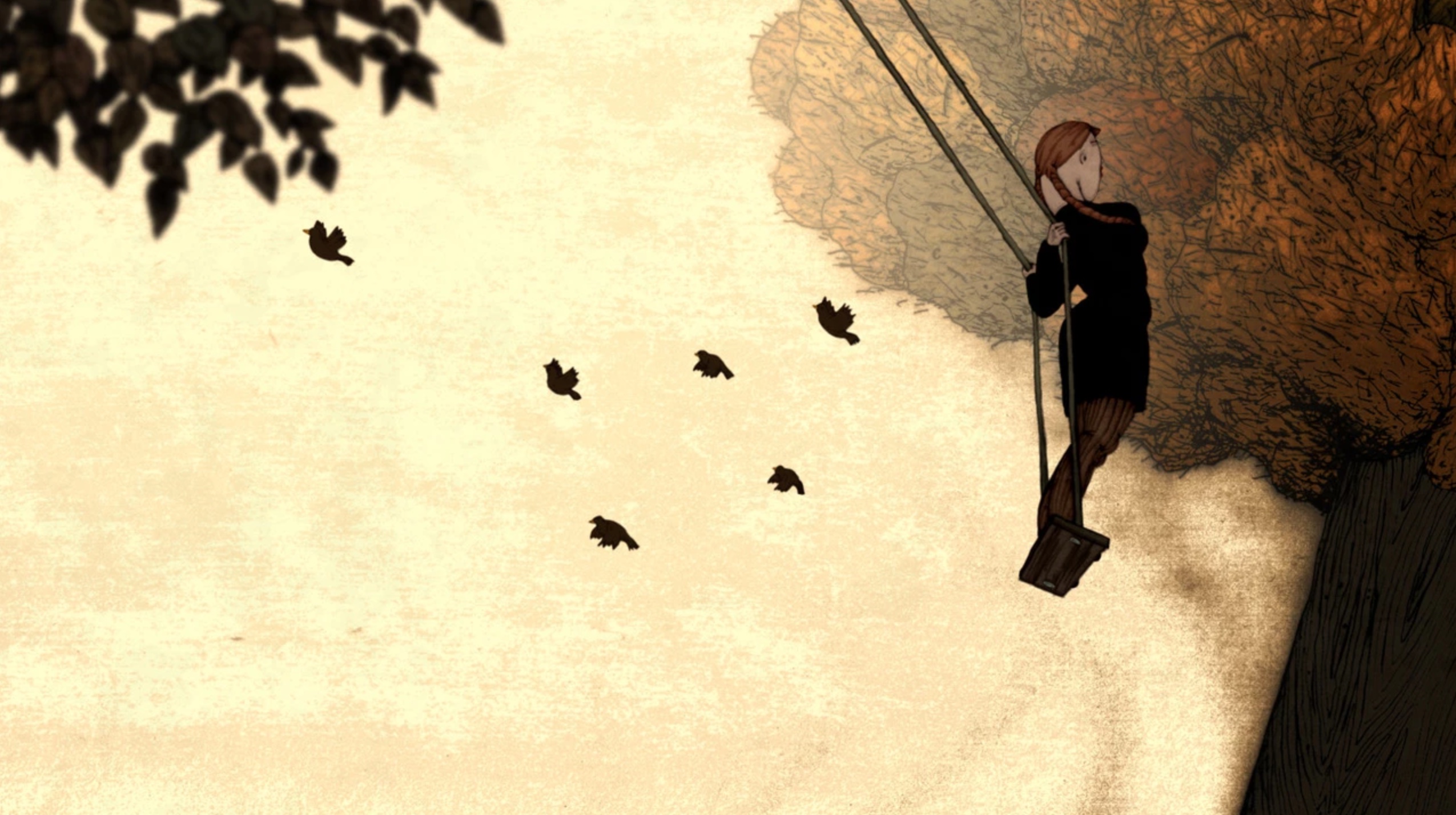
Milch (dir. Igor Kovalyov, 2005)
We’ve chosen five evenings’ worth of films. There are two live action films: the first one is The Stone Wedding by Mircea Veroiu and Dan Pița, and the second is Kazimierz Kutz’s Nikt nie woła, or Nobody’s Calling. In addition, we’ll be showing three animation directors: Walerian Borowczyk, followed by Igor Kovalyov, and then Priit Pärn from Estonia.
Walerian Borowczyk: three short films (1963-66)
In all his work, [Borowczyk] used many different techniques, excelling in all of them. With Renaissance, we see a devastated world that attempts to reassemble itself. Les jeux des anges he made by doing some watercolours that a friend then suggested he animate. What he created was the most visceral landscape that had not been seen before in this kind of animation. The third film by Borowczyk is Rosalie, which is based on a Guy de Maupassant story. It’s a monologue in which young Rosalie, played by Borowczyk’s wife, defends herself for the murder of her infant.
Watch the Quay Brothers’ selection of Borowczyk shorts now.
Igor Kovalyov: three animations (1990-2005)
The second animator we’ve chosen is the Ukrainian-born Igor Kovalyov, who studied under the magisterial Yuri Norstein. There are three films: Hen, His Wife, Andrei Svislotskiy, and Milch. Hen, His Wife is about a husband who doesn’t recognise that his wife is a hen – only upon the arrival of a guest do things become apparent. Andrei Svislotskiy is one of his most mysterious and atmospheric films. Milch is a story from a boy’s perspective as he observes his father’s affairs. It’s told with oblique details, and it’s quite haunting and erotic.
Watch the Quay Brothers’ selection of Kovalyov shorts now and explore our full collection of animated titles here.
Life Without Gabriella Ferri (dir. Olga and Priit Pärn)
The final animator is the Estonian Priit Pärn, born in Tallinn. We’re showing his Life Without Gabriella Ferri. This is about the complicated love life between a husband, wife, and a small child, cooped up. What strikes us most about these three filmmakers is the unique world they’ve created that could not possibly be upended by live action filmmaking. That’s what most inspires us.
Watch Life Without Gabriella Ferri now and explore our full collection of Estonian titles here.
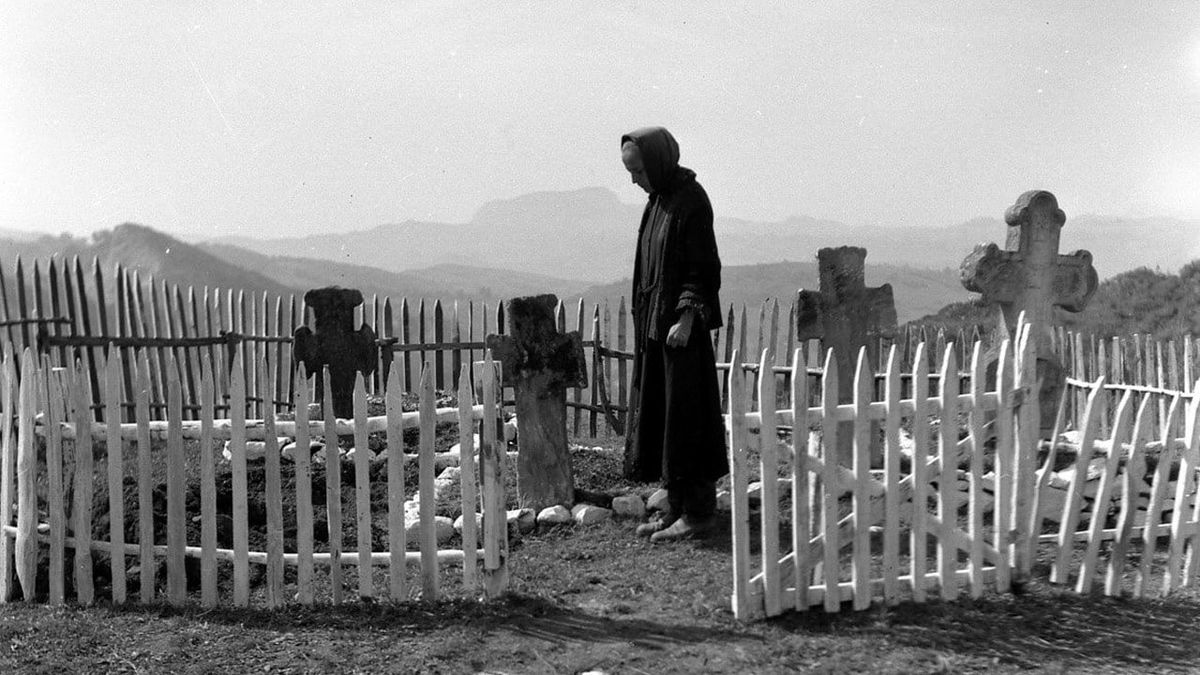
The Stone Wedding (dir. Mircea Veroiu and Dan Pița, 1972)
The Stone Wedding (dir. Mircea Veroiu and Dan Pița)
The first feature film is The Stone Wedding, which is made up of two parts. The first part tells the story, in beautiful, hypnotic, folkloric images, of a widow and her fatally ill daughter. There’s a Romanian folk legend that says that when a young woman dies prematurely, she’s buried in her wedding dress… The second part tells the story of a deserter who teams up with a musician who is going to a wedding. At the wedding, they realise that it’s an arranged marriage, and during the ceremony the bride becomes fixated on the musician. The film was shot in location in a very remote, mountainous region of Romania. My brother and I wrote to the cameraman, Iosif Demian, who was living and teaching in Australia. We asked him a lot of questions about the making of the film, and he wrote back a very detailed letter… One element that binds the two parts is the music, which was written by Dorin Liviu Zaharia, a completely untrained musician.
Watch The Stone Wedding now and explore our full collection of Romanian titles here.
Nikt nie woła (dir. Kazimierz Kutz)
The final film we’re showing is Nikt nie woła by Kazimierz Kutz. The film takes place in the Recovered Territories of western Poland after the Second World War. The hero is a man who has been in the Polish underground, no longer wants to kill, but has disobeyed an order and is being hunted. He meets up with Lucyna, and a romance begins – but it’s doomed. The most important thing is the cinematography of Jerzy Wójcik, who two years before had filmed Andrzej Wajda’s Ashes and Diamonds (1958). Here, he took off in another direction. He was pinning his two protagonists against walls, in bleak situations. It’s remarkable what he’s capable of in his lighting. It’s important to mention the contribution of the composer Wojciech Kilar. This is one of his earliest contributions to film music. The score is fantastically modern.
Watch Nikt nie woła now and explore our full collection of Polish titles here.
Klassiki Picks with the Quay Brothers is available to subscribers from 13 February – 6 March. Listen to our podcast interview with the Brothers here.


 Go back to journal home page