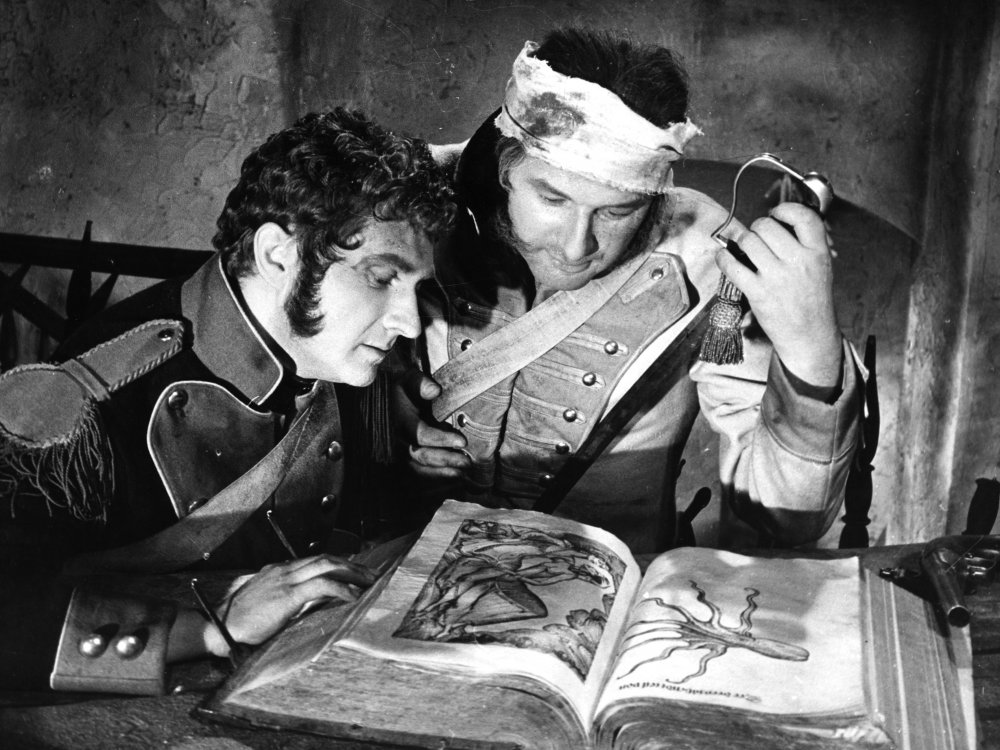
The Saragossa Manuscript (dir. Wojciech Has, 1965)
2025 is the centenary year of Wojciech Jerzy Has – one of Poland’s greatest filmmakers, but a figure often misunderstood or underestimated outside of the country. Recently, that has begun to change. This year’s edition of the Kinoteka Polish Film Festival included a full retrospective of Has’s remarkable career: from his early melodramas and rare shorts to the surrealist masterpieces that made his name.
We’re closing out this anniversary year with a final Has celebration. Until 25 December, Klassiki subscribers can watch a restoration of The Saragossa Manuscript. Has’s masterpiece of sixties counterculture is a surreal odyssey across time and space. Adapted from Jan Potocki’s picaresque novel, the film stars Polish screen icon Zbigniew Cybulski as Alphonse van Worden, an 18th-century military officer whose journey across Spain becomes a descent into madness when he is waylaid by a succession of mischievous spirits and eccentric interlopers. Nesting stories within stories within stories and serving up a parade of supporting characters – from princesses to hermits, madmen, Inquisitors, and cabalists – The Saragossa Manuscript is baffling but hypnotic, with a haunting electroacoustic score by the great Krzysztof Penderecki. Its acolytes include Luis Buñuel, David Lynch, and Martin Scorsese – but this is a truly singular cinematic experience.
Ahead of the Kinoteka retrospective in April, we spoke to its curator, the Polish film expert Michael Brooke, about Has’s life and times for an episode of the Klassiki Podcast. To mark our screening of The Saragossa Manuscript, we’re publishing this abridged transcript of highlights from that conversation. Klassiki subscribers can also watch Has’s beautiful post-war romance Farewells on the site now. And make sure to check out Daniel Bird’s piece for the Klassiki Journal on Has’s literary adaptations here.
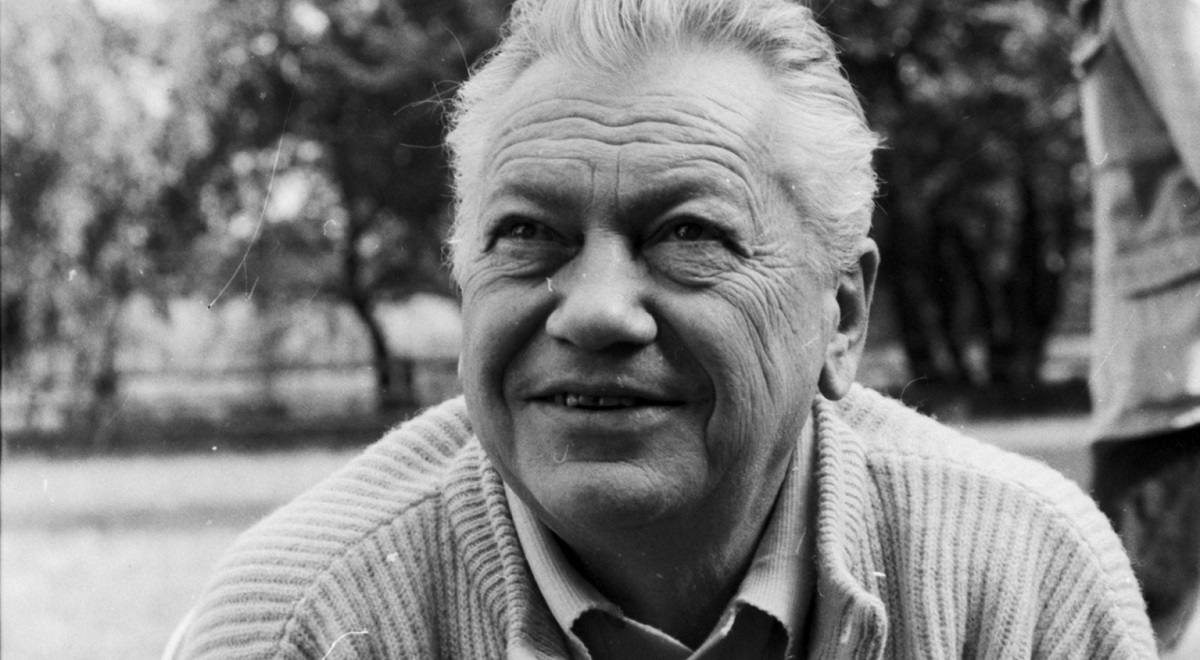
Wojciech Has
Why a full Has retrospective, and why now?
There is every reason for doing a full retrospective of Has generally, because he is a really major, major figure in Polish cinema, but much more highly regarded in Poland than abroad for various distribution reasons. Only four [of his features] ever had commercial distribution in Britain, out of 14 in total.
I saw The Noose, his 1957 debut film, about 15-16 years ago, and was absolutely blown away by it. I thought: why don’t I know this film? I knew the other big 1950s Polish films – Andrzej Wajda’s “war trilogy”, Jerzy Kawalerowicz’s Night Train, Andrzej Munk’s Eroica – but I didn’t know The Noose at all. I thought it was easily as good as the others. And then I discovered that it was equally as well-regarded in Poland from the start. But it wasn’t distributed because its subject was alcoholism, and from what I gather the authorities weren’t keen on it being shown abroad for fear that it would give the wrong impression of what Polish men were like. Has was lucky with his timing, in that there was a cultural thaw when Władysław Gomułka took over as leader of the country [in 1956] that led to an explosion across the board culturally; creatively, it was an incredibly exciting time. And Has’s film was made right in the middle of that creative ferment.
Has is a contemporary of other canonical figures – Wajda, Kawalerowicz, Tadeusz Konwicki – figures all born roughly in the mid-1920s who emerge in the post-Stalinist thaw. He is, at least at first, always listed as a member of what’s known as the “Polish Film School”, the post-Stalinist movement spearheaded by Wajda that reinvents Polish cinema in the period. But Has is not really considered part of that canon, and he quite quickly distinguishes himself from his cohort.
A lot of the canonical titles were made by the Kadr Film Unit, which was run by Jerzy Kawalerowicz and Tadeusz Konwicki. That includes films like Canal, Ashes and Diamonds, Munk’s Eroica. Has’s films were made for the Kamera Film Unit, so he’s apart from them in that sense. The other directors were interested in a classical approach to filmmaking. For all the innovations of films like Ashes and Diamonds, they’re not “New Wave” films in the French sense of the term. That said, there is a lot in common between Has and Wajda: they both a visually baroque, quasi-surrealist sensibility. Luis Buñuel was a fan of both, which I think is telling.
There absolutely is a Has touch. He’s not a historian in the sense that Andrzej Wajda is, but he is very interested in history and the way it manifests itself through memory, often distorted memory
Wajda is so well-regarded as a chronicler of Polish history, someone with a sociological eye; lots of his films are dissections of moments in Polish history. Whereas Has is more famous as an adapter of literary works. He’s more interested in the surreal and the literary.
A bit like Stanley Kubrick, virtually all of his films were literary adaptations. I think he had a very high regard for literature generally, and I think he relished the process of translating often quite experimental literature into appropriate film form. Often, he was working with the authors themselves: Farewells was based on a very highly regarded novel by Stanysław Dygat, who then co-authored the film script.
People often say that it was a “safer bet” to adapt literature when it came to working with or against the communist censors.
That is also absolutely true.
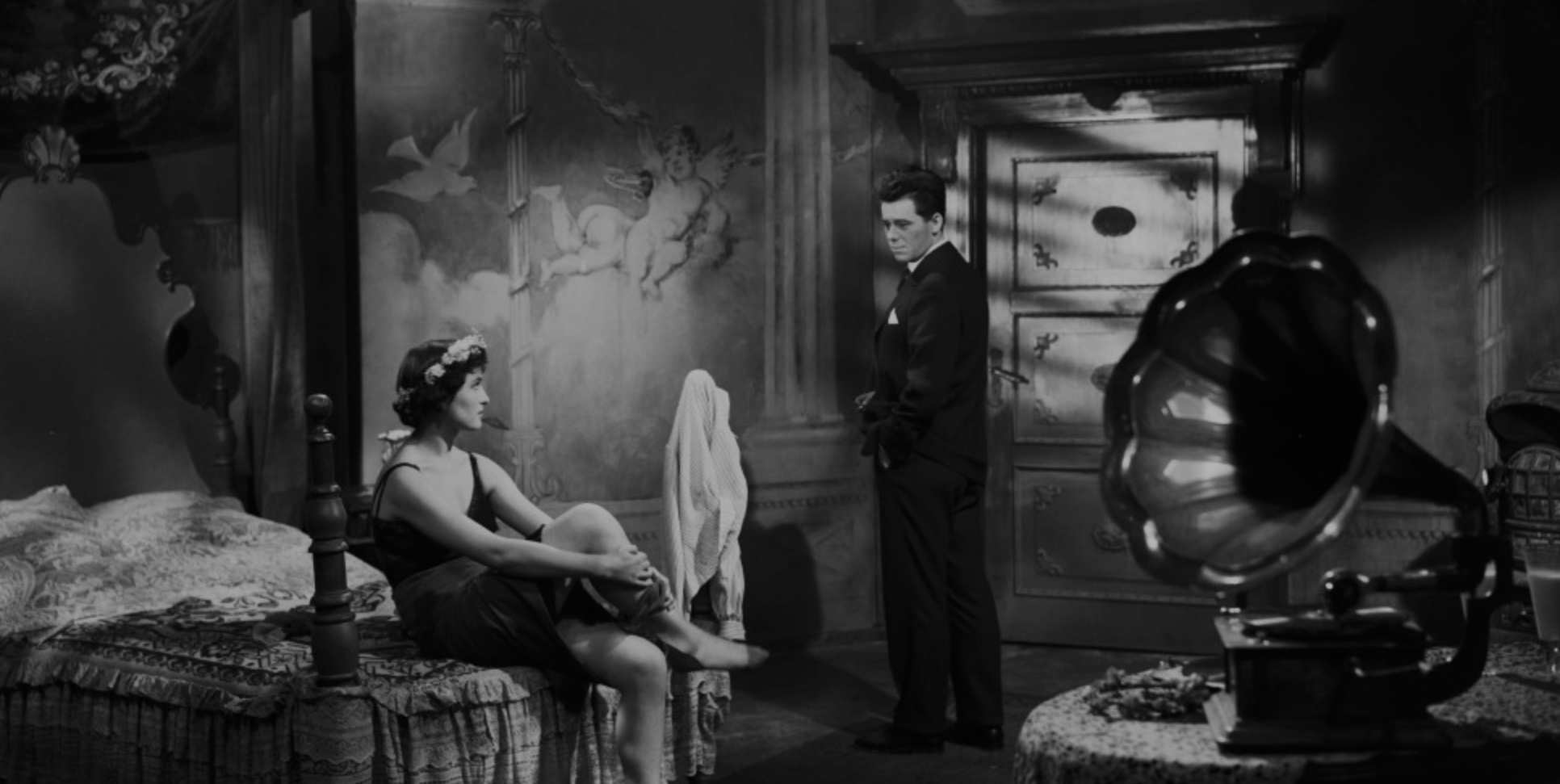
Maria Wachowiak and Tadeusz Janczar in Farewells (dir. Wojciech Has, 1958)
So, was Has a liberty taker when he got his hands on these literary works? Is there a Has touch? The range of works that he adapted is remarkable, stretching from centuries past to the present.
There absolutely is a Has touch. You mentioned history: Has is not a historian in the sense that Wajda is, but he is very interested in history and the way it manifests itself through memory, often distorted memory. That first becomes overt in Farewells, his second feature. It’s a film of two halves, one set before World War Two and one set during the war.
It’s a mirrored structure: the two halves take place in the same village outside Warsaw but with completely different tones. First, we see the place full of potential, then we see it as a site of lost potential.
He’s very fond of mirroring and doubling. The Saragossa Manuscript is full of it: it’s a very good way of making sense of a very non-linear narrative, spotting the echoes between sections. That’s very much a Has characteristic.
I think Has’s career can reasonably be broken into three parts. The first third is the six early films, from 1957-62. He made one film a year, his most prolific period by some distance. That’s The Noose (1957), Farewells (1958), One Room Tenants (1959), Goodbye to the Past 1961), Gold Dreams (1962), and How to Be Loved (1962). That last one is the film where people really started to notice him outside of Poland. Then you have the middle period, which goes from The Saragossa Manuscript (1965) to The Hourglass Sanatorium (1973), where the films became increasingly ornate and convoluted, with bigger gaps between them. Then there’s a big gap where he pretty much retired from filmmaking, when he was teaching at the Łódź Film School and not showing much inclination to return to directing. Then suddenly there’s this late quartet, roughly a film a year: Write and Fight (1984), Memoirs of a Sinner (1985), An Uneventful Story (1986), and The Tribulations of Balthazar Kober (1988).
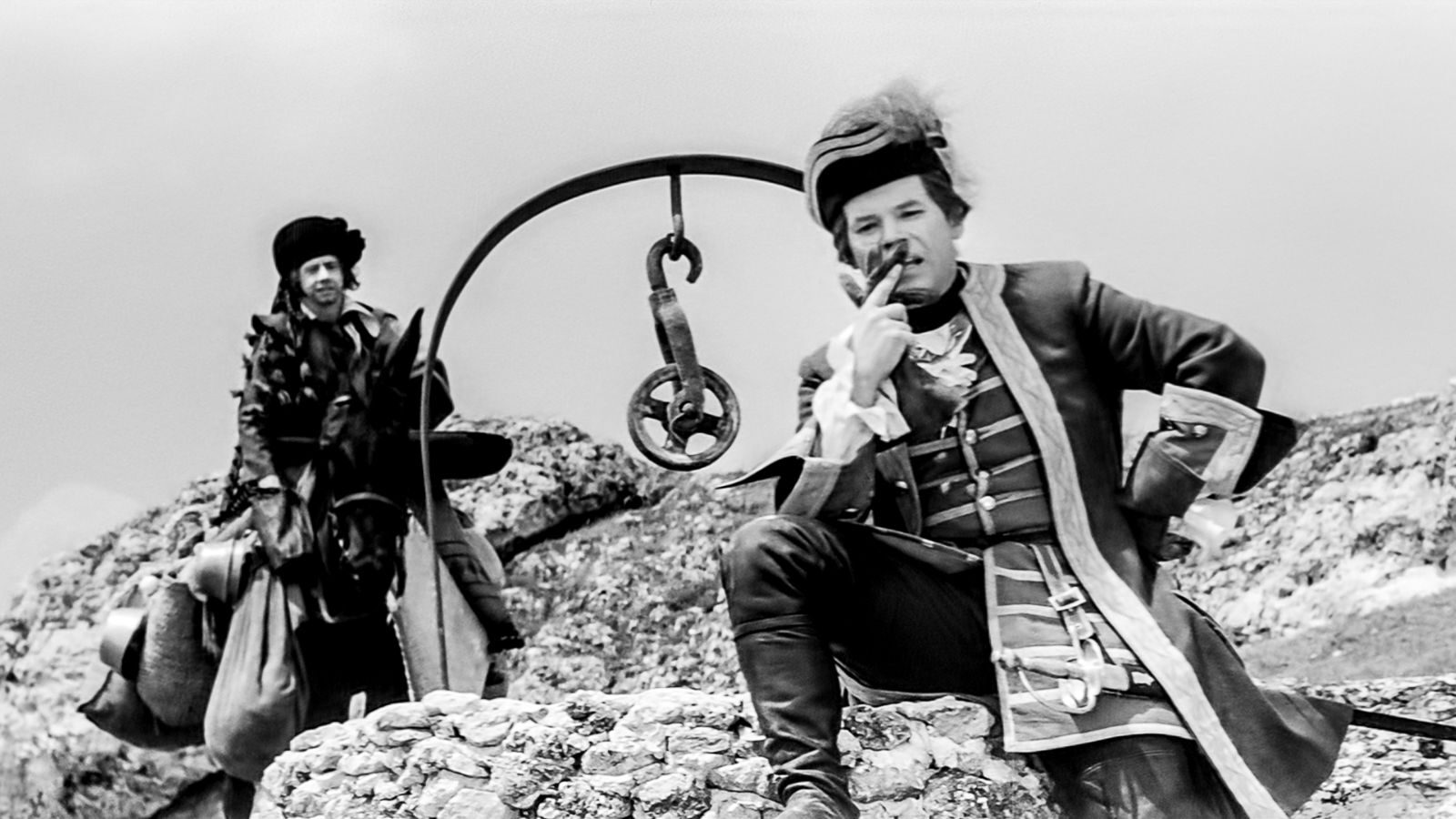
Zbigniew Cybulski in The Saragossa Manuscript (dir. Wojciech Has, 1965)
The Saragossa Manuscript is an undertaking: it’s a three-hour adaptation of a novel from the early 1800s by a nobleman named Jan Poticki, who shot himself because he thought he was a werewolf.
I only realised recently that the original was written in French. At the time, Poland didn’t exist. One of the reasons why the Poles revere their great literary masters from the nineteenth century is that they wrote in Polish, and they were keeping Polish culture alive. The most successful Polish films ever made are adaptations from that period. It would be the equivalent of an all-time British film list that was all Dickens and Trollope adaptations.
I’ll leave it to you to try and give as brief as possible a summation of what it’s all about…
A plot synopsis is more or less impossible in any coherent form. It has something like ten separate narrative nodules that relate to each other in unexpected ways. We start off in the Napoleonic era, when the titular manuscript is discovered by some soldiers. What they read is the story of Alphonse van Worden from a century earlier, played by Zbigniew Cybulski. During the course of his adventures, he is told various stories by various people. Sometimes, people within those stories tell stories. What’s remarkable about it is how coherent it is to watch. This is where Has’s control becomes vital. There’s lots of doubling up of themes and ideas. He’s very fond of setting up sequences and then pulling the rug out. There’s lots of stuff about comparisons between religions and Kabbalism and so on. It’s surrealist in the sense that there’s a weirdly coherent dream logic to it, even when events don’t make sense.
Has’s generation of directors, who were born in the 1920s, remembered pre-war Poland. In recreating impressions of what Poland was like for them, Jewish culture was very important
How did he suddenly come out with this film? Had he been wanting to make it for a while? It’s such a stand-out creation.
It’s not the sort of thing you could make as a debutant. It cost about three times the budget of a normal Polish film at the time. Polish cinema’s Gone with the Wind was a film called Knights of the Teutonic Order by Aleksander Ford, which came out in 1960. It was Poland’s first ever widescreen historical epic, and it was the most phenomenal box office hit. So, the various film units were keen to have a slice of that pie. In the mid-sixties you saw three of these huge, widescreen epics: Saragossa Manuscript, Wajda’s The Ashes (1965), and Kawalerowicz’s Pharoah (1966). I don’t really know how Has managed to make it so formally radical – though that’s true of the original novel. It’s a perfectly faithful adaptation structurally. It was the film that really made Has’s international reputation. Its champions included Francis Ford Coppola and Martin Scorsese, and The Grateful Dead’s Jerry Garcia, who was obsessed to the point of helping with its restoration in the nineties.
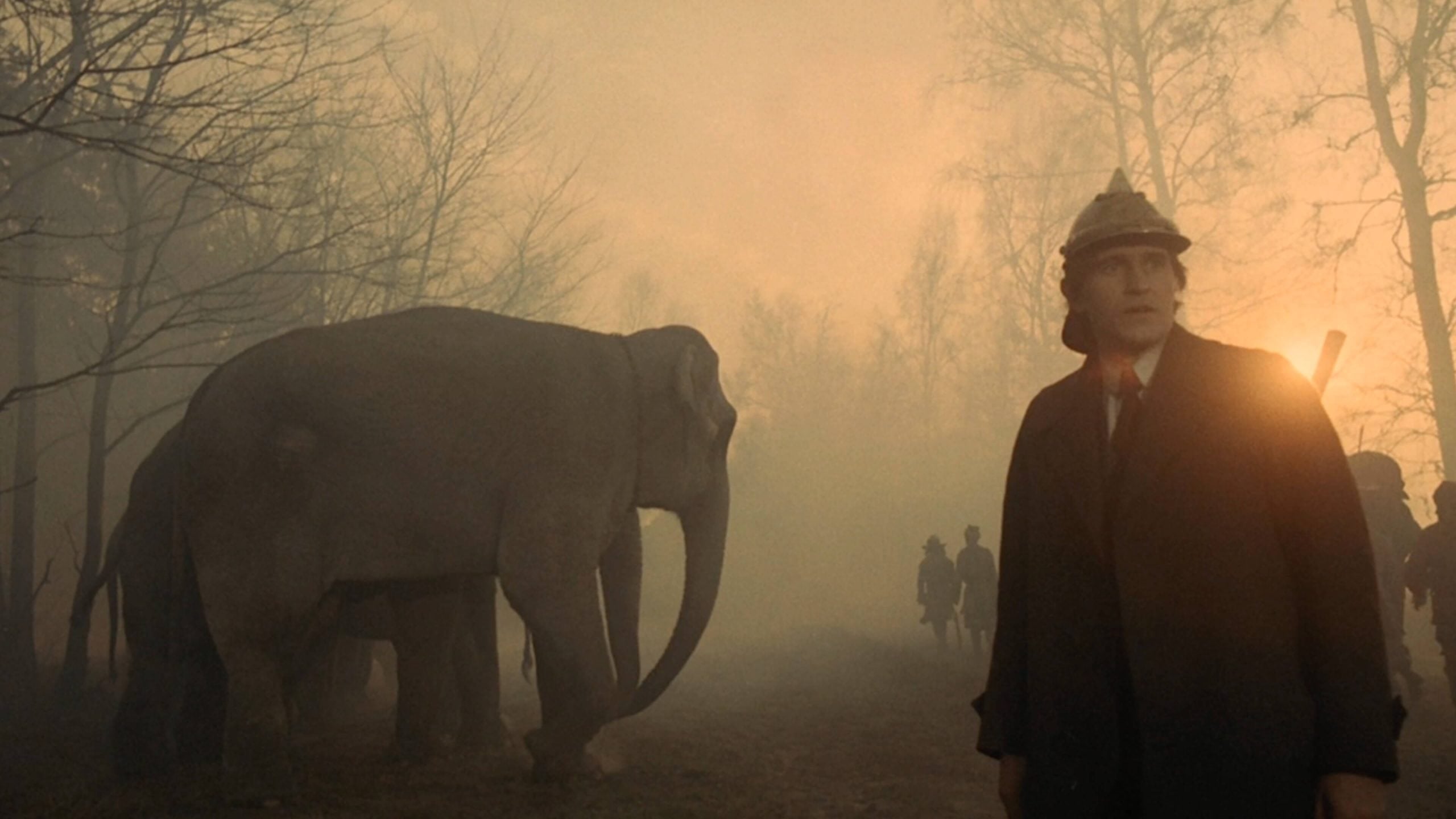
Jan Nowicki in The Hourglass Sanatorium (dir. Wojciech Has, 1973)
The Hourglass Sanatorium is another adaptation, this time of the great Jewish-Polish author Bruno Schulz, who was murdered during the Holocaust.
One of the most interesting things that Has did, particularly given when the film was made, was to really emphasise the Jewish angle, which was very unusual for Polish cinema of the time.
Has himself was half-Jewish, is that right?
The assumption has been that, for someone who was so interested in Jewish subject matter – it comes out in other films, like The Codes – and was interested enough to teach himself to read Hebrew, he must have had some kind of Jewish ancestry. But that appears not to be the case.
It wasn’t unheard of, though. Wajda wasn’t Jewish, and he devoted a lot of time to that side of Polish history.
Absolutely. Poland changed so much between 1939-49. It went from one of the most multicultural to one of the most monocultural countries in Europe. This generation of directors, who were born in the 1920s, would have remembered pre-war Poland. In recreating impressions of what Poland was like for them, Jewish culture would have been very important.
Watch The Saragossa Manuscript on Klassiki until 25 December.


 Go back to journal home page