The Klassiki Companion is our beginners’ guide to the key filmmakers, movements, and concepts in the cinema of Eastern Europe, the Caucasus, and Central Asia. To mark the launch of our double bill of his films, this edition is dedicated to the “red modernism” of Hungary’s Miklós Jancsó, master of the long take and groundbreaking chronicler of his homeland’s political hopes and fears.
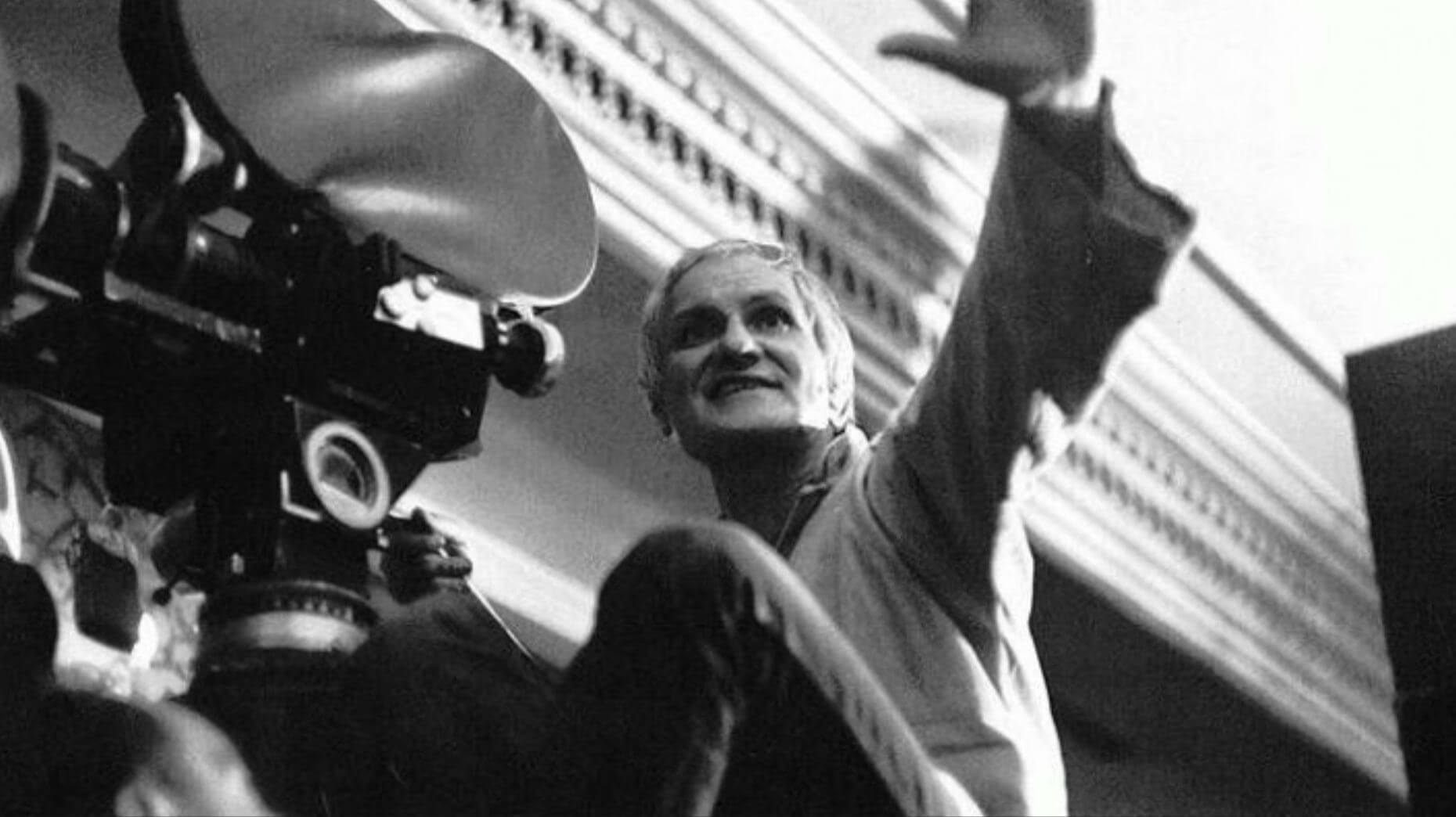
Miklós Jancsó
There is a sad serendipity to the fact that Klassiki is launching its new celebration of the great Miklós Jancsó mere weeks after the death of Béla Tarr – maybe his only true contender for the title of greatest Hungarian filmmaker. Not that Tarr himself was in any doubt, calling Jancsó their nation’s finest on more than one occasion. If Tarr’s death suggests the waning of a certain strand of austere European arthouse, then when Jancsó passed in 2014 it felt like losing a living link to the New Waves that reinvigorated European cinema in the post-war decades. He was one of those directors to emerge in the 1950s and ‘60s who, with remarkable perseverance, continued to plough their filmmaking furrows well into old age: Věra Chytilová and Alain Resnais, both of whom also died in 2014, continued working well into their eighties; Agnès Varda was still directing when she died at 90 in 2019; Jean-Luc Godard when he ended his own life in 2022 at 91. Jancsó made the last of his 33 features at the age of 89.
It’s an overwhelming oeuvre, mostly reduced outside of Hungary to a handful of canonical films from the sixties and seventies: The Round-Up (1966), The Red and the White (1967), Red Psalm (1972). A statement by the great critic Jonathan Rosenbaum read at Jancsó’s funeral called him “one of the great lost continents of world cinema”. Perhaps Jancsó’s longevity was a response to the fact that he only came to feature film directing when he was already in his forties, making the transition from theatre work via state-funded (and state-serving) documentaries. It is certainly true that the productivity of Jancsó’s career is matched to a remarkable degree by the consistency of its artistic vision: there is no mistaking one of his films for anyone else’s. Indeed, the director described his style – defined by its exquisitely blocked long takes, captured by a serpentine camera, probing the dark depths of national history with a critical but humanist eye – as “the only way I know how to make films”.
Jancsó was a critically-minded Marxist, but one need neither to have read Capital, nor to know the ins and outs of Hungarian history – which he interrogated with a dedication unmatched by his filmmaking compatriots – in order to recognise his universal concerns. He matches political commitment to a fully realised aesthetic: what Jancsó called “the middle way” and the critic J. Hoberman termed “red modernism”. “With the possible exception of Sergei Eisenstein,” Jonathan Rosenbaum continued in his elegiac remarks, “I suspect that Jancsó remains the supreme example of a film artist who views history as a multi-layered and passionate form of pageantry, something to be sung and danced, by the camera as well as by the actors, and, speaking more figuratively, by the audience.”
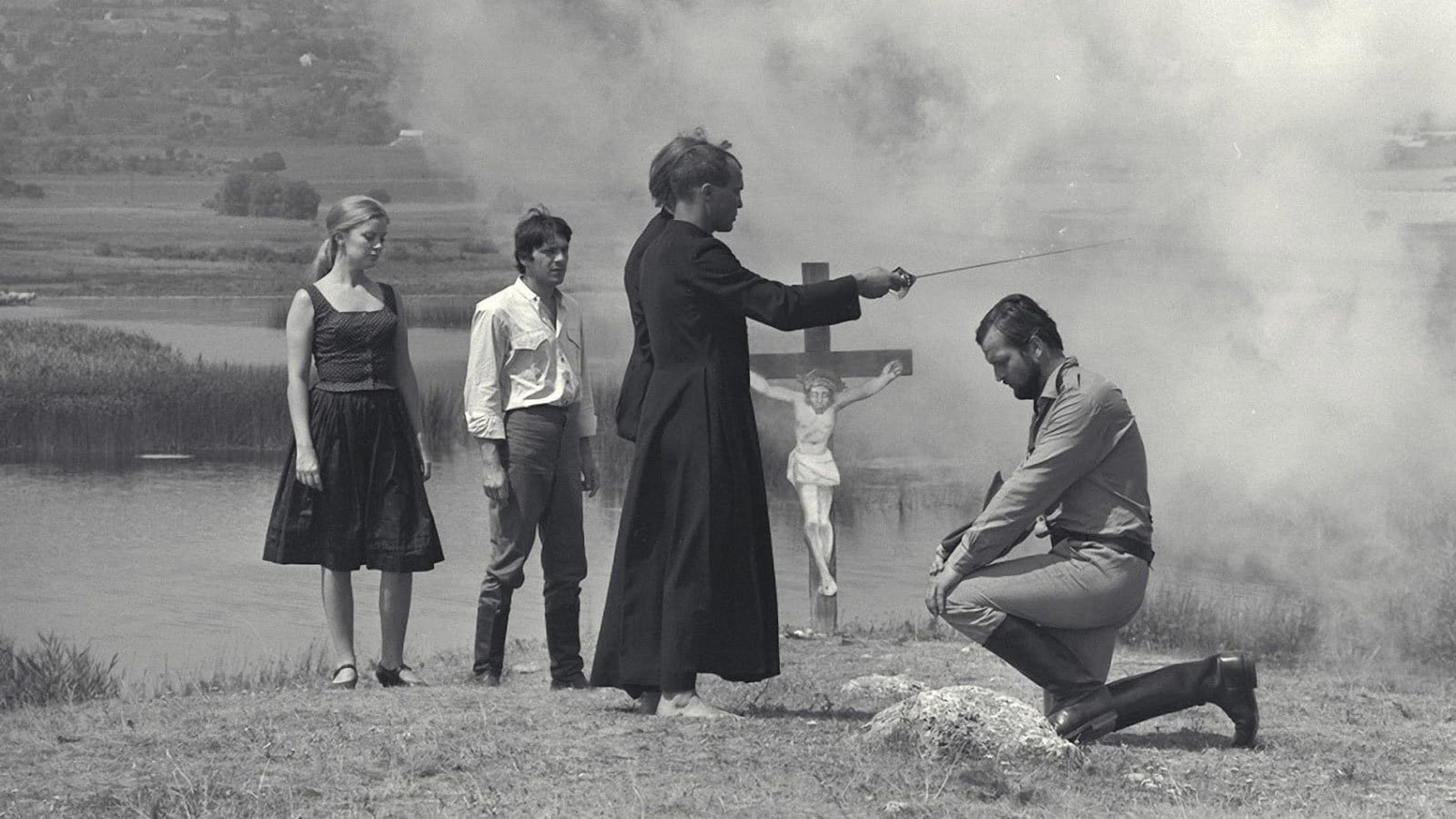
The Red and the White (1967)
Early life, early films
The course of Jancsó’s early life reveals many of the divisions and ruptures in Hungarian history that he would go on to dramatise in inimitable fashion. The son of a Hungarian father and a Romanian mother with Jewish roots, he was born in 1921 and raised in a village near Budapest. In keeping with this heritage, he studied law and art history in Cluj, unofficial capital of the ethnically mixed region of Transylvania – soon to be lost for good to Romania after the Second World War. Jancsó did briefly serve in the military after graduating in 1944 and spent some time as a prisoner of war in Russia, an experience that informed his 1965 film My Way Home. Upon returning to Budapest, he enrolled in the Academy of Theatre and Film Arts, beginning his filmmaking career in 1954 as a director of newsreels.
In the words of J. Hoberman, one of Jancsó’s most perceptive Anglophone admirers, the director’s “film form may be universal, but his narrative content is often barely decipherable outside the arcane realm of Hungary’s history or its cultural politics.” In the first half of the twentieth century alone, that history comprised a junior role in the Hapsburg Empire; defeat alongside the Central Powers in the First World War; a short-lived Communist republic that was crushed by the proto-fascists of Admiral Horthy; a Nazi puppet state during the Second World War; a Stalinist Soviet satellite whose bid for independence in the abortive 1956 revolution was crushed and replaced with the (relatively) benign “barracks socialism” of the sixties and seventies. Jancsó addressed himself to this history, and to its nineteenth-century antecedents, right from his first feature, 1958’s The Bells Have Gone to Rome, about a gang of Hungarian teenagers pressured into action with the Nazis on the eastern front.
For Jonathan Rosenbaum, Jancsó “viewed history as a multi-layered and passionate form of pageantry, something to be sung and danced, by the camera as well as by the actors, and, speaking more figuratively, by the audience.”
In these first years as a certified fiction filmmaker, Jancsó established many of the creative and personal relationships that would define his “golden” sixties period. In 1958, he married Márta Mészáros, one of Hungary’s most vital if overlooked directors. The following year he met the screenwriter Gyula Hernádi, with whom he worked until the latter’s death in 2005; “he was a true great friend,” Jancsó later recalled, “Hernádi always said that we were identical twins.” 1963’s Cantata saw him working for the first time with the actor Zoltán Latinovits. His third feature, My Way Home (1965), was the first penned by Hernádi and the first of many to star the wan-faced András Kozák. Kozák plays Jóska, a Hungarian soldier on his way home through a landscape riddled with debris and destruction in the final days of the Second World War. After he is captured by the occupying Red Army, he forms a bond with the Russian soldier Kolya (Sergei Nikonenko), despite their lack of a common tongue. Already, Jancsó’s love of the Hungarian landscape, his distrust of authority, and his deep empathy were on full display.
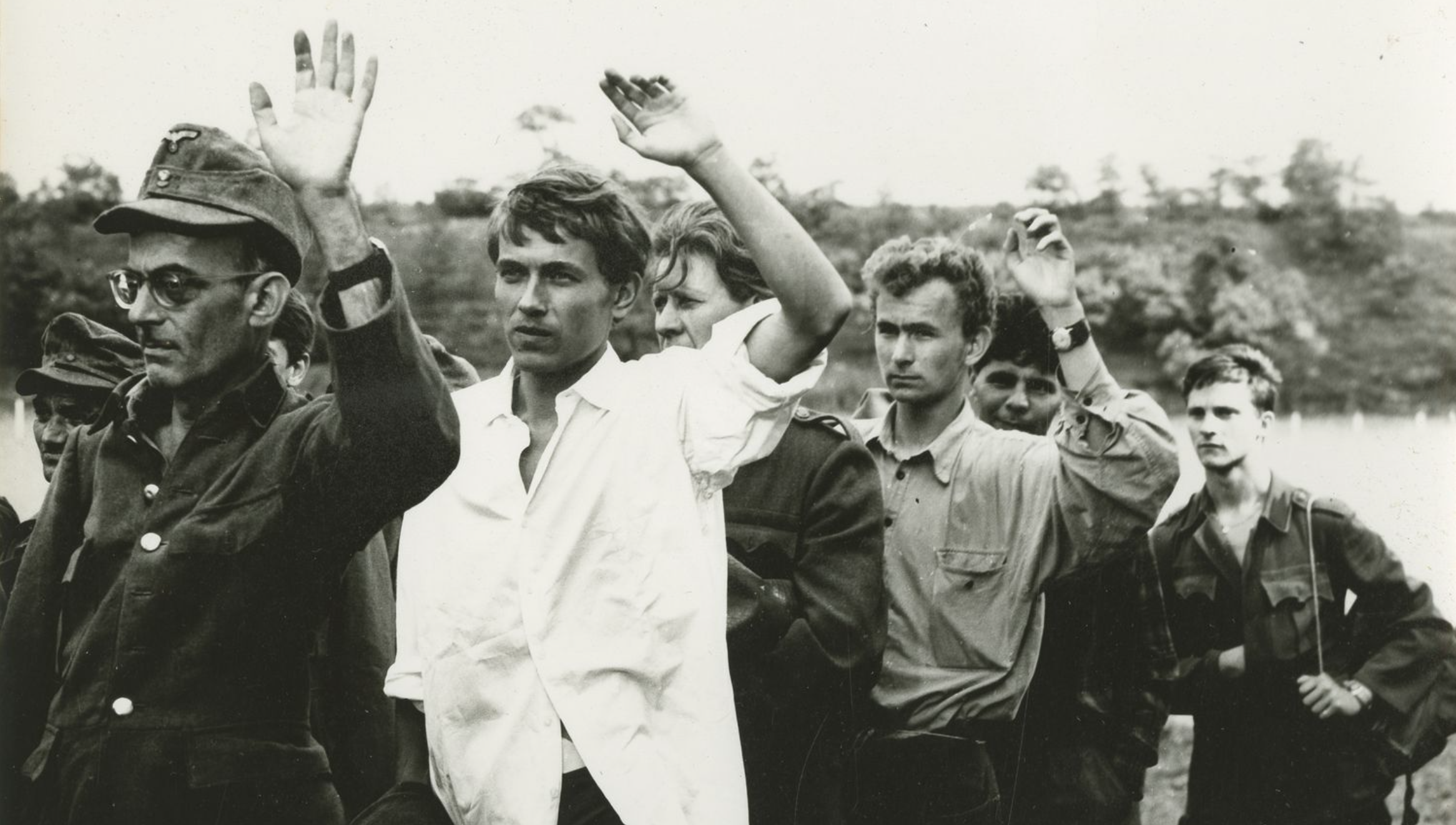
My Way Home (1965)
International acclaim: The Round-Up to Red Psalm
Jancsó’s international reputation exploded in the years after My Way Home thanks to a remarkable run of features between 1966 and 1972 – The Round-Up (1966), The Red and the White (1967), Silence and Cry (1968), Red Psalm (1972) – that captured the imaginations of the European festival circuit. Western critics were enamoured of an idiosyncratic formal approach that quickly became the Jancsó “brand”; in Hoberman’s recounting, this “appeared to be a synthesis of Antonioni (elegant widescreen compositions, austere allegorical landscapes), Bresson (impassive performers, exaggerated sound design), and Welles (convoluted tracking shots, intricately choreographed ensembles).” In truth, Jancsó’s mature film language was already well on display in My Way Home, which also reveals the ends behind the visual means: to excavate Hungarian history and landscape in order to explore philosophical questions of power, fate, and justice. That film had also introduced two other key elements of the Jancsó playbook. First, his recurring fixation on the puszta, or Great Plain, that dominates the east of the country. (The puszta would later return, of course, in Béla Tarr’s own long-take Hungarian odysseys, most famously in Satantango.) Second, the special aural quality of the Jancsó film, which often blends of folk songs, dirges, and mismatched languages across the soundtrack. The critic Michael Brooke has argued that Jancsó may have benefitted indirectly from the way in which domestic censorship pushed him towards allegory and symbolism, since it made his films more legible to international audiences unaware of the specifics of Hungarian political history.
What was the history that spoke to Jancsó? To cite Hoberman again: “his narratives recalled the literature of extreme situations – pivoting on cryptic betrayals, mapping the seizure of power, dramatising the exercise of terror.” The Round-Up is representative. Written by Hernádi and starring Latinovits and Kozák alongside János Görbe and Tibor Molnár, the film takes place in 1868, 20 years after a failed attempt by Hungarian nationalists to break away from the Hapsburg Empire. Imperial troops roam the puszta, searching for those who took part in the rebellion; villages are subjected to sadistic rituals of collective punishment. The film was an instant success at the 1966 Cannes Festival. Two years later, Jancsó would address similar themes in more cloistered, claustrophobic style in Silence and Cry. Now we are back in the twentieth century: 1919, after the fall of the short-lived post-war Hungarian Soviet Republic to the fascist regime of Miklós Horthy. Kozák returns as István, a communist soldier on the run from the ensuing reprisals, who finds shelter in a farm run by the harried Károly (József Madaras) and two mysterious women. As the police state tightens its grip, loyalties are pushed to the brink. We are back in the nineteenth century for the petty peasant uprising that drives the elliptical narrative of Red Psalm.

The Round-Up (1966)
In between these studies in persecution came The Red and the White, a Hungarian-Soviet co-production intended as a celebration of the fiftieth anniversary of the October Revolution. Like many other Soviet films about the revolutionary era – Aleksandr Askoldov’s Commissar, Gleb Panfilov’s No Path Through Fire – the film is actually set during the Civil War that followed the Bolshevik’s seizure of power. Rather than the heroic escapade expected by his Russian backers, Jancsó produced an abstract allegory on the senselessness of war. Battle here “is a chess game in which two armies battle back and forth, successively occupying the same indifferent landscape in a series of lethal, geometric reversals,” writes Hoberman. “Mass murder in bucolic summer… an austerely pornographic pastoral.” The Soviets refused to release the film inside the USSR, and it was initially denied an international premiere when Cannes was cancelled following the May 1968 unrest – but would go on to be one of Jancsó’s most resounding critical successes.
Jancsó rounded out the decade with The Confrontation (1969), his first colour film and his most musical to date: a kind of folk-opera set in the first years of communist rule in 1947, in which a gaggle of students on the hook to Machiavellian party officials attempt to win over a local Catholic school to the red cause. Winter Wind, released the same year, sees a cell of Croatian anarchists plotting to assassinate the king of Yugoslavia; it was co-written with the French duo Jacques Rouffio and Francis Girod and starred foreign talent including Marina Vlady, Jacques Charrier, and Ewa Swann. Taken together, this double header speaks to the direction of travel for Jancsó in the decade ahead: more international co-productions, and ever more baroque stylisation. Having established his brand, Jancsó was about to push it to the point of self-parody.
the ends behind Jancsó’s extravagant visual means: to excavate Hungarian history and landscape in order to explore philosophical questions of power, fate, and justice
Italy and experimentation
As his style ploughed deeper into symbolic reverie and his takes grew ever longer and more elaborately choreographed, Jancsó was on the move in personal and professional terms. In 1968, he met the Italian writer, Giovanna Gagliardo. They would marry and up sticks to Rome, where the director lived for the next ten years, only occasionally returning to Budapest to complete intermittent Hungarian productions. Jancsó was entering a peculiar period in his career, refining his form to a fine point while opening himself up to ever more outlandish content, producing some of his most acclaimed and most derided works back-to-back. Red Psalm won him the best director award at Cannes; conversely, Jancsó’s Italian films remain among his most obscure, with critical rehabilitation still some way off.
Winter Wind consists of only 13 shots, Elektra, My Love (1974) of just 12. This reimagination of the tragedy of Agamemnon as a puszta-set musical is one of Jancsó’s most intensely allegorical films, with the psychological aspect of the Greek tragedy transformed into mass choreography; the arrival at the climax of a red helicopter confirms that we are dealing with universal, pan-historical themes rather than the distant world of Sophocles. Jancsó’s major Hungarian work of the period was an intended trilogy known as the Vitam et sanguinem. The first two installments, Hungarian Rhapsody and Allegro Barbaro (both 1978) were the most expensive films ever produced in the country but failed to convince the authorities to countenance the final feature.
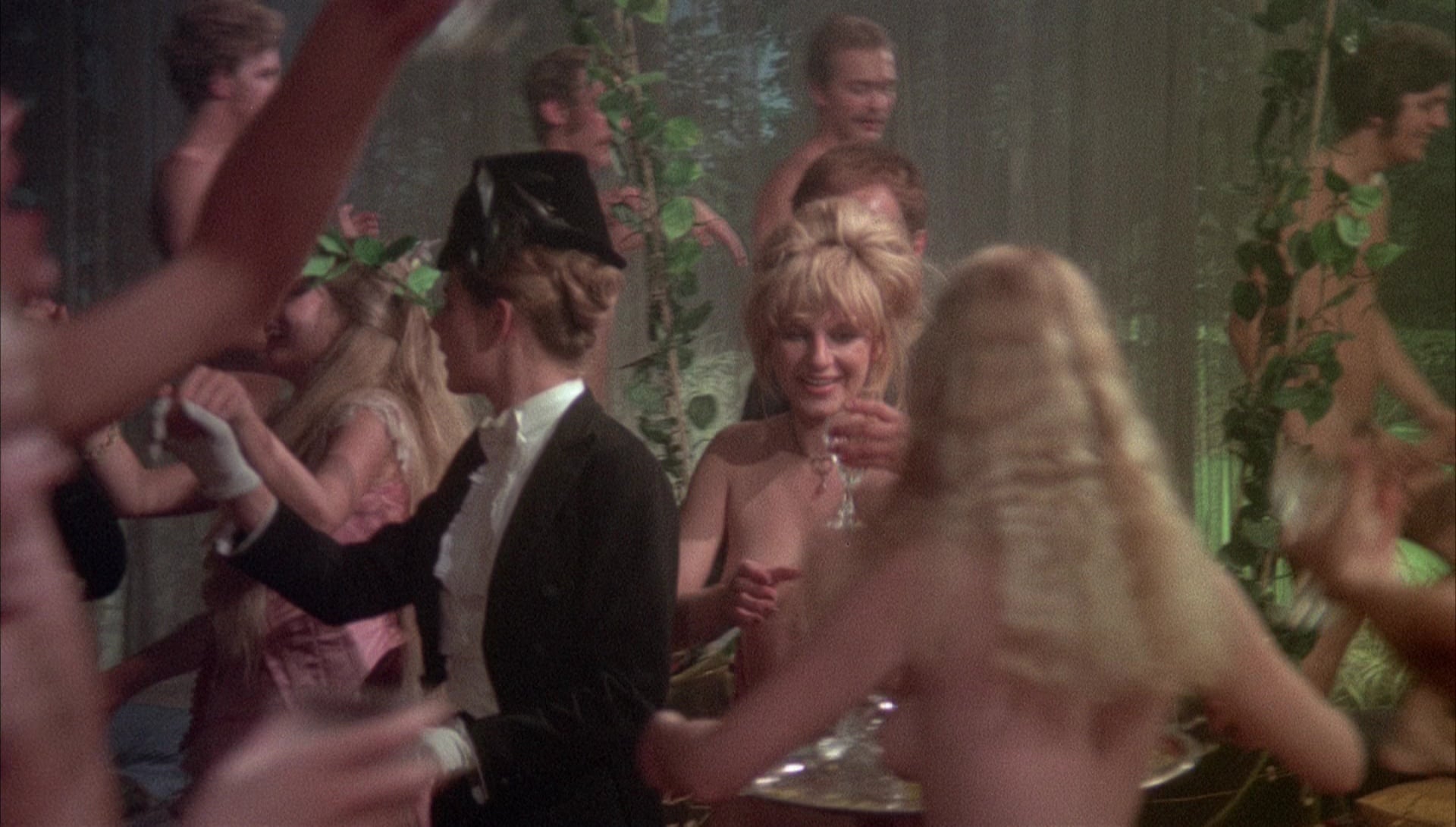
Private Vices and Public Virtues (1976)
In Italy, Jancsó worked with Antonioni muse Monica Vitti (The Pacifist, 1971) and in feature-length television (Technique and Rite, 1971; Rome Wants Another Caesar, 1974). Perhaps most representative of his time in Rome is Private Vices and Public Virtues (1976), an erotic account of the “Mayerling affair” between Hapsburg Crown Prince Rudolf and Baroness Mary Vetsera that leans heavily into the sordid decadence of the era and whose cynical marketing as a softcore romp helped to diminish Jancsó’s critical reputation even further. In his obituary of Jancsó for Senses of Cinema, Christopher Mildren argues that it was at this point in his career that the director’s insistence on “the extreme long take, choreographed camera and actor movement, psychological obliqueness, and the decorous use of nudity, both male and female, went from being considered astounding innovations, to being scorned as repetitive tics, notorious and obscurantist.” In 1979, Jancsó received a lifetime achievement award from Cannes – a sign of both his well-earned reputation and the suspicion that his glory days were behind him. Yet there were still 31 years of feature filmmaking left in the tank.
In the last years of communist Hungary, Jancsó produced a handful of films that suggested that this particular old dog might yet learn some new tricks. The Tyrant’s Heart (1981) is a self-aware update of this historical features of the previous two decades: a postmodern Renaissance romp unfolding within an aggressively artificial castle set. With Season of Monsters (1986), Jancsó did something that he had not attempted for 23 years: he made a film set in the present day, and (partly) in urban Budapest. Here, actors and characters from 1969’s The Confrontation return for the birthday party of their former professor, a witty bit of meta-cinematic self-commentary that Jancsó undercuts with surrealistic flourishes (including the intervention of a Loch Ness-style monster). Although these films are rarely screened today, they reveal the extent to which Jancsó was aware that the old world was dying and that a new artistic approach would be needed to deal with what came next.
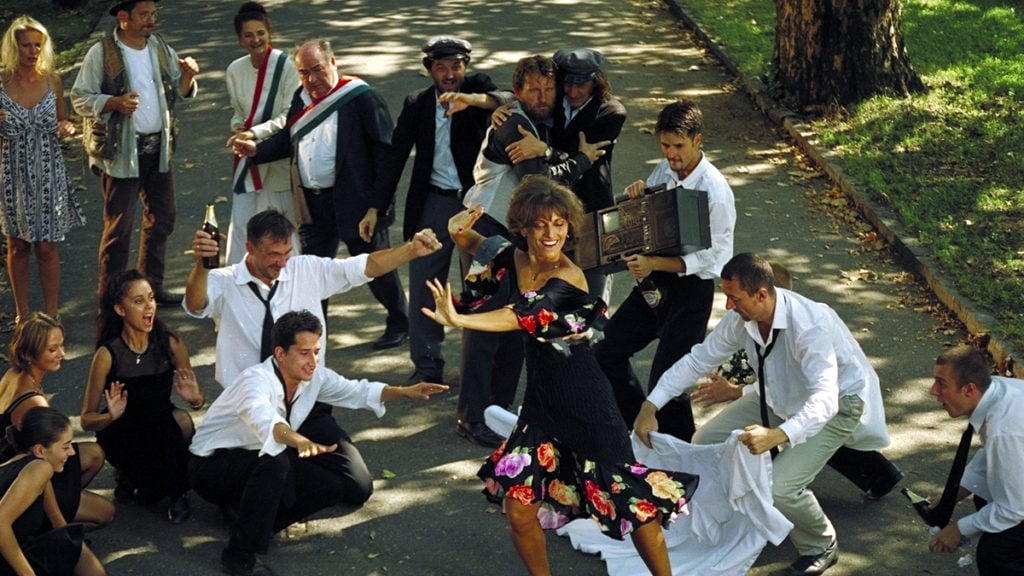
The Lord’s Lantern in Budapest (1999)
Post-communist reinvention
As “barracks socialism” collapsed into post-communist crisis, Jancsó’s “red modernism” was put to the test. A trio of films followed Season of Monsters that attempted to reconcile the idiosyncrasies of the director’s leftist politics and his stylistic peccadilloes to the new era of the market. Jesus Christ’s Horoscope (1989) views the death of the socialist bloc through the eyes of a poet named Josef Kaffka; God Walks Backwards (1991) imagines a world in which Mikhail Gorbachev is executed and neo-Stalinists take over Hungary. It might not sound like it, but the film is a comedy. (It also features both Jancsó and Hernádi, both of whom are executed onscreen.) Finally, after the assassination thriller-farce Blue Danube Waltz (1992), Jancsó did something he had not done in nearly four decades: he stopped making films.
“Cinema was made to fill an auditorium of three hundred people… Today, you can do anything with a small camera. Astruc said that film will become art when the camera becomes like a fountain pen. And now it is.”
His return in 1999 with The Lord’s Lantern in Budapest marked a remarkable late-career turnaround that is still largely unknown outside of Hungary. Working with a new cinematographer in Ferenc Grunwaldy, Jancsó ditched his customary long takes and sumptuous stylings for a freewheeling, improvisational, and low-budget series of satires known as the “Undertaker” films. Starring Zoltán Musci and Péter Scherer as the hapless Pepe and Kapa, the six features that followed won Jancsó a new following among the disaffected young cinephiles of the post-communist era with their dark humour, celebration of local underground musicians, and acerbic attacks on national amnesia. Wake Up, Mate, Don’t You Sleep (2002) addresses the still-thorny topic of Hungarian antisemitism and its role in the Holocaust; in Battle of Mohacs, (2004), Pepe and Kapa travel back in time to prevent their homeland’s defeat to the Ottomans, changing the course of European history in the process.
Jancsó thus found a way to continue his lifelong deconstruction of power relations and national neuroses long after the international festival circuit had ceased paying attention. His final completed work was a contribution to Hungary 2011 (2012), a Béla Tarr-produced anthology aimed squarely at Victor Orbán’s repressive cultural policies. Two years later, Jancsó died of lung cancer at the age of 92. In 2011, after his eventual retirement from feature filmmaking, he gave an interview about the future of cinema that captures his quintessential blend of cynicism and stubborn humanism. Asked whether film was still a valid form of cultural expression, Jancsó responds: “I don’t think it is anymore. Cinema was made to fill an auditorium of three hundred people. Now, three people sit inside; that’s not cinema anymore. In the past, when we started, it was a strange thing because few people did it. Today, you can do anything with a small camera. You record what happens. That’s cinema. Astruc said that film will become art when the camera becomes like a fountain pen. And now it is.” To the end, Miklós Jancsó acted on his belief that, in the right hands, the film image could reveal the terrible and beautiful workings of the world.
Poet of the Plains: two films by Miklós Jancsó is available on Klassiki now.
Explore our full collection of Hungarian titles here.


 Go back to journal home page