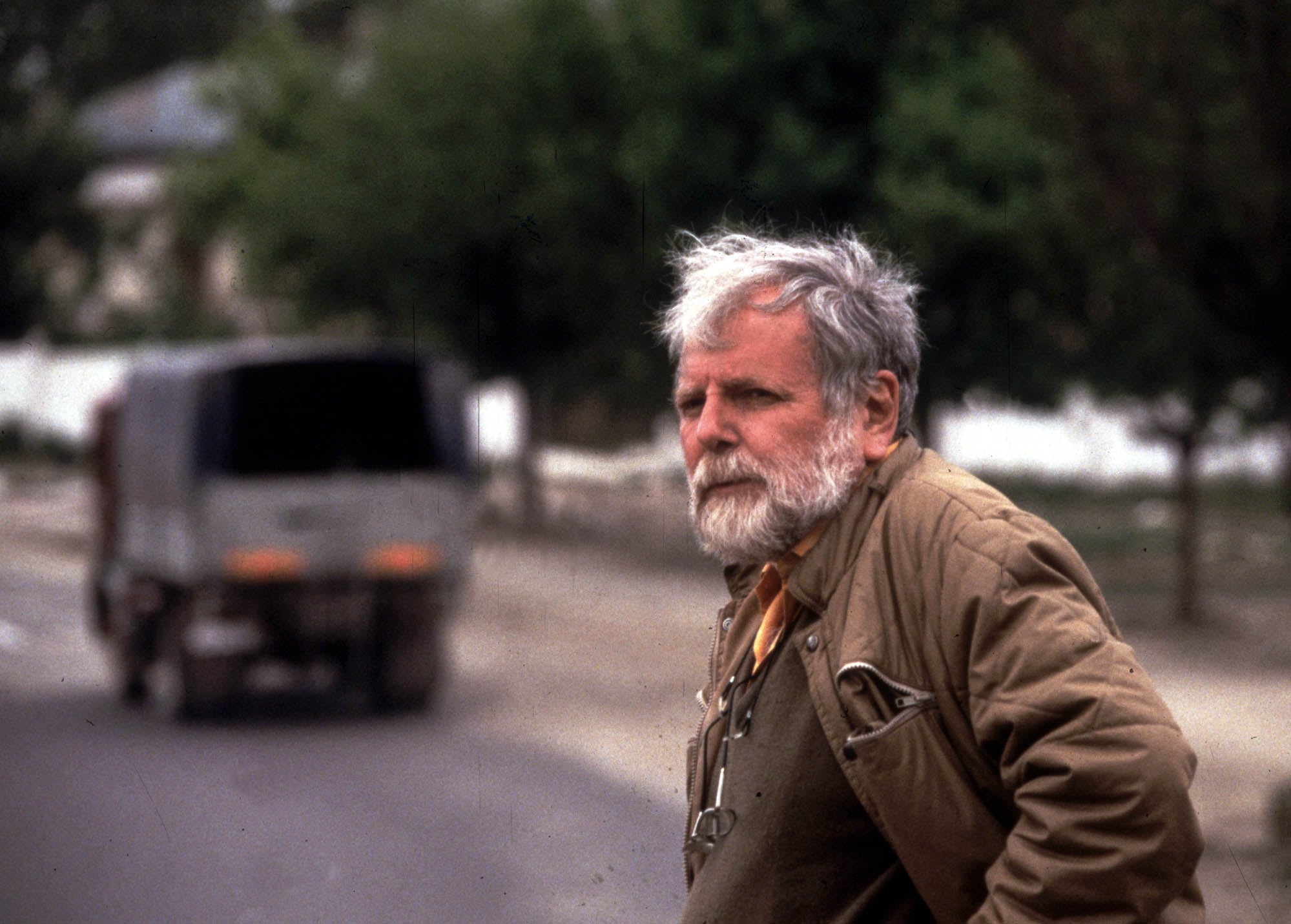
Lucian Pintilie
The international reputations of national cinemas are often reductive, but in Romania’s case, the effect is extreme. The 21st-century New Wave of Cristi Puiu, Corneliu Porumboiu, et al – and more recent offshoots, such as the iconoclastic Radu Jude – defines Romanian film in the eyes of outsiders to a remarkable degree. With other post-socialist states, communist-era movements are often understood as part of a national cinematic evolution and as pre-cursors to contemporary filmmaking: think of the Yugoslav Black Wave, or the poetic cinema tradition of the Baltic nations. But Romania’s pre-1989 cinema hardly gets a look in. There are a number of reasons for this: the relatively late institutionalisation of film production in the country after the Second World War; the Ceauşescu regime’s increasing isolationism that cut its filmmakers off from the international circuit. But the New Wave didn’t arrive from nowhere, and Romanian film history is full of gems.
Perhaps the best way to understand both classic and contemporary cinema in context is to look at figures who bridge the gap. For Romanian film, the outstanding candidate is Lucian Pintilie. He was at the heart of the flourishing of innovative filmmaking that invigorated artists and audiences alike in the 1960s. His background in theatre, and his peripatetic, censorship-afflicted career speak to the particular conditions informing Romanian directors under Ceauşescu. And his post-1989 work set the stage for the festival triumphs of Puiu and co. Indeed, Pintilie is sometimes referred to as the godfather of the New Wave – but his own films are far too intriguing to be reduced to scene-setting.
Pintilie’s background in theatre, and his peripatetic, censorship-afflicted career speak to the particular conditions informing Romanian directors under Ceauşescu. Pintilie is sometimes referred to as the godfather of the New Wave – but his own films are far too intriguing to be reduced to scene-setting
Pintilie was born in 1933 in Bessarabia, a historical region split between present-day Moldova and Ukraine. (A fellow Bessarabian was Kira Muratova – another iconoclastic filmmaker whose influential work bridges the communist and post-communist eras.) Pintilie remembered his cosmopolitan homeland as being “inhabited by a genuine ethnic mosaic: Romanians, Ruthenians, Gagauzes, Turks, Tatars, Jews, and, of course, Ukrainians and Russians.” He attended school in Bucharest, before becoming a member of the first generation to attend the capital’s Institute of Theatre and Cinematographic Art.
Before he came to cinema, Pintilie had made a name for himself in theatre. It was common for directors in Romania to shuffle between the two disciplines: in contrast to the august institutions of neighbouring states like Ukraine and Hungary, film production only truly took off in Romania after the war, and talent needed to be identified in the parallel world of stage directing. Pintilie was a resident director at Bucharest’s famous Bulandra Theatre from 1960, where his stagings of classics by Shaw, Gogol, and Chekhov cemented his reputation. The Bulandra was to have an outsized influence on Romanian cinema in the sixties. Its artistic director while Pintilie was resident there was Liviu Ciulei, known for his productions of Shakespeare, Brecht, and O’Neill, who would have a brief but potent film career: he directed only three features, but the third of these, Forest of the Hanged (1965) became the first Romanian film to gain international recognition when it won him the Best Director Palme at Cannes. Pintilie’s and Ciulei’s fates were conjoined: although the stage afforded leeway from the censors to a degree that film did not, Pintilie’s 1972 production of Nikolai Gogol’s classic satire The Government Inspector proved too risky, and both men found themselves shut out of future work; Pintilie left the country soon afterwards.
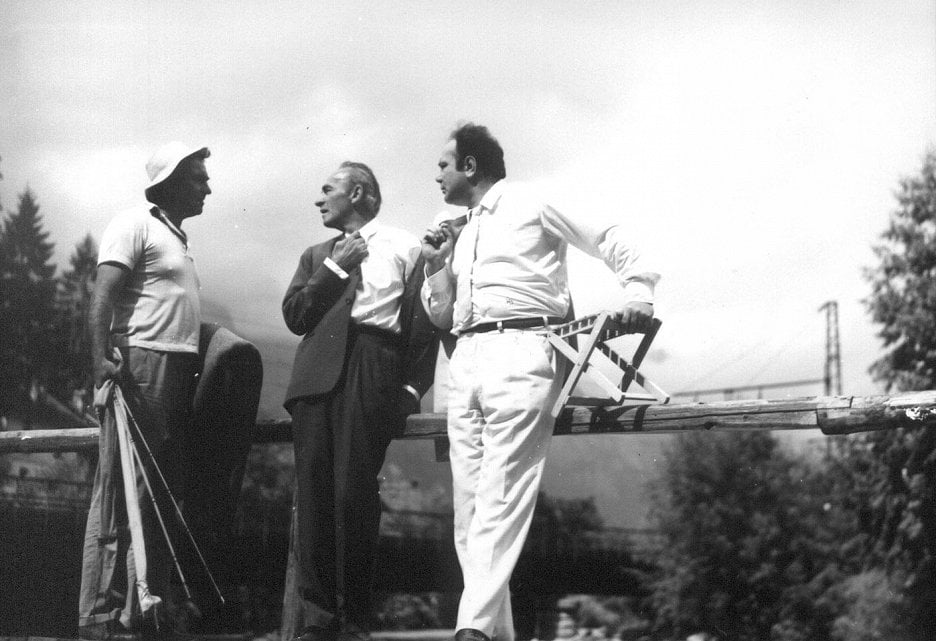
Reconstruction (dir. Lucian Pintilie, 1968)
Before then, though, he had made his mark on Romanian cinema with two canonical titles. Sundays at Six (1965) charts the romance between two communists as it brings the pair into conflict with their ideological commitments. Marrying a bleak sense of humour with an unconventional narrative structure, the film was criticised from above – although Pintilie would eventually be allowed to make his much more celebrated, explosive, and subversive follow-up, Reconstruction, three years later. This film was adapted from a short story by Horia Pătraşcu and based on an incident he had witnessed in the provincial town of Caransebeş: militiamen had arrested two young men, who they accused of drunken anti-social behaviour. For some reason, they then decided to have the pair re-enact the scene in order to demonstrate to the public the dangers of alcohol abuse. Pintilie’s theatrical background, as well as his penchant for absurdist humour and Brechtian alienation effects made him the perfect candidate to reimagine Pătraşcu’s work for cinema.
The film stars George Mihăiţă and Vladimir Găitan as Vuica and Nicu, the ill-fated students at the heart of the farce. After their graduation party, the pair got drunk and assaulted the waiter at the Seagull, their sleepy local riverside bar in the Carpathian foothills. Rather than sentencing the pair to regulation punishment, the local procurator (George Constantin) decides to have them recreate their brawl for the benefit of a film crew making an educational short about the perils of alcoholism. Events are corralled by bilious militiaman Dumitrescu (Ernet Maftei) and eavesdropped by a flirtatious local girl (Ileana Popovici) and the booze-addled voice of reason, teacher Paveliu (Emil Botta). In the hands of Pintilie, Pătraşcu, and cinematographer Sergiu Huzum, this basic premise quickly and predictably collapses in on itself, the film (and the film within the film) becoming a treatise on the slippery relationship between performance and reality and the ways in which the film camera both services and undermines notions of authority. The reconstruction itself is only fitfully observed, with Pintilie’s attention more focused on extraneous details and side plots – equipment failures, the search for a gaggle of lost geese, the procurator’s attempts to sunbathe his way through the afternoon. Ever the theatre man, for Pintilie, realism is an end and not a means. In 2008, Reconstruction was voted the greatest Romanian film of all time.
In Pintilie’s hands, Reconstruction, becomes a treatise on the slippery relationship between performance and reality and the ways in which the film camera both services and undermines notions of authority. Ever the theatre man, for Pintilie, realism is an end and not a means
Unsurprisingly, the film provoked consternation among the state studio authorities, who allowed it a very limited release in Timișoara and at Bucharest’s Luceafărul Cinema – where, Pintilie later claimed, “the projectionist was driven out of his mind” by incessant demands to repeat screenings. Soon the film was pulled from screens altogether until the 1990s. In combination with the Bulandra incident, Pintilie now had more than enough reason to emigrate. He spent much of the next decade in France at the Théâtre National de Chaillot and the Théâtre de la Ville in Paris. During this period, he also adapted his beloved Chekhov for the screen in Yugoslavia (Ward No. 6, 1978). Pintilie was able to return to Romania, although not to work in theatre while there. He was even able to direct another film, 1982’s Carnival Scenes – but when that too was pulled from screens, he spent the rest of the Ceauşescu era abroad. “It is true, on one level, my work does not correspond to official art,” he told the Washington Post in 1986. “My vision of the world is crueller, more sarcastic, more satirical. But at the same time, there is a great deal of tenderness underneath… But one day, I shall win this bet. I have a mystical conviction that I will make movies again in my country.”
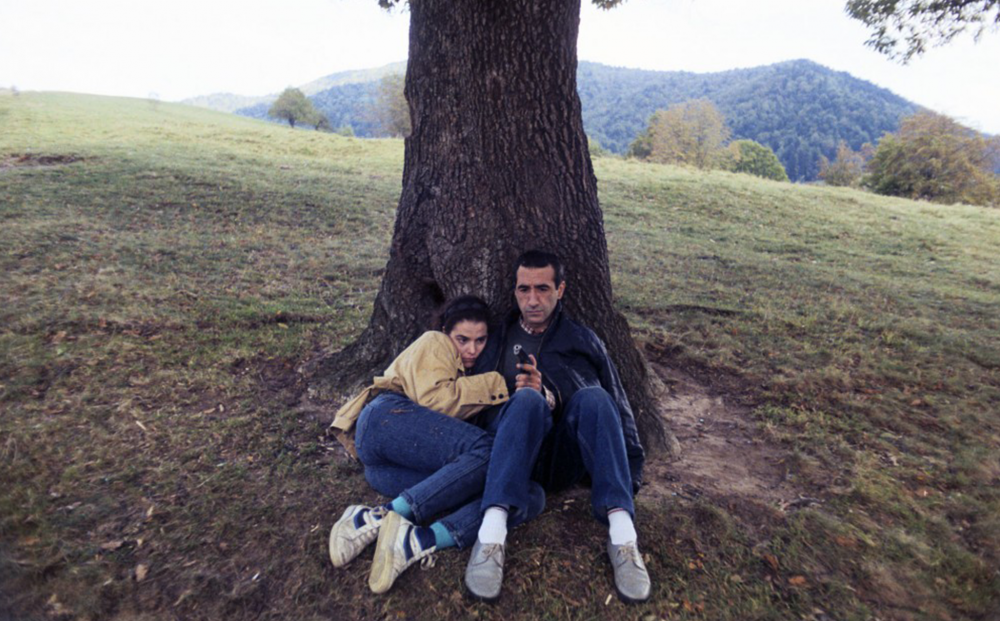
The Oak (dir. Lucian Pintilie, 1992)
Pintilie did indeed live to win his bet. As was the case with his fellow Bessarabian Kira Muratova, a stymied socialist career gave way to post-communist prolificity, with six features completed before his death in 2018. The first of these was perhaps the most consequential: The Oak (1992), about the rebellious daughter of an ex-officer of the Securitate secret police force. Pintilie’s concern for the brutality of the past and its lingering aftermaths in the “democratic” present was further developed in the thriller Too Late (1996), about a desperate group of coal miners, and The Afternoon of a Torturer (2001), a disturbing exploration of the psychology of Ceauşescu-era repression. An Unforgettable Summer (1994), set in the 1920s and starring Kristin Scott Thomas as the wife of an army officer face with a moral dilemma, was a more opulent departure.
It was in these later years that Pintilie’s influence on the coming New Wave was made concrete. Tudor Giurgiu, filmmaker and director of the Transylvania Film Festival, was assistant director on Too Late – “like attending a second film school,” in his words. No less than Cristi Puiu (and New Wave screenwriting sensation Răzvan Rădulescu) wrote Pintilie’s final film, Niki and Flo (2003). In his obituary for Pintilie, Nick Roddick describes the film as “a kind of autopsy of Romania a decade after the revolution… a truly unique mixture of absurdist comedy, documentary-like domestic detail and the playing out of toxic relationships.” That this description fits Pintilie so well while also serving as an elevator pitch for the Romanian New Wave that was just around the corner is telling. Two years after Niki and Flo, Puiu would direct The Death of Mr. Lazarescu from a script by Rădulescu, kickstarting a new era for Romanian film. Without Pintilie, by Puiu’s own admission, “the New Wave would have never existed.” Corneliu Porumboiu put it even more cleanly. When asked what he wanted to be when he grew up, he replied: “Lucian Pintilie.”
Watch Reconstruction on Klassiki now as part of our new collection of classic Romanian cinema.


 Go back to journal home page