The Watchlist is Klassiki’s occasional series of themed viewing recommendations drawing from the cinema of Eastern Europe, the Caucasus, and Central Asia. In this edition, we pick six films from the Klassiki Library that reimagine the classic love story – from the hopelessly a hopelessly romantic to the incurably cynical.

Slow (dir. Marija Kavtaradzė, 2023)
The Klassiki Library contains all manner of romantic tales: from animation to musicals, silent film to contemporary drama. Below are six titles available to watch right now from some of the most beloved filmmakers in our collection, all concerned with matters of the heart but ranging in tone from heartfelt sincerity to witty deconstruction.
Motorcycle Summer (dir. Uldis Brauns, 1975)
Motorcycle Summer is the sole fiction feature from Uldis Brauns – the Latvian maestro who helped to reinvent non-fiction filmmaking as part of the so-called “poetic documentary” movement that emerged from the Baltic states in the 1950s and ‘60s. It’s an endearing Soviet twist on the biker movie and a touching romance that never succumbs to outright sentimentality. When Māris (Pēteris Gaudiņš) receives a motorbike for his eighteenth birthday, he hits the road with his friends. There he meets unhappy bride-to-be Inese (Inese Jansone) and her thoughtless fiancé, and a whirlwind romance blooms that soon sees the pair riding the roads of Soviet Latvia. But will theirs be any more than a fleeting summer of love? Brauns explores the clash between youth and tradition with sensitivity and a keen eye for human drama.
Watch Motorcycle Summer on Klassiki now and explore our collection of Latvian titles here.
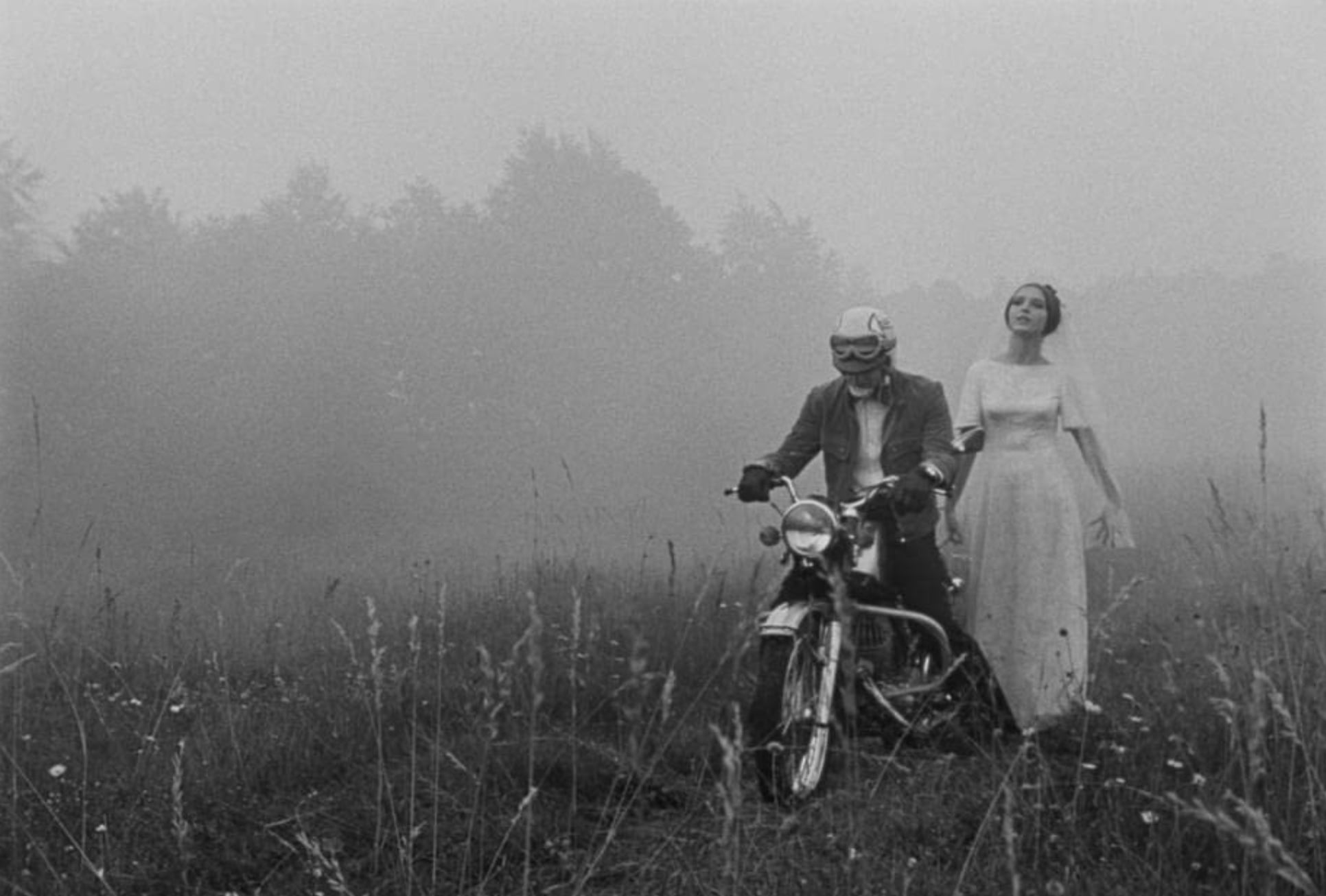
Motorcycle Summer (dir. Uldis Brauns, 1975)
Love Affair, or The Case of the Missing Switchboard Operator (dir. Dušan Makavejev, 1967)
Flipping the romantic script entirely is this gleefully subversive, formally skittish, and surprisingly moving oddity from the inimitable Dušan Makavejev, scion of the Yugoslav Black Wave. Centred around the titular doomed affair between a Hungarian switchboard operator Izabela (Eva Ras) and a Muslim, middle-aged sanitation specialist Ahmed (Slobodan Aligrudić), this parable about the political implications of free love jumps between tense personal drama, pseudo-documentary addresses from sexologists and criminologists, and grotesque comedy. A perfect entry point into the radical, off-kilter humanism of the Black Wave, with its concern for the marginal and the unhinged, it’s also a delicious dissection of the darker side of romantic passion.
Watch Love Affair on Klassiki now and explore our collection of Yugoslav Black Wave titles here.
Spring on Zarechnaya Street (dir. Marlen Khutsiev, 1956)
The release in 1956 of Spring on Zarechnaya Street, the feature debut of the much-loved Marlen Khutsiev (I Am Twenty, July Rain), signalled a sea change in Soviet cinema. The film was one of the first statement pieces in the nascent “Thaw” that followed the death of Stalin. Khutsiev and co-director Feliks Mironer captured the sincerity and optimism of the newly liberal and enthused 1950s, making Spring an instant hit that remains a touchstone to this day. While the film has much to say about the process of post-war reconstruction, at its heart is the charming, odd couple romance between a literature teacher and a happy-go-lucky factory worker (Nina Ivanova and Nikolai Rybnikov), refreshingly free of cliché and full of feeling.
Watch Spring on Zarechnaya Street on Klassiki now and listen to our podcast episode marking Khutsiev’s centenary here.
Brief Encounters (dir. Kira Muratova, 1967)
Another debut feature, this time from the inimitable Kira Muratova: one of Russian-language cinema’s most idiosyncratic auteurs. Relationships are never simple in Muratova’s films, and Brief Encounters is no exception. The director described the film as a “provincial Chekhovian melodrama”, and while it’s certainly an apt label, it doesn’t do justice to the witty cynicism and quiet devastation that Muratova wrings out of what might have been a tawdry potboiler premise. The director stars opposite legendary singer Vladimir Vysotsky and debutante Nina Ruslanova as one member of a fractured love triangle, with the tale of female rivalry and dashed dreams related through a series of disorienting flashbacks. Banned for twenty years and only rediscovered in the late ‘80s, Brief Encounters has long since been recognised as a classic: right from the off, Muratova knew how to get to the thorny heart of a love story like no other.
Watch Brief Encounters on Klassiki now and explore other titles from Kira Muratova here.
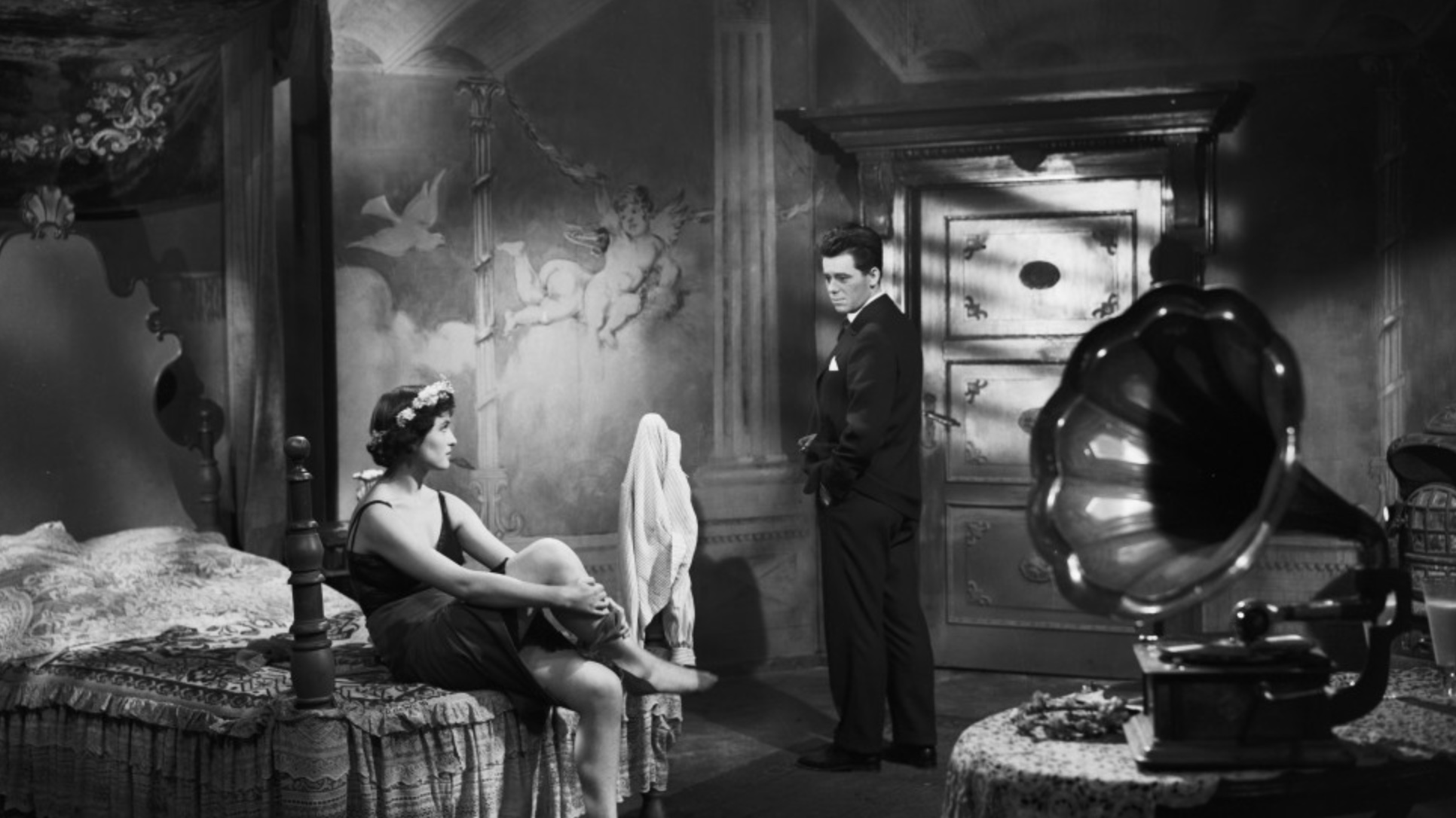
Farewells (dir. Wojciech Has, 1958)
Farewells (dir. Wojciech Has, 1958)
Romantic narratives often reflect the broader social context in which they are made: if a film like Khutsiev’s Spring on Zarechnaya Street captures the optimism of post-Stalinism and post-war reconstruction, then Wojciech Has’s melancholic adaptation of Stanisław Dygat’s novel evokes the despair pervading Poland in the years before and after the Second World War. Made at the start of Has’s singular, often surreal career, as the title suggests Farewells is a story of love found and lost. In 1939, bourgeois student Pawel (Tadeusz Janczar) rebels against his conservative upbringing by running away to the countryside with cynical dancer Lidka (Maria Wachowiak). Their idyll is disrupted first by their families, and then by the catastrophe of war. Reconnecting years later, the pair reflect on the traumas suffered since and question their capacity to love again. Has’s fatalistic vision of a relationship – and a society – riven by unbreachable divides proved highly influential for the nascent Polish Film School of the late 1950s. A perfect blend of romanticism and cynicism.
Watch Farewells on Klassiki now and listen to our podcast episode about the career of Wojciech Has here.
Slow (dir. Marija Kavtaradzė, 2023)
Can romance in film be rescued from cliché, formula, and groupthink? Perhaps any affirmative answer will depend upon attentiveness to minoritarian and underrepresented perspectives on the standard repertoire of conceits and contrasts. With her sophomore feature, Lithuania’s Marija Kavtaradzė goes further than most in attempting to open up the modern romance film to new potentialities, finding a refreshing way into the age-old (and usually purely rhetorical) questions that structure the genre: will they or won’t they? And is this person “the one” for whom principles and personality must be sacrificed? When sign language interpreter Dovydas (Kęstutis Cicėnas) meets dancer Elena (Greta Grinevičiūtė), their attraction is instant and intense. But when Dovydas reveals that he is asexual, the pair must learn to renegotiate their desires if they want to build a lasting connection. Kavtaradzė’s intimate portrait of a relationship pushes past the clichés of cinematic romance, capturing the push-pull of a young relationship with heady 16mm photography and sensual, affecting lead performances.
Watch Slow on Klassiki now and explore our collection of Lithaunian titles here.
Our latest curated collection, Modern Romance: three films about the changing face of love, is available to subscribers until 1 October.


 Go back to journal home page